

Renowned authors bring stories to remote villages, empowering both adults and children through the healing power of literature, Yang Feiyue reports.
Peng Xueping had kept to herself for months, avoiding eye contact, after a sudden family misfortune.
The 12-year-old girl from Mabian Yi autonomous county, deep in the mountains of Southwest China's Sichuan province, began to open up only after meeting Tang Sulan, a celebrated children's author known affectionately to millions of young readers as "Mother of Silly Wolf".
"I like Story of the Silly Wolf. It taught me to be brave. Since we're alive, we might as well live happily," Xueping says.
For Tang, visiting this remote mountain county for the first time, the encounter was quietly profound.
"I was deeply moved. It reaffirmed the true value of children's literature," she says.
At the pottery-painting workshop where Tang first noticed Xueping, the shy girl had painted the magpie rhododendron, a flower symbolizing beauty and purity in Yi culture.
The details showed extraordinary care, Tang notes.
"I could tell her inner world was incredibly rich," she says.
In late March, Tang, along with Xu Guixiang, and Alai, both renowned novelists and vice-chairmen of the China Writers Association, traveled to Mabian as part of an initiative to empower rural areas through literature.
"Literature comes from life, and it must return to life," Tang explains.
"Bringing literature to the county scene is part of serving the people. As a contemporary writer, I feel both interested and responsible for taking part," she adds.
Mabian was once known as a remote frontier. After shaking off poverty, the county is finding new life through tea, green plums and bamboo groves.
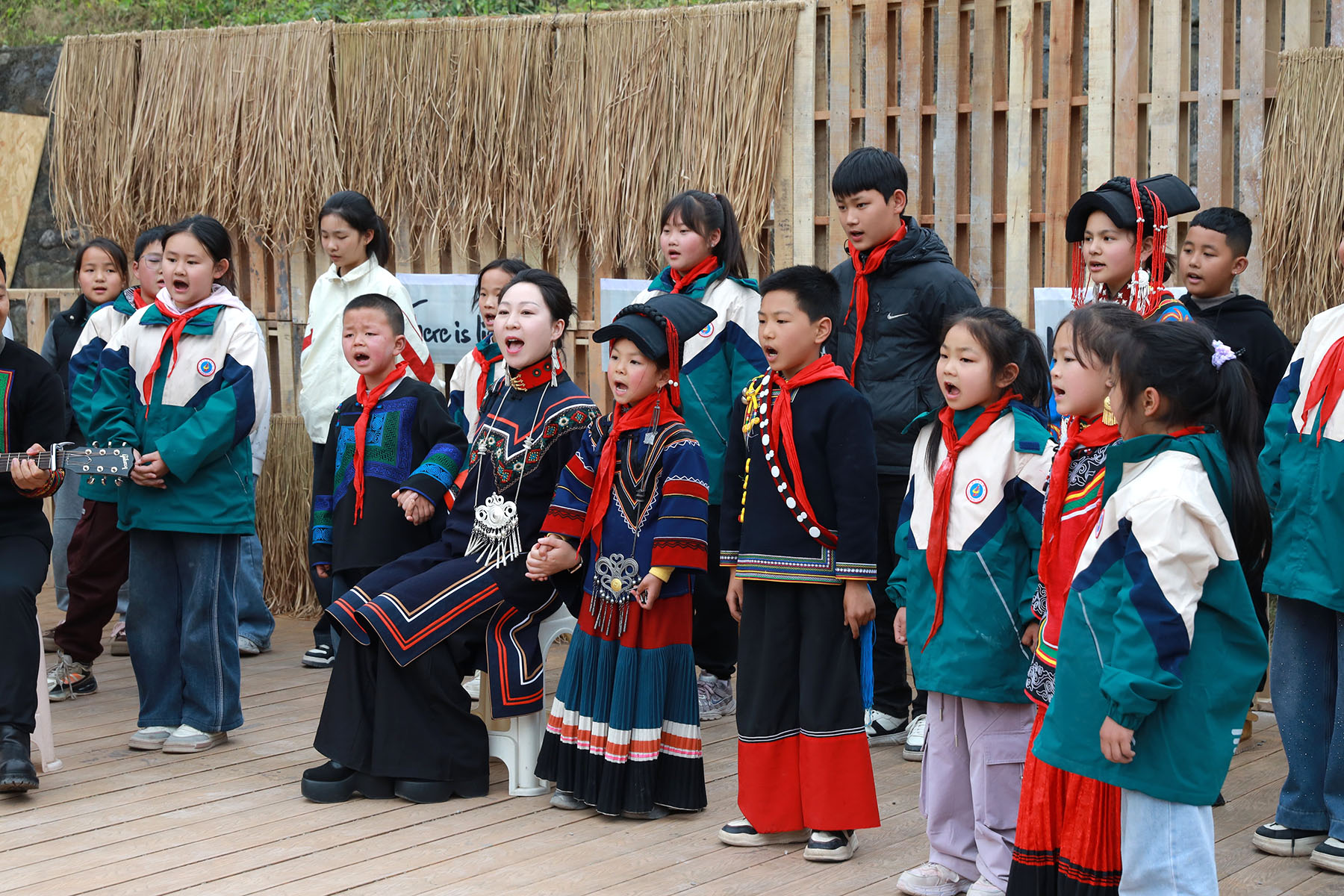
During the trip, Tang found herself surrounded by children from both Han and Yi ethnic groups, their faces bright with curiosity.
"I felt the vibrant energy of Mabian. The children's passion for books, their respect and affection for me — it was deeply moving," she says.
Tang was particularly impressed by 8-year-old Yu Keyi, who had nearly all her books.
Flipping through Keyi's notebook, Tang discerned that the young girl had an instinct for storytelling.
"Read widely. Write boldly. Write what's in your heart. You have the power to create a more beautiful world with your words," Tang encouraged her.
A seed, not a diploma
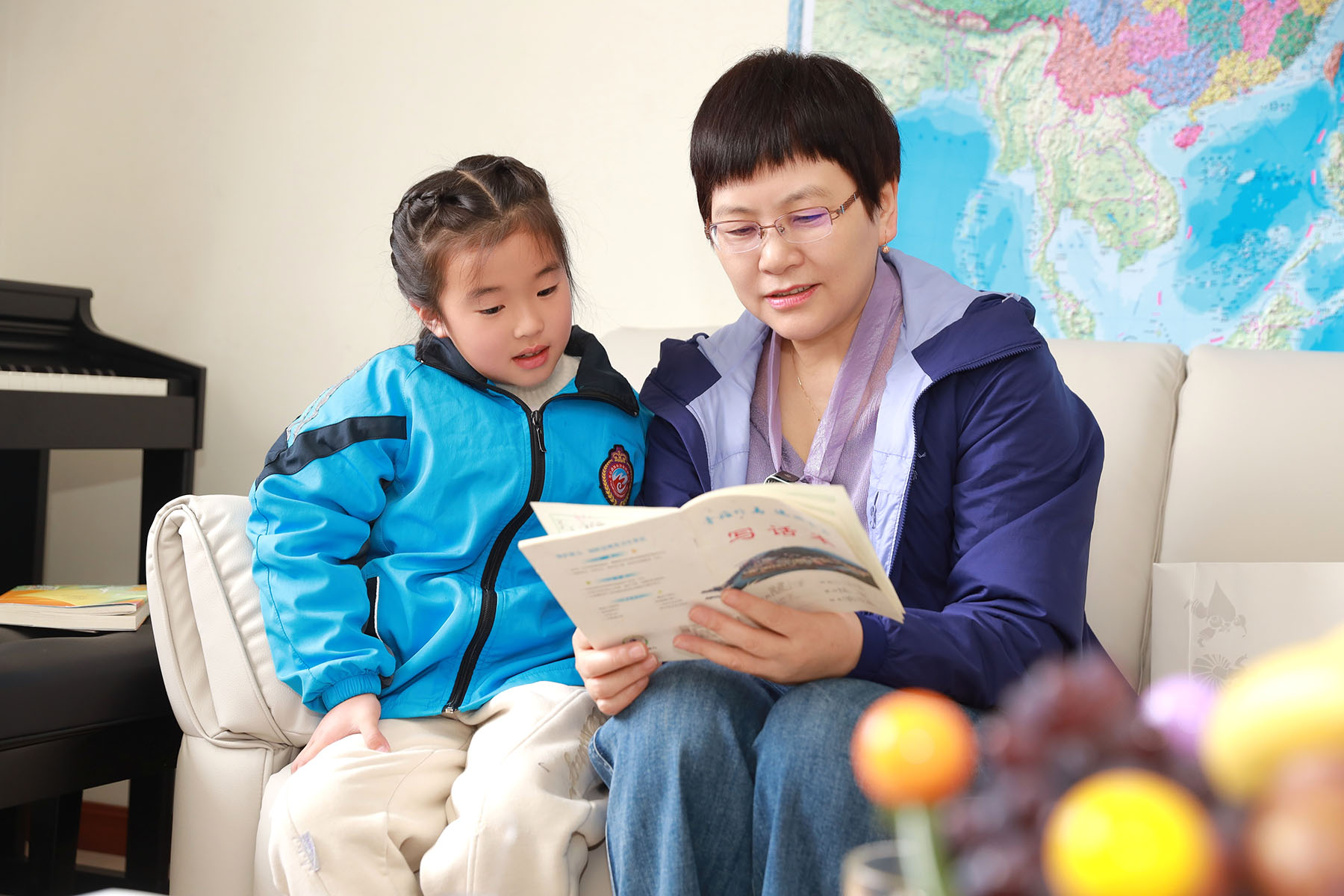
During her stay, Tang taught a creative-writing class at Minjian Primary School.
"I want children to fall in love with reading, to develop a lifelong habit, to move from receiving an education to educating themselves," Tang explains.
For children growing up in these mountains, Tang believes that literature offers "a window to a wider world, comfort for the soul and the strength to grow".
This is the unique power of China's literature-driven rural vitalization, she notes.
"Its uniqueness lies in helping ordinary people feel the charm of literature and enjoy its spiritual nourishment."
Tang was not the only writer knocking on unfamiliar doors during the rural literary program.
Xu also helped Long Zhengqian, a former soldier and poetry lover, find his way as a writer.
When Xu visited his home, Long brought out notebooks filled with verses drawn from military service and years working in rural communities.
Seeking advice, Long asked how to turn a "rich mine" of his experiences into meaningful work.
Xu's answer was direct: write everything down, including every detail of his rural work.
"Record the strengths and weaknesses of the place you're helping to develop. That is the most vivid and valuable literary material you'll ever find," Xu emphasizes, adding that passion is essential.
Beyond workshops and visits, organizers created a literary atmosphere through a morning market event.
Outside the bustling farmers market, the air carried the scent of rain, fried dough and fresh ink from book stalls. Martial artists performed graceful routines, while vendors displayed books, cultural products, and local specialties.
Crowds gathered for poetry games, idiom chains, and literary trivia.
Xu even joined in, attempting a few martial arts moves himself as local villagers cheered him on.
"Shopping at the morning market and also guessing idioms, reciting poetry, and winning prizes — literature suddenly feels close," says a local woman, holding a child's hand.
Li Yiming, from the China Writers Association secretariat, says the initiative aims to give residents new ways of observing life, expressing emotions, and creating beauty.
"When children pick up a pen to write their first story, when villagers recite their own poems by a bonfire — that is when the seeds of literature quietly sprout," Li says.
A letter of gratitude
Tang's visit was not the first time the "literary county" initiative had crossed mountains. Six months earlier, it was launched in Xiushui county nestled among misty hills in eastern Jiangxi province. That event featured Alai.
When Alai arrived in Mabian for this second March edition, he received an unexpected gift in the form of a letter that Xiushui readers had carried more than 1,300 kilometers.
The letter invoked a famous literary friendship from a thousand years ago — that of Huang Tingjian and Su Shi, two towering poets of the Song Dynasty (960-1279).
"Their poems and responses crossed mountains and rivers," the letter reads. "It was through living, breathing, human interaction and the collision of minds that they created immortal works."
Alai notes that Huang Tingjian, a Northern Song Dynasty (960-1127) scholar from Xiushui who wrote some of his finest verses during his exile in Sichuan, had already forged a bond between the two regions through his poetry.
Now literature was forging that bond again, as the Xiushui and Mabian literature federations signed a cooperation agreement at a ceremony in Mabian.
Asked about literature's most fundamental gift, Tang says it lies in discovering and feeling the beauty of life and the world, enriching the soul and unlocking creativity.
Before leaving Mabian, Tang offered one last piece of advice to the children who had gathered around her.
"Reading is the key to the world, which has places our feet cannot reach and sights our eyes cannot see."
Ding Yangsi, a fifth-grader at Minjian Primary School, says he developed a fondness for literature after meeting the writers.
When he learned that Tang was coming to Mabian, he picked up Story of the Silly Wolf.
"I found it really interesting," says the boy, who usually reads history and military affairs.
He says the fairy tale made him smile and showed him that words could be gentle, humorous, and meaningful.
"I'll surely read more of her books."
Yu Rong, the school's vice-principal for two decades, has witnessed the long-term effects of such programs.
"Every child who picks up a book, every writer who visits — it all adds up. The positive results will come," Yu says.
For Tang, that is precisely the point.
"The goal is not to train writers," she says. "It's to nurture imagination and help people see the beauty in life."
Contact the writer at yangfeiyue@chinadaily.com.cn
