

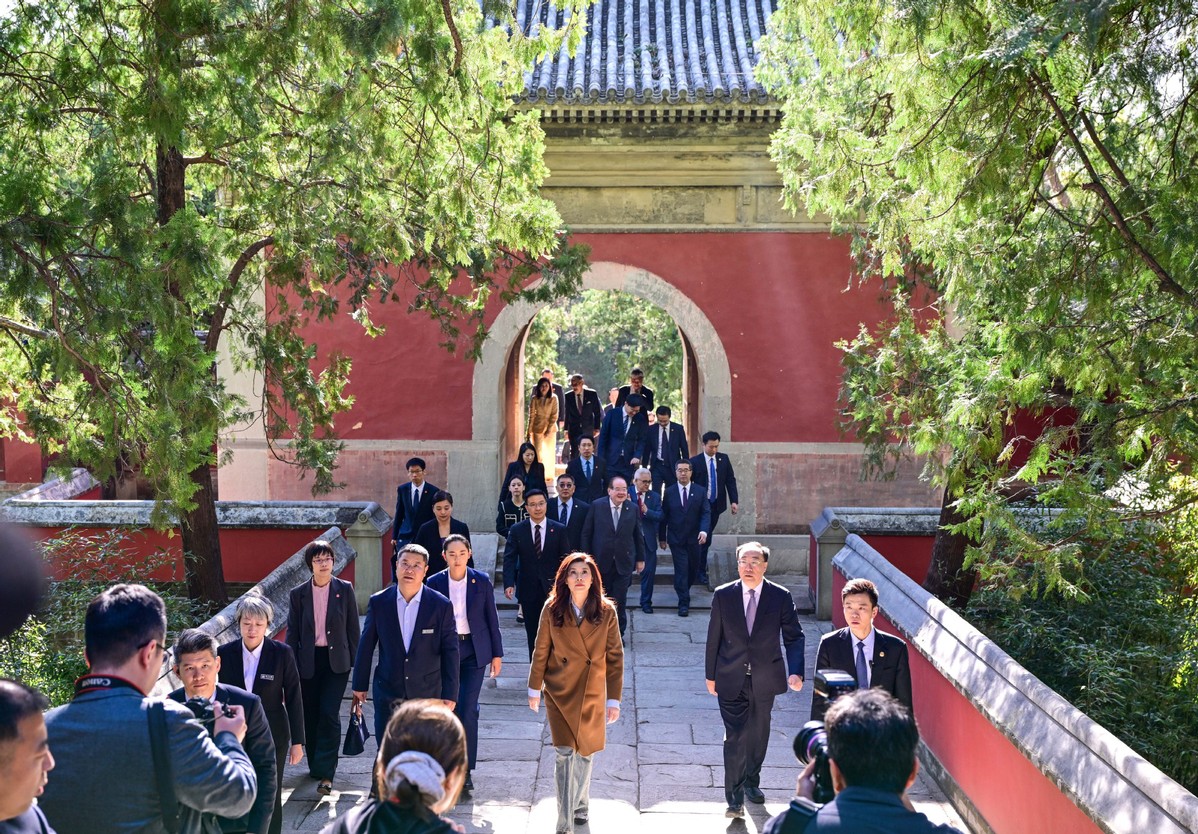
Technological progress on Chinese mainland left a strong impression on Cheng Li-wun, chairwoman of the Chinese Kuomintang party, during her visit to Beijing, which she described as a "highly rewarding trip".
On Saturday morning, Cheng led a KMT delegation to the Sun Yat-sen Memorial Hall, located within Biyun Temple at Xiangshan, or the Fragrant Hills, on Beijing's northwestern outskirts.
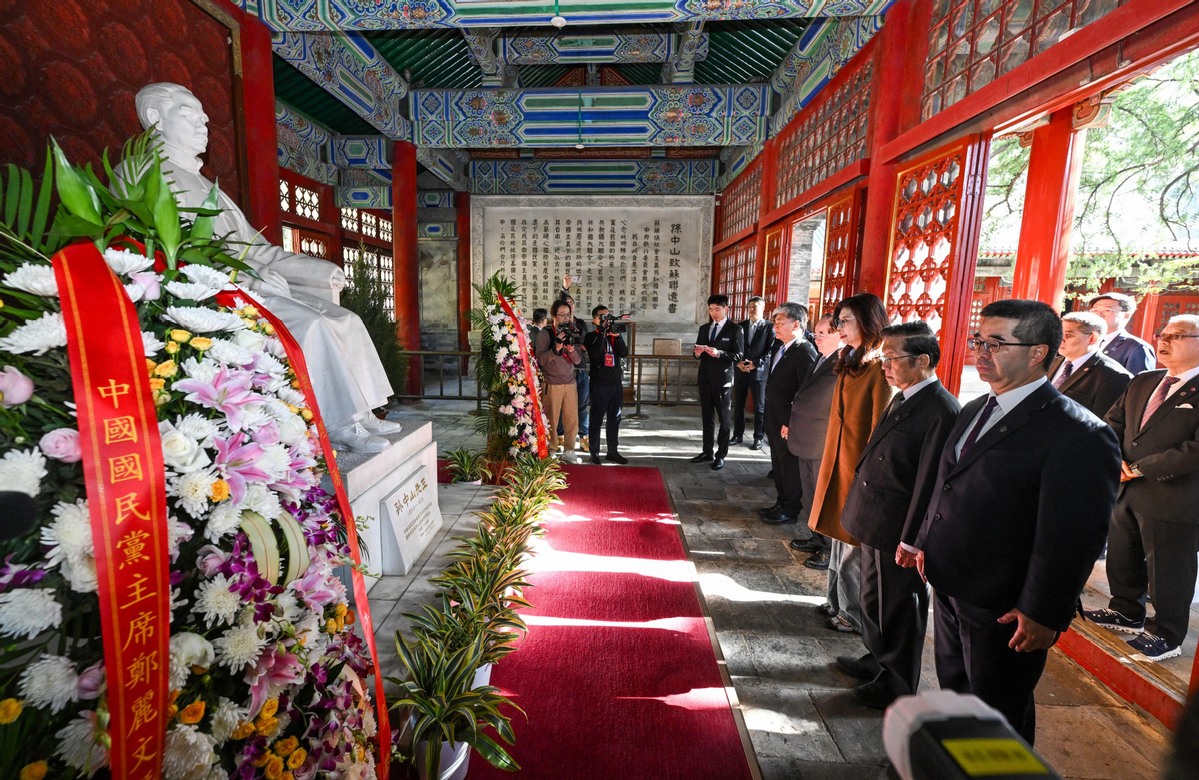
Cheng and the delegation bowed before Sun Yat-sen's seated statue inside the hall and paused at his cenotaph beneath the diamond throne pagoda.
While this year is the 160th anniversary of Sun's birth, paying homage to the historical figure is a longstanding tradition for KMT leaders visiting the Chinese mainland. As the most prominent founding figure of the KMT, Sun played a pivotal role in ending imperial rule in China.
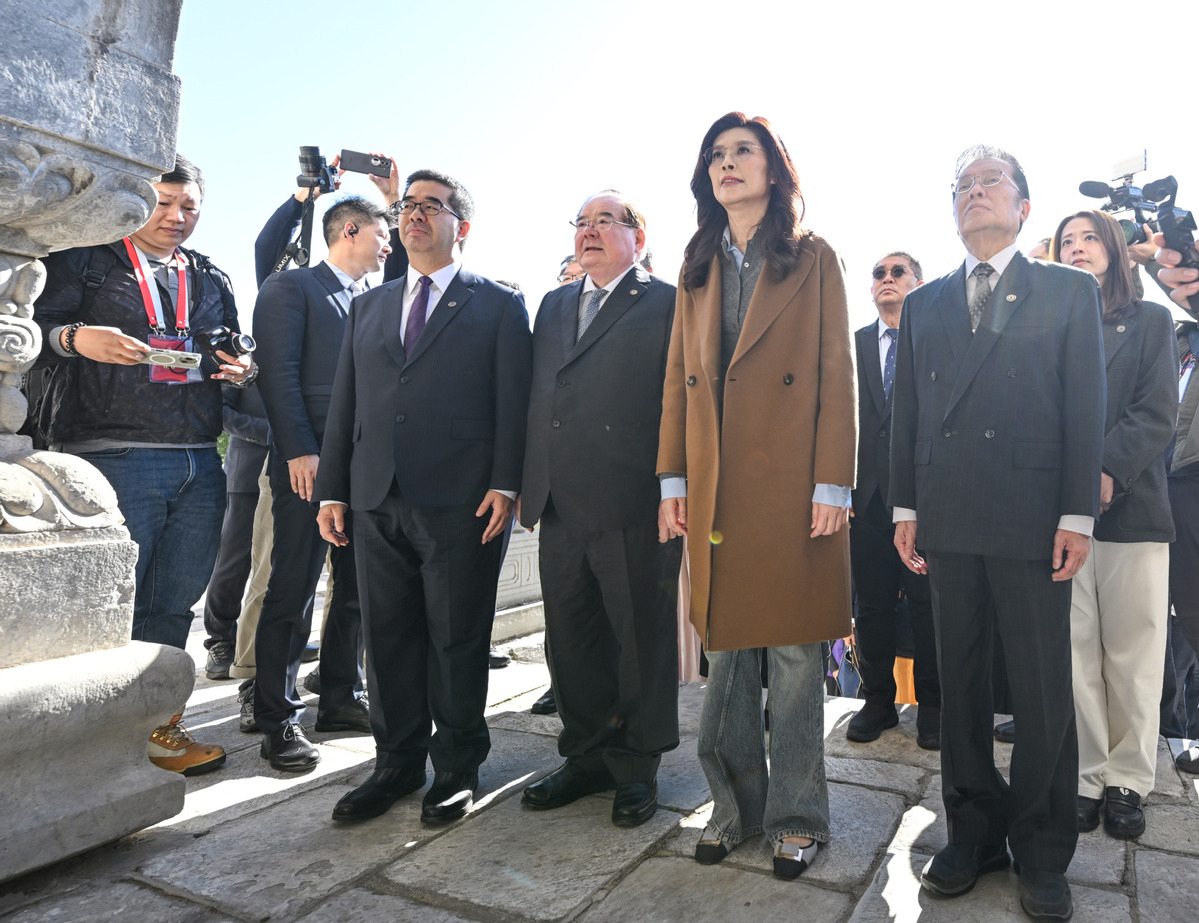
Sun's coffin remained at Biyun Temple for almost four years after his death in Beijing on March 12, 1925, before his remains were moved to Nanjing, Jiangsu province, in 1929. Cheng and the rest of the delegation visited the Sun Yat-sen Mausoleum in Nanjing on Wednesday.
Later on Saturday, the delegation toured the Zhongguancun National Innovation Demonstration Zone Exhibition Center in Beijing's Haidian district. The center showcases more than 560 technologies and products, including artificial intelligence, embodied intelligence and high-end medical devices.
Describing Haidian as a place where some of the world's brightest minds converge, Cheng said she had "found answers for Taiwan's future" there as the island's service sector and traditional manufacturing industries facing mounting challenges.
She said the industrial application of technological innovation could drive the comprehensive upgrading of Taiwan's industries, citing her visits to both Shanghai and Beijing, where AI has been widely applied.
Cheng also underscored the importance of jointly leveraging the strengths of both sides of the Taiwan Strait and called for the provision of greater opportunities and support for young people.
"Without political barriers across the Taiwan Strait, the two sides could make significant contributions to humanity," she said.
Cheng's trip, the first to the mainland by a KMT chairperson in a decade, began on Tuesday and will conclude on Sunday.
On Saturday afternoon, the delegation also visited the Palace Museum in Beijing.
