

Partnering with mobile apps, the capital city offers the best routes for those who wish to appreciate spring flowers, Yang Feiyue reports.
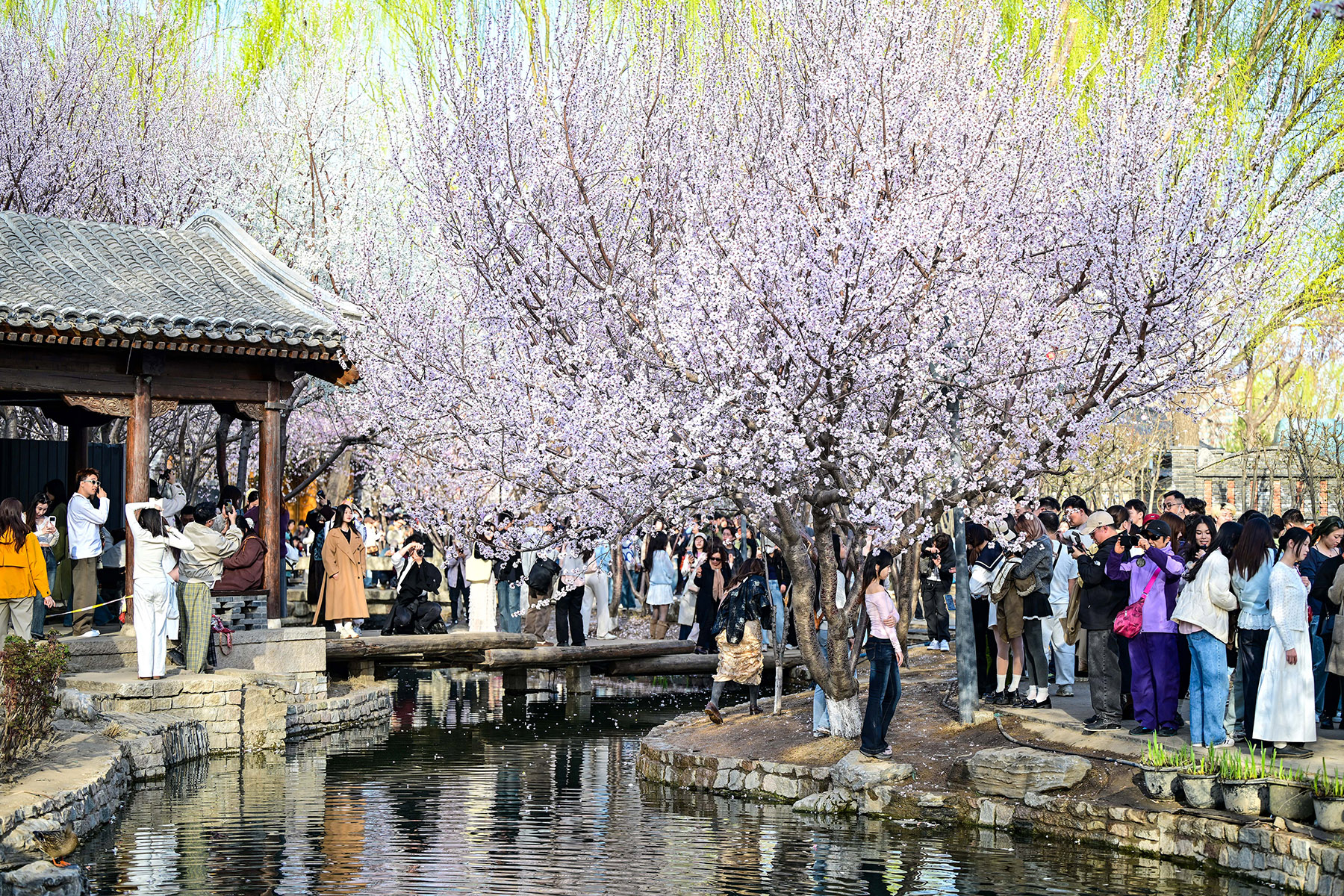
From a prince's peonies to an AI-powered map, China's capital reimagines spring flower appreciation as a cultural journey.
Exactly 142 years ago, the disgraced prince Yixin, better known as Prince Kung, rode west from the Forbidden City.
He had fallen out of favor with Empress Dowager Cixi and was dismissed from all his posts. Historical records confirm he spent much of the following decade in seclusion at Jietai Temple in the western hills.
According to accounts preserved at the temple, he brought with him peonies from Prince Kung's Mansion in downtown Beijing, including rare varieties.
Among them was a cultivar with pale green petals, known as dou lyu (pea green), recognized as one of the four most famous peony varieties in Chinese horticulture. The black peony, another rarity, was also part of his collection.
Today, if you visit Jietai Temple's peony courtyard in mid-to-late April, you can see descendants of these very plants. Temple records and local horticulturalists confirm the lineage traces back more than a century to the Prince Kung era.
READ MORE: Tourism soars as flower-chasing season
"Every flower tells a story," says Zhang Jing, director of the resource development department at the Beijing Municipal Bureau of Culture and Tourism, during the launch ceremony of the Quality Flower Appreciation campaign for spring in mid-March.
The capital city invites residents and travelers to come and see not only its rich floral resources, but also the history, culture, and way of life behind each blossom.
The bureau has developed a "three differences" philosophy this year for flower chasers.
The first involves perspective. For instance, the West Dyke of the Summer Palace in northwestern Haidian district is a classic spot for viewing mountain peach blossoms, drawing crowds each March.
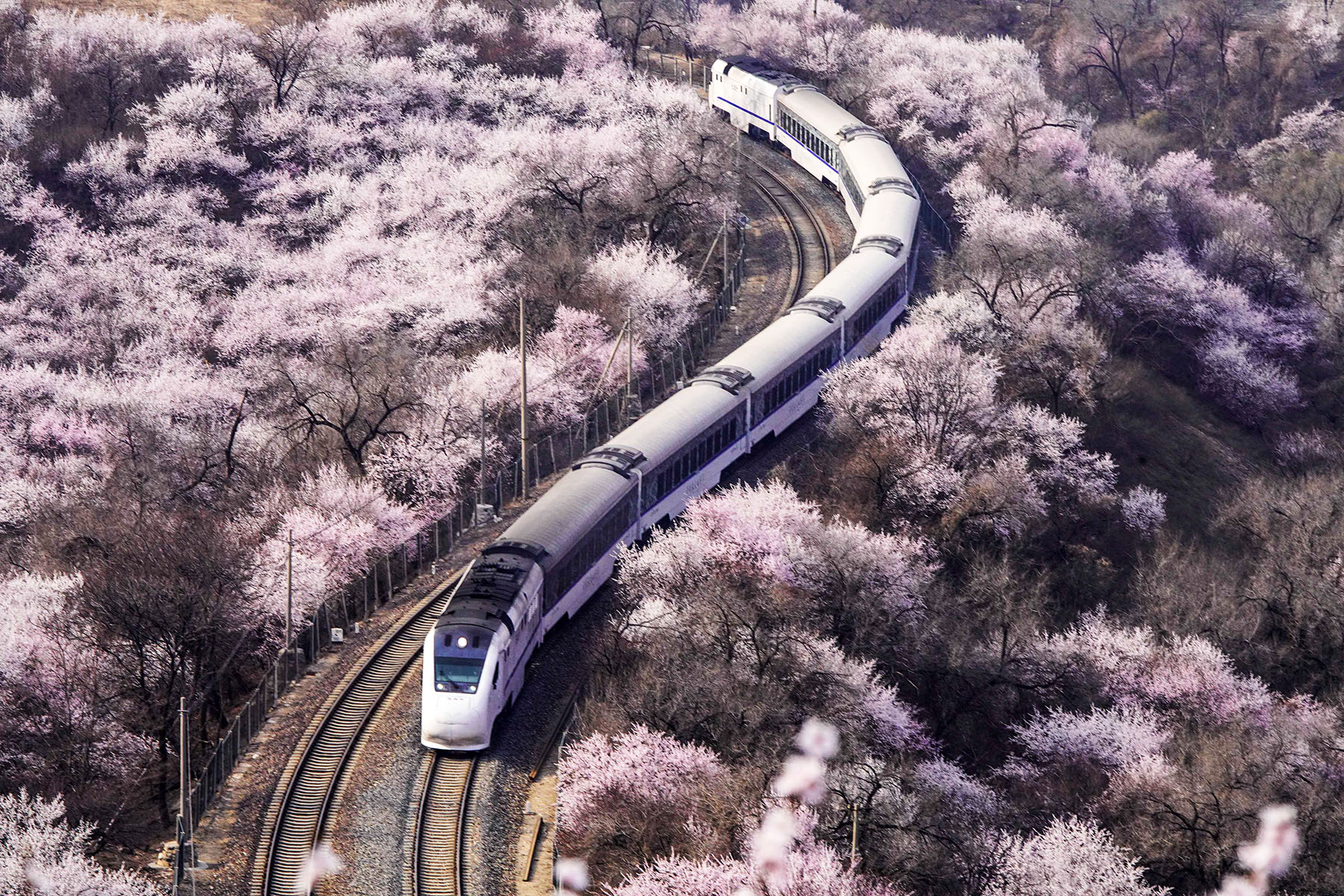
But this year, the Beijing cultural and tourism authority suggests a different approach. "We're encouraging people to take a boat and appreciate the flowers by water," Zhang explains.
From Kunming Lake and looking upward, the peach blossoms offer a vista that has been available since boats first plied these waters, yet one many overlook.
The second philosophy engages with listening and scent, as well as sight, at places like Zhihua Temple in eastern Dongcheng district. The Ming Dynasty (1368-1644) monastery, completed in 1444, typically sees pear trees bloom in late March. During the blooming season, visitors can hear "Jing music", which received national intangible cultural heritage designation in 2006. This musical tradition was preserved by the temple's monks for nearly 600 years and has continued during peak travel seasons.
The temple also houses one of Beijing's finest surviving zaojing (caisson ceiling), a wooden architectural feature typically found in temples and palaces, installed during the Ming Dynasty, Zhang points out.
"We want people to appreciate pear blossoms while listening to music. To look up and see the ceiling, it's all part of the experience," he adds.
The third difference weaves flower appreciation into daily life.
ALSO READ: Where spring dreams in pink
For visitors who have frequented Zhongshan Park for its tulip blossoms each spring, the Beijing bureau points them to Laijinyuxuan, a teahouse built in 1915, within the park. According to historical records and literary accounts, Lu Xun, the foundational figure of modern Chinese literature, frequented the establishment. His diaries mention enjoying their dongcai (preserved vegetable) buns. The recipe has been maintained continuously since.
"When you go to Zhongshan Park, visit Laijinyuxuan first. Order jasmine tea, try the buns Lu Xun wrote about, and then go admire the tulips," Zhang advises.
Similarly, at Yuyuantan Park, home to one of Beijing's largest cherry blossom collections with trees donated since the 1970s. The park now offers cherry blossom-themed coffee at select outlets.
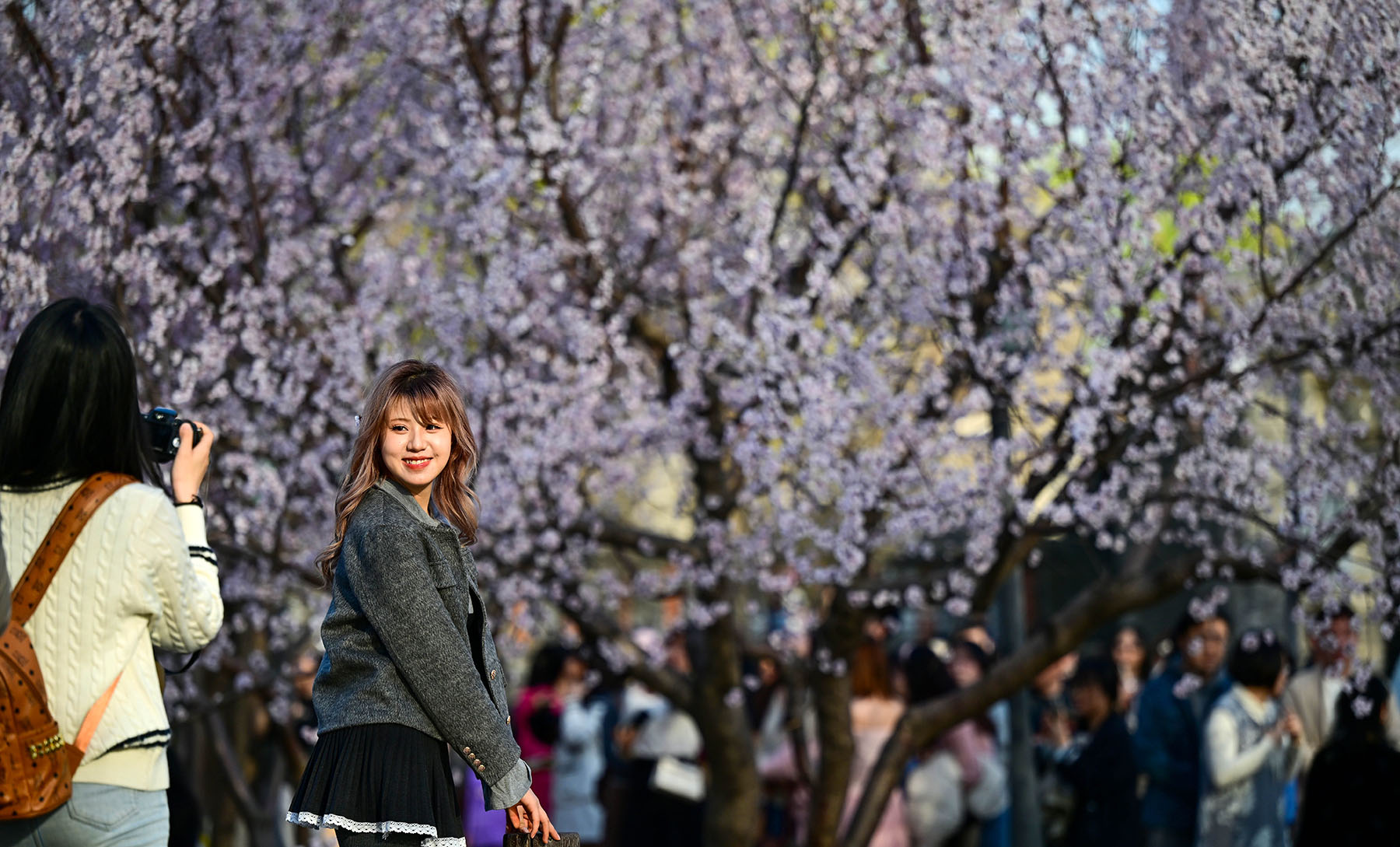
These layered experiences find one of their most concentrated expressions in the western Mentougou district, 25 kilometers from downtown Beijing, encompassing much of the western hills where Prince Kung once lived in seclusion.
"Mentougou's various flower-viewing areas bloom in succession, offering residents an extended spring season," says Guo Jia, an official from the Mentougou bureau of culture and tourism.
In March, winter jasmine in Yongding town blooms first. Along national highways 108 and 109, mountain peaches appear.
Local tourism authorities recommend Miaofengshan town and Tanwang road for photo-taking.
In late March and through April, Tanzhe Temple, founded in the Jin Dynasty (265-420) and one of Beijing's oldest Buddhist temples, is home to magnolia trees approximately 400 years old. Known as "er qiao" magnolias, named after two legendary beauties from the Three Kingdoms period (220-280), their pink and white petals bloom through April, Guo points out.
In mid-to-late April, Jietai Temple, first established in the Tang Dynasty (618-907), is an ideal site for visits as it maintains over 1,000 lilac trees, some dating to the Ming and Qing (1644-1911) dynasties, as well as the peony courtyard containing varieties traceable to Prince Kung's era.
From May onward, crabapple blossoms in Junzhuang town, roses in Mencheng area, peonies in Yongding town, herbaceous peonies in Qingshui town, and apple blossoms in Yanchi town follow in succession.
Blooming landscapes will continue to enrich through June, when the district's Miaofeng Mountain's alpine roses bloom, Guo recommends.
For those who prefer to do more than just drive past these landscapes, Mentougou has opened two designated greenway routes that connect to the ancient temple and surrounding hills.
"It's ideal for cycling, meandering, and experiencing local folk customs," Guo says.
ALSO READ: Blossoms delight
To help visitors navigate these many options, the Beijing culture and tourism bureau has collaborated with Baidu Maps to create a Beijing flower appreciation map.
"We aim to provide more than just navigation — it's one-stop flower appreciation service," says Wang Yixuan, product operations specialist at Baidu Maps. According to Wang, the map integrates blooming time data from the Beijing Meteorological Service, 10 officially recommended routes from the culture and tourism bureau, AI-generated route planning based on user searches for specific flowers and locations, and location data for parking, charging, gas stations, and public restrooms near viewing areas.
According to Wang, similar seasonal features have previously generated millions of daily clicks during peak periods. On social platforms, including Xiaohongshu (RedNote), users have begun sharing their experiences using the map.
When explaining the map cooperation, Zhang, with the culture and tourism bureau, says that the goal is to "present various lifestyle scenes integrating Beijing's culture, commerce, tourism, sports, and exhibitions, bringing more beauty and aesthetic value to everyone's spring life".
The city's cultural and tourism officials promise that the flower appreciation season extends a standing invitation to visitors: dismount, savor, and find beauty and stories in each flower.
Contact the writer at yangfeiyue@chinadaily.com.cn
