

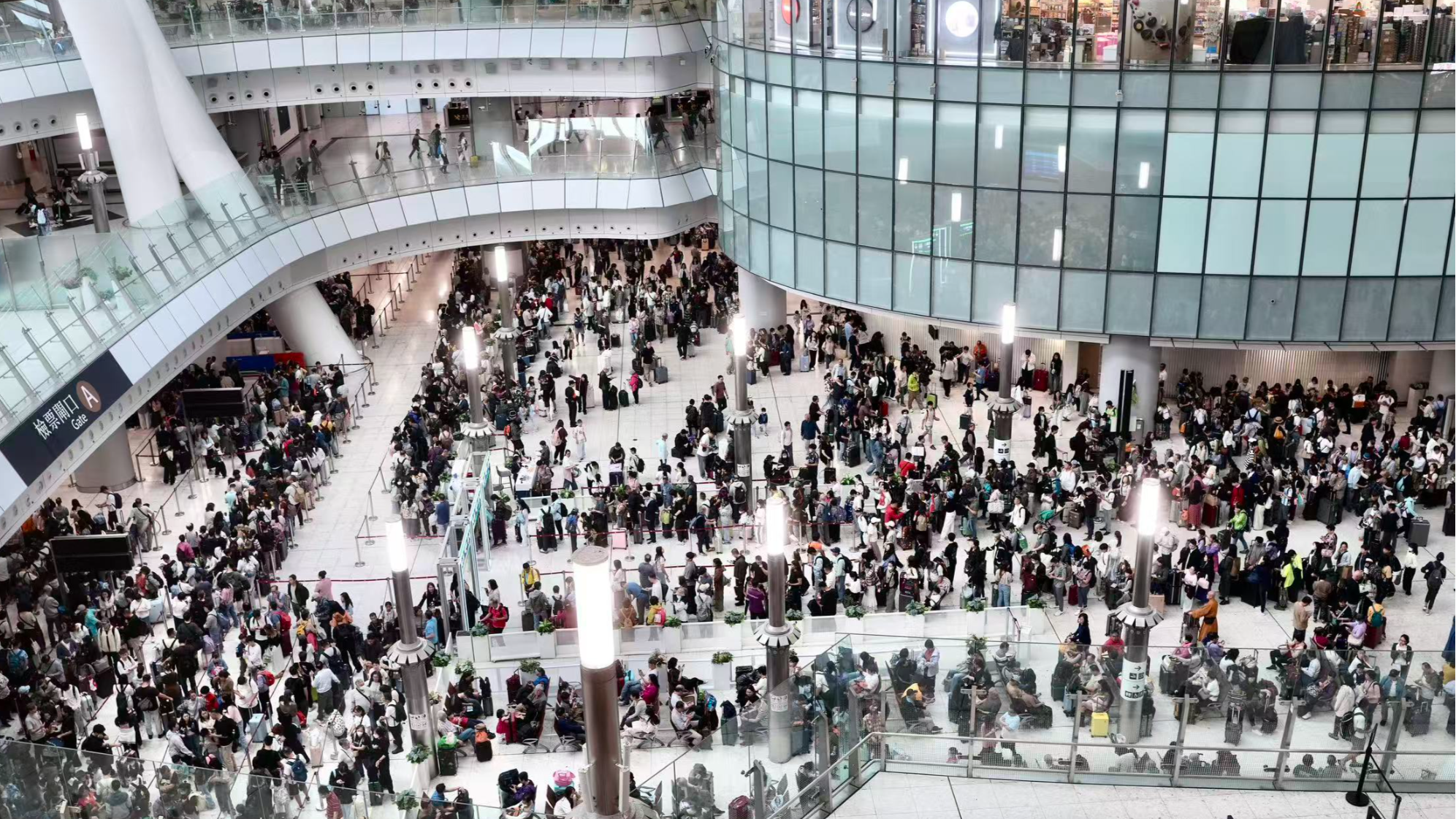
Hong Kong’s tourism sector has noted a growing appetite for high-speed rail travel and foreign cuisine among inbound and outbound holidaymakers during the five-day Easter and Qingming holiday breaks from Friday to Tuesday.
Running from Friday to Tuesday, the holiday saw 6.27 million inbound and outbound passenger trips, a 28.2 percent increase over last year’s four-day Easter holiday, from April 18 to 21.
The crossings included 335,000 arrivals made by Chinese mainland tourists during the mainland’s three-day Qingming break, from Saturday to Monday.
The Hong Kong-Zhuhai-Macao Bridge’s boundary inspection station reported 29,800 vehicle crossings on Monday — the highest single-day total since the bridge opened in 2018. Of these, 17,900 were small passenger cars with a Hong Kong license plate, also setting daily records.
ALSO READ: Hong Kong-Zhuhai-Macao Bridge sees record daily vehicle flow
Over the break, more than 2.37 million trips were made by Hong Kong residents departing the city, with about 80 percent — more than 1.8 million — traveling to the mainland via land or sea checkpoints.
Lo Wu and the Lok Ma Chau Spur Line were the busiest border points, while the Hong Kong West Kowloon Railway Station was also noticeably crowded.
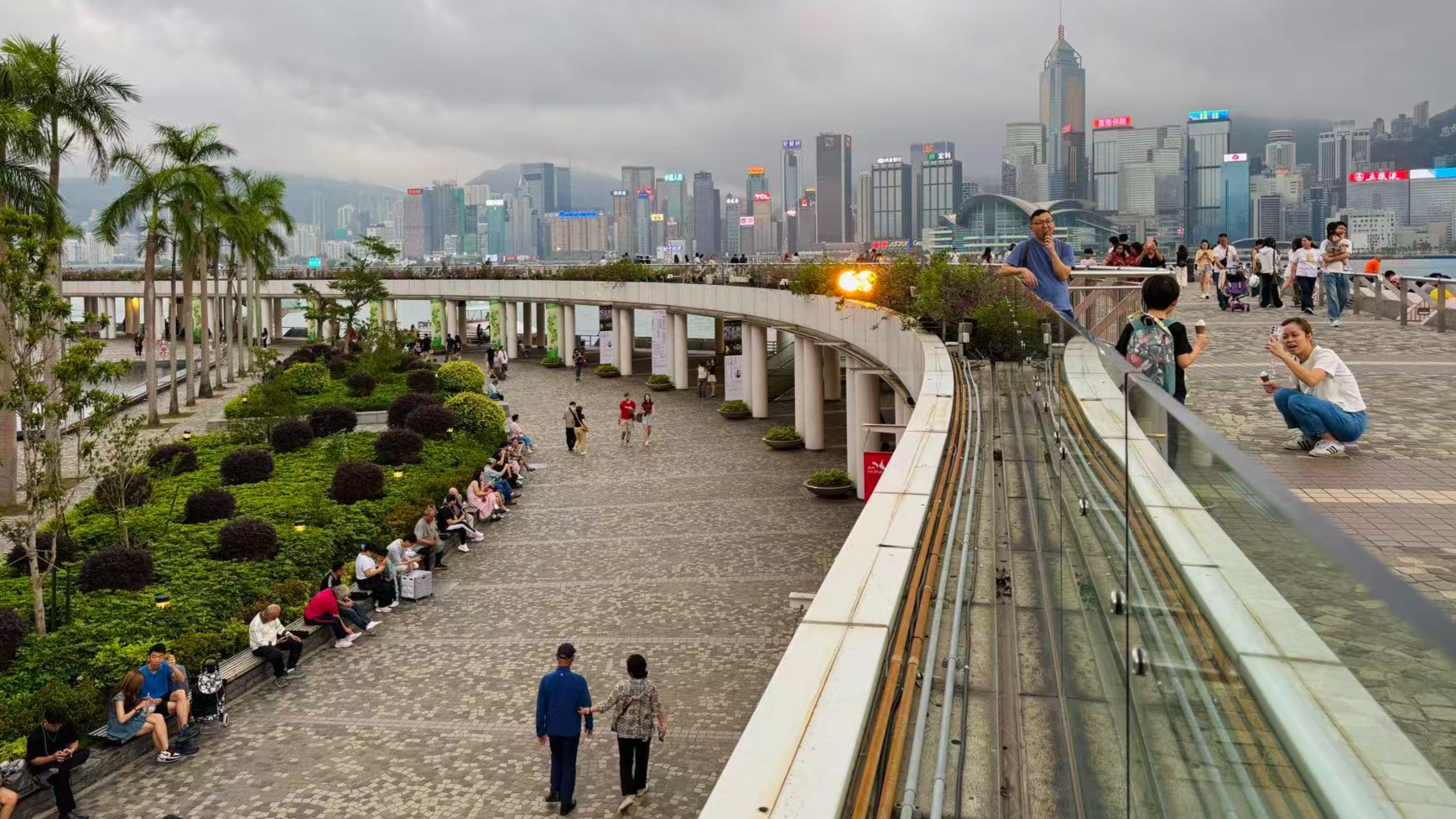
Timothy Chui Ting-pong, executive director of the Hong Kong Tourism Association, said the number of local tour groups heading to the mainland during the holiday spiked by 30 percent year-on-year.
He said local travelers’ interest in high-speed rail trips has grown significantly, particularly on long-haul routes.
Guizhou, Fujian, Hunan provinces, the Guangxi Zhuang autonomous region, and the Chaoshan area in Guangdong province were the top high-speed rail destinations for Hong Kong travelers, Chui said.
He attributed the shift partly to recent geopolitical tensions in the Middle East and limited flight options to Europe, while an improving economy and stronger consumer sentiment encouraged Hong Kong residents to explore the mainland.
Bullet trains have also brought in travelers. Chui said many high-speed rail trains from the mainland to Hong Kong were fully booked, with large numbers of tourists from Guangdong and Guangxi visiting the city.
He said he believes that Hong Kong’s tapestry of dining, shopping and entertainment remains the main draw for mainland visitors, especially those on short trips.
Edward Leung Hei, chairman of the Hong Kong Feast and Retreat Association and a former lawmaker, told China Daily that Easter is usually a slack season for local hotels and restaurants, as many residents leave the city. However, this year, the overlap of the Easter, Qingming, and spring break holidays has helped offset the spending loss from outbound travel, Leung said.
Leung said that hotel rates rose 15 to 20 percent over the break, with occupancy exceeding 90 percent and some hotels fully booked.
The catering sector, however, had mixed results. While some restaurants saw a dip in guest numbers, those serving foreign cuisine outperformed the broader market, Leung said. Some high-end foreign cuisine restaurants recorded single- to double-digit growth, he added.
Looking ahead, Leung said he hopes for a steady, “wave-after-wave” of major events, combined with holidays, to sustain growth in Hong Kong’s tourism-related industries. He highlighted the upcoming Rugby Sevens tournament, to be held from April 17-19, as a key catalyst to boost tourism.
Leung is also optimistic about the Labor Day holiday in May, which he expects to attract over 1 million arrivals.
He called on local authorities to deliver more mature and thorough coordination for major events, including crowd and traffic management, to fully unleash Hong Kong’s potential as a premier events destination.
Contact the writer at amberwu@chinadailyhk.com
