

BERLIN - One month after the United States and Israel launched military strikes on Iran, rising energy prices and supply risks are rippling through Europe's economies.
Oil and gas prices have surged, shipping routes have been disrupted, and power markets are tightening, adding to inflationary pressure and weighing on industry and households.
Analysts observe that these developments underscore Europe's vulnerability regarding imported energy, placing significant strain on both its economic resilience and its green transition strategy.
Soaring energy prices
Escalating tensions in the Middle East have driven a sharp rise in energy prices, despite coordinated efforts by the International Energy Agency to release strategic oil reserves.
ALSO READ: Iran thanks China for emergency aid
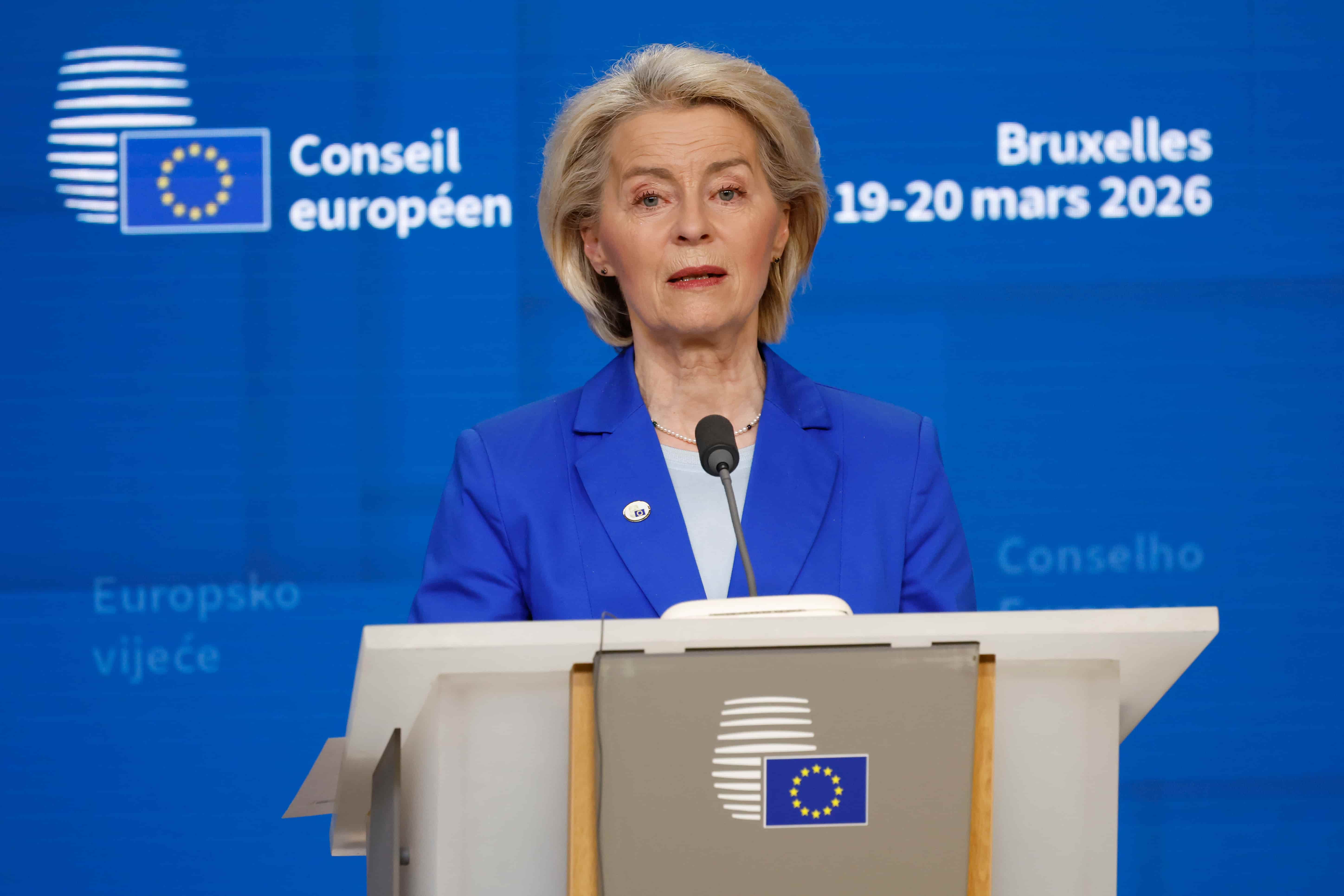
European Commission President Ursula von der Leyen said the European Union's bill for oil and gas imports had increased by around 6 billion euros ($6.42 billion) since the conflict began.
Benchmark Dutch TTF natural gas futures, Europe's main pricing reference, have jumped nearly 80 percent over the past month, while Brent crude futures in London have surged by more than 40 percent.
The rise in gas prices is particularly significant for Europe, where electricity prices are closely tied to gas markets. Goldman Sachs Co-Head of Global Commodities Research Daan Struyven estimated that around 60 percent of European power prices are linked to natural gas, increasing the region's exposure to energy shocks.
Economic forecasts are being revised. The Organisation for Economic Co-operation and Development (OECD) on Thursday cut its euro zone growth forecast for this year to 0.8 percent and raised its inflation outlook to 2.6 percent. The European Central Bank also lowered its growth projection to 0.9 percent while lifting its inflation forecast to around 2.6 percent.
More worrying for policymakers is a potential shift from price pressures to supply risks. Shell CEO Wael Sawan warned that Europe could face fuel shortages within weeks if disruptions to Middle East oil flows persist. Germany's economy and energy minister, Katherina Reiche, said energy supply pressures could intensify between late April and May if the conflict drags on.
Strained industrial sector
Europe's industrial sector, already strained by high energy costs following the phase-out of Russian gas after the Ukraine crisis, is facing renewed pressure.
READ MORE: Economists cut ASEAN-6 GDP growth amid Mideast conflict
Oil is not only a key transport fuel but also a critical industrial input. Rising prices are pushing up logistics costs while feeding through into manufacturing via raw material channels, weighing on energy-intensive sectors.
At the same time, European companies are contending with lingering US tariff pressures and weak external demand, creating a combination of headwinds that is tightening operating conditions across manufacturing.
At the macro level, economists warned that elevated energy prices and supply uncertainty could have a systemic impact on Europe's industrial base, particularly in Germany and Italy.
European Central Bank President Christine Lagarde said firms could respond faster to rising costs from the Iran-related oil shock, reflecting recent experience with inflation since the Ukraine crisis.
"The response of firms and workers may be faster than last time. We have a more recent memory of high inflation, which could affect how quickly costs are passed on," she said.
At the sector level, agriculture, chemicals and automotive industries are among the hardest hit. Carsten Brzeski, global head of macro at ING Research, noted that these sectors face a "multi-layered squeeze" as rising energy costs add to pressure from tariffs and weak demand.
ALSO READ: Putin: It's hard to predict consequences of Mideast conflict
Companies are already feeling the impact. Lorenzo Poli, CEO of Italian paper producer Cartiere Saci, said rising energy costs were being passed on to end products, potentially affecting everyday goods such as paper products. Axel Ebbecke, CEO of Germany's A. Ebbecke Verfahrenstechnik, said shipping disruptions had forced companies to reroute cargo around the Cape of Good Hope, increasing transport costs by about 40 percent.
Struggling households
Higher energy prices are also weighing on households, raising spending on transport and utilities and squeezing disposable income.
Samina Sultan, an economist at the German Economic Institute, said that sectors such as baking and dairy processing are facing upward price pressure, while higher feed costs could push up meat prices.
Governments across Europe have responded with emergency measures. Spain introduced a 5 billion-euro ($5.35 billion) package including energy tax cuts and subsidies for transport and agriculture. Italy implemented fuel tax reductions, Poland plans to cut fuel VAT, and Serbia reduced excise duties on crude oil by a cumulative 60 percent.
Meanwhile, high energy prices are accelerating interest in renewable alternatives. Greg Jackson, CEO of Britain's Octopus Energy, said sales of solar panels and heat pumps had risen significantly since the conflict began. Data from German online car marketplace mobile.de shows the share of electric vehicles in user searches climbed from 12 percent to 36 percent since early March, with similar trends emerging in France.
According to analysts, fiscal measures had cushioned the immediate impact but were straining public finances. They noted that repeated shocks, from the Ukraine crisis to the current Middle East conflict, were exposing Europe's reliance on imported energy and pushing policymakers to reconsider the balance between energy security, industrial competitiveness and the green transition.
