

Attacks across region see Indonesia condemning killing of peacekeepers amid Israeli campaign in Lebanon
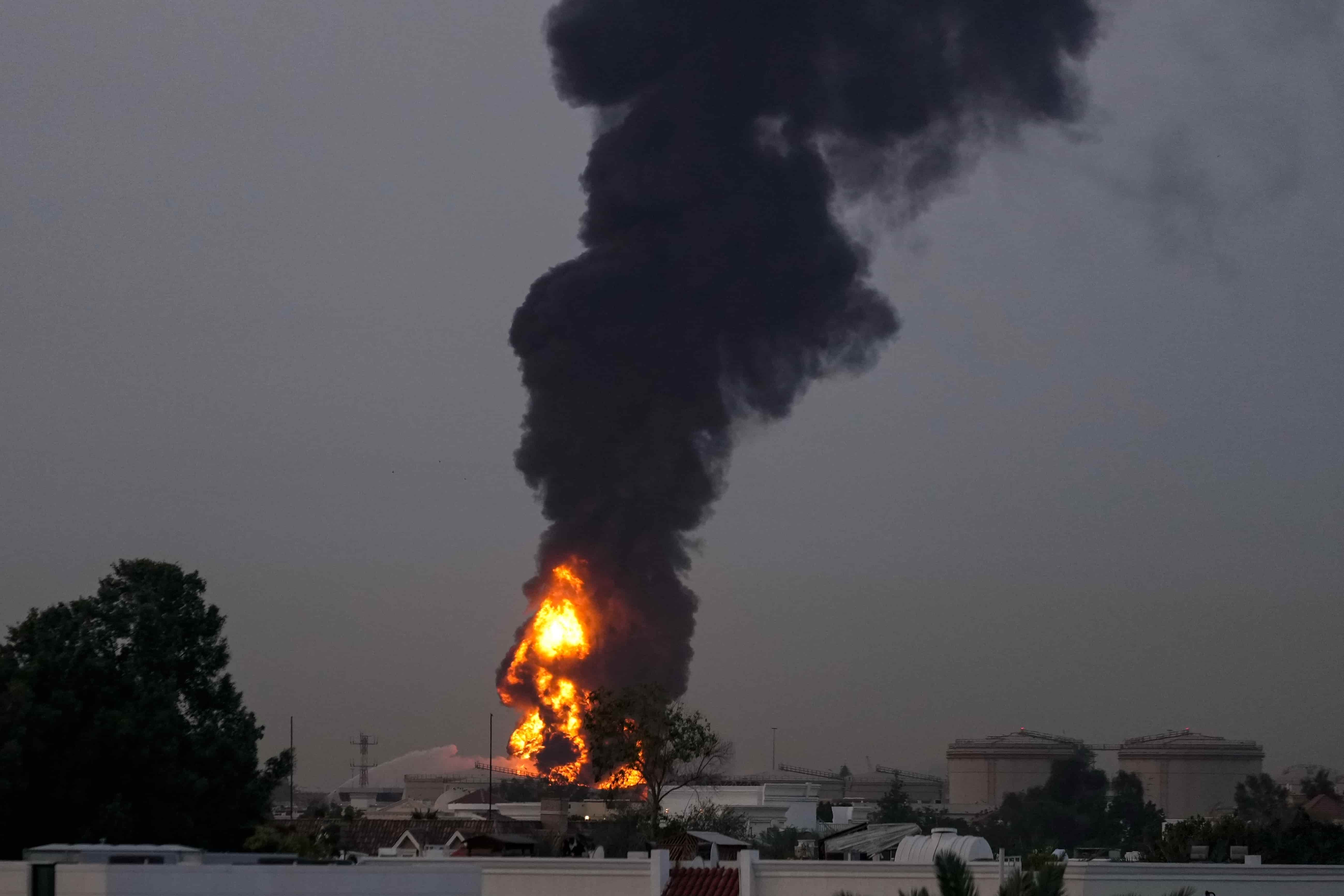
Fighting in the Middle East intensified on multiple fronts on March 31 with the region waking up to the possibility of an oil spill following an attack on a fully loaded Kuwaiti oil tanker at the Dubai Port.
The tanker, Al Salmi, which was docked at the port in the United Arab Emirates, caught fire after being attacked by Iranian forces on March 31 at about 12.10 am local time, the Kuwait Petroleum Corporation said in a press statement. Emergency services and firefighters were dispatched to help bring the situation under control.
The Dubai Media Office said authorities confirmed that response teams had successfully contained the incident involving the Kuwaiti tanker in Dubai waters, with no oil leakage and no injuries reported.
Bahrain, Saudi Arabia, and Qatar also reported intercepting strikes overnight.
In Iran, a wave of military strikes rattled the city in the last 24 hours with the country’s ISNA news agency reporting an attack on the city of Mahallat in Markazi province on March 30, allegedly killing 11 people and injuring 15.
ALSO READ: Palestine blasts Israel's death penalty law targeting West Bank Palestinians
The Iranian Red Crescent Society said its aid workers launched rescue operations in the Iranian capital Tehran and in the northwestern city of Zanjan.
In Israel, eight people were reported injured amid Iran’s missile attack on central Israel, The Times of Israel reported on March 31. Impacts were also reported in Bnei Brak, Ramat Gan, and Petah Tikva, with footage showing cars on fire.
United States Secretary of State Marco Rubio warned Iran of consequences over the closure of the Strait of Hormuz during an interview with Al Jazeera.
He claimed that indirect communication between Tehran and Washington is ongoing through intermediaries and that US President Donald Trump “always prefers diplomacy”.
In an interview with US broadcaster Newsmax, Israeli Prime Minister Benjamin Netanyahu gave no timeline for ending the war, but claimed the mission is at the halfway point.
READ MORE: 2 UN peacekeepers killed, 2 more wounded in explosion near Lebanese town
In Lebanon and beyond, anger erupted following the death of three Indonesian peacekeepers on March 30. The soldiers were part of the Indonesian contingent deployed under the United Nations Interim Force in Lebanon (UNIFIL). France called on the UN for an emergency meeting on March 31.
The Ministry of Foreign Affairs of Indonesia condemned the incidents.
“The recurrence of such heinous attacks against Indonesian peacekeepers within a short span of time is utterly unacceptable,” the ministry said in a statement.
This cannot be treated as an isolated occurrence, but reflects a rapidly deteriorating security environment in southern Lebanon, where ongoing Israeli military operations have placed UN peacekeepers at grave risk, it added.
The ministry mourned the loss of the fallen peacekeepers, and said Indonesia stands in solidarity with their families, while wishing a swift recovery to those injured.
“Indonesia calls for an immediate, thorough, and transparent investigation to establish the facts, including the circumstances and those responsible, and stresses that full accountability must follow,” it added.
READ MORE: Iran threatens retaliation amid fresh wave of Israeli strikes
Dina Yulianti Sulaeman, director of the Indonesia Center for Middle East Studies told China Daily that the killing of Indonesian UN peacekeepers in Lebanon is “dangerous” and it changes the situation.
She said it “demonstrates how the current escalation in the Middle East is no longer limited to direct confrontations between states, but now affects international peacekeeping missions and neutral actors”
Sulaeman said it has impacted public opinion in Indonesia, which is growing increasingly hostile toward the US and Israel.
“The Indonesian government had previously joined the BoP (Board of Peace), expressing its willingness to join the ISF (International Stabilization Force), but this was completely disregarded by the US and Israel. Israel has completely ignored Indonesia's position,” said Sulaeman.
“This tragic incident shows that the US and Israeli aggression on Iran have triggered a chain reaction throughout the region, impacting everyone,” she said.
Sulaeman warned that “serious and just diplomatic intervention” was needed, namely stopping the attacks by the aggressor rather than asking Iran, the victim of the aggression, to stop its resistance and efforts to protect its sovereignty.
Without that, “the conflict could continue to escalate geographically and politically,” she added.
On March 31, Spain announced it has closed its airspace to US planes involved in attacks on Iran, Madrid's Defense Minister Margarita Robles has said.
"We will not authorize the use of Moron and Rota (military bases) for any acts related to the war in Iran," she said, adding that Spain had made this clear to the US government from the beginning.
