

War heightens regional instability, erodes global norms
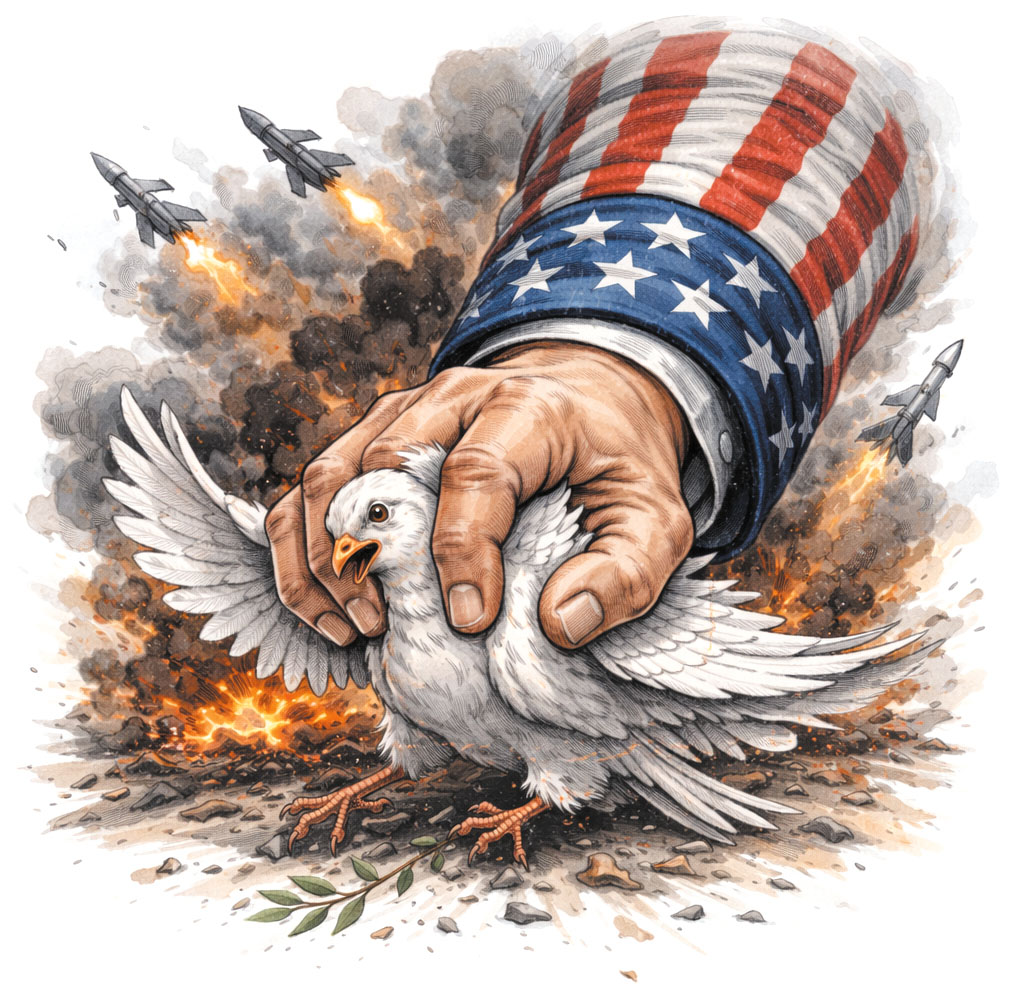
We see an alarming number of Western politicians and media outlets trying to justify the military action by the United States and Israel against Iran. Driven by the self-righteousness we are so familiar with, they believe the US is once again standing up for good in the fight against evil. That is why it is urgently necessary to pause and reflect.
The US and Israel are currently waging war against Iran, justifying this with the latter’s alleged imminent development of nuclear weapons — knowing full well that the accusations are far from the truth. The situation resembles the circumstances that preceded the Iraq war. Once again, it is said that the Iranians must be liberated, and once again, everything must happen quickly.
READ MORE: Iran, US harden their positions as efforts falter
But in Iran, the consequence of this invasion could be even more devastating than in Iraq. The population is twice as large, highly educated, and despite internal tensions, the country is more stable in terms of organization. It has a stronger military, and its political system is unlikely to collapse with the elimination of individual leaders.
While the George W. Bush administration at least claimed to be rebuilding Iraq politically and economically, the actions of the US and Israel today are aimed primarily at destruction from the air.
The outcome of this war is likely to be decided less on the battlefield than by internal political developments in Iran, the US, Israel and neighboring Arab states. In this respect, the US and Israel appear to be at a disadvantage. Their strategy — if one can speak of a strategy at all — is based on a “decapitation strike”.
The hope was that the rapid elimination of the Iranian leadership would lead to massive uprisings in Iran and that parts of the armed forces would switch sides to the insurgents, causing the country to collapse.
Although the decapitation strike appears to have been successful, neither an uprising nor a military coup has occurred. There are no reports of tensions among the numerous centers of power in Iran. With each passing day, the likelihood of an internal uprising or military coup decreases.
Meanwhile, the war is extremely unpopular in the US — especially among Donald Trump voters who trusted his promise that he would not start any new wars. With every new report of destruction, civilian casualties — including more than 160 schoolgirls killed — and fallen US soldiers, domestic political resistance will grow.
The drastic rise in energy prices as a result of the blockade of the Strait of Hormuz is only further dampening support for the war.
The war against Iran began on Feb 28 with a ruthlessness that is hard to surpass. Israel promised negotiations were still ongoing, and Iranian negotiators made significant concessions in Geneva on Feb 26. A senior US government official confirmed that considerable progress had been made. The Omani foreign minister, who acted as mediator, also spoke of a breakthrough. On Feb 27, President Trump stated that he preferred a diplomatic solution to war. However, by that point, the decision to attack the following day must already have been made.
Contrary to all international norms, Israel killed a large part of the Iranian leadership in a massive surprise missile attack — including the religious and state leader and other senior figures. So was it the case, as many observers suspect, that the US and Israel were only pretending to negotiate in order to lull the Iranian government into a false sense of security? Such a move would be a severe breach of trust in the modern world.
This war has not only destroyed trust in the sincerity of the West. It has also gravely ruined international law based on the UN Charter — the very law that the West itself once helped establish. The military action against Iran has proceeded without broad international authorization, and without even the approval of the US Congress, raising serious questions about adherence to principles. Such actions may further erode respect for international law and encourage a global order increasingly shaped by power rather than rules.
ALSO READ: If there's a window of opportunity for peace, it's imperative that it not be squandered
The war will also undermine all efforts to curb the proliferation of nuclear weapons. Although the US and Israel claim that this war is intended to prevent the proliferation of nuclear weapons, they are likely to achieve the opposite in the long term. Their actions will reinforce the conviction in many countries that only the possession of nuclear weapons can protect against such attacks.
The war with Iran already has far-reaching consequences. It has heightened regional instability, strained international security arrangements and raised serious questions about the credibility of diplomatic norms and international law. The conflict is no longer only about military confrontation, given the fact that it is reshaping the political and strategic environment in which the West itself must now operate.
The author is a member of the European Parliament, a former diplomat and the former assistant secretary-general for political and peace-building affairs at the United Nations. The author contributed this article to China Watch, a think tank powered by China Daily.
The views do not necessarily reflect those of China Daily.
