

Foreign diplomats explore provinces, traditions and industries in a program designed to foster connections and showcase the country outside of Beijing, Yang Feiyue reports.
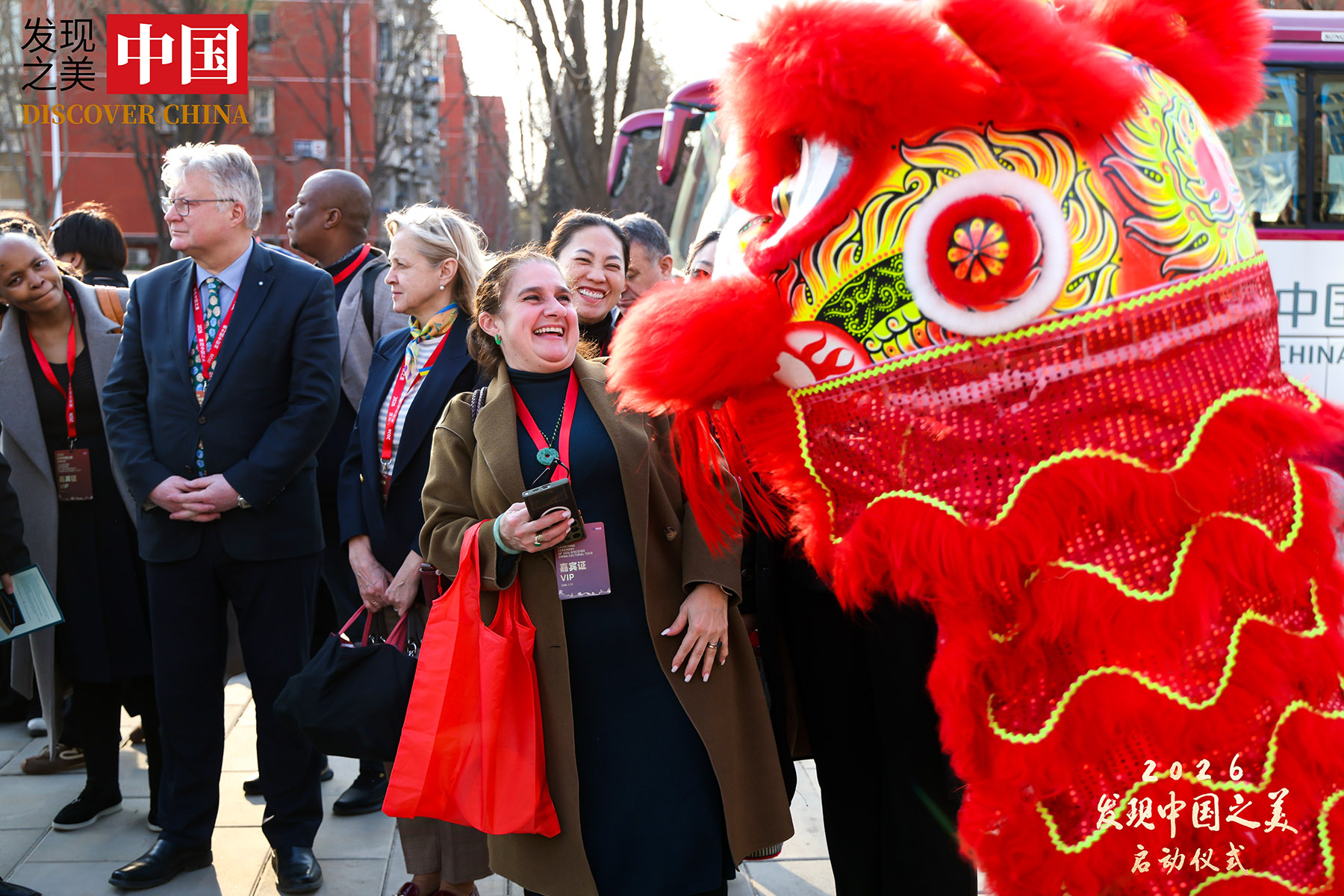
When Paulette Bethel, the Bahamian ambassador to China, recalls her trip to the Inner Mongolia autonomous region last year, her eyes light up.
She was dressed in the robes of a Mongolian princess, and carved the roast lamb that would be served for dinner. She also rode a horse across the grasslands.
"My favorite animal," she says with a smile.
Moments like these have become cherished memories for many foreign envoys who have taken part in Discover China Cultural Tour, a program launched by the Ministry of Culture and Tourism in 2021.
More than 500 diplomats from 107 countries participated in the program, which by the end of 2026 will have covered 24 provincial-level regions.
Beyond being a sightseeing tour, the program is a carefully arranged immersion for diplomats to step outside Beijing and learn about a country that is too often understood only through statistics and briefings, according to the tour organizers.
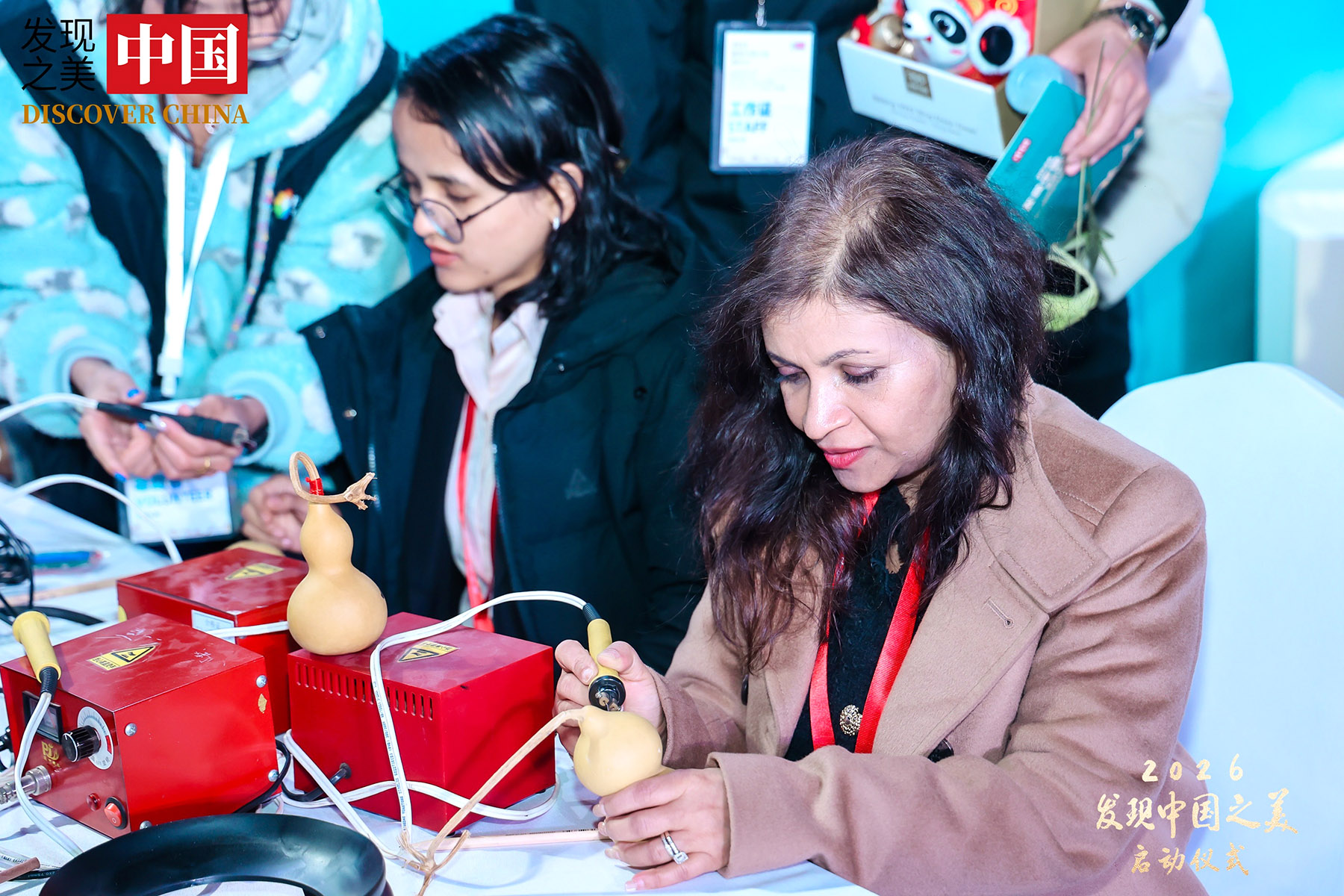
On Friday, the program's 2026 edition was launched in Beijing's Shunyi district, a place known as the home of Beijing Capital International Airport.
Diplomats got a taste of the interplay of ecology, industry, and culture in the district. They visited a car factory, where they walked through the manufacturing floor and watched as vehicles took shape along the assembly line. Outside, test drivers put the cars through their paces — accelerating, reversing, and navigating courses designed to showcase handling and stability.
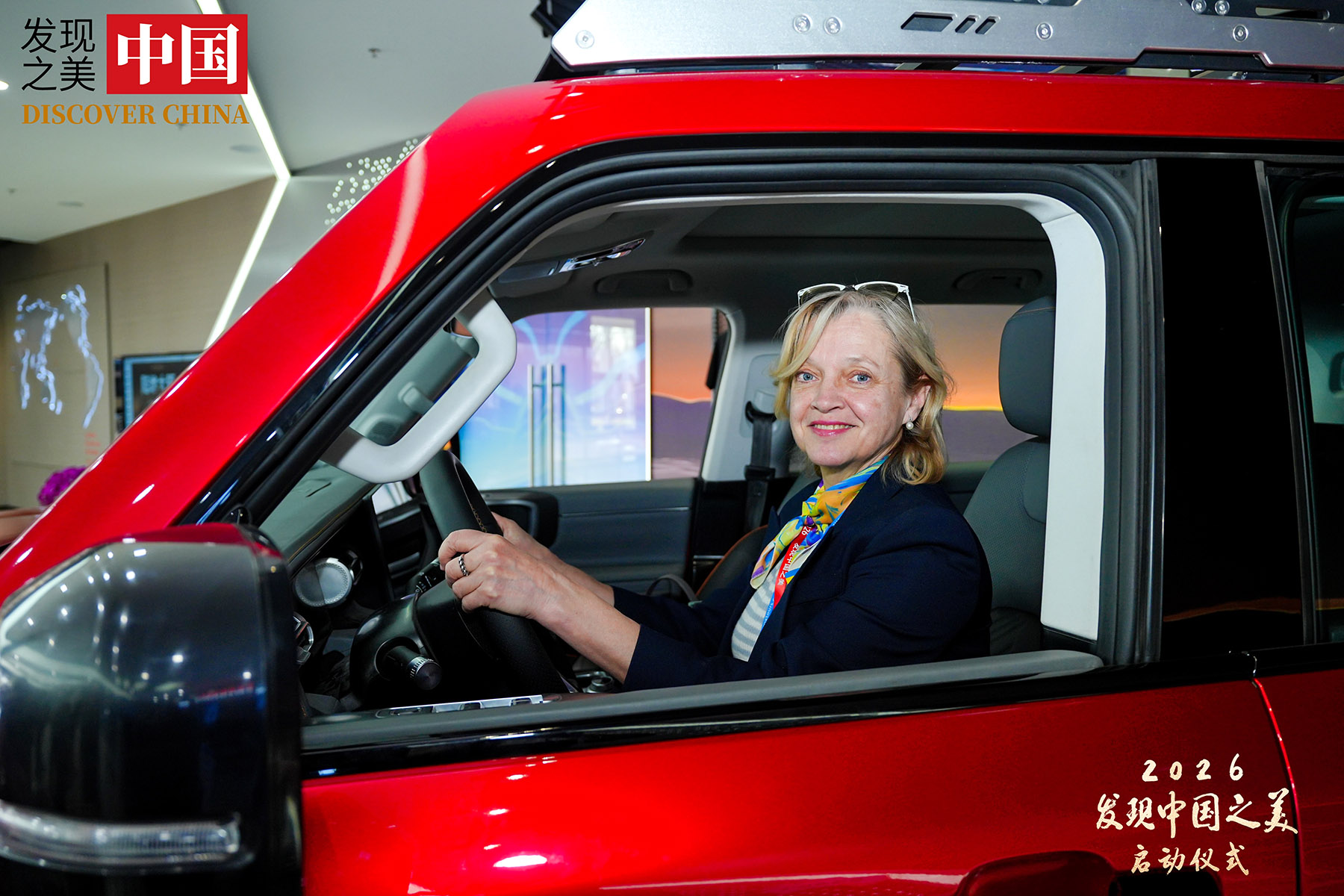
Kimberly Zammit, deputy head of the Maltese embassy in China, admits she was too nervous to take the wheel herself, but she watched with fascination.
"It felt like you were watching a film, or the behind-the-scenes of a film. It was amazing, and they're so big, and all the colors of the cars are so nice," she says.
A liquor distillery also left a strong impression, with the scale of its operation and the artistry of its presentation. The complex felt more like a palace, with its courtyards and pavilions evoking a sense of history, many of the diplomats agreed.
The bottles on display drew as much attention as the liquor inside."We were all telling ourselves that the bottle itself, without the alcohol, must cost a fortune," Zammit recalls.
"All the bottles were so beautiful, so colorful. You could use them as decorations and maybe put flowers in them, like a vase."
As evening fell, the diplomats gathered at the Shunyi District Cultural Center for an exhibition that offered a condensed portrait of a district that styles itself as the nation's front door.
Throughout the exhibition, the diplomats were exposed to a range of experiences: digital installations that brought to life the region's wetlands, waterways, and flower fields; a cultural creativity platform where intangible heritage was reimagined for contemporary life; and displays of electric vehicles, digital-scent film technology, 3D holographic avatars, and cutting-edge medical innovations.
"Green energy should be the future," Zammit says, her eyes on the electric vehicles.
"I believe that whatever China is doing in this field is a great contribution, not only to China, but also to everyone," she adds.
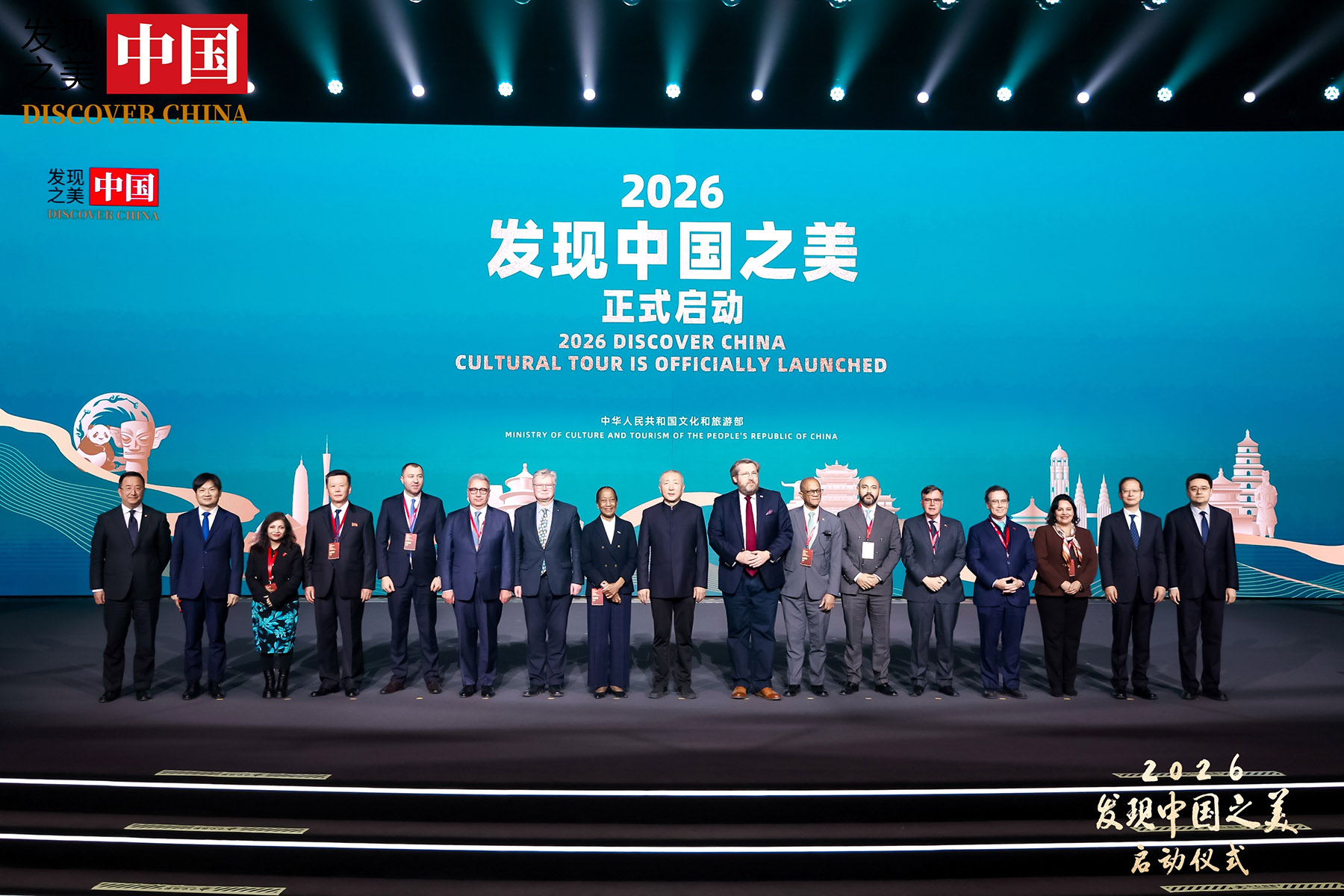
The culture section invited diplomats to try painting and weaving after watching a master of the fire-painted gourd craft demonstrate his art with a heated iron pen, sketching landscapes onto the surface of a dried gourd in a few swift strokes. Nearby, a practitioner of straw weaving, a craft with a history stretching back seven millennia, showed how pliable stalks can be shaped into creatures.
For many of the diplomats, the Discover China tour is not a new concept. Dario Mihelin, the Croatian ambassador, has already been on two trips to Guizhou and Jilin, two provinces that could hardly be more different in climate and terrain.
In Guizhou, he witnessed the village soccer league known as Cun Chao. In Jilin, he stood in the mountains and looked out toward the Chinese border.
"Discover China is a truly amazing program by the Ministry of Culture and Tourism. The whole diplomatic corps greatly appreciates it," Mihelin says.
"It provides us with a wonderful opportunity to get to know parts of China that we don't usually visit, and we find new opportunities for business cooperation, scientific cooperation, and cultural cooperation.
"What this program so elegantly does is merge all these aspects and much more, showcasing the real China outside Beijing."
Anibal Cabral, the Uruguayan ambassador, only arrived in Beijing last October, so everything is still new to him.
"I'm very impressed with the organization of the event," he says after touring the exhibition."Everything has been planned and done with passion."
Cabral has studied the itinerary for this year's program and has already shown an interest in Sichuan province in the southwest.
"You have a very ancient culture, and you keep your traditions, but you also skillfully integrate these with the new and exciting modern China," he says.
Manuel Carvalho, the Portuguese ambassador, who previously served as consul general in Macao and Hong Kong from 2009 to 2013, has been excited about visiting Xi'an, in Shaanxi province, for its historical significance.
"I don't think there is anything else like the Terracotta Warriors," he says, adding that the appeal of Chinese tourism lies in its thousands of years of history, diverse landscapes, and modern technology.
The cultural tour has served as a bridge for human connection, which diplomats agree is the foundation of diplomacy.
"To me, it's really the crux of my job," says Bethel.
"I do believe very firmly that people-to-people diplomacy is really the heart of any type of diplomacy. We get the opportunity to meet people at the very local level and at other levels, to engage with them, and to get to feel a little more of what the country is about, because the country is nothing without the people," she adds.
She considers these cultural tours important opportunities to meet people and to build bridges.
"We're here to expand relationships and deepen friendships, and that's how you do it, person to person," she notes.
In the months ahead, diplomats joining the cultural tour will travel to Beijing, Chongqing, Guangdong, Sichuan, Hubei and Shaanxi. They will walk through cities and villages, through landscapes ancient and new.
Having been in China for two and a half years, Zammit has become, by her own admission, an unofficial promoter of Chinese tourism.
"I feel like they should call me a tourism ambassador for China now, not a Maltese diplomat, because all I do is talk about China," she says with a laugh.
When her friends and family ask about China, she tells them to look beyond the usual destinations.
"When foreigners think of China, they think of Beijing, Shanghai, maybe Hong Kong, and that's it. But if you want something different, you really have to look at the other provinces."
What she values most about the Discover China program is its ability to take her to places she could not reach by herself.
"China is huge, you can't reach everything," she says.
"Even if I've been to a place before, when you travel in a group, you see different things — the niche places that I wouldn't be able to visit on my own."
Contact the writer at yangfeiyue@chinadaily.com.cn
