

Nation aims for balance in solid discarded materials output by 2030

Editor's note: As protection of the planet's flora, fauna and resources becomes increasingly important, China Daily is publishing a series of stories to illustrate the country's commitment to safeguarding the natural world.
China will target a "dynamic balance" between industrial solid waste output and processing capacity in key sectors, as it steps up source reduction and comprehensive utilization to tackle massive historical stockpiles and rapidly accumulating new waste, according to a recent national action plan on solid waste governance.
Unveiled early this year by the State Council, the country's Cabinet, the plan prioritizes the treatment of solid waste that has a direct impact on public health and workplace safety.
It calls for the expedited establishment of a comprehensive, long-term governance framework, alongside resolute measures to curb solid waste growth, with the industrial sector as a key focus of these efforts.
READ MORE: River cleaners keep Yangtze waters clear
By 2030, the annual utilization of bulk solid waste should reach about 4.5 billion metric tons, and the annual volume of recycled major renewable resources should be 510 million tons, per the plan.
In a recent news conference organized by the State Council Information Office, Li Gao, vice-minister of ecology and environment, said more than 11 billion metric tons of solid waste — spanning industrial, construction, household, agricultural, and hazardous categories — is generated in China each year.
In particular, he highlighted the remarkable challenges China faces in managing its growing industrial solid waste.
China's industrial sectors, such as mining, smelting, and power generation, continue to generate vast quantities of solid waste, compounding the challenge of a massive historical stockpile, he stated.
In recent years, he said, traditional utilization channels such as infrastructure construction have contracted, increasing the difficulty of reuse, which in turn has driven a further rise in new accumulations.
"As a result, effective governance must tackle both the legacy of historical stockpiles and the mounting pressure of new waste," he noted.
A preliminary survey by the ministry shows that the cumulative stockpiled industrial solid waste across the country amounts to about 33 billion tons, occupying an area of about 3,500 square kilometers, Li revealed.
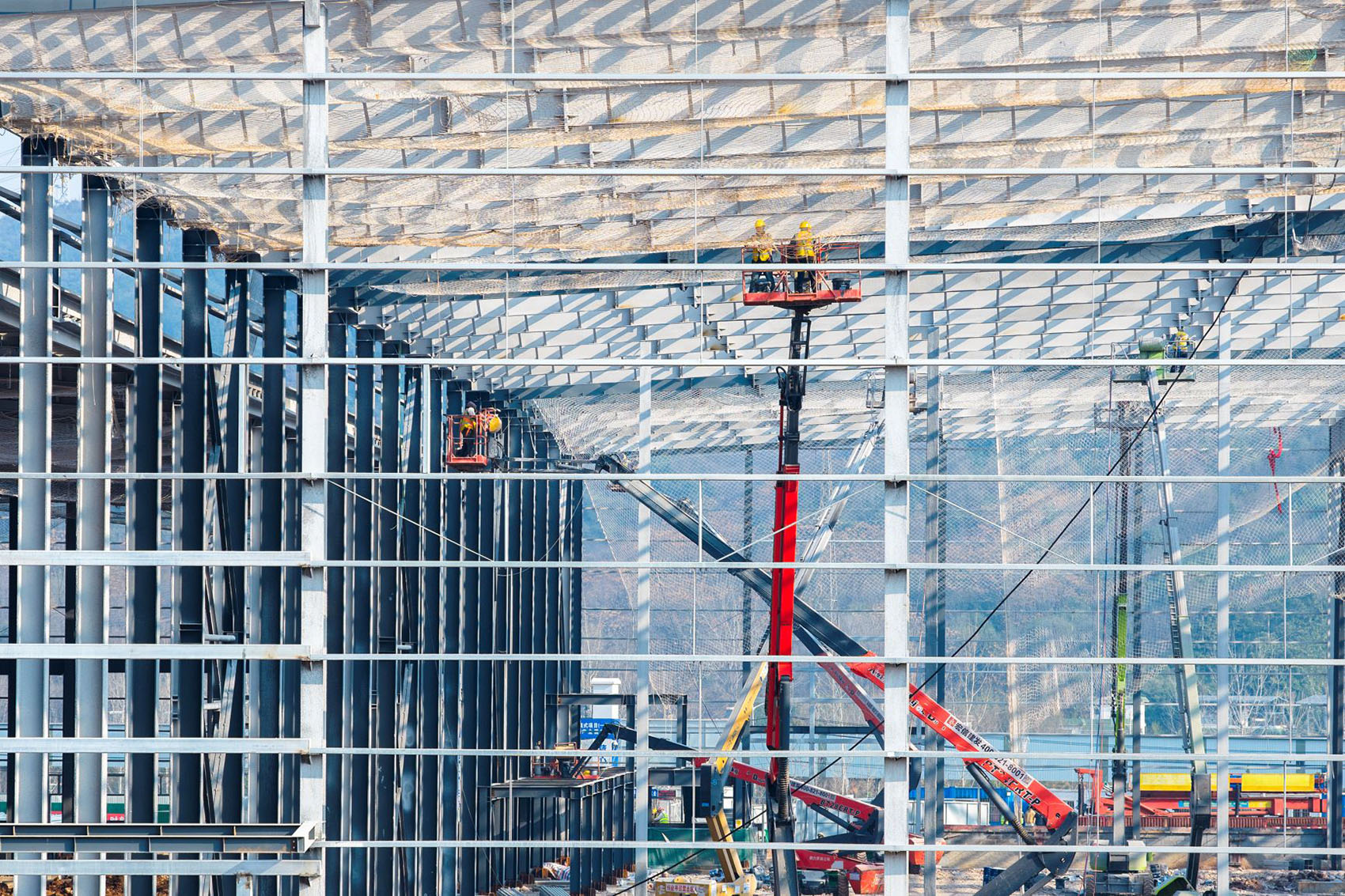
According to the ministry's Solid Waste and Chemicals Management Center, China's comprehensive utilization of non-hazardous industrial solid waste totaled 2.65 billion tons in 2024, representing an increase of 740 million tons from 2012.
"However, compared with the vast and growing generation of non-hazardous industrial solid waste, the amount recovered and productively utilized remains quite limited," the center said in a statement following publication of the action plan.
Each year, nearly 2 billion tons of new bulk industrial solid waste are stockpiled, causing ecological damage and occupying large areas of natural resources, including farmland, forests, and grasslands, it added.
The vice-minister pledged to actively explore new channels for the large-scale disposal and utilization of industrial solid waste while advancing the remediation of historically stockpiled sites.
He stated that the ministry has revised its pollution control standard for the storage and landfilling of nonhazardous industrial solid waste, permitting compliant waste to be used for wall rock filling and for backfilling operations such as the remediation of subsidence areas and pits.
The ministry will continue to guide relevant provinces in conducting pilot projects to use bulk industrial solid waste for the restoration and backfilling of open-pit mines and other sites, Li stated.
He disclosed that large-scale utilization projects have been carried out in the Yellow and Yangtze river basins in 2024.
In nine provincial regions along the Yellow River, 128 projects involving the filling, backfilling, and ecological restoration using coal gangue and coal ash were implemented, achieving a utilization volume of over 100 million tons, he said.
The projects in five provincial regions in the middle and upper reaches of the Yangtze target phosphogypsum, a byproduct of processing phosphate rock into phosphoric acid for fertilizers, he noted. More than 29 million tons of the waste were utilized in 24 projects.
Li revealed that the ministry has so far completed the remediation of safety hazards at over 5,000 tailings ponds, with more than 2,200 of these located in the Yangtze River Economic Belt and the Yellow River Basin.
The ministry will ramp up efforts to investigate and mitigate environmental safety hazards at heavy-metal mines, tailings ponds, waste yards, and hazardous-waste landfills, he noted. For sites that meet environmental standards, it will proactively move to close and cap them, followed by high-standard ecological restoration.
ALSO READ: Recycled products shatter old ideas about ceramic waste
According to the action plan from the State Council, the country aims to remediate at least 60 percent of historically stockpiled solid waste sites by 2030.
While vowing to beef up comprehensive utilization of solid waste, Wang Peng, director-general of the department of energy conservation and comprehensive utilization of the Ministry of Industry and Information Technology, also stressed source reduction as one of his ministry's priorities in its efforts to implement the action plan.
"We will integrate green design at the initial stage of production and implement green manufacturing throughout the entire process to minimize industrial solid waste at the source and improve the overall environmental performance of industrial products," he said.
Focusing on key waste-generating industries such as steel, non-ferrous metals, petrochemicals, and chemicals, the ministry will guide industrial parks and enterprises to implement "zero-waste" transformations to reduce the intensity of solid waste generation and ease its utilization.
Contact the writers at houliqiang@chinadaily.com.cn
