

The Hong Kong Special Administrative Region stands at a pivotal moment in global education. As China’s Belt and Road Initiative (BRI) propels tens of thousands of Chinese families overseas for career or business endeavors, a pressing challenge emerges: How can their children preserve their cultural roots while studying foreign curricula? Establishing an international network of schools based on the Hong Kong Diploma of Secondary Education (DSE) offers a bold solution, blending Chinese heritage with global standards to fill this critical gap.
 Keep ‘China in their hearts’
International schools originated to serve expatriate families, allowing children to follow home curricula abroad for smooth repatriation. The United Kingdom, the United States, France and Germany built thriving networks on this model. China’s rise has created a new diaspora. Overseas Chinese professionals and entrepreneurs fuel global growth but face a problem: Their children must adopt Western systems like the International Baccalaureate (IB), A-levels, or Advanced Placement, severing ties with Chinese knowledge and identity.
An overseas Hong Kong Diploma of Secondary Education network directly addresses this, creating an “educational haven” where students study abroad yet keep “China in their hearts”. Rooted in Hong Kong’s bilingual system, the HKDSE ensures cultural continuity while preparing young people for worldwide opportunities.
The HKDSE stands out as the only globally recognized high school qualification led by a Chinese society. Its “bilingual emphasis” and “international vision” leverage Hong Kong’s unique language competitiveness — a rare fusion of Chinese fluency and Western proficiency that no other city matches.
Students can study most subjects — including mathematics, physics, and chemistry — in Chinese (traditional or simplified), except English. This eliminates language barriers that hinder depth of thought in Western curricula, letting Chinese-speaking students think critically in their mother tongue. Meanwhile, HKDSE’s rigorous English component meets top university standards in Europe and America.
Hong Kong’s edge lies in its societal bilingualism — 95 percent of residents speak Cantonese, over 50 percent are fluent in English, and Mandarin proficiency surges among young people. This produces graduates who navigate boardrooms in Beijing, London, or Silicon Valley with equal ease. Unlike monolingual systems, the HKDSE builds “code-switching” mastery — seamless shifts between languages and cultures — giving students a 21st-century advantage in global commerce, diplomacy, and technology. As the Chinese mainland’s economy demands bilingual talent, the HKDSE provides this competitiveness, positioning overseas Chinese young people to lead in a multipolar world.
Bridge to China's higher education boom
Global education flows shift toward China. Hong Kong and the mainland, especially the Guangdong-Hong Kong-Macao Greater Bay Area, attract overseas Chinese and international students with great prospects. HKDSE schools will serve as vital bridges.
The HKDSE favors nonnative English speakers, earning full recognition from English-speaking nations without cultural biases plaguing the IB or A-levels. It fairly assesses ability, removing “glass ceilings” for Asian and non-Western youth.
In a multipolar world, cultural confidence defines power. By anchoring overseas Chinese youth to their roots while unleashing bilingual global potential, this network makes “studying abroad, heart with China” a reality. Hong Kong must seize this, contributing uniquely to the nation and world
Hong Kong’s experts master Western assessments and Chinese essence, embedding advanced Chinese as a second language (CSL) within the HKDSE. Beyond basic “survival Chinese”, it dives into literature and society, building academic proficiency for mainland or Hong Kong universities.
We enter a new “era of China”. Global Chinese learning has professionalized, building on Confucius Institutes’ success. The Chinese world needs standards akin to the International English Language Testing System (IELTS) or the Test of English as a Foreign Language — tools of Anglo-American soft power.
Overseas HKDSE schools pivot this vision. Adding CSL to the HKDSE could evolve it into a global Chinese proficiency benchmark, open to all, certifying academic Chinese for non-speakers like IELTS does for English. This transcends education; it’s cultural strategy.
Strategic vision: HK's cultural soft power
The goal: To plant HKDSE schools in BRI-participating and Association of Southeast Asian Nations countries, rivaling IB or A-levels internationally. Integrating CSL drives this, envisioning non-Chinese students worldwide embracing HKDSE.
Hong Kong’s language competitiveness amplifies impact. As a superconnector, it nurtures global talent, sets Chinese education rules, and exports culture. This leverages its trilingual ecosystem — where professionals fluidly handle English contracts, Mandarin negotiations, and Cantonese networks — to build nation-level influence.
Critics may question geopolitics. Yet adaptable hubs like London and New York thrived through change; Hong Kong’s education model can too. With policy support — reforms, incentives, connectivity — HKDSE networks will flourish.
In a multipolar world, cultural confidence defines power. By anchoring overseas Chinese youth to their roots while unleashing bilingual global potential, this network makes “studying abroad, heart with China” a reality. Hong Kong must seize this, contributing uniquely to the nation and world.
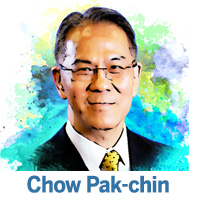
Chow Pak-chin is a member of the Chief Executive’s Policy Unit Expert Group, and an honorary associate professor at the University of Hong Kong.
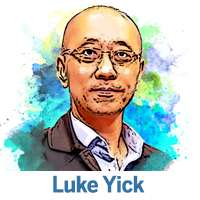
Luke Yick is president of the HKU Education Alumni Foundation and founder and former CEO of an education enterprise.
The views do not necessarily reflect those of China Daily.
