

SARs must leverage 5-year plan to boost high-quality growth, says Ding
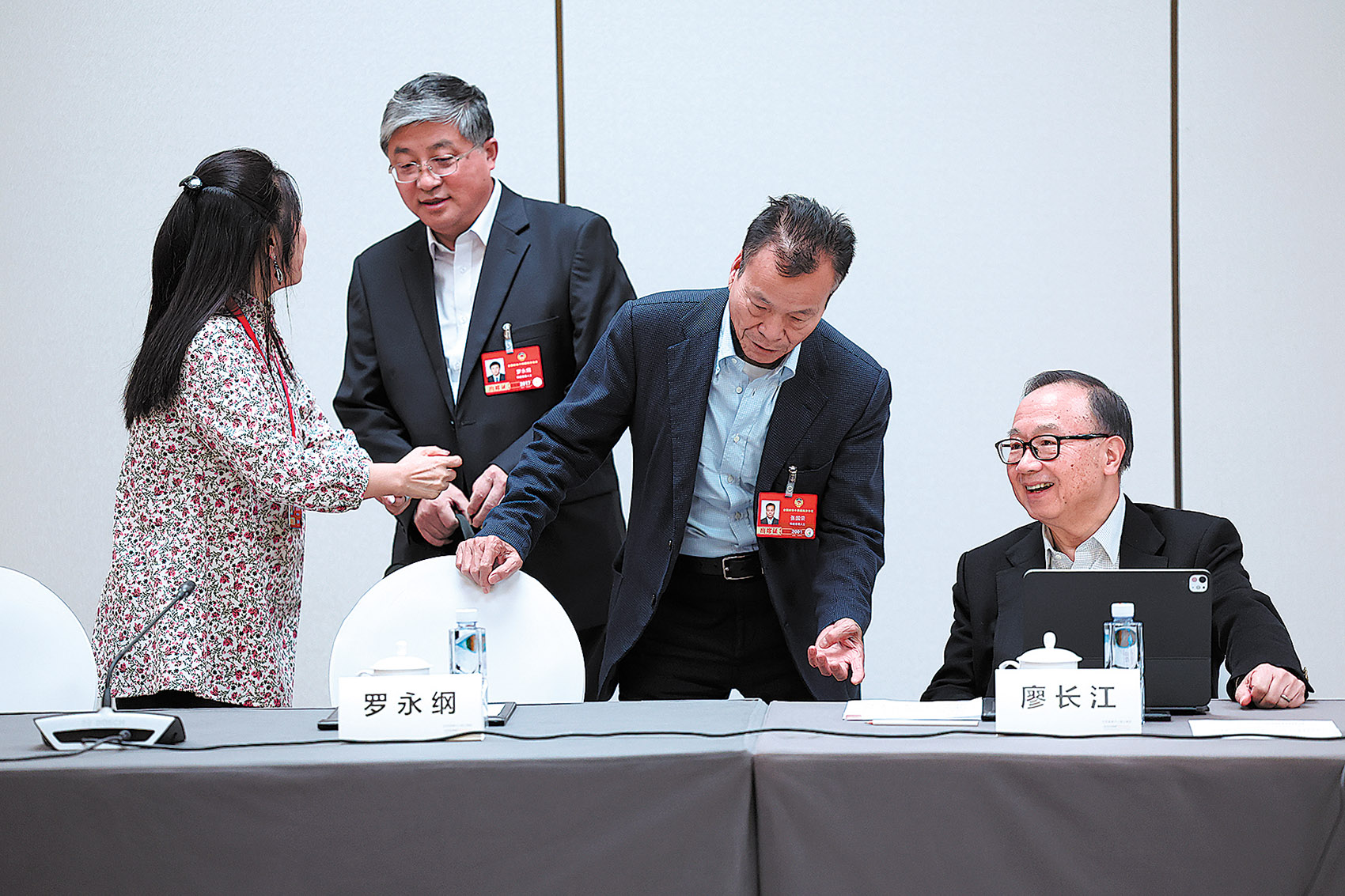
Vice-Premier Ding Xuexiang called on the Hong Kong and Macao special administrative regions (SARs) to capitalize on the significant opportunities presented by the country’s 15th Five-Year Plan (2026-30) and make solid efforts toward high-quality economic development.
Ding, a member of the Standing Committee of the Political Bureau of the Communist Party of China Central Committee, made the remarks on March 6 during a joint meeting with national political advisers from the two SARs at the fourth session of the 14th National Committee of the Chinese People’s Political Consultative Conference.
He said that both the SARs had made comprehensive progress across various fields over the past year, and that they are in their best period of development.
The comments followed Premier Li Qiang’s Government Work Report on March 5, which highlighted the central government’s support for Hong Kong and Macao to better integrate into and contribute to the nation’s overall development. The report also pledged to develop the Guangdong-Hong Kong-Macao Greater Bay Area into an international center for scientific and technological innovation.
Jonathan Choi Koon-shum, a member of the Standing Committee of the National Committee of the CPPCC, said in an interview with China Daily that Ding outlined five expectations for the two SARs during the meeting, including calling for various sectors in Hong Kong, particularly the business community, to offer suggestions for the formulation and implementation of the city’s first five-year plan.
Choi said Ding also encouraged Hong Kong and Macao to accelerate the development of new quality productive forces and to strengthen cooperation with the Chinese mainland in areas such as artificial intelligence, big data, and biomedicine.
According to Choi, Ding said he hoped that Hong Kong would leverage its unique position of being backed by the motherland while connected to the world and play a stronger role in the Belt and Road Initiative.
Ding was also quoted as calling for support for Hong Kong SAR’s executive-led governance and the SAR government’s law-based administration, which is essential for its stability and prosperity.
Melissa Kaye Pang, a member of the CPPCC National Committee and former president of the Law Society of Hong Kong, said Ding highlighted the need to promote high-quality economic growth, focusing particular attention on major innovation hubs.
Samuel Yung Wing-ki, another member of the CPPCC National Committee from Hong Kong, said Ding cares deeply about the two SARs. “I’m confident that the Hong Kong SAR government will respond proactively to future challenges and development needs,” Yung said.
He cited Ding as noting that in 2025, despite facing numerous external challenges, the nation delivered a remarkable trade performance. Data released by the General Administration of Customs showed that China’s foreign trade expanded 3.8 percent year-on-year in yuan terms in 2025.
Participants said six CPPCC National Committee members from Hong Kong and Macao addressed the meeting. Their speeches focused on topics including promoting Hong Kong’s development as an international education hub, enhancing the city’s technological innovation service capacity, and positioning Macao as an important window for international cultural and people-to-people exchanges.
Contact the writers at irisli@chinadailyhk.com
