

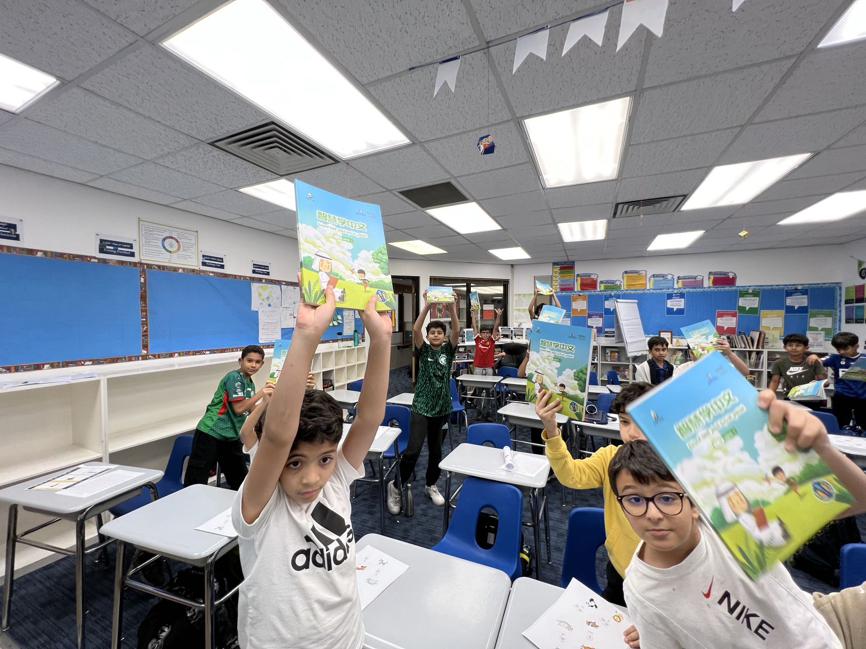
As global demand for learning the Chinese language grows alongside China's expanding economic ties, Zhang Shirong, a deputy to the 14th National People's Congress, is calling for an overhaul of how the language is promoted abroad, adding that the next phase of international Chinese education must "move faster, become more localized and make better use of technology".
Zhang, who is also the co-founder of Wisdom House, a cultural communications group, said the rapid growth in demand — particularly in countries participating in the Belt and Road Initiative — is exposing structural gaps in teaching resources, coordination mechanisms and teacher training.
"Chinese carries thousands of years of civilization and is an important cultural product that China shares with the world," Zhang said on the sidelines of the recently concluded two sessions. "As international exchanges deepen, we need a more effective system to support Chinese education globally."
Technology, he said, should play a larger role.
READ MORE: Law aimed at bolstering standard Chinese language education passed
Artificial intelligence and digital learning tools are rapidly transforming global education, allowing students to access interactive lessons, personalized exercises and immersive language environments.
The NPC deputy from the Ningxia Hui autonomous region said international Chinese education should accelerate the use of such technologies to create more engaging learning experiences.
"AI and digital platforms can redesign teaching scenarios and provide personalized learning paths," he said. "This is especially important for attracting younger learners."
Currently, many government scholarships are granted before students arrive in China. Zhang suggested shifting part of the funding to a performance-based system, with financial support distributed according to students' academic results, language proficiency and practical achievements during their studies.
"The goal is to encourage continuous effort and improve learning outcomes," Zhang said.
He also proposed linking major international competitions with scholarships or internship opportunities to create stronger incentives for talented students to pursue Chinese studies.
Localization of teaching materials will also be essential, Zhang said.
He called for the development of country-specific textbooks and digital content tailored to different cultural contexts, incorporating elements of contemporary Chinese culture alongside local themes.
Supporting resources could include digital courseware, gamified classrooms, virtual language environments and graded reading materials.
"Different countries have different learning habits," Zhang said. "Teaching materials should reflect those differences."
ALSO READ: New Sino-British study program begins
China's international Chinese education sector is undergoing a transition from rapid expansion to higher-quality development, policymakers say. While interest in the language continues to grow, Zhang said existing systems have struggled to keep pace with demand in many parts of the world.
Ultimately, Zhang said, international Chinese education should be seen not only as a cultural project but also as a strategic component of China's global engagement.
"As China's cooperation with the world deepens, language becomes an important channel for mutual understanding," he said.
Through learning language, Zhang added, students from foreign countries can gain a clearer understanding of contemporary China and develop a deeper appreciation of other cultures.
Contact the writers at chengyu@chinadaily.com.cn
