

Relics found in Turpan reveal that multiple ethnicities coexisted along the ancient Silk Road, report Wang Ru in Beijing and Mao Weihua in Urumqi.
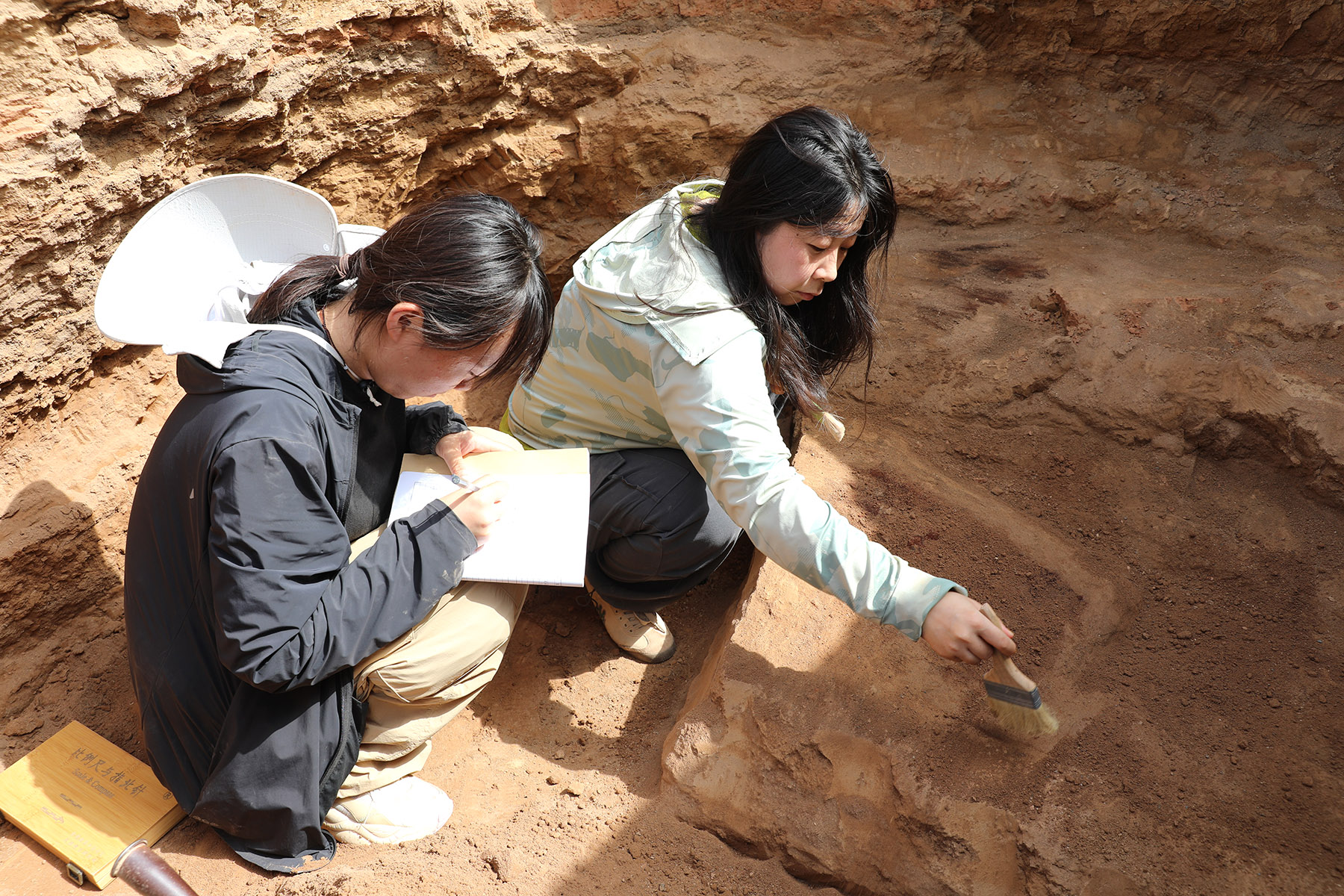
A Tang Dynasty (618-907) high official's tomb has emerged from the sands of Turpan in the Xinjiang Uygur autonomous region, with his vibrant afterlife still intact. Archaeologists announced the discovery at the Badam East cemetery site, which includes a rare painted wooden coffin base adorned with vividly colored winged beasts — a fantastical blend of Western imagery and China's Central Plains' burial traditions. The unearthing offers new proof of cultural communication and integration along the ancient Silk Road.
The spotlight recently turned to the site as archaeologists' efforts there made it one of the top six archaeological discoveries in China in 2025, as announced earlier this year by the Institute of Archaeology with the Chinese Academy of Social Sciences in Beijing.
From 2022 to 2025, archaeologists at the Xinjiang Institute of Cultural Relics and Archaeology excavated 18 tombs from the Sixteen Kingdoms period (304-439) and nine from the Tang Dynasty, uncovering more than 600 various cultural relics. The relics offer a valuable glimpse into Xiyu, or the Western Regions, a historical term used to describe present-day Xinjiang and Central Asia, from the Jin (265-420) to the Tang dynasties.
READ MORE: Xinjiang's sands reveal fascinating finds
According to Shang Yuping, the lead archaeologist at the site, the biggest discovery this time is a tomb they named M20 (No 20 tomb), which yields a rarely seen complete set of wooden facilities in the tomb, including a couch, a coffin, a folding screen, boxes, and a rack.
Shang says the burial assemblage of this kind reflects a funerary tradition rooted in the ritual system of the Zhou Dynasty (c. 11th century-256 BC), typically reserved for tombs of high-ranking officials or members of the royal family, rather than ordinary people. This suggests that the tomb owner must be someone of a high social status.
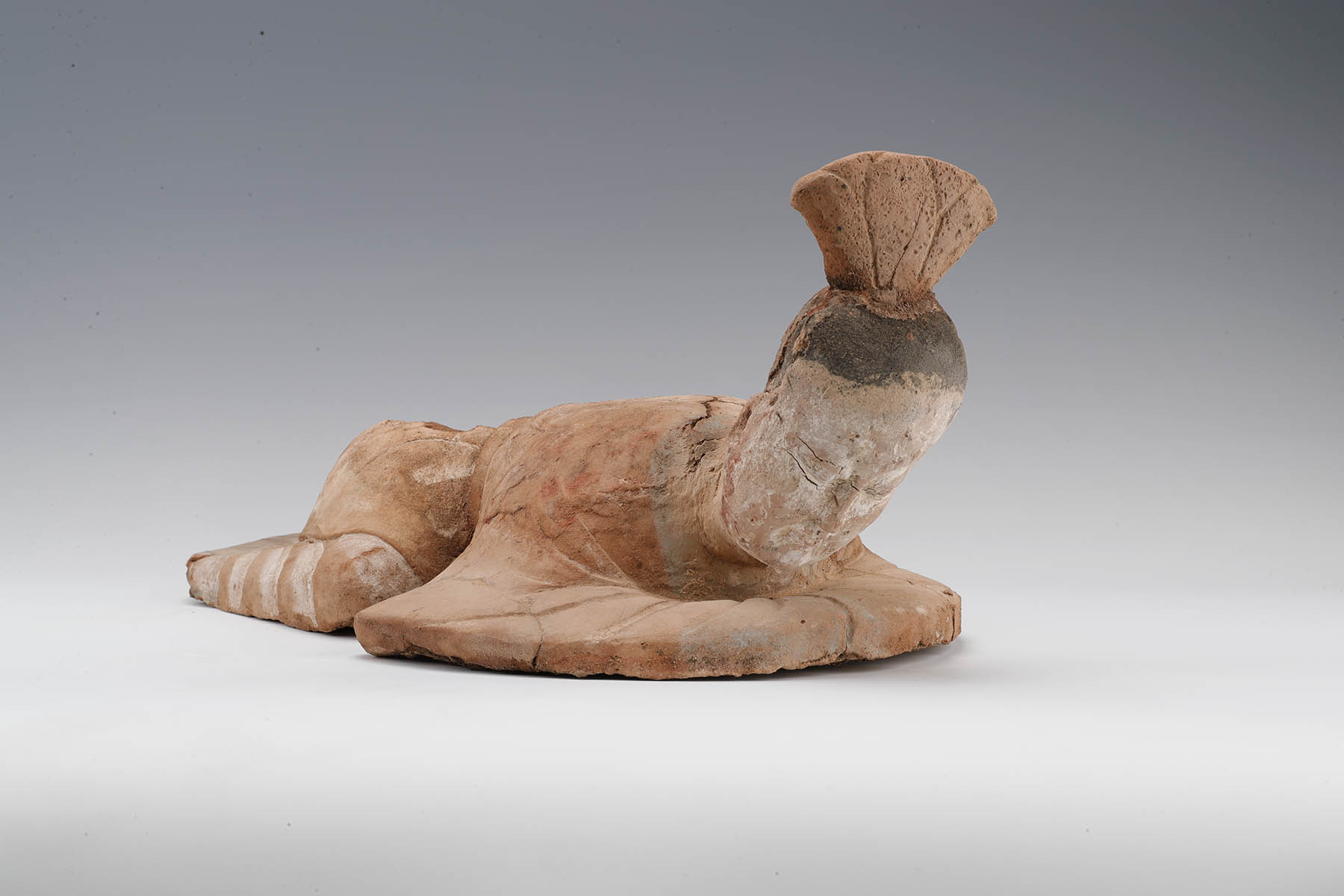
The wooden couch, which features a desk, a wooden plate, a pen-holder, and a ceramic inkstone, closely resembles the wooden couch depicted in an ancient painting from the Northern Qi Dynasty (550-577) and shows scenes from the tomb occupants' life, says Shang.
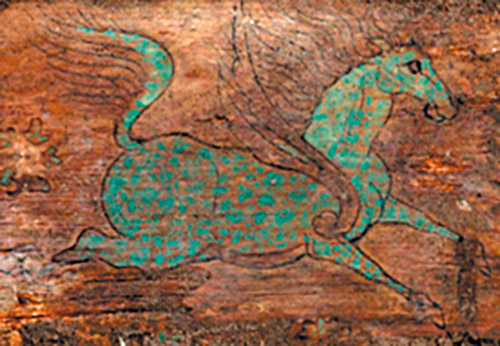
On the base of the wooden coffin are paintings of 12 auspicious beasts, including a winged lion and a celestial horse, which differ from each other but share a similar style featuring wings, wide-open mouths, elongated tongues, and four sharp claws.
"The animals appear to be flying. The lines and colors were painted with such fluid precision — possibly in a single pass — that some experts believe they could have been the work of skilled court painters from the Tang period," says Shang, who adds that the patterns may symbolize blessings for the dead to ascend to immortality.
Scholars say the celestial horse may be traced to the Byzantine Empire (4th-15th centuries), and the winged lion also came from the West. But Shang points out they all show a mighty, dynamic style, complying with the aesthetic value of China's Central Plains, possibly indicating mutual influence and learning in ancient times.
"Ritual traditions from China's Central Plains, Xiyu's local spiritual images and exotic cultural elements can all be found in this set of wooden facilities, vividly demonstrating the pluralistic and inclusive features of Chinese civilization," says Shen Ruiwen, an archaeology professor at Peking University.
Since the deceased was buried with his head facing west, a burial custom commonly associated with non-Han groups, Shang says they believe the owner may be someone of high social status from an ethnic group that might have been honored by Tang rulers for his contributions. Therefore, the tomb embodies a blend of cultural elements from both China's Central Plains and local ethnic traditions.
Traces of cultural exchanges can also be found throughout other tombs. For example, people have found many coins from the cemetery, including the Kaiyuan Tongbao, a popular Tang Dynasty coin from China's Central Plains; Persian silver coins; Byzantine gold coins; and others from Central Asia, indicating the flourishing trade that once took place in Turpan.
Historically, Turpan was an important intersection on the ancient Silk Road. These discoveries are a testimony to the prosperous trade and cultural exchanges in the area during the Tang Dynasty, says Shang.
Archaeologists also find that the burial practice of placing a coin in the deceased's mouth was common. This is a time-honored tradition from China's Central Plains, dating back to the Neolithic era, over 4,000 years ago.
Mysterious artifacts also include some wooden and iron ground certificates — pieces of wood or iron with words used as certificates for the dead's land acquisition in the afterlife. The tradition of burying them in tombs is believed to be closely related to Taoism, providing evidence of its spread in Turpan at that time.
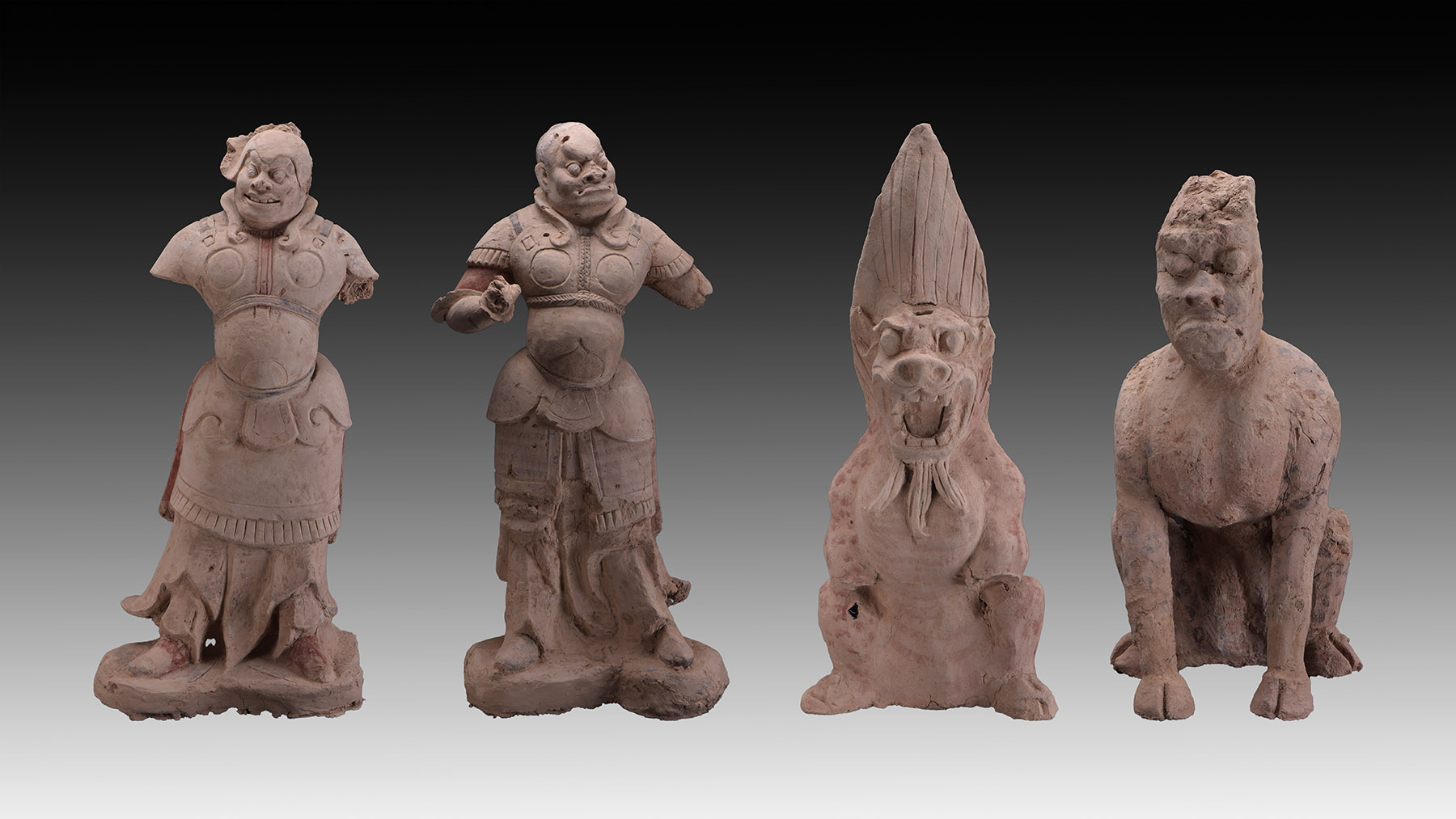
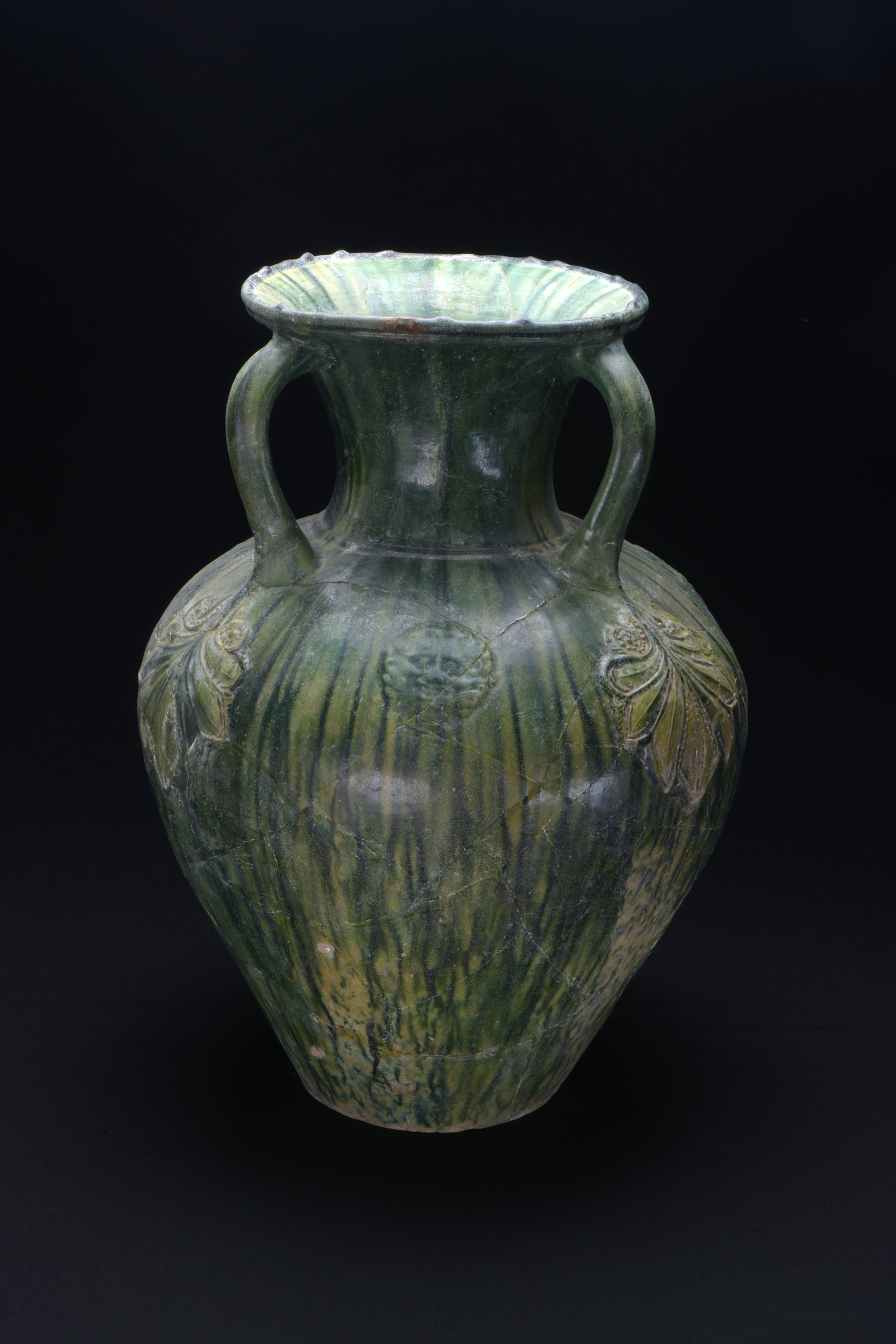
Moreover, burnished artifacts with gold and silver inlay, which were luxuries during the Tang period, Central Asia-style jars and Sogdian burial traditions are also found in different tombs in the cemetery.
Although many of the tomb occupants' identities remain unknown, archaeologists have confirmed two as Tang Dynasty senior officials, Cheng Huan and Li Chonghui, based on tomb epitaphs.
The inscriptions show both officials, who are not recorded in historical literature, served in Xiyu even after the An-Shi Rebellion (755-763), an event traditionally linked to the dynasty's decline.
"The titles of emperors' reigns, the officials' ways of ascending in their careers, and some administrative systems recorded in the epitaphs all follow the same patterns with those found in China's Central Plains, providing precious evidence of the Tang government's continued administrative presence in the region during a period with limited historical records," says Shang.
Based on Li's epitaph, archaeologists discover that he was born into an aristocratic family that produced many high-level officials in the Sui (581-618) and Tang periods.
"Li's epitaph records that he admired the ambition of Ban Chao, a diplomat from the Eastern Han Dynasty (25-220) who re-opened the ancient Silk Road and safeguarded the frontier. This reflects Li's commitment to protecting his motherland and defending its borders. Despite being born into a prominent family, he did not choose a life of leisure," says Shang, adding that in history books and archaeological efforts, they have discovered many individuals from China's Central Plains who, like Li, dedicated themselves to defending the frontier in Xinjiang.
Guo Wu, an archaeologist with the Chinese Academy of Social Sciences, says Turpan is known as a paradise for his peers, as its dry climate has contributed to preserving numerous cultural relics from different eras, similar to a time capsule.
"Government documents were often issued nationwide, so similar ones can sometimes be found in different places. What makes Turpan special is that it preserves texts that have been lost elsewhere," says Guo.
ALSO READ: Excavations highlight ethnic diversity
Shang says the cemetery is only five kilometers from the Gaochang (Qocho) city ruins, where descendants of soldiers and officials dispatched to the area during the Han Dynasty (206 BC-AD 220), and many other ethnic people resided during the Tang era. Along with the nearby Astana cemetery site, the Badam East cemetery was a public burial ground for residents of the city.
People have found many cultural relics from the Astana cemetery site, particularly a large amount of paper relics, forming a distinctive discipline named Turpan studies. The Badam East site was discovered later when local people irrigated vineyards, says Guo.
"The yield of artifacts fills in many blanks for the first time," says Shang. "It offers a panoramic view of how multiple ethnic groups coexisted and communicated in Xiyu, laying a foundation for understanding the formation of China as a united country with ethnic diversity."
Contact the writers at wangru1@chinadaily.com.cn
