

Beijing's ancient alleyways offer a serene, historical escape from fast-paced urban life
In the early morning light, Zhuanta Hutong comes to life. Narrow alleys glow with soft sunlight, casting long shadows across brick walls. The scent of street food mingles with the hum of daily life, as old bicycle carts rattle past small courtyards and laundry sways in the breeze.
Yue Haizhou, who has worked in the neighborhood's management department for more than two decades, enjoys walking through the lanes and witnessing their vibrant pulse, as she has done for years.
But for Yue, a Beijing native who grew up in the hutong, this is more than just a neighborhood. "It is a journey through Beijing's soul," she said. "Every step feels like a conversation with the city's heart."
READ MORE: Hutong keeps books alive
Tucked beneath Beijing's towering modern skyscrapers, Zhuanta Hutong stands as one of the oldest and most historically significant lanes in the capital city. This narrow alley is the only one in Beijing to have a documented history spanning three dynasties: Yuan (1271-1368), Ming (1368-1644) and Qing (1644-1911). In fact, it is often referred to as "the root of the hutong", serving as a living testament to Beijing's deep history.
The hutong is not just about ancient architecture, but also the stories of influential people who once lived there, including Yuan Dynasty playwright Guan Hanqing and esteemed writer Lu Xun, a leading figure in modern Chinese literature.
"For those eager to see beneath the surface of Beijing's modern life, there's no better place to start than here," said Yue, guiding visitors to the alley's hidden treasures.
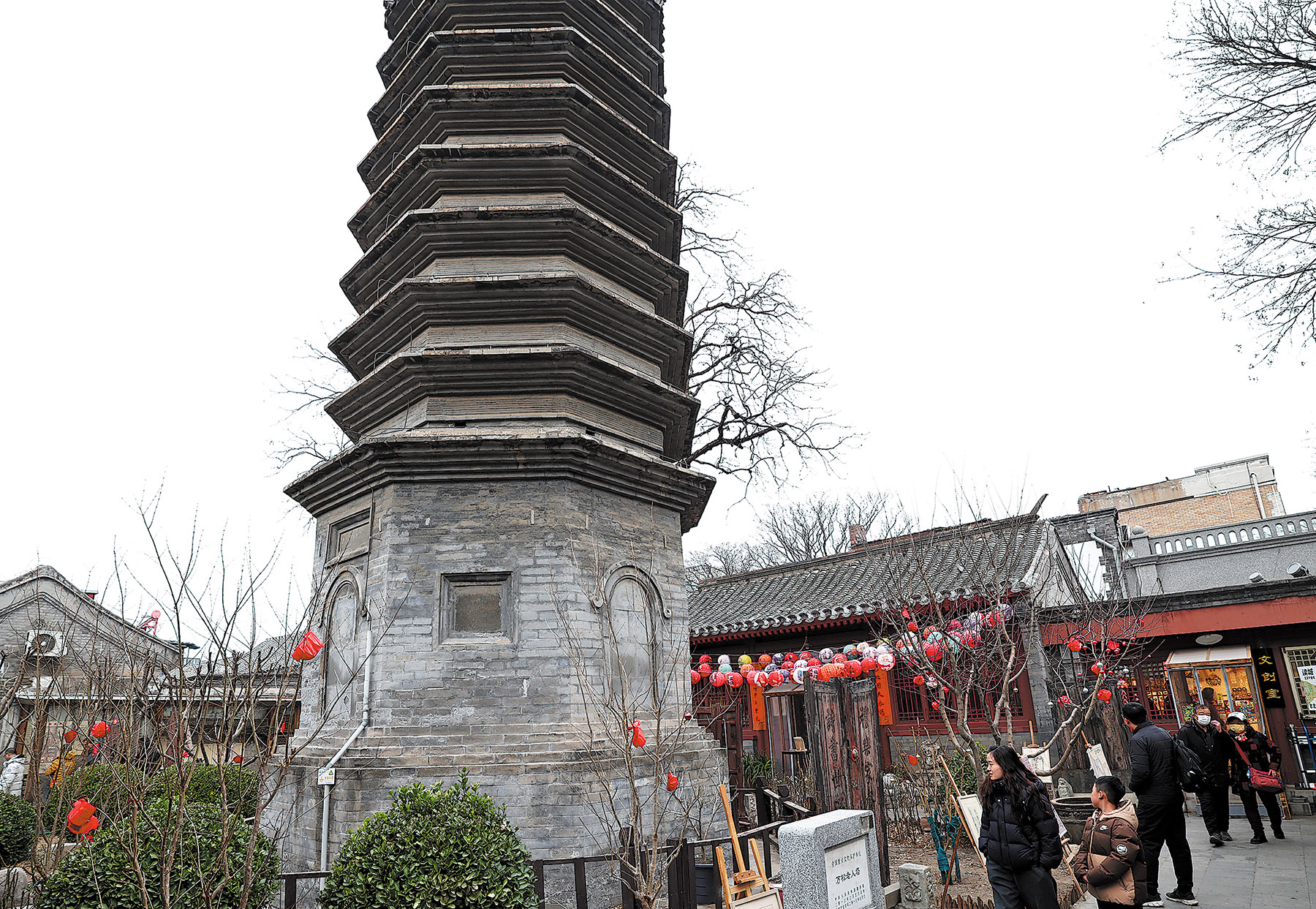
One of them, located at the eastern entrance of Zhuanta Hutong, is the Zhengyang Bookstore. The bookstore, steeped in history itself, specializes in books about the history of Beijing and is famous for the Wansong Elder Pagoda — a nine-tiered brick structure that dates back to the Yuan Dynasty, nestled quietly in the yard.
In November, the Beijing "Root of Hutong" Cultural Experience Center opened in Zhuanta Hutong in the city's Xicheng district. With its tea-scented air and handcrafted souvenirs inspired by traditional courtyard designs, the center provides visitors with a tactile connection to the hutong's past. The second floor is an exhibition space, and the terrace on the top floor offers a panoramic view of the area's rooftops with their curved eaves.
"It's a new hot spot for both locals and tourists," said Pei Chen, general manager of the hutong renewal project.
ALSO READ: Residents feel the benefits of hutong revamps
Despite Beijing's rapid development, the sense of community in the hutong remains strong. Pei, who grew up in the city's ancient alleyways, reflected on one of their most enduring charms — the community spirit. "In the hutong, neighbors know each other. There's a real sense of intimacy here that's hard to find in today's cities. It's a rare and valuable quality in a fast-moving world," he said.
"When you walk these lanes, you're connecting with a community that has endured for centuries. Perhaps you'll leave with a book, or maybe just a deeper sense of connection to a city that has always evolved, but remains deeply rooted in its past," he added.
Contact the writers at chennan@chinadaily.com.cn
