

Beyond lecture halls, learning journeys bring different worlds closer, shaping perspectives through shared experiences in a rapidly changing China.
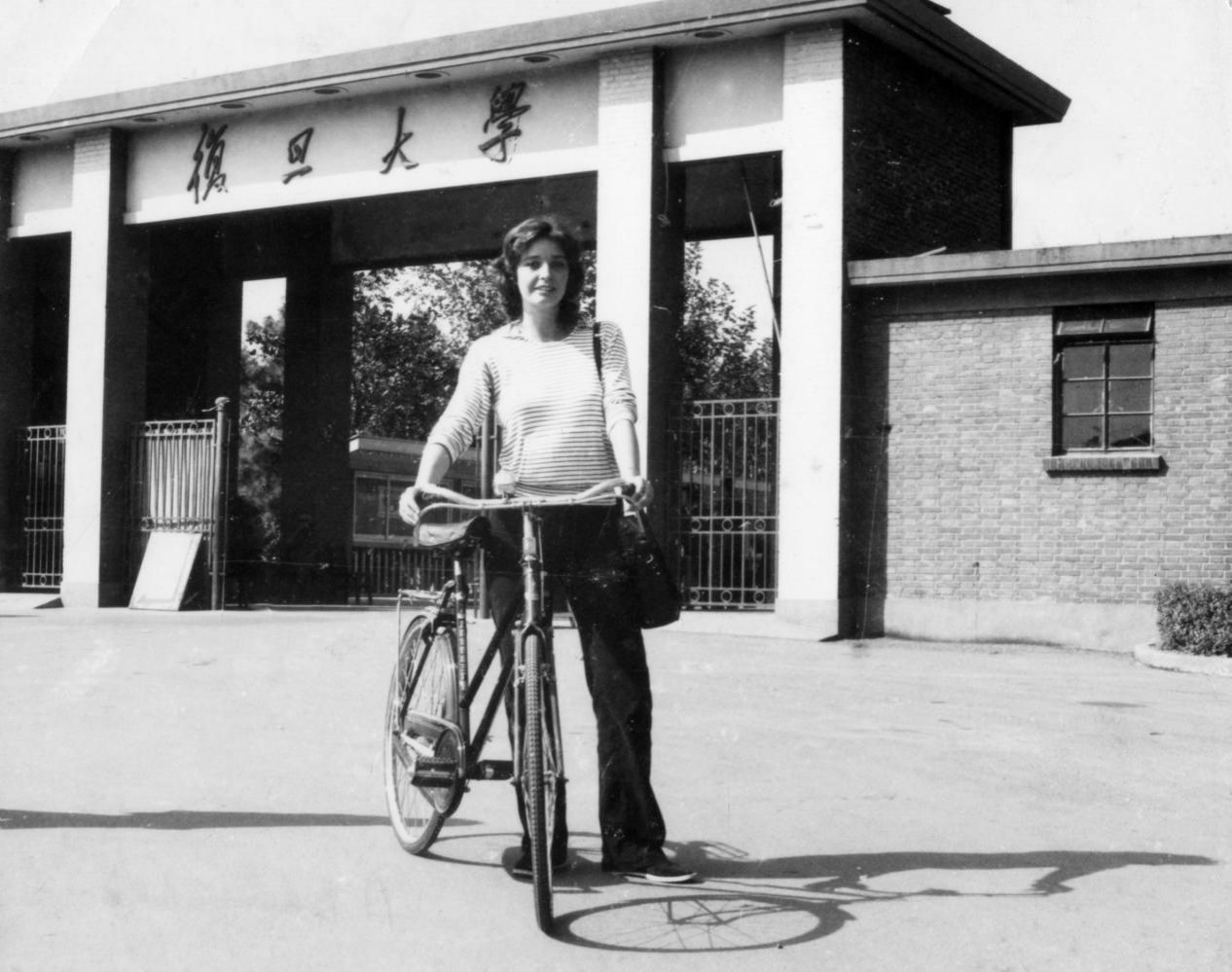
In August 1979, 22-year-old US student Madelyn Ross arrived at Fudan University in Shanghai and encountered a China with few material comforts. The campus cafeteria offered few options, hot water was available for just one hour a day, and classrooms were unheated.
Decades later, on a return visit to Fudan, Ross was struck by the university's dramatic transformation: new buildings, the quality of the education, the ambition of the students — and even a subway stop right at the campus door.
As part of the first groups of US students to study in China after the reform and opening-up, Ross spent one year at Fudan teaching English and studying Chinese literature. The experience sparked a lifelong dedication to fostering exchange and understanding between the two countries. She later worked with the US-China Business Council and directed China-related programs at several US universities.
READ MORE: Deepening roots of understanding
Looking back on her student years, Ross recalls the intense curiosity many Chinese people had about the wider world. Locals would approach her to learn disco dancing, and her classes were often filled with lively debates. This all took place during a period when China was just beginning to open up to the world, characterized by curiosity, optimism, and a sense of possibility.
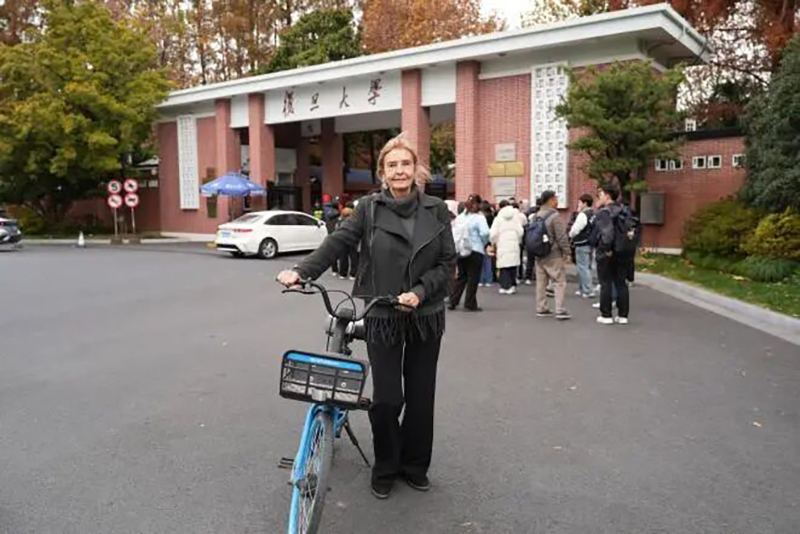
Over her half-century connection with China, Ross says what she sees as the country's biggest change is the emergence of a "new confidence".
"Each time I come back to China, I feel there's greater confidence," she observed.
At the same time, she worries that too few young Americans today have a deep understanding of China, highlighting the urgent need to strengthen educational exchanges between the two countries.
"If you don't spend significant time in China — integrating yourself into China with a Chinese institution, on a Chinese campus — you won't really understand the Chinese perspective or the society and culture. And then it makes misperceptions much easier," she explained.
"I think both of our countries need to train future leaders who deeply understand each other's country," she added.
Evolving views
Following Ross, generations of young people from around the world have come to China, not just as observers but as researchers and activists. In this era of rapid development, they are crafting diverse stories about what it means to "study in China", both inside classrooms and across the country's vast landscape.
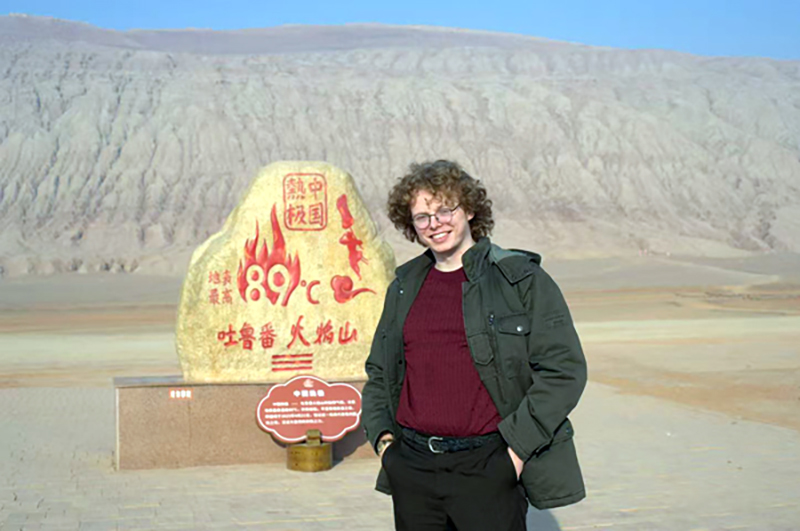
One of them is 24-year-old US student Austin Hicks. Majoring in Marxist political economy, he came to China to test theory against practice.
While studying at East China Normal University, his academic focus gradually expanded beyond textbooks and lectures to include China's diverse regions and development paths.
He was particularly interested in the Xinjiang Uygur autonomous region, which he had long followed through reading and research. In December 2025, he finally visited the region. There, he observed a thriving cultural industry, supported by sustained investment, especially in the context of the Belt and Road Initiative.
As he traveled through Xinjiang, he found these developments were evident in everyday life. He saw Uygur dances on street corners, with signs written in the Uygur language. He watched Uygur TV shows, attended theater productions, and dined at Uygur restaurants where he interacted with local musicians and artists.
"That was the most beautiful thing to see about socialist modernization," Hicks said. "It doesn't just impact the economic dimensions of people's lives, but also their cultural expressions."
Even more touching than these broader observations were the personal connections he made along the way. One evening in Turpan, Hicks came across a group of children playing basketball. He joined their game, and afterward they launched into a long, friendly conversation.
"They asked me questions about the US, and I asked them about their lives in Xinjiang. It was the most wholesome experience ever. It was hard to walk back to the hotel because they wanted to keep the conversation going, but I was ready to sleep," he recalled with a laugh.
Hicks plans to write an article about his experiences in Xinjiang for readers in what he broadly calls "the West" — "all the countries outside of China that hear these lies about China."
"This is not a political project. I'm just reporting on what's happening," he said. "I want people to understand that you can find all of this out for yourself."
In the future, Hicks hopes to visit the Xizang autonomous region and rural areas across China to learn more about rural revitalization efforts and the country's rural cooperative medical system.
Bridging cultures
While Hicks' experience centers on "dispelling doubts", the story of Burundian Sinologist Bankuwiha Etienne is about "building trust" through cultural resonance.
Etienne's journey into Sinology began at the Confucius Institute in Burundi, where he progressed from student to teacher and eventually to researcher. He is now pursuing a doctorate at Nanjing University in Jiangsu province, focusing on China-Africa relations and cross-cultural communication.
Through his studies, Etienne has noticed deep connections between traditional Chinese culture and indigenous African cultures. For instance, the Ubuntu philosophy prevalent in sub-Saharan Africa — often summarized as "I am because we are" — closely aligns with the collective mindset found in Chinese society. Its emphasis on social harmony and moral virtue also echoes core Confucian values.
"Whether in relationships between individuals or between humans and nature, Africa and China share many similarities," he said.
Leveraging this cultural affinity, Etienne explores the practical relevance of Chinese modernization for Burundi and the broader African continent. He believes that Africa, as a developing region with rich agricultural traditions, can benefit from China's experience in agricultural modernization and rural transformation.
As a scholar, Etienne is dedicated to bringing a distinctive African voice to global Sinology. "We view China through a friendly and constructive lens," he noted, adding that a new generation of African Sinologists is seeking cooperation and mutual benefit rooted in long-standing traditional ties.
He has translated these ideas into action by authoring a French-language monograph on the mission of Confucius Institutes in Africa, analyzing their role from an African perspective.
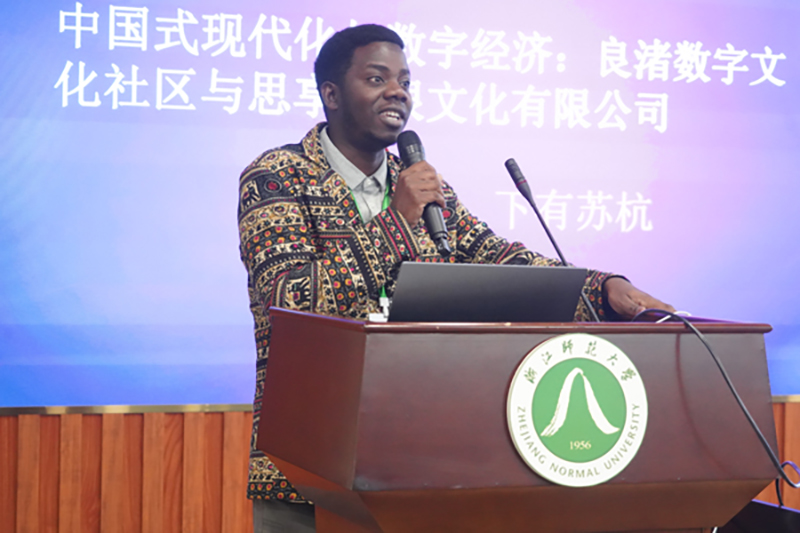
He also co-founded the Chinese translators' association in Burundi, which has grown into a network of more than 60 members across multiple African countries. The association provides crucial translation services for Chinese investment and aid projects in Burundi while also creating local employment opportunities.
In contrast to Etienne's scholarly approach, 22-year-old Indonesian Chinese student Jansen Kosasih is more of a curious explorer. Fluent in Indonesian, English, Mandarin, and Hokkien, he is highly sensitive to cultural diversity. Since enrolling at Tsinghua University in 2021, he has traveled extensively across China, visiting Shanghai, Shanxi, Zhejiang, Xinjiang, and Inner Mongolia to experience the country's regional and ethnic cultures firsthand.
"China is just one country, but when I come here, it feels like I've experienced hundreds of countries," he said. "China is too huge, too broad. Every time I go to a new city, it feels like I enter a new universe, a new world."
ALSO READ: 'Becoming Chinese' takes social media by storm on rising curiosity
"Everywhere you go, there's something to learn, something that leaves a deep memory inside of me," he added.
Kosasih describes China as "a land of opportunity", where he immerses himself in social and technological advancements. He is particularly impressed by everyday conveniences such as shared bikes and shared power banks. The completion of the Jakarta-Bandung High-Speed Railway also allowed him to witness how Chinese technology has influenced development in his hometown.
As a student assistant in Tsinghua's admissions office, Kosasih regularly returns to Indonesia to introduce the university and Chinese culture to local secondary school students. Looking ahead, he hopes to work in Indonesia's education sector and promote student exchanges with China.
"I want to be a bridge between China and Indonesia — or even Southeast Asia," he said.
"Coming to China is not only about getting to know China," he added. "It's about opening a window to a whole new world and a whole new experience. I'm sure that once people come here, it will not be their last time visiting China."
Zhong Yutong contributed to this story.
Contact the writers at guiqian@i21st.cn
