

In a ceramic company's clearance warehouse, a most unusual treasure hunt unfolds on weekends.
Visitors push carts through narrow aisles, their eyes scanning mountains of scattered porcelain items. A delicate teacup here, a minimalist bowl there, an elegant plate stacked nearby — all priced between 1 and 3 yuan (14-43 US cents).
One can hear bursts of exclamations and laughter that suggest surprising finds.
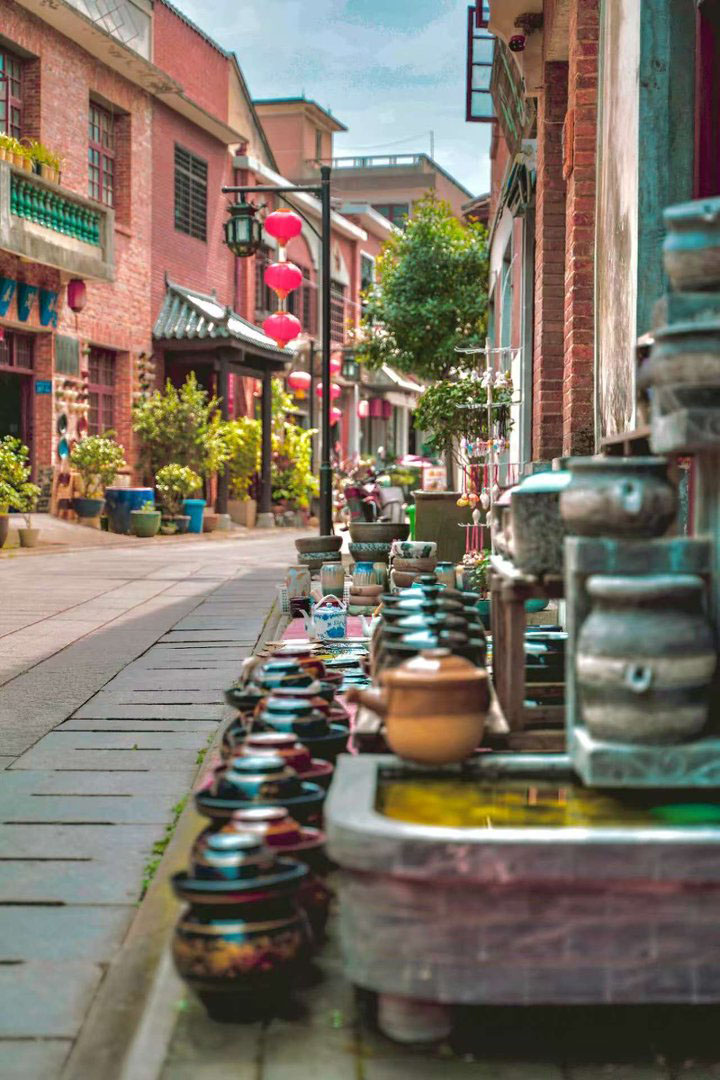
This is the new life pulsing through Tongguan Old Street, a 500-meter-long lane in Changsha, the capital of Hunan province, that first took shape during the Tang Dynasty (618-907).
For much of the late 20th century, however, the street's fortunes waned.
As large-scale industrial ceramic production grew, the demand for traditional, handcrafted wares declined, and many artisans struggled.
READ MORE: Museum shows its true colors
The old town was fading, traditional skills were ignored, and many changed trades, according to the street's administration.
The future of the intricate skills that once fueled a global trade was uncertain until a concerted revival effort began in the early 2000s.
Local authorities have since worked to restore its image and rolled out incentives to attract porcelain artisans and businesses. It has given rise to a remarkable renaissance.
In 2021, the old street was designated as a Hunan provincial historical and cultural street.
The ceramic treasure hunt offers a clue to this transformation. The pieces on sale are mostly rejects from the company's main production line due to microscopic flaws, such as pinprick bubbles or tiny specks.
"To a professional, they're imperfect. To everyone else, they're perfectly beautiful and usable," notes Xu Peng, an expert from the Hunan provincial ceramic art committee.
This porcelain hunting activity serves as a way of inviting people in, letting Tongguan's extraordinary underglaze colors enter ordinary homes, Xu adds.
This spirit of accessibility has defined the new old street.
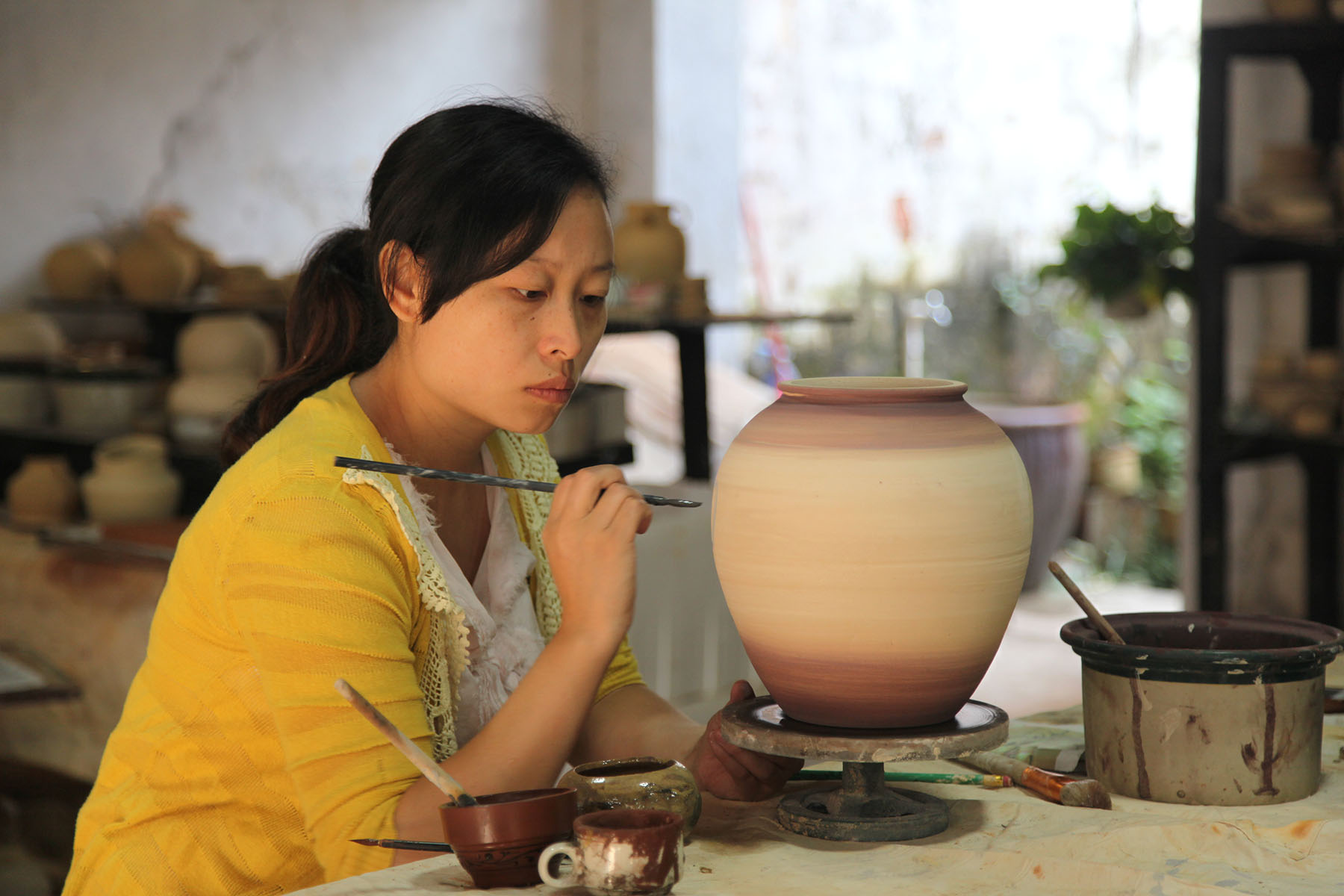
Here, masters of intangible cultural heritage work side by side with young innovators. The air carries the earthy scent of clay and the low hum of electric pottery wheels.
In one studio, Liu Jiahao, in his 30s, guides a visitor's hands on a pottery wheel.
The fourth-generation heir to the local legendary "Mudman Liu" family, with his father, Liu Kunting, a national-level inheritor of the Tongguan kiln techniques, has chosen to stick to tradition with a touch of innovation.
"I was obsessed with the unpredictability of wood-firing," he says, recalling a formative trip to the porcelain capital Jingdezhen in Jiangxi province during university.
Unlike the controlled gas kilns used in modern industry for consistency, wood-firing embraces unpredictability.
In the wood-burning furnace, ash and flame interact with the glaze in a dramatic, inherently "guessing" process known as kiln transformation.
"It's about collaborating with the fire, not commanding it," he explains. "The kiln gives each piece a unique 'skin' — a record of its passage through the flames."
Determined to merge this ancient method with Tongguan's heritage, Liu Jiahao spent years experimenting. "My first year, four entire kiln-loads were complete failures," he laughs.
In 2015, he built what he claims was Hunan's first modern smokeless wood-fired kiln, a hybrid design balancing tradition with environmental standards. His studio symbolizes the street's new ethos: reverence for the past, not bondage to it. Small teapots from his kiln sell for over 1,000 yuan each, and his creations have found buyers from Europe to North America.
His 'Mudman Liu' studio now sees annual revenue surpassing 5 million yuan, with over half flowing through e-commerce livestreams.
Liu Jiahao's innovation extends to technology. He has collaborated with Hunan Normal University and employs 3D printing and digital modeling to design new forms. "We used 3D printing to create the intricate molds," he says.
He also launched co-branded products, such as a series of ceramic-sealed liquor jars with a famous local distillery, and delicate ceramic fridge magnets featuring classic Changsha kiln motifs, all of which have become popular with the street's rising number of visitors.
A few doors down, another master, Peng Wangqiu, a provincial-level Tongguan porcelain-firing inheritor, has dedicated himself to the union of porcelain and another Hunan specialty: dark tea.
In his bustling studio, visitors knead clay as spinning wheels fling droplets of water.
"Culture stems from life's needs," Peng says. He adds that traditional Tongguan ware — large water vats, pickle crocks and roof tiles — are born from agrarian daily life. "As society urbanizes, we must find new needs to serve," he explains.
For Peng, the answer is creating vessels for dark tea. He points out that the porous, unglazed interior of Tongguan pottery is ideal for brewing Hunan's fermented dark tea, allowing it to "breathe" and enhancing its earthy aroma.
ALSO READ: Creatives find their muse in small town culture
"Hunan tea needs Hunan ware," he states, outlining his research into building a complete "Hunan tea culture system". He has found that his customers are instinctively drawn to an interaction with the clay, water, and fire at his place.
The local government's revitalization efforts over the years transformed the old street into a living exhibit, with walls embedded with pottery shards in mosaic patterns and lamp posts shaped like dragon kilns that climb the nearby hills.
New spaces like the Tongguan Youth Hub, managed by Liu Jiahao's team, regularly host salons and workshops, knitting a community of young creators.
Whenever he is asked why he doesn't strictly follow the tradition to the letter, he says he believes his family's heritage shouldn't be confined by old craftsmanship. "Innovation is inheritance. We have to make things the younger generation connects with," he says.
