

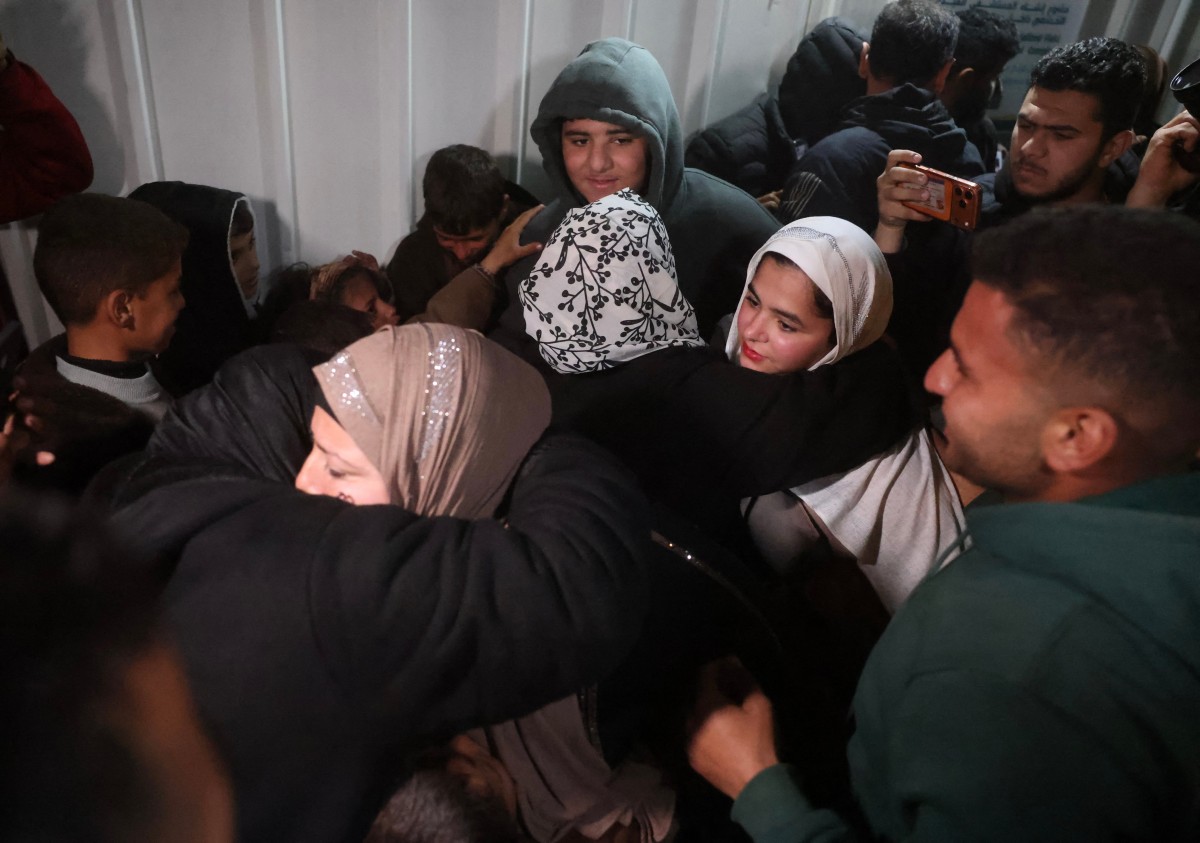
GAZA - For Palestinians who were allowed to return to Gaza through the newly reopened Rafah crossing, the journey home was both exhausting and emotionally taxing.
Israel officially reopened the Rafah crossing, connecting Gaza to Egypt, for pedestrians on Monday, but it only permits a limited number of Palestinians to re-enter Gaza each day.
According to the Hamas-run Gaza government media office, only 12 Palestinians -- nine women and three children -- were permitted as the first group to return via Rafah, while eight Palestinians were allowed to leave Gaza through the crossing for medical treatment in Egypt.
Om Ahmed, a woman in her 70s who had traveled to Egypt for medical treatment in March 2024 and then stranded there, was among those allowed to return. Seated in a wheelchair at the Nasser Medical Complex in Khan Younis, southern Gaza, she spoke of the months spent in limbo, caught between waiting and uncertainty.
ALSO READ: Palestine condemns Israeli plan to legalize West Bank settlement farms
"My longing for Gaza led me to register immediately upon hearing the news that the crossing would soon reopen," she told Xinhua. "I missed my children, my grandchildren, my home. Even though the city has changed after the war, seeing my family again gave me strength."
She said the journey through the crossing was both physically and emotionally grueling. "The process was long and difficult. We waited for hours in the cold, and everything was tightly controlled," Om Ahmed said.
The returnees faced intense scrutiny by Israeli forces at the crossing. Om Ahmed recounted that a militant escorted them to a separate area for questioning by Israeli soldiers. "Some of us were blindfolded, and all of us had to follow strict instructions," she said.
The experience, she said, was especially hard for elderly and sick travelers. "Being examined and interrogated while already exhausted and unwell was very stressful. Some women cried; the fear and uncertainty were overwhelming," Om Ahmed said. "Yet, the hope of returning home gave us the courage to endure it."
Another returnee, speaking on condition of anonymity, said only a fraction of registered patients were allowed to cross. "Twelve of us entered Gaza, while the rest were sent back to Egypt. After months of waiting for treatment and safety, being turned away felt like a punishment," she said.
Accounts from multiple returnees described prolonged questioning -- sometimes lasting several hours, with some blindfolded or handcuffed.
Returnees also reported strict limits on personal belongings. "Each traveler could carry only one bag of clothing. Other items, including children's toys, were confiscated. I saw a child cry as soldiers took her toy," said Om Ali, a returnee from Gaza City.
READ MORE: Hamas says ready to hand over Gaza administration to national committee
Gaza-based political analyst Ahed Ferwana told Xinhua that the reported practices reflect a broader pattern of control and restriction by Israel.
"The approach at Rafah demonstrates a continuation of restrictive policies aimed at Gaza residents. Limiting movement, confiscating belongings ... These actions go beyond security measures and violate the international law," he said.
Historically, Rafah has been a vital route for both personal travel and the movement of goods. The reopening of the crossing is part of a ceasefire agreement between Israel and Hamas signed last October. However, movement has remained strictly limited.
Abu Ahmed, a Palestinian patient, described arriving at the Egyptian side early Monday morning only to be denied entry. "The crossing is supposed to be a lifeline for patients and vulnerable families, but it seems to have been used as leverage against the Palestinian people," he added.
Mustafa Ibrahim, a Gaza-based political analyst, told Xinhua that while the reopening is "symbolically significant," it underscores the ongoing challenges Palestinians face in exercising basic freedom of movement.
"The crossing is a humanitarian necessity, and should not be a political favor," he said.
