

"Xinjiang's North Pole" stands at the top of where China's map ends, in the middle of the Altay Mountains, just south of where four countries touch.
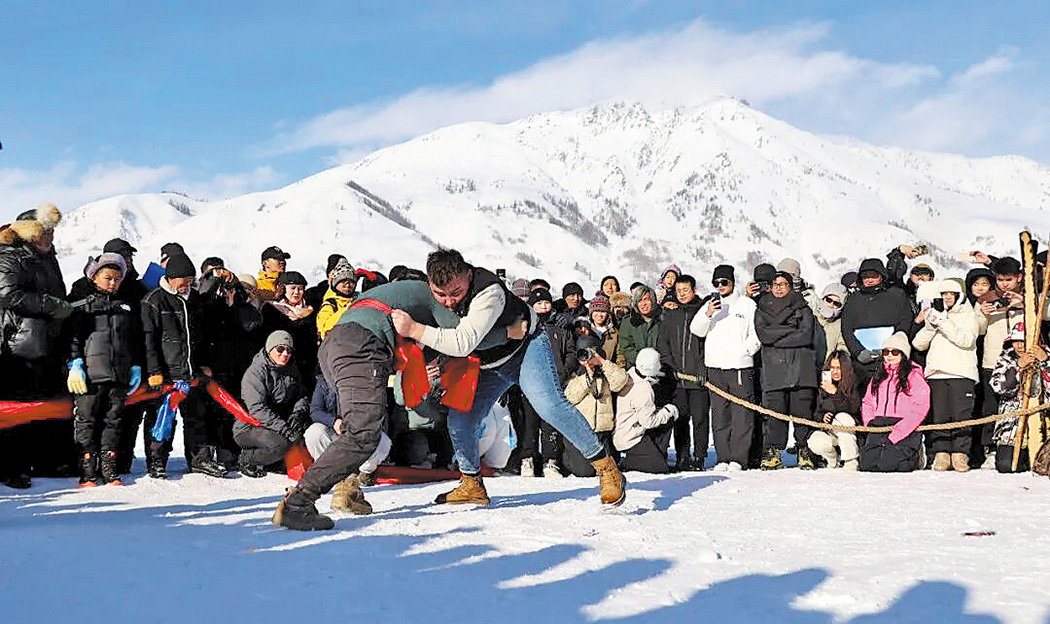
Hemu's identity is shaped by the snowbanks that mantle this tip of the Xinjiang Uygur autonomous region at the Siberian biome's bottom rim.
Atop the 2,848-meter summit on the township's farthest fringe, the skyline is divided — and shared — by China, Mongolia, Russia and Kazakhstan. From this apex, you can see all four countries in a single view.
Yunxiao Peak stands as a geological watchtower gazing across Xinjiang's geographical frontier. In every direction, serrated stilettos of stone slice the heavens above and carve the earth below into four nations.
From this vantage point, these national borders are invisible, but the natural boundaries that etch them into our planet are anything but — colossal parapets of rock constrained only by the horizon.
READ MORE: Xinjiang's sands reveal fascinating finds
Hemu isn't a dot on a map but rather a destination where worlds converge.
The ancient heritages of the ethnic Mongolian Tuvan and Kazak peoples coalesce into a singular frontier culture found only in this settlement and neighboring Kanas and Baihaba.
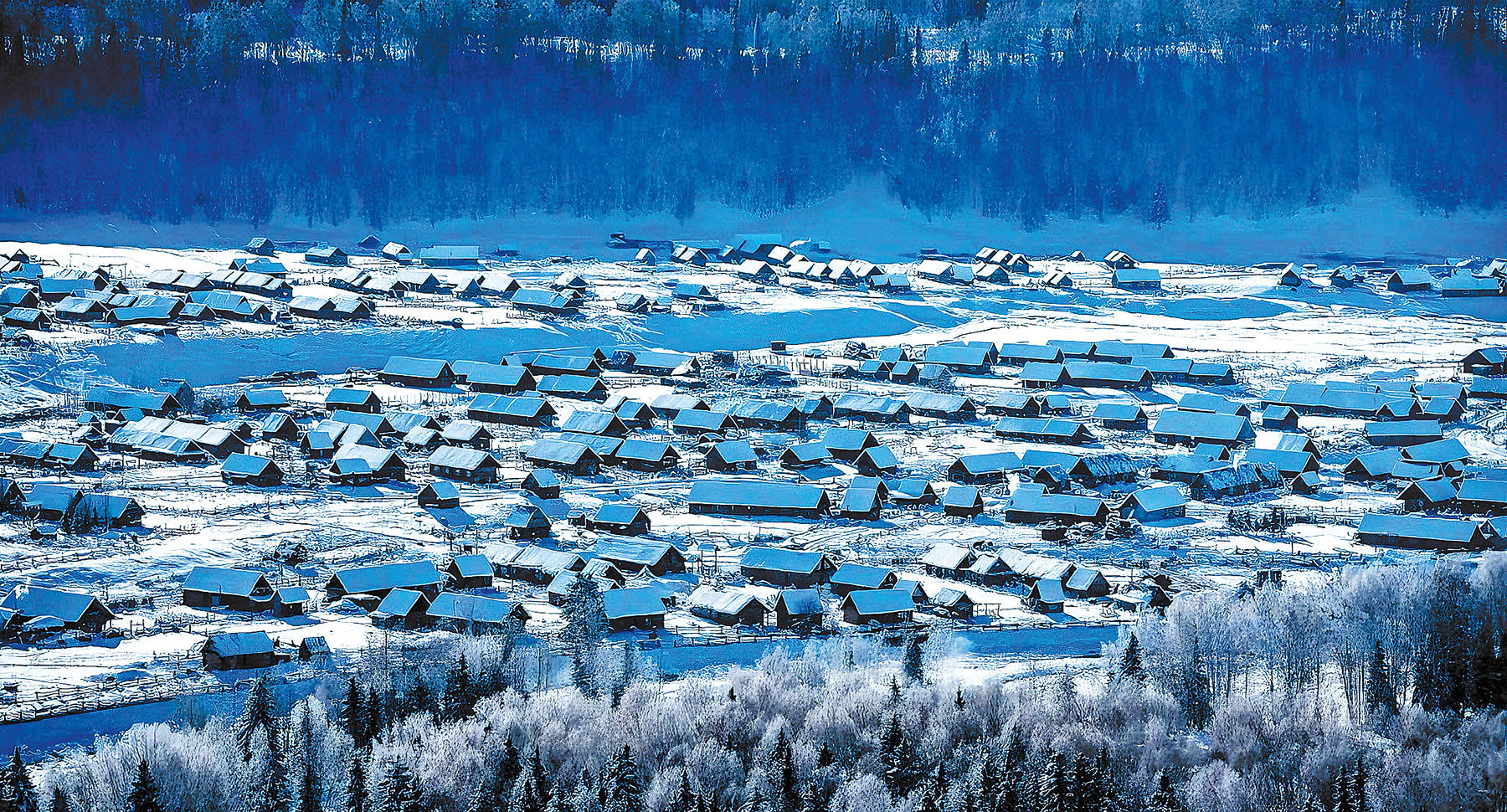
Seasonal migrations freeze in place during deep-set winters. The Hemu River snips apart and seams together patchworks of sunny grasslands and shadowy forests before it braids together with the Kanas River.
Hemu village seems small but is by many measures a grand settlement. It appears as a humble huddle of red-pine cabins cradled by mountains, home to just 600 humans and 130,000 livestock. But this remote hamlet is outsized in its cultural significance, which has been captivating greater global interest in recent years.
Hemu is the "Arctic Village" of China's "Northwestern Snow Capital", Altay. Life here marches to a soundless percussion of billions of snowflakes silently striking the ground. Each one is like a drifting music note nobody hears, but everybody feels, and nomadic herders move to its rhythm with poise.
Snow doesn't just descend here — it rises, accumulating in piles taller than the people who walk through it. Or, at least, they try.
Viral videos show people thwacking poles against buildings to detonate rooftop avalanches, diving from cabins' eaves and vanishing into the deep snow below, and seeming to swim as they stride through chest-deep drifts. Other clips show dogs dashing along the snowbanks, dolphining through the vast sea of frozen water, their heads bobbing as they bounce forward.
Gliding across time
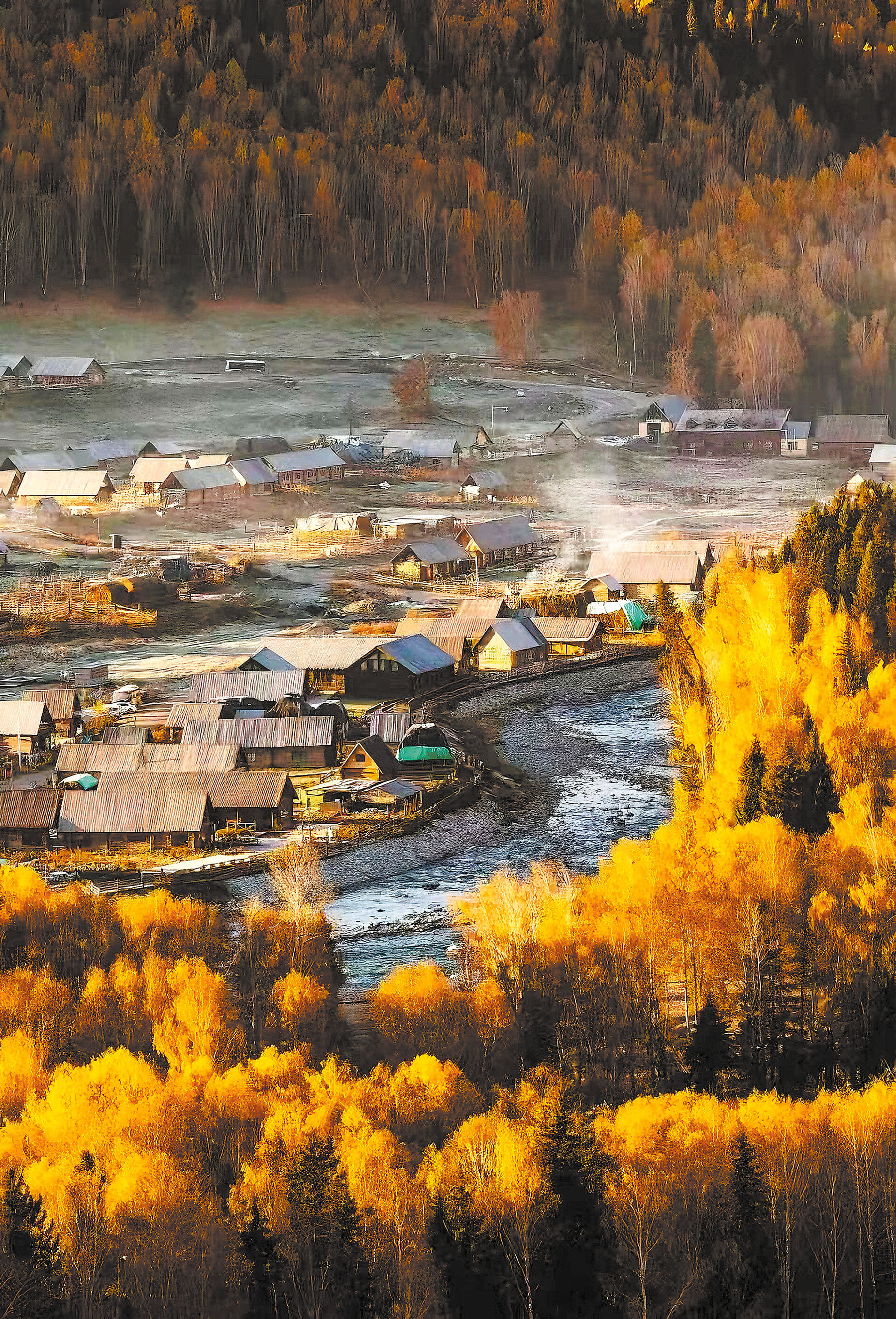
Indeed, it's tricky — if not impossible — to walk through so much snow. So, since ancient times, people have instead glided over it.
Prehistoric petroglyphs in Altay portray what may be humankind's earliest depictions of skiing.
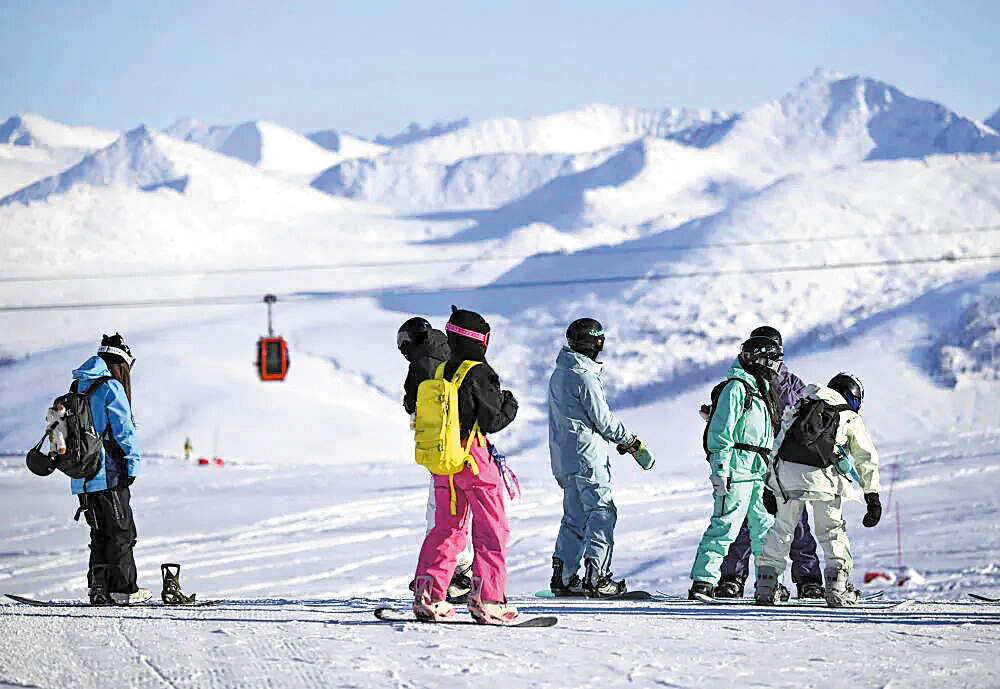
Yunxiao Peak takes this legacy to new heights and lengths, as the top spot in the Jikepulin International Ski Resort, which is crisscrossed by 103 ski trails totaling 108 kilometers.
The Keketuohai trail claims to be Asia's longest at 11.2 km, and the 4.93-km cable car to Yunxiao's zenith is reportedly China's longest at a ski destination.
Experiences extend beyond whooshing downhill. Visitors waddle along snowshoe paths, drill holes for ice fishing and hike through primeval forests.
A relic of the region's millennia-old skiing legacy rests forsaken but not forgotten in a corner of Hemu's Century-Old Cabin — a set of horse-fur-sheathed pinewood skis with cattle-leather cordage to tie them to users' feet.
The shelter, originally erected by Russian settlers as three classrooms 124 years ago, has become an exhibition hall of traditional culture. It was rebuilt according to the initial design, using old logs repurposed from an office, school and barn.
On the windowsill, a simple wooden candlestick testifies to winters hunched indoors, its wax drippings layering memories of dark days like geological strata.
Sitting in another corner is a vessel chiseled from a hollowed-out log with a square hole punched into its side — the spigot for kumis, a mildly fizzy, slightly alcoholic beverage made from fermented mare's milk.
Sheep stomachs, like those hanging near a window, are still used to carry horse milk, and birchbark canteens slosh with butter tea. A shiny, crinkled cowhide sack and a horsehide pouch that dangle from wall pegs are used to ferment yogurt or transport water.
A handmade wooden cradle testifies to a harsh practicality that suffers little sentiment in an unsympathetic wilderness, where function trumps feelings. Its severe design features a bed of wooden planks with a hole for a toilet. Infants' calves were tied to the sides to prevent them from becoming bowlegged, even before they had begun life in the saddle or on skis.
A comparably hard and unyielding saddle hewn from raw timber hangs on the wall. This seat would offer the rider some support but little cushioning during long journeys across Altay's unforgiving expanses.
Every showcased item is an answer to a question posed by the chilly massifs' cold indifference. How do you carry your milk, your child and yourself across the snow? How do you extract shelter, light and food out of a realm hardened by ice and rock?
The Century-Old Cabin doesn't just present heirlooms but preserves a complete working logic for improbable survival.
Its design is typical of houses in Altay's Kanas region.
Roughly 40-centimeter-thick red pine logs are stacked to form walls that extend underground, and moss is packed in the spaces between for insulation. Residents regularly moisten this mortar so that it not only remains viable but also grows to generate living walls that better seal out the biting winds.
Roofs are steep-pitched so that snow slides off before the beams buckle. The gables can be detached in the summer to enjoy sunshine and reattached if it rains, like the top of a convertible.
Hemu's cabins don't just rebuff the elements outdoors but also control the climate indoors.
In this frigid domain, weather is the architect, drafting blueprints for both the way of life and its refuge.
Nourishing tradition
Cabins answer how to subsist. Cuisine answers on what.
Hemu's cultural evolution was compelled by a harsh climate that tempered traditions in a forge not of fire but of frost.
Yet flames answer the riddles of scarcity posed by the stomach. Hot meals are extracted from the land's basic yields — meat, dairy, redskinned potatoes and grain.
Hunks of beef, horse meat and mutton sizzle on skewers and simmer in stews and soups.
Boiled meat serves as the basis for communal bowls of beshbarmak — called "five fingers", since it's eaten without utensils — served over noodles doused in a rich broth and sprinkled with crumbles of a dried cow or goat cheese called kurt.
ALSO READ: More than daily bread
Suyou, kumis and its camel-milk corollary, shubat, are rich beverages that make drinking a vital source of calories in this nutrient-deprived terrain.
Hemu's people haven't conquered the cold wilderness but instead coexist with it.
To dwell in this taiga is to dance nimbly atop the weight of a thousand winters, to move in tune with their hushed melodies with patience, skill and grace.
It's a choreography learned over millennia — in the glide of skis, the stomp of boots and the swish of dogsled blades — to set in motion a song of survival that spans seasons, centuries and spirit.
If you go
Transportation: Direct flights to Altay are available from Beijing and Guangzhou, Guangdong province. You can also choose to fly to Urumqi, the Xinjiang Uygur autonomous region's capital, and take a one-hour transfer flight or an overnight train ride to Altay.
Carpooling is the most convenient and economical option at about 200 yuan ($29) per person per day, with a four-to-five-hour drive from Altay to Kanas or Hemu.
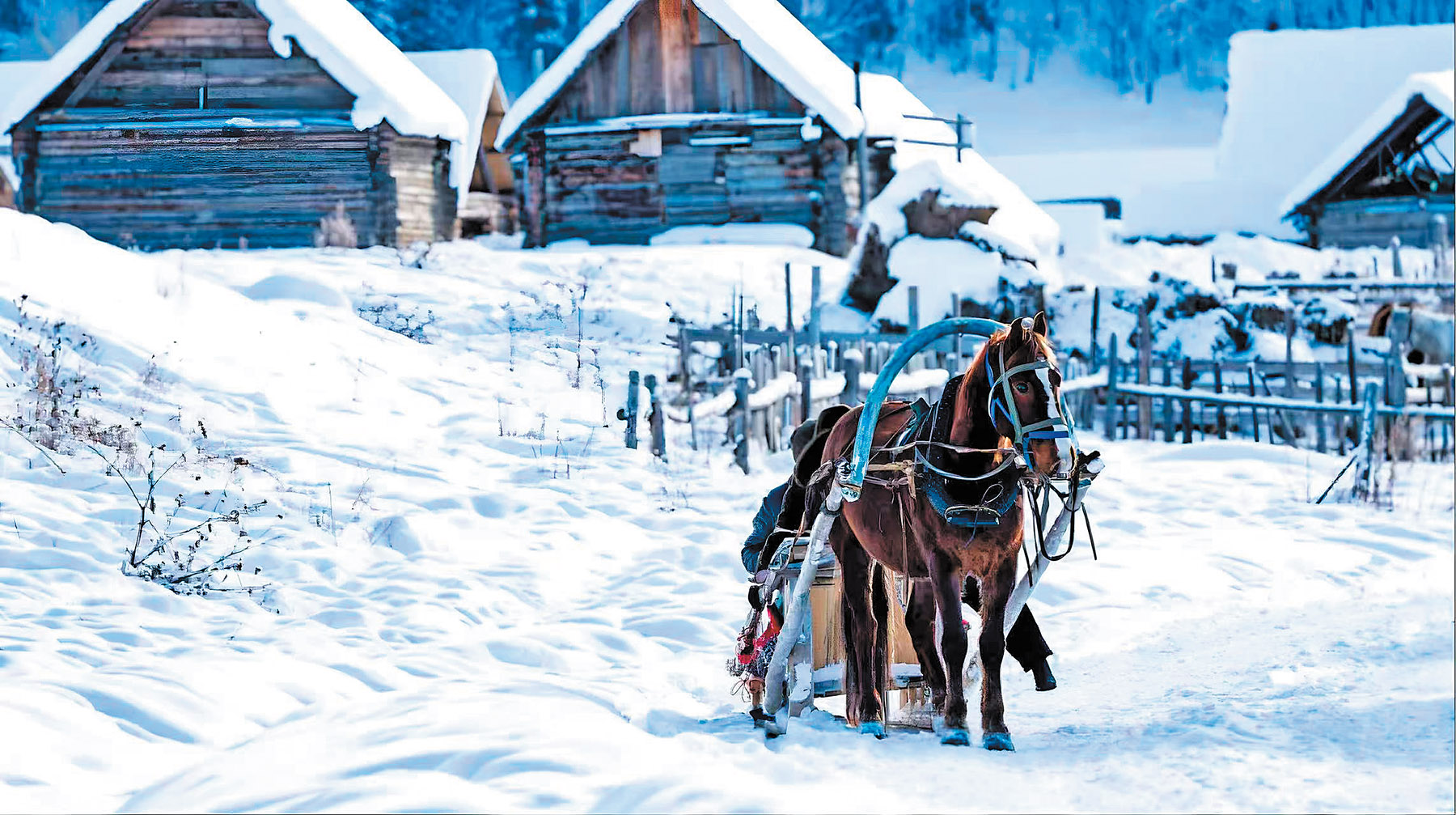
In scenic areas, shuttle buses are essential in Kanas and Hemu. The transfer center is about one hour from the entrance to Hemu. There are also buses and horse-drawn sleds in the villages.
Activities: After arriving in Altay, you can choose to go night skiing at Jiangjunshan Ski Resort or explore the food street to savor local delicacies.
In Hemu, stay in a wooden house and wander around the old village. Be sure to take photos of the "snow mushrooms". Stargazing is highly recommended. Get up early to capture the morning mist at the Hadeng observation deck in Hemu. Then ride a horse through the birch forest.
Tips: Temperatures can drop to — 30 C. Wear windproof down jackets, fleece-lined pants, waterproof, nonslip snow boots, thick gloves and hats; attach hand warmers to your phone to prevent battery drainage from low temperatures. Wear sunglasses to prevent snow blindness and keep a power bank handy to recharge your devices.
Visitors to Hemu and Baihaba need to obtain border passes from local security bureaus before entering.
