

Expansive domestic demand offers stabilizing counterweight to economic volatility worldwide, providing predictable, long-term export opportunities for international businesses
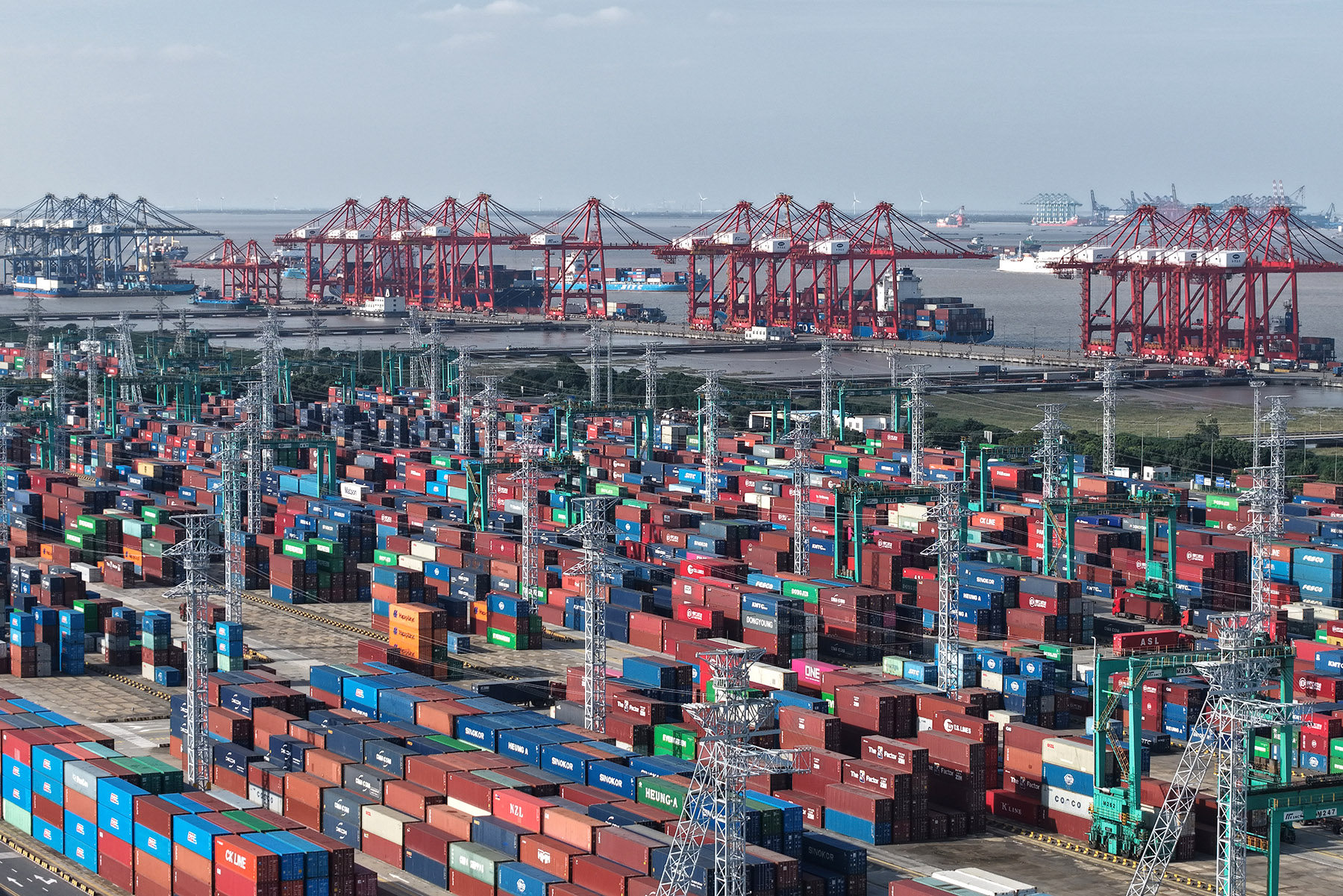
China has vowed to raise imports along with its consumption-boosting initiatives, translating its massive market into a stable engine for global trade and a thriving destination for foreign businesses, senior economists and business executives said.
At a time of rising protectionist measures worldwide, Beijing's commitment to opening its doors even wider to imports is expected to provide much-needed momentum for the fragile global economic recovery, they added.
Their comments came after the General Administration of Customs said earlier this month that China's imports expanded 0.5 percent in 2025 from a year earlier to 18.48 trillion yuan ($2.65 trillion), maintaining its share of global imports at around 10 percent.
"China's imports hit a record high in scale last year, securing the country's position as the world's second-largest import market for the 17th year running," said Wang Jun, deputy head of the administration, at a news conference.
READ MORE: Nation's steady foreign trade growth expected to anchor global stability
Wang noted that the declining global prices for key commodities last year, such as crude oil and iron ore, down about 10 percent, dragged down the overall import growth rate by 1.4 percentage points. "Given these conditions, achieving any import growth was no easy feat," he said.
"It's worth noting that several countries have politicized trade and economic issues, restricting high-tech exports to China on various pretexts — otherwise, we'd be importing even more," Wang added.
For the world's second-largest importer, pursuing the balanced development of imports and exports has been a long-term strategy. It has been included in the recommendations of China's top leadership for formulating the country's 15th Five-Year Plan (2026-30).
In December, Han Wenxiu, executive deputy director of the Office of the Central Commission for Financial and Economic Affairs, told a news conference that China "should expand exports while increasing imports, in order to promote the sustainable development of foreign trade".
The Ministry of Commerce also launched the "Big Market for All: Export to China" initiative in November to motivate foreign businesses to increase their exports to China and seize the new opportunities offered by the vast Chinese market.
"China has made a lot of efforts along the way to boost imports," said Tu Xinquan, director of the China Institute for World Trade Organization Studies at the University of International Business and Economics in Beijing.
"To date, China's overall tariff level has been cut to 7.3 percent — a level nearing the average of developed countries," Tu said. "China also applies provisional tariff rates, lower than the most-favored-nation rates, to nearly 1,000 imported items annually."
In particular, China implemented zero-tariff treatment on 100 percent of tariff lines for all 53 least developed African countries that have diplomatic ties with China.
The annual China International Import Expo, held since 2018, is further evidence of Beijing's import expansion drive. Last year's edition saw intended deals amount to $83.49 billion over a one-year period, hitting a record high.
"In an era of economic uncertainty, a market of such scale and openness has become perhaps the world's most sought-after resource," said Liao Fan, director of the Chinese Academy of Social Sciences' Institute of World Economics and Politics.
According to the UN Trade and Development, global trade growth is expected to weaken further in 2026 due to a slowing world economy, geopolitical fragmentation, persistent policy uncertainty, heightened vulnerabilities, and rising trade costs. The WTO has also sharply revised down its forecast for growth in global merchandise trade in 2026 to just 0.5 percent.
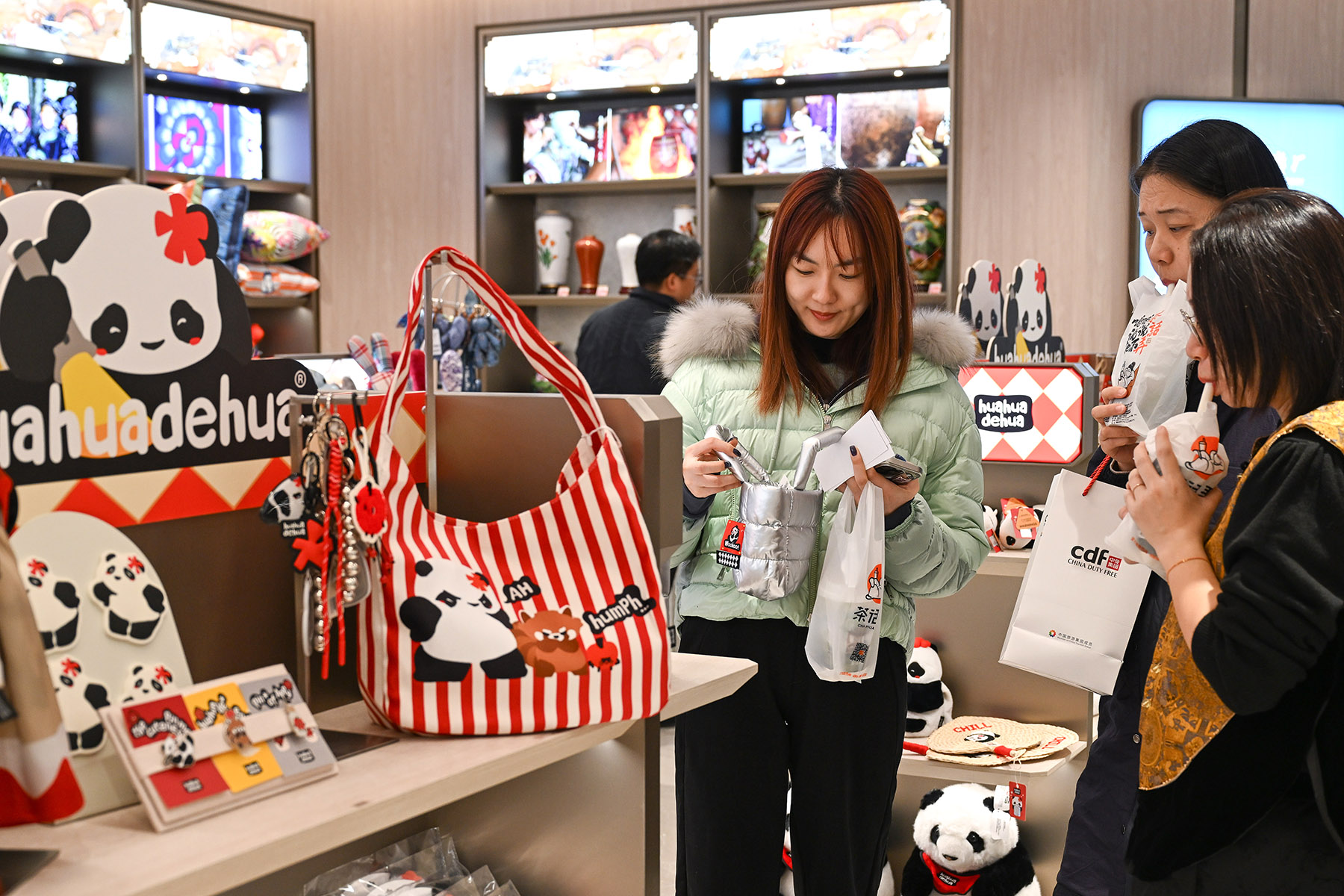
In stark contrast, with a population exceeding 1.4 billion, including over 400 million middle-income consumers, China is fueling nearly 50 trillion yuan in annual consumption at home and is rapidly solidifying its role as a foundational pillar of global demand, Liao said.
An increasing number of international brands are choosing China as the first market to debut their newest products — a trend that speaks volumes about the country's unrivaled consumer appeal and strategic influence in shaping global demand.
In addition to adding a new concept store in Shanghai next year, Abercrombie & Fitch Co, a US apparel and accessories retailer, will also step up its presence in top and second-tier cities, including Guangzhou, Guangdong province, Chengdu, Sichuan province and Changsha, Hunan province — by opening more stores across China.
"The Chinese market remains our number one priority in the Asia-Pacific region," said Steven Sare, A&F's managing director for APAC. "We are investing not only in new offline stores, but also in enhancing store experiences to make them more appealing to consumers."
Despite the current geopolitical situation, Sare said that A&F, currently operating 21 stores across the Chinese mainland, has observed a growing preference among Chinese consumers for US-style sportswear, prompting the company to further expand its footprint in China following customer feedback.
Norway's high-end outdoor specialist Norrona, British cycling lifestyle brand Rapha, Italian outdoor footwear maker Crispi, and US clothing company Smartwool also opened their first stores in China late last year.
Robert Koopman, former chief economist of the WTO, said that over the next five to 10 years, "an important evolution in China's role is going to shift toward being a big center of demand".
With China's sustained economic recovery, and in particular, expanding consumer demand, imports have maintained year-on-year growth for seven consecutive months since June, with the growth rate accelerating further to 4.4 percent in December, customs data showed.
This expansive demand offers a stabilizing counterweight to global economic volatility, providing predictable, long-term export opportunities for international businesses. For multinational corporations, accessing and succeeding in the Chinese market is increasingly seen as a strategic imperative.
"The market is massive in scale and very diverse, from top-tier cities to lower-tier cities that are also growing in wealth with advanced demands," said Hubert de Haan, senior vice-president for China at German home appliances company BSH.
ALSO READ: Duty-free shopping fuels Hainan's inbound tourism
"Chinese consumers are eager to try new things and have high demands for innovation. For BSH,China is an important place to be. We need to be here because this is the global powerhouse of home appliances and it's a huge market where we need to be successful. With the competencies and capabilities that we gain here, we can also win in other parts of the world," he said.
In Beijing's latest step to open up its vast domestic market, the Hainan Free Trade Port has rolled out a series of island-wide special customs operations. These changes are set to make it easier for overseas goods to enter the market and expand zero-tariff coverage.
Liliana Lucioni, president for China at Coach, a US luxury brand, said that thanks to China's trade facilitation measures, the company's sales in the country grew by 18 percent year-on-year in the fourth quarter of fiscal year 2025, outperforming other global markets.
With the launch of a series of high-level opening-up initiatives, such as the special customs operations in the Hainan FTP, China's vast market will become an even greater opportunity for the world, she added.
Contact the writers at wangkeju@chinadaily.com.cn
