

Photography and video event promotes conservation with curiosity, innovation, tech and youth, Yang Feiyue reports.
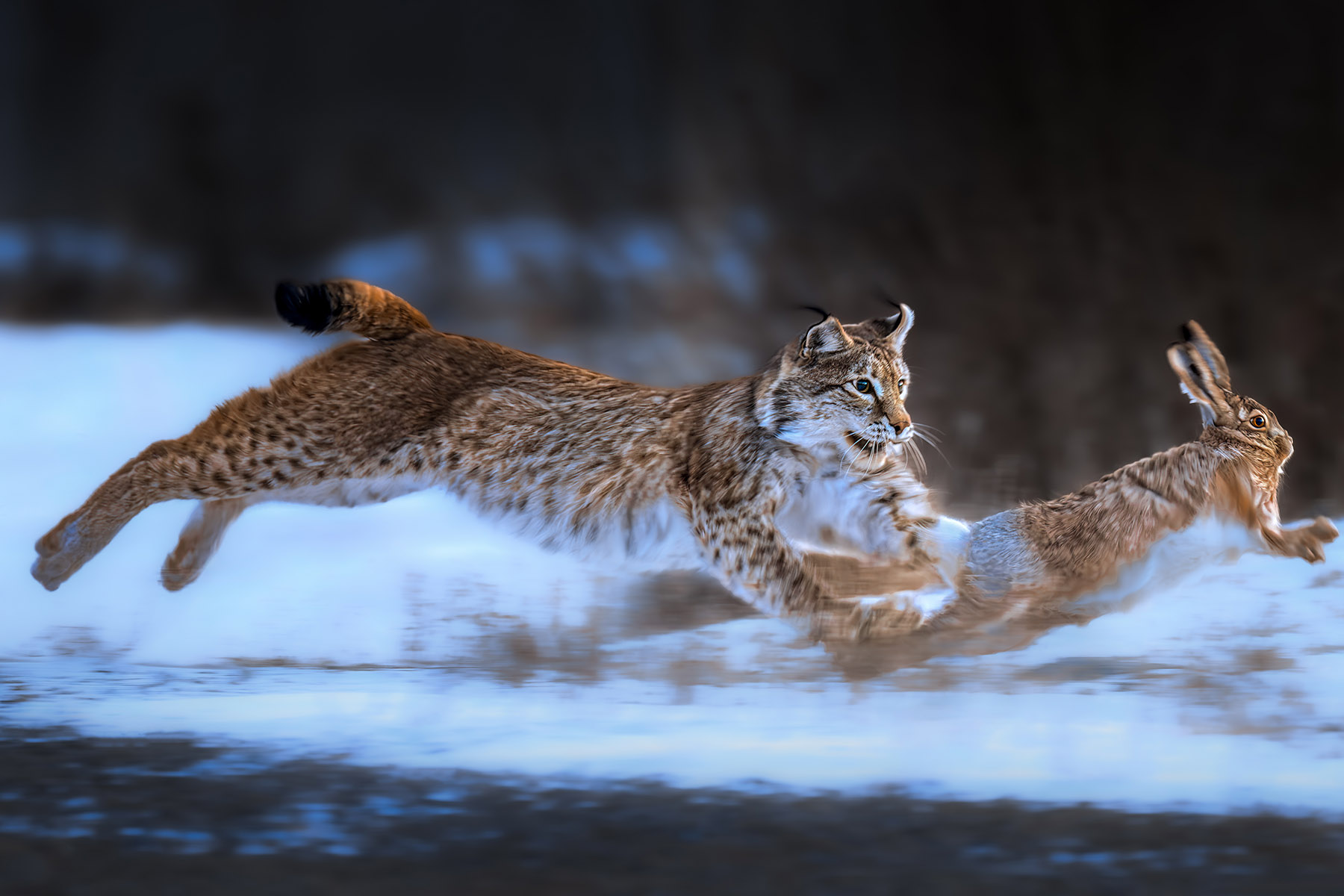
In the Shenzhen Science and Technology Museum's sleek, futuristic atrium, a primal drama in the amber glow of twilight jumps into view.
A lynx, its body a taut arc of pure kinetic ambition, launches toward a hare whose frantic escape blurs the line between creature and dust. As this slide flickers onto a screen, the audience, a gathering of the world's leading conservationists, scientists and artists, falls into a collective hush.
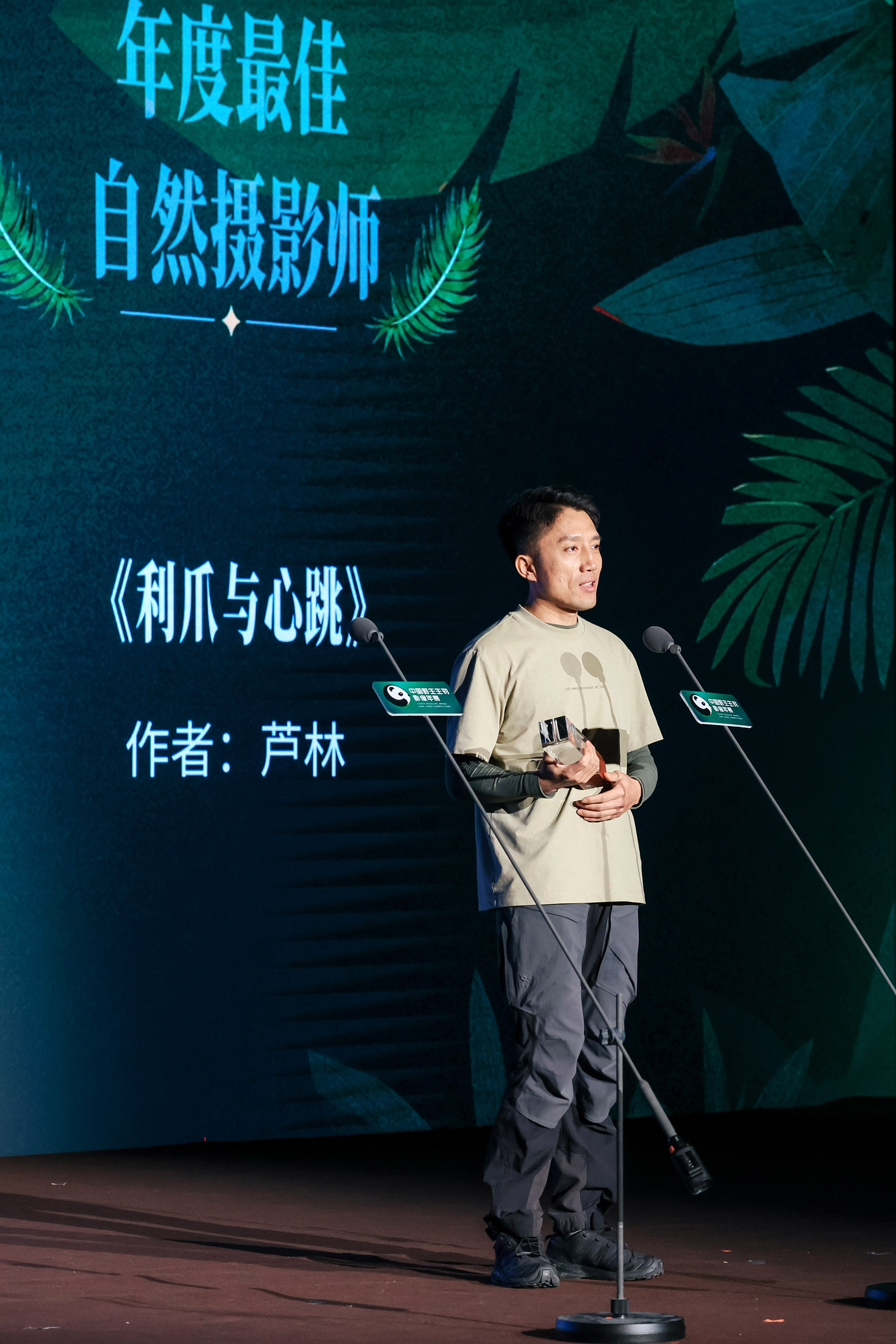
"In the piercing clarity of their locked gazes lies a shared, desperate yearning for life," Zheng Yongchun, head of the museum, says about the work Claw and Heartbeat by Chinese photographer Lu Lin.
"In this frozen, silent instant, one can almost hear the pounding heartbeats of predator, prey and photographer alike. Credit goes to the photographer, whose 10 months of patience made it possible for us to witness this life-and-death moment," Zheng adds.
It was an emotional and artistic climax of the 2025 China Wildlife Image and Video Competition award ceremony held in mid-January in Shenzhen, South China's Guangdong province.
In just six years, the event has transformed from a domestic showcase into a global platform seeking to define how the natural world is seen, documented, and, ultimately, protected.
Its mission was on display in this year's theme, "The Unreachable Realm".
Organized by the Chinese National Geography magazine and hosted by the Chinese Academy of Sciences, with backing by the China Environmental Protection Foundation and tech giant Qualcomm, this year's competition received 39,366 entries from 83 countries and regions.
Lu's Claw and Heartbeat won him the Best Natural Photographer of the Year award at the competition. The Jury's Award went to South African filmmakers Will and Lianne Steenkamp for Lions of the Skeleton Coast.
The 2025 theme points not only to remote, unexplored geographical landscapes but also to the boundaries of human cognition and the very methods of exploration, says Li Shuanke, president of Chinese National Geography.
"Humanity's unknown frontiers exist not only at the edges of the map but also in how we perceive and protect nature through imagery," he explains.
"Therefore, the competition must be an ascent toward this 'unreachable realm'."
Since its 2020 launch, the competition has amassed nearly 200,000 entries and billions of online impressions.
The contest has become a nexus of art and science that draws more attention to universal themes ranging from biodiversity loss to the wonder of discovery, and portrays China as an emerging curator in the global conversation about the wonders that remain to be discovered, and why they matter to humankind.
The New Discovery Award was a significant innovation in this year's competition. This category prioritizes documented scientific contributions over aesthetic beauty, judging entries against criteria such as evidence of a new species or the rediscovery of a "lost" one.
The competition received 1,222 submissions for this category, according to the organizer.
The New Discovery Award captures the fundamental truth about the power of observation, notes Xu Xing, head of the Institute of Vertebrate Paleontology and Paleoanthropology, Chinese Academy of Sciences.
"A clear ecological photograph holds entirely different meanings for different people," Xu says.
"Some may simply see a bird, while a birder might realize that this bird shouldn't be here. A professional taxonomist, however, could potentially uncover a clue pointing to a completely new species. Thus, the spirit of 'discovery' is perhaps an open perspective — resisting quick conclusions, never overlooking the unusual, and persistently questioning," he elaborates.
"This is precisely the idea the New Discovery Award aims to convey," he adds.
Xu calls upon the public to record the world with the focus and curiosity of a scientist in this era of unprecedented visual abundance.
"Your lens can capture not only beauty but also truth, questions, and moments that may reshape our understanding," he emphasizes.
The most forward-looking investment of the competition is in younger generations. In partnership with the Jane Goodall Institute China, an affiliate of the Jane Goodall Institute Global, the competition launched a youth award, attracting 1,254 teenage submitters.
The category aims to give teenagers the tools to see nature and speak for it, according to Li.
"It reflects our anticipation and confidence in the growth and participation of young people," Li says.
READ MORE: Loving Earth through lenses
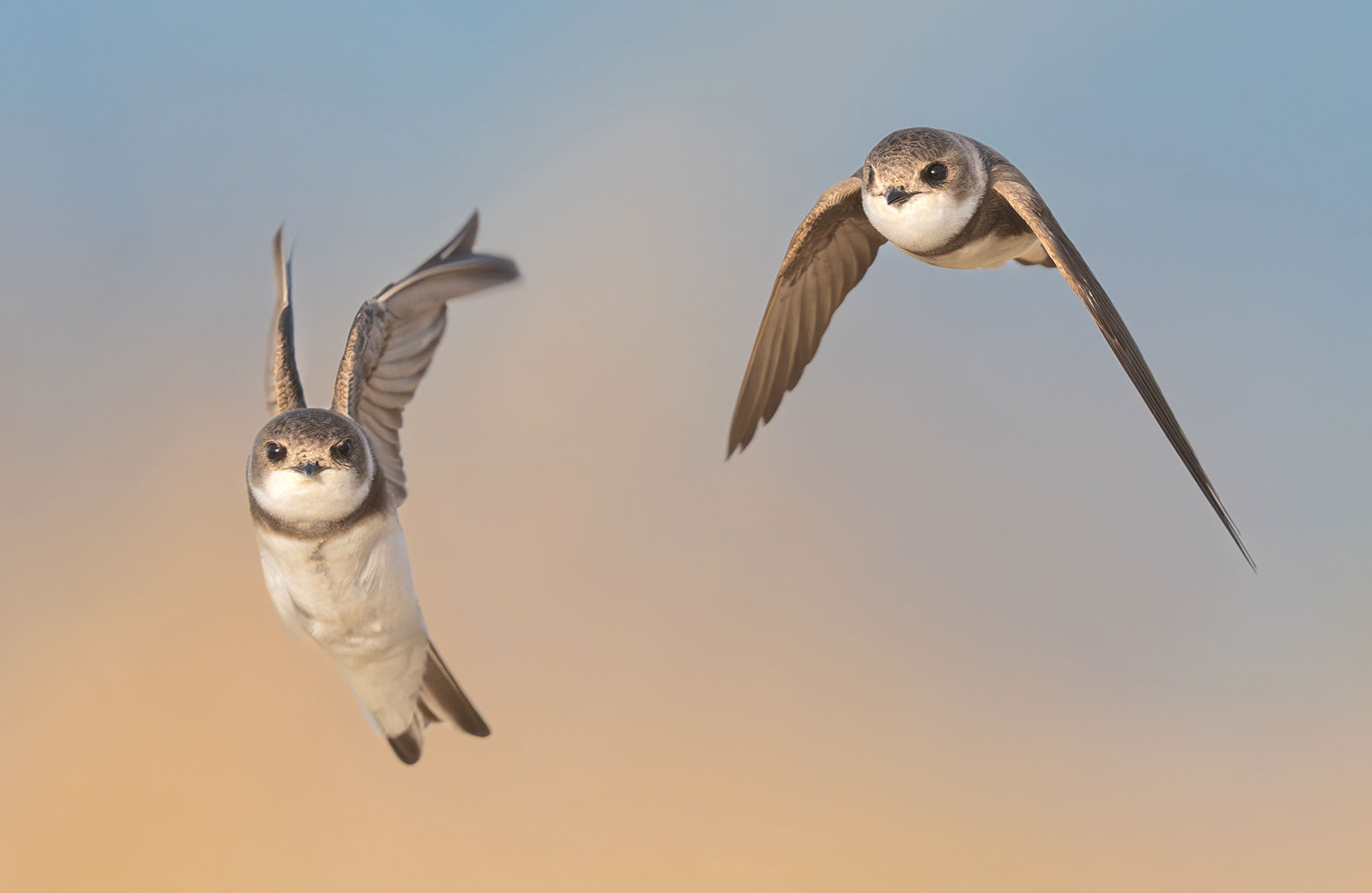
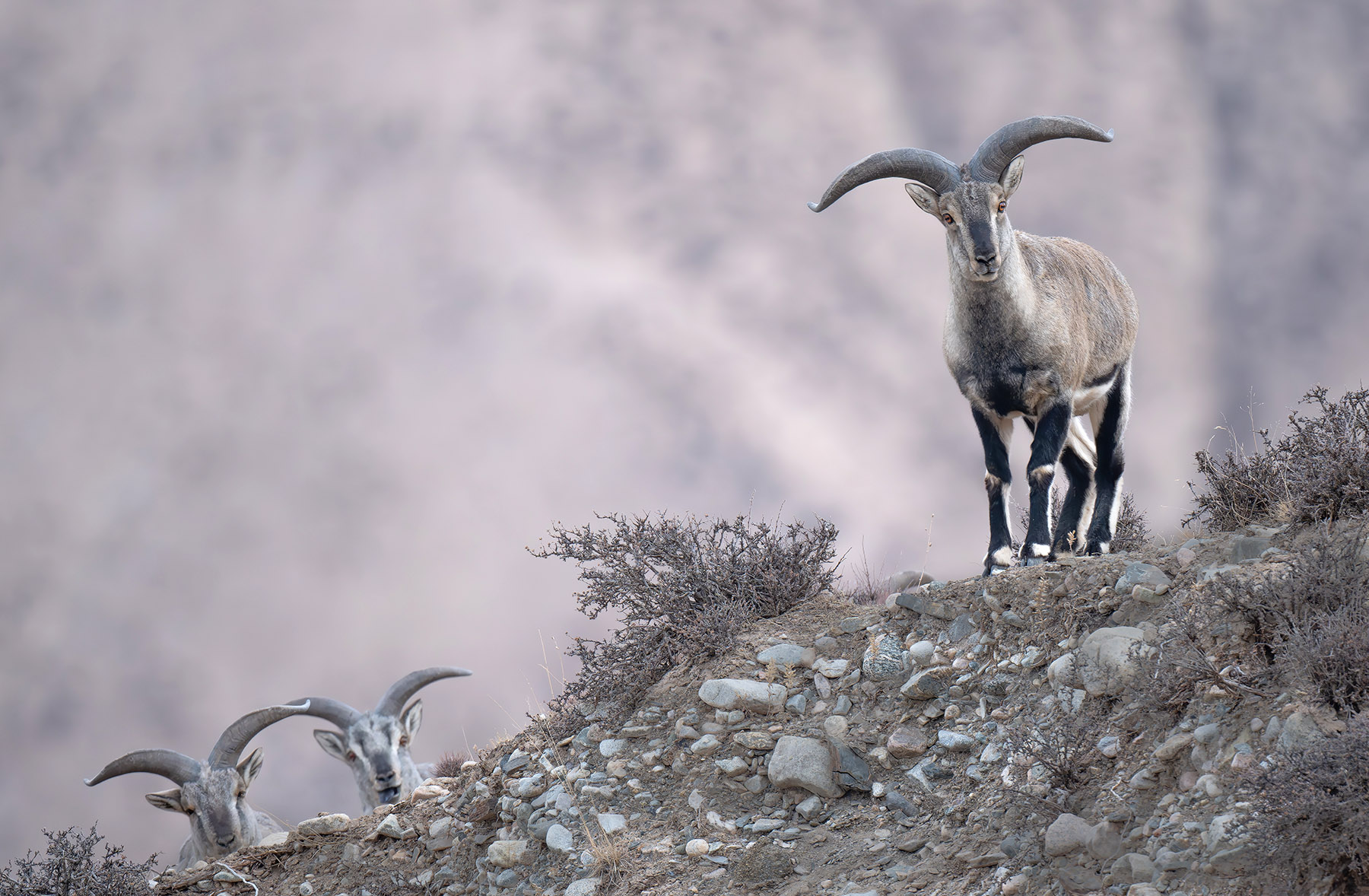
Chen Ruizhe, an official from the youth empowerment program Roots & Shoots, points out that the winning entry captivates the audience with its remarkable variety, from insects and birds to wolves and blue sheep, from mudskippers along the shore to weasels in the pasture, each frame revealing a world of wonder.
"What makes this collection even more extraordinary is that all the photographers belong to one remarkable group: people under the age of 18," she notes.
"Their youth, love for nature, and passion for life radiate through their work. While solid foundational skills and continuous improvement define their craftsmanship, what truly sets them apart is their keen observation, rich imagination, and unwavering dedication to the natural world," she adds.
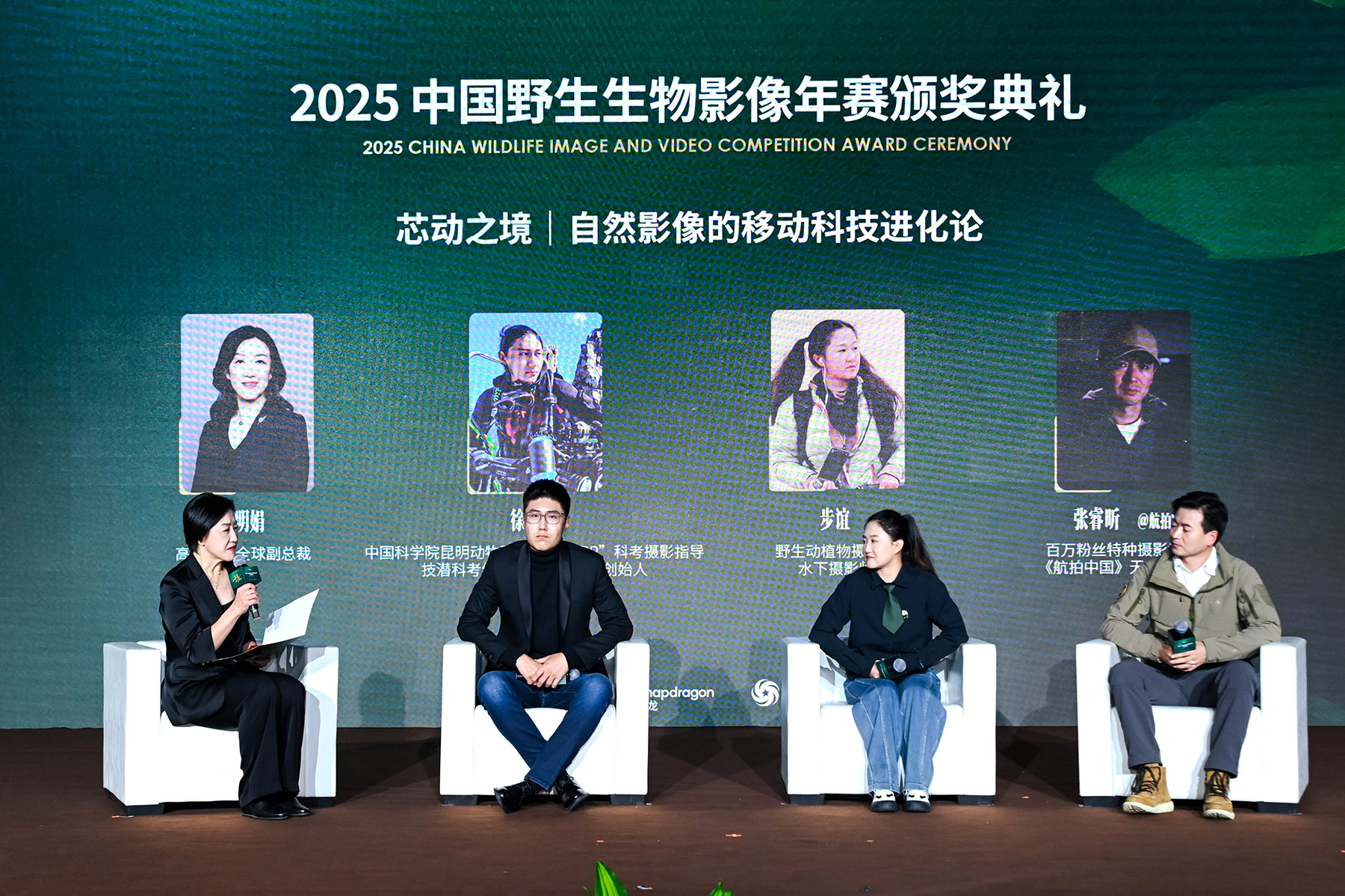
The competition's core mission of making nature documentation accessible to all has found a powerful ally in the ongoing evolution of technology, which is steadily lowering barriers to observation and creation.
Hou Mingjuan, senior vice-president of Qualcomm, highlights how the profound emotional resonance of the winning works is intrinsically linked to the quiet, enabling promise of the tools used to create them.
"Through breathtaking images, we not only see the grandeur of nature, but also feel the quiet, explosive power of life unfolding in the smallest details," Hou says.
She draws on her own experience when she joined a Chinese National Geography expedition to Mount Qomolangma in the Xizang autonomous region, in 2025.
ALSO READ: Putting life in focus
"The thin air, the harsh landscape, the hours of waiting for a shot, all taught me that every image hides untold perseverance," she says.
She emphasizes that Qualcomm's Snapdragon technology is designed to be "the engine for multi-perspective imaging", integrated not just into smartphones but also AI glasses, action cameras and drones, giving creators "freer, more diverse perspectives to reach more unreachable realms".
Looking ahead, Li, with Chinese National Geography, outlines a bold vision for the competition.
"The competition will continuously strengthen its role as a global platform serving creators worldwide," he says.
By leveraging cutting-edge technology, it will empower the aspiration of "making everyone a nature photographer".
"The goal is to encourage more people to become discoverers of knowledge with the spirit of scientific rigor and truth-seeking, while driving the development of a comprehensive ecosystem encompassing publishing, communication, exhibitions, and conservation efforts," Li says.
Contact the writer at yangfeiyue@chinadaily.com.cn
