

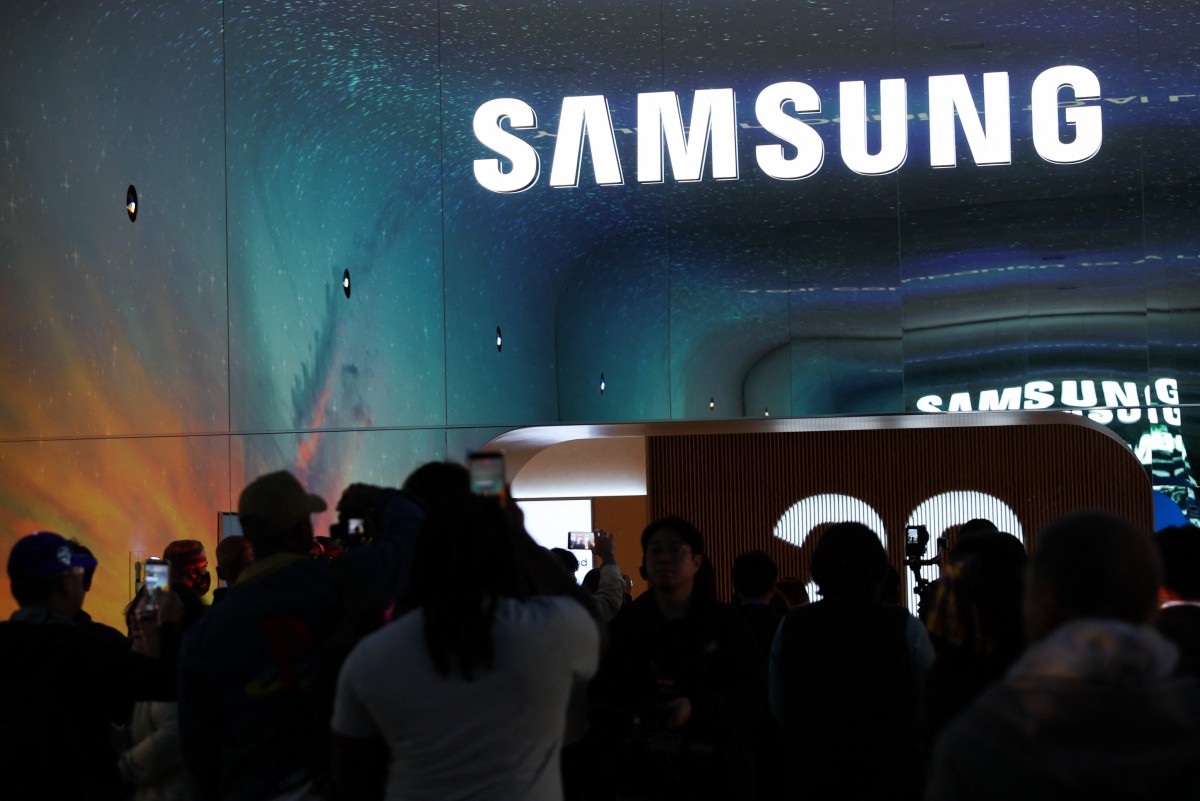
SEOUL - Samsung Electronics on Thursday projected a threefold jump in fourth-quarter operating profit from a year earlier to a record high as tight supply and a surge in artificial intelligence-driven demand stoked prices for conventional memory chips.
The results highlight how chip prices have rocketed as chipmakers scramble to keep up with demand for memory chips used in servers, personal computers and mobile devices to meet AI needs.
The world's largest memory chipmaker estimated an operating profit of 20 trillion won ($13.82 billion) for the October-December period, beating an LSEG SmartEstimate of 18 trillion won and up from 6.49 trillion won a year earlier, a regulatory filing showed.
The operating profit is a new quarterly record, topping its previous high of 17.6 trillion won in the third quarter of 2018.
ALSO READ: Samsung to double AI mobile devices to 800m units this year
Samsung shares edged up 0.6 percent in morning trade on Thursday to a record high, adding to a 155 percent jump over the past year.
'Terrific' chip demand
The top makers of conventional chips, including South Korea's SK Hynix and Micron Technology, are struggling to meet demand and have to build more fabrication plants.
"The world is going to need more fabs and the reason for that is because of this new industry called AI factories," said Jensen Huang, CEO of the dominant maker of AI processors, Nvidia.
"It's good to be a semiconductor manufacturer," he told reporters at the Consumer Electronics Show in Las Vegas, adding that "the demand out there is really, really quite terrific."
The global DRAM market is expected to more than double to $311 billion in 2026 from last year, which would be nearly six times the market's size in 2023, Macquarie Equity Research said in a note on Tuesday.
DRAM chips are used in servers, computers and smartphones to temporarily store data and help run programs and applications smoothly and swiftly.
Contract prices for a type of DRAM chip rose 313 percent in the fourth quarter from a year earlier, according to data from market tracker TrendForce.
TrendForce expects conventional DRAM contract prices to rise a further 55 percent to 60 percent in the current quarter from the previous one.
Samsung, which is also the world's top maker of smartphones and TVs, expects revenue to rise 23 percent to a record 93 trillion won from a year earlier.
Its semiconductor business will account for the lion's share of its operating profit, generating about 17 trillion won in the fourth quarter, according to Ryu Young-ho, a senior analyst at NH Investment & Securities.
He expects strong memory prices this year will more than offset sluggish growth in its mobile business, which he said would find it challenging to raise prices sharply to counter rising memory component costs.
Rising memory costs
Analysts remain broadly optimistic about Samsung's earnings outlook, expecting memory undersupply to persist into 2026 as global data centre investment expands and capacity remains constrained.
However, some have cautioned that rising memory component prices could dampen demand and drive down margins for data centres, PCs and smartphones.
DB Securities analyst Seo Seung-yeon projected that fourth-quarter profit at Samsung's mobile business is likely to decline from a year earlier due to higher component costs, while profit is expected to grow in its display business on robust sales of its major customer Apple's iPhone 17 series.
READ MORE: Samsung 'hikes memory chip prices by up to 60% as shortage worsens'
Samsung's co-CEO TM Roh, who oversees Samsung's mobile, TV and home appliance business, told Reuters that some impact from rising memory prices was "inevitable", and did not rule out raising product prices.
Advanced memory chips
Analysts noted that Samsung's high-bandwidth memory (HBM) business is poised for significant growth in 2026 from a low base in 2025, supported by stronger demand from customers adopting custom chips such as tensor processing units (TPUs) and expectations that Samsung will gain a higher market share at Nvidia.
READ MORE: Samsung Electronics says in talks with Nvidia to supply next-generation HBM4 chips
Samsung's co-CEO Jun Young-hyun said last week that Samsung customers have praised the competitiveness of the company's next-generation HBM chips, or HBM4, quoting them as saying "Samsung is back".
Samsung plans to release detailed results, including a breakdown of earnings for each of its business divisions on Jan 29.
