

InSilico Medicine Cayman TopCo, an artificial intelligence drug discovery startup, said on Monday that it has secured a research and development deal worth up to $888 million with French pharmaceutical company Servier, capping a transformative week that saw the AI drug discoverer debut in Hong Kong's largest biotech listing of 2025.
The agreement adds global validation to InSilico's technology just days after it announced a separate R&D breakthrough with Chinese partner Zhejiang Hisun Pharmaceutical Co Ltd, reinforcing investor enthusiasm for artificial intelligence as a tool to slash drug development times.
Under the terms of the multi-year agreement announced on Monday, InSilico will be eligible to receive up to $32 million in upfront and near-term payments to deploy its proprietary Pharma. AI platform to discover novel treatments for difficult-to-target cancers. Including milestone payments, the total deal value could reach $888 million. Servier will share R&D costs and lead the subsequent clinical development, regulatory interactions and global commercialization of any resulting drugs. "This collaboration reflects our confidence in InSilico's internally developed and validated AI platform," said Christophe Thurieau, executive director of the Research Institute at Servier.
For InSilico, the deal is an opportunity to deploy what its founder calls the next phase of drug discovery. "I believe the future of pharmaceutical superintelligence is ever so close, where AI agents could actually make decisions and design experiments, driving a virtuous cycle of faster, smarter and safer drug development," said Alex Zhavoronkov, founder and CEO of InSilico Medicine.
While the Servier deal promises future revenue, InSilico pointed to raw speed in local research collaborations as proof of concept.
On Friday, InSilico announced it had nominated a preclinical candidate PCC for Hisun Pharmaceutical just eight months after their collaboration began in April 2025.
With research and operations straddling across the United States, China, Canada and the Middle East, InSilico is among an early cohort of startups that use AI to improve drug discovery. Industry data suggest traditional early-stage drug discovery typically drags on for 2.5 to 4 years. By contrast, InSilico claims to have compressed this timeline to an average of 12 to 18 months.
Its most advanced internal drug candidate, which treats an incurable lung disease, has shown promise in a mid-stage study.
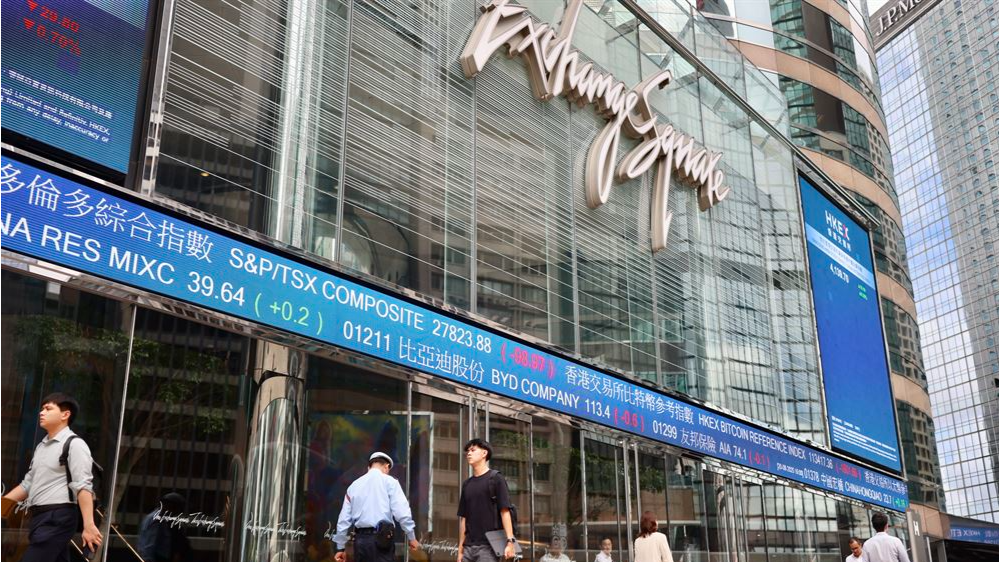
The promise of such efficiency drove a frenzy for InSilico's initial public offering on the Hong Kong stock exchange on Dec 30, raising HK$2.28 billion ($292.75 million).
ALSO READ: Insilico Medicine is said to aim for HK listing in coming weeks
InSilico stated it plans to use nearly half of its Hong Kong IPO proceeds to fund the clinical research and development of its key clinical-stage pipeline drug candidates, with another 20 percent earmarked for early-stage drug discovery, and 15 percent for the development of new generative AI models.
InSilico reported more than $85 million in revenue in 2024. Besides developing its own drugs, the company generates revenue by selling access to its AI drug discovery software, collaborating with industry peers and licensing assets to clients.
The AI pharmaceutical sector is approaching a "singularity", said Sinolink Securities analyst Zhao Haichun, predicting the "first major moment will inevitably be the market approval of the first human drug developed via AI".
Despite the capital inflow — Sinolink Securities recorded 12 global business development transactions in 2025 in the sector by late November — hurdles remain.
Experts warn that data silos pose a systemic risk. "The most valuable knowledge often remains hidden in corporate data silos," said Liu Haiguang, chief scientist at Zhongguancun Academy.
