

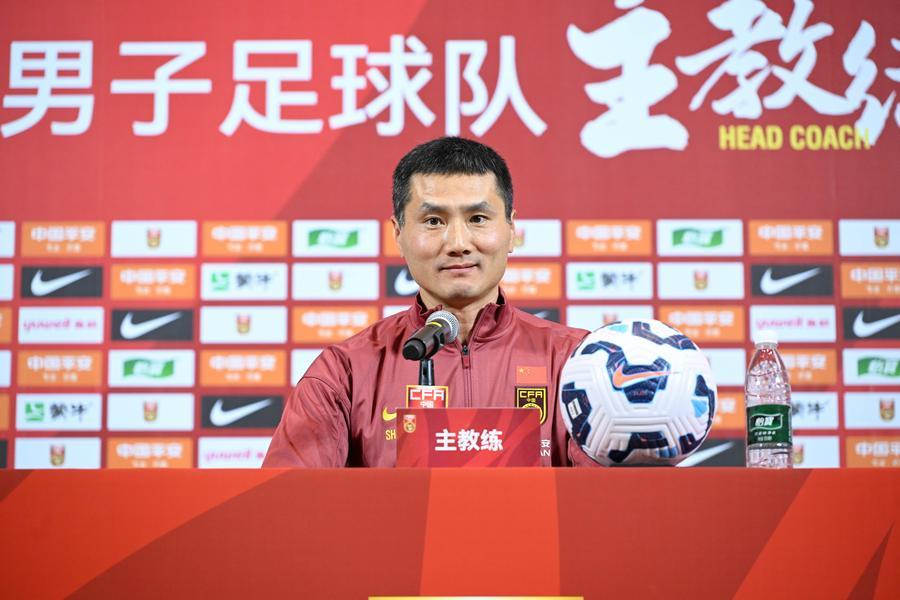
A new start, yet the tall task remains, and is seemingly harder than ever. Despite looking like an almost insurmountable goal, the Chinese men's national soccer team will continue to push for World Cup qualification, with the 2030 edition a top priority amid its tough rebuild under the watch of new manager Shao Jiayi.
The fresh-faced Shao, who was appointed the beleaguered squad's new head coach in November, minced no words on the Cup-qualifying ambition in his inauguration speech, but has called for a more realistic approach and a more concerted effort in addressing the most pressing issue.
"We have to get our confidence back. To me, that's the biggest challenge at the moment," the 45-year-old former Team China midfielder said during his introductory news conference in Zhaoqing, Guangdong province, on Sunday.
"And we won't be able to do it just by talking a big game to the players. We have to pick it up one step at a time with hard training, high-quality performances and solid preparations for future matches," said Shao, a formidable member of Team China's 2002 World Cup finals roster.
"For any player or coach with a national team, it's always the ultimate target to represent their country at the World Cup, and it's same with us.
"But, we have to focus on the present, which is the difficult situation we are in. To narrow the gap with the world, we need to keep our feet on the ground, stay humble and work diligently on a daily basis to contribute to the revival."
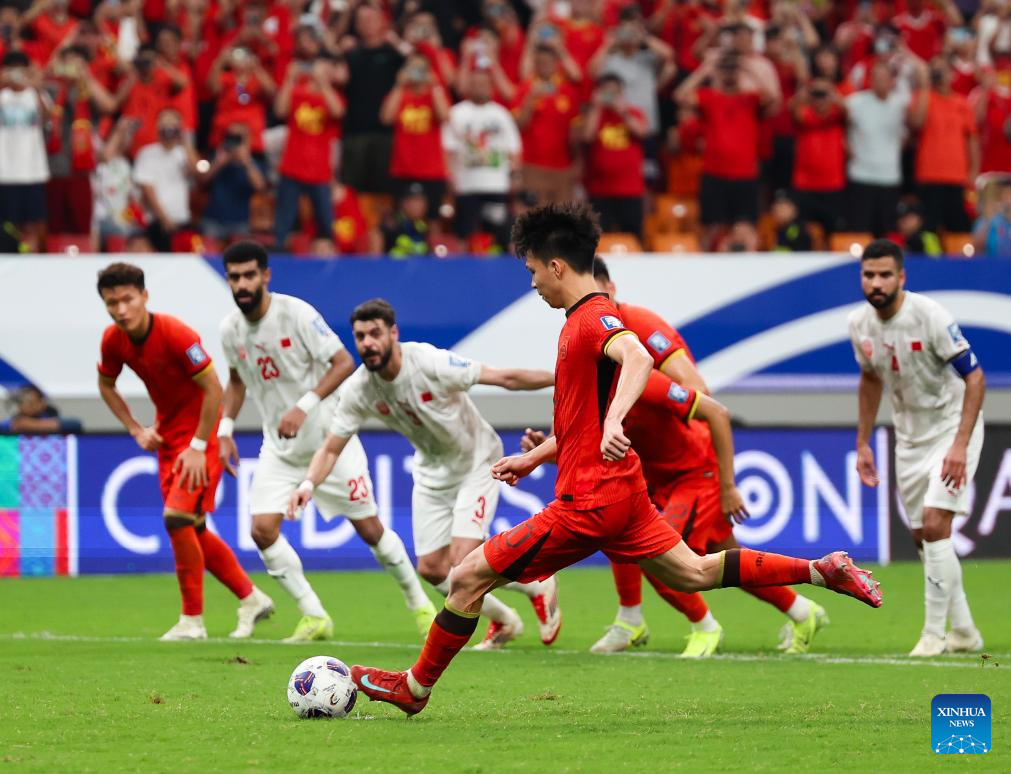
The restoration of confidence, for sure, won't be easy, given just how frustratingly Team China messed up with yet another Asian qualifying campaign for FIFA's marquee tournament only half a year ago.
Due to a lack of quality talent at the elite level, and the incompatibility of former coach Branko Ivankovic's tactics with the squad's abilities, Team China was eliminated in June, early in the third stage of Asian qualifiers for this summer's tournament in the United States, Canada and Mexico, failing to qualify for the Cup finals for a sixth straight time since the country's sole appearance in 2002.
As excitement builds globally for this summer's soccer showpiece, Team China, shamefully, has had to move on and prepare for a shot at the 2030 edition, with the Chinese Football Association's choice of Shao, over more experienced international candidates, for the high-pressure post reflecting its commitment to long-term youth cultivation.
ALSO READ: Shao: China's talents must set sights on Europe
A quick fix, with whatever temporary remedies, has been proved impossible for the disappointing national program, which has squandered huge sums of money and resources on its previous failed Cup-qualifying attempts, hiring expensive, big-name foreign coaches and introducing naturalized Brazilian-born players.
Shao, who worked as a team leader and an assistant coach with China's under-18 and U20 squads from 2018-23, reiterated his faith in youth, but insisted that standards won't be compromised in his new team.
"I got called up to the national team for the first time when I was 20, before I had much experience in the league," said Shao, who kicked off his 17-year pro career with his hometown club Beijing Guo'an in China's top-flight in 1999.
"I'd like to offer young players the same opportunities (I had), but on the condition that they prove themselves with consistency and quality."
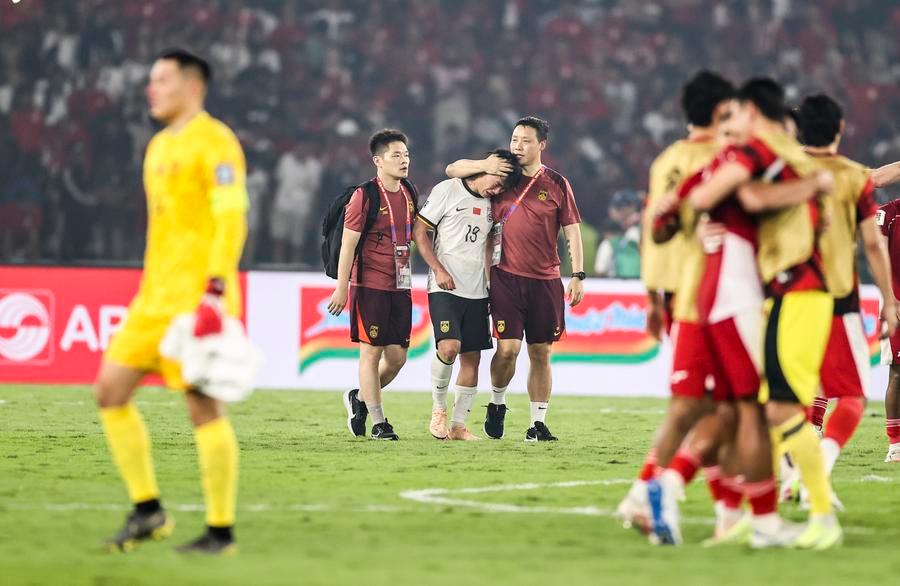
The CFA announced a 26-player roster for Shao's initial training camp, which is taking place in Zhaoqing and will travel to Dubai for a series of friendly matches through Jan 27, with four new faces added.
Notably absent from the senior roster are young striker Wang Yu-dong and defender Hu Hetao, who both impressed during last year's World Cup qualifiers. However, they are expected to rejoin the senior squad following their U23 Asian Cup commitments later this month.
The next major international tournament for Team China, which is currently ranked 93rd in the world and 14th in Asia, will be the 2027 Asian Cup to be held in Saudi Arabia.
Each and every day in this gap year counts toward that stern test, Shao insisted.
"The national team does not have any match that can be ignored. Every match is very important (even without featuring in any major international tournaments this year). Each match concerns our fans and the future trajectory of the national team. We can never slack off," Shao said.
After representing China at the 2002 World Cup jointly hosted by Japan and South Korea, Shao moved to Germany and went on to play 168 matches across the top-tier Bundesliga and second-division Bundesliga 2 with 1860 Munich, Energie Cottbus and Duisburg, respectively, scoring 24 total goals to become one of the most successful Chinese players to date to compete at an elite level in Europe.
Shao retired in 2015 as a Guo'an veteran after multiple injuries cut short his playing career, before opening a second chapter as a budding coach, first with the national youth squads and then with Chinese Super League club Qingdao West Coast.
During his short stint with Qingdao from 2024-25, Shao succeeded in saving the small-budget team from relegation for two consecutive seasons.
