

Design engineer makes it his life's mission to bring back the ancient craftsmanship of black pottery, taking it out of museum collections and into homes for everyday use, Wang Xin reports.
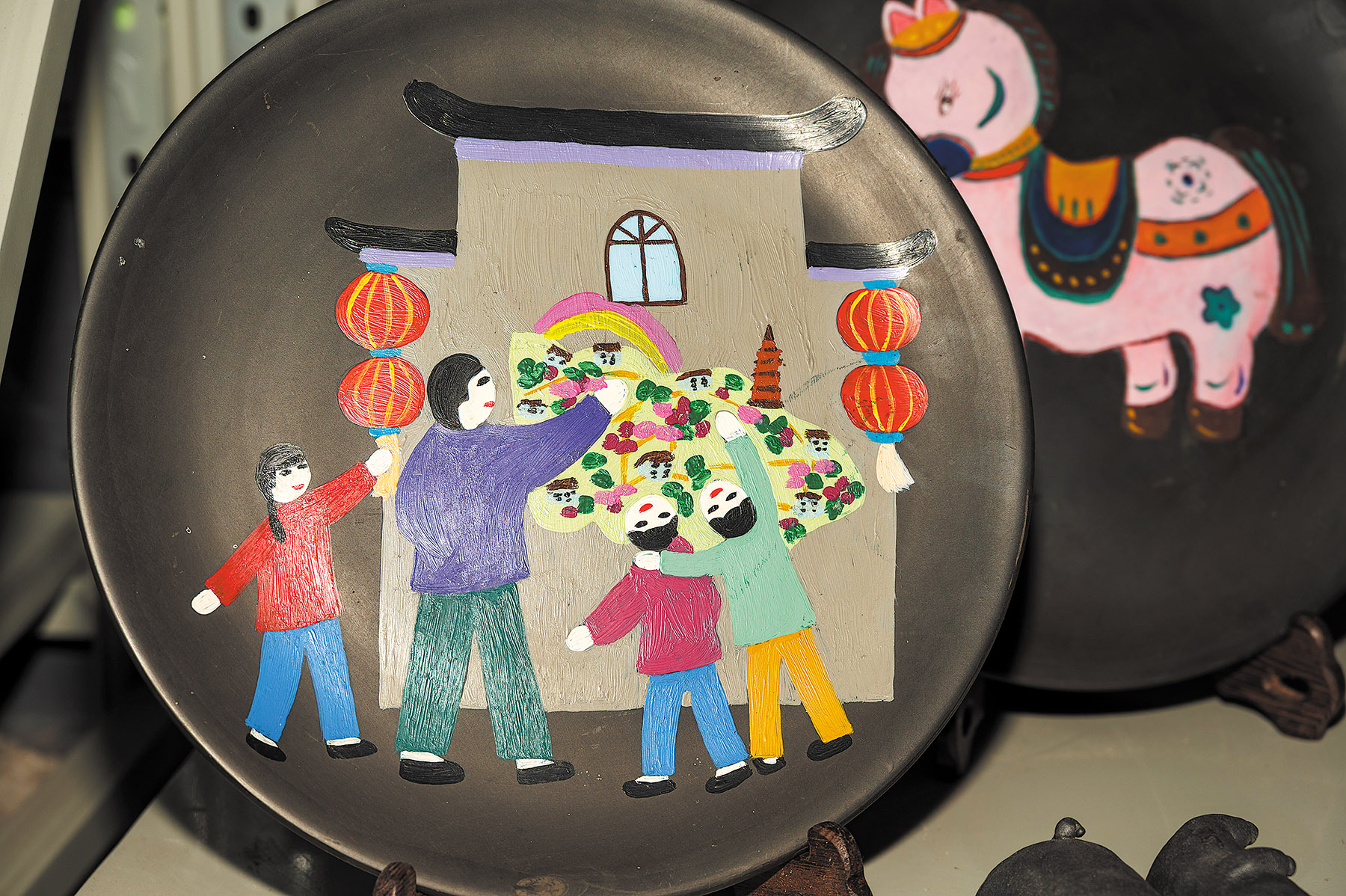
Song Qiujun, a design engineer from Shanghai's Jinshan district, is committed to reviving black pottery, an ancient craft with a 5,000-year history across China.
Black pottery is a prominent variety and a brilliant achievement in Chinese pottery-making, and stands as one of the nation's cultural symbols of primitive society and ancient civilization. It is considered a pinnacle of ceramic craftsmanship following painted pottery and possesses major historical significance and rich cultural connotations.
Black pottery is also regarded as a representative of Liangzhu culture (3300-2300 BC), a Neolithic period that existed in the Yangtze River Delta region, which is known for its sophisticated jade carving.
READ MORE: Tibetan youths value cultural heritage
Pottery ware of this kind is typically made of gray clay, featuring bright, refined surfaces and uniquely structured shapes. Since ancient times, scholars and poets have praised it as "black yet translucent, gleaming like gold" and described it as "sturdy as iron yet as lustrous as jade".
Tinglin town in Jinshan district has unearthed a large number of exquisite black pottery artifacts from the Neolithic period in Liangzhu, which serve as vital clues in deciphering the region's historical and cultural heritage. However, the craft was nearly obsolete in the late 1990s for a myriad of reasons.
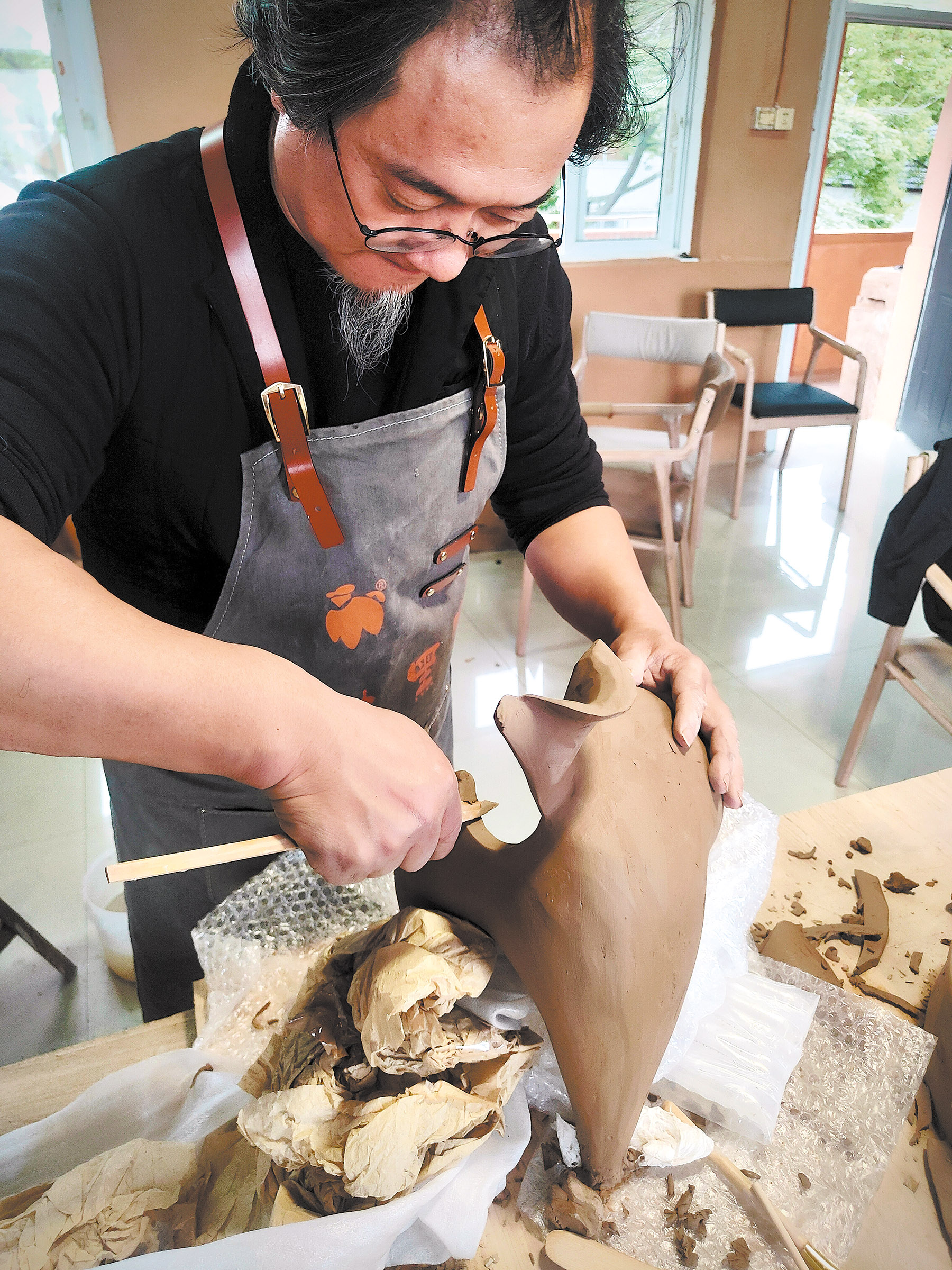
It is also around that time that Song's career began taking off. After graduating from school in 1999, he stepped into the building decoration industry. He started his own business in 2003 and raked in millions of yuan over the following year. While continuing his commercial success, Song always felt an attachment to his hometown and the district's cultural roots. For him, a district's unique cultural identity is just as important as its economic triumph.
The turning point came in 2015, when Song accidentally learned from a friend that Tinglin town harbored exceptionally high-quality clay, and his ambition was instantly kindled. As a Jinshan native with established connections in the art world, he felt a responsibility to showcase Jinshan's culture through art and to introduce the district's black pottery to Shanghai and then the nation.
But Song's team soon encountered significant challenges. They took it for granted that black clay could make black pottery — a misunderstanding the team spent nearly three years resolving. Struggling through numerous attempts and failures, as well as mental and financial challenges, Song continued to lead the team faithfully and relentlessly. Finally, they found the key.
The essential technique in making black pottery is not using blackened clay, but rather the complex ancient method of carburization during the firing process.
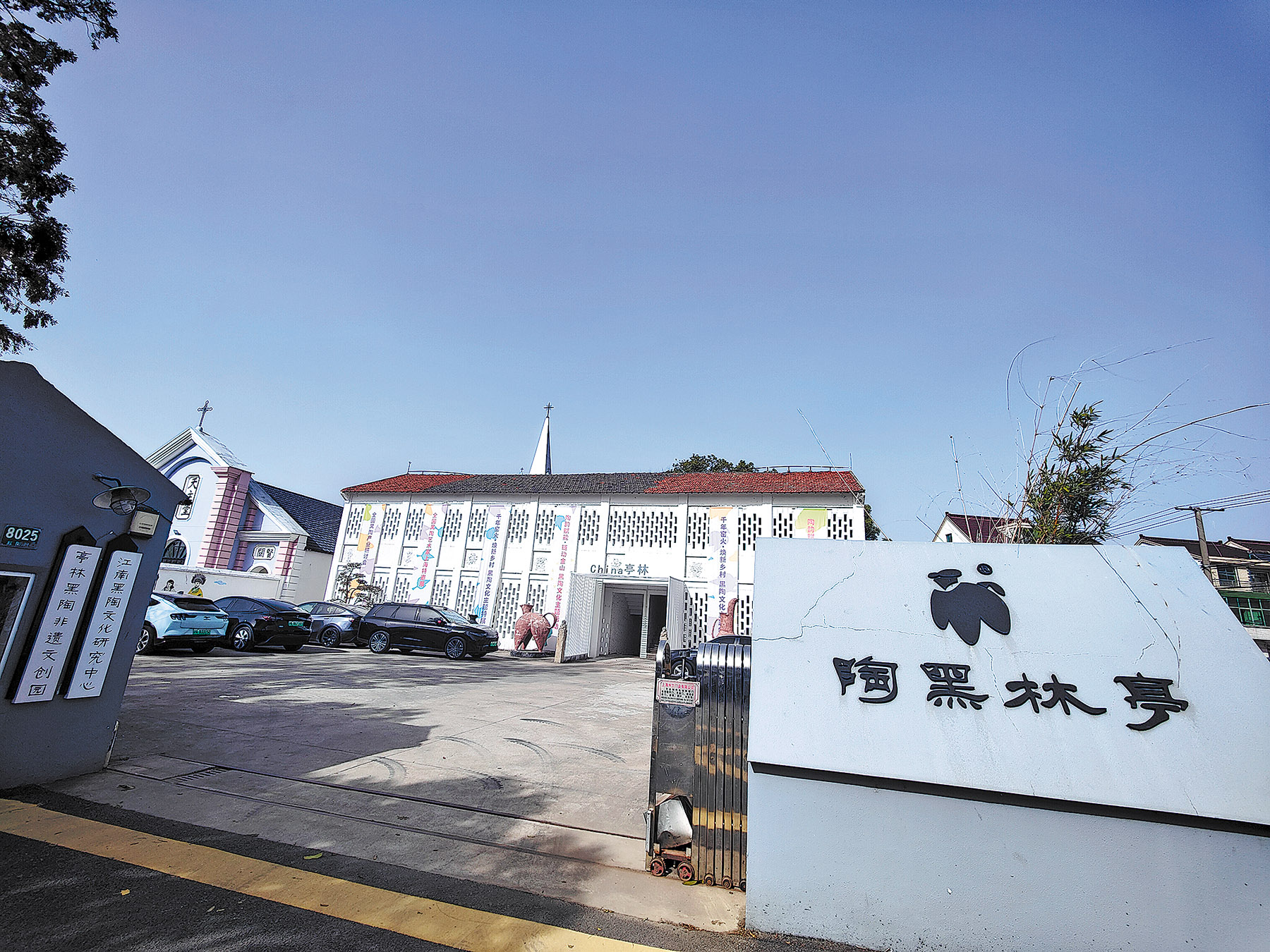
The firing of black pottery is both a science and an art, reliant on experience. The black pottery in Tinglin town is made from a local bluish-purple clay. The processes of digging, sun-drying, filtering, and settling the clay take around seven days. After shaping the vessels, drying and firing them take another four to five days, making a complete firing cycle at least 10 days.
The firing process is even more critical. In traditional black pottery firing, the dried clay objects are placed directly into the kiln. When the temperature reaches 800 C, woods and rice husks containing moisture are added to the kiln, which is then completely sealed, allowing the firing to continue under oxygen-deprived conditions. This process generates dense smoke, allowing carbon molecules to permeate the objects and complete the carburization.
Firing was even more challenging for Song, as he expected to "produce jet-black, lustrous, and hard black pottery at a temperature of 1300 C". He had to precisely control the temperature and pressure inside the kiln, judging the firing stage by listening to the sounds and observing the colors beside the raging flames to capture the right moment to add materials.
"Making a perfect piece of black pottery requires some luck," he says. Each time Song opened the kiln, he felt like he was opening a blind box, with disappointment being his usual reaction.

Fortunately, Song's perseverance paid off. After more than 400 trials and errors, his team hit a breakthrough by late 2018. They successfully stabilized the firing temperature for black pottery between 1200 and 1300 C, mastered the glazing techniques, and developed a pollution — and emission-free modern production method.
Song's innovation does not stop there. He is committed to reintroducing black pottery from displayed cultural artifacts back into everyday life as utensils, emphasizing the practical and innovative use of such ancient handicrafts.
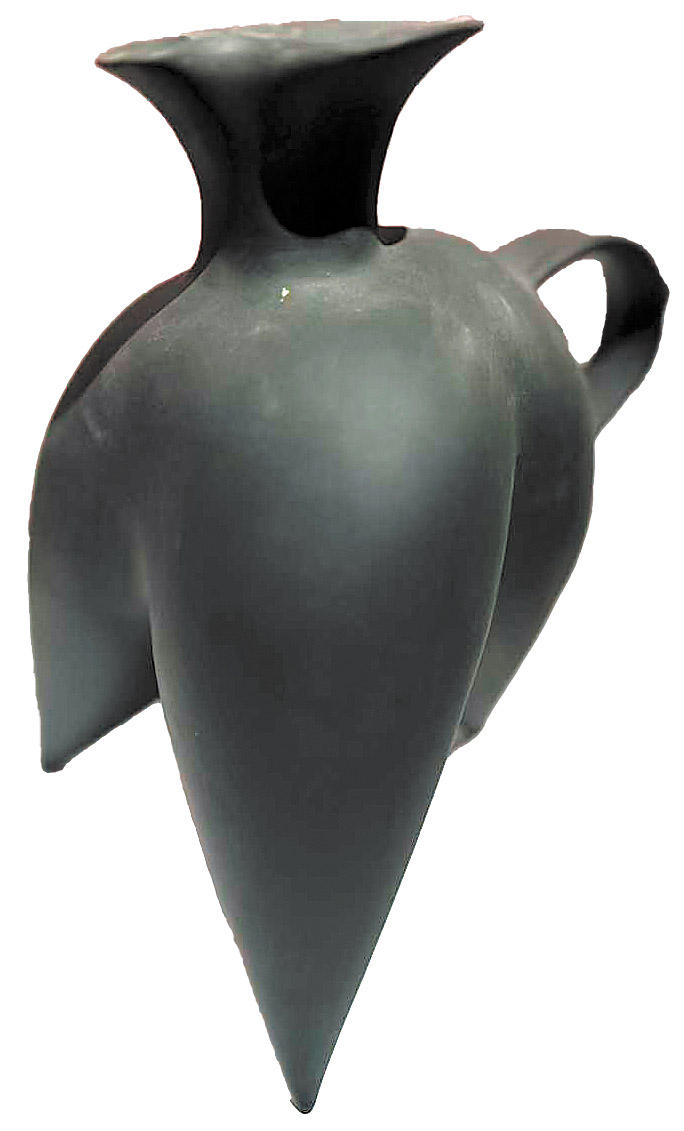
For instance, he ingeniously adapted the aesthetics of Liangzhu cultural artifacts, including a three-legged container for water and wine, into coffee or tea sets suited for modern use. Such innovation is far beyond a triumph in product design. It brings black pottery out of museums and back into everyday life.
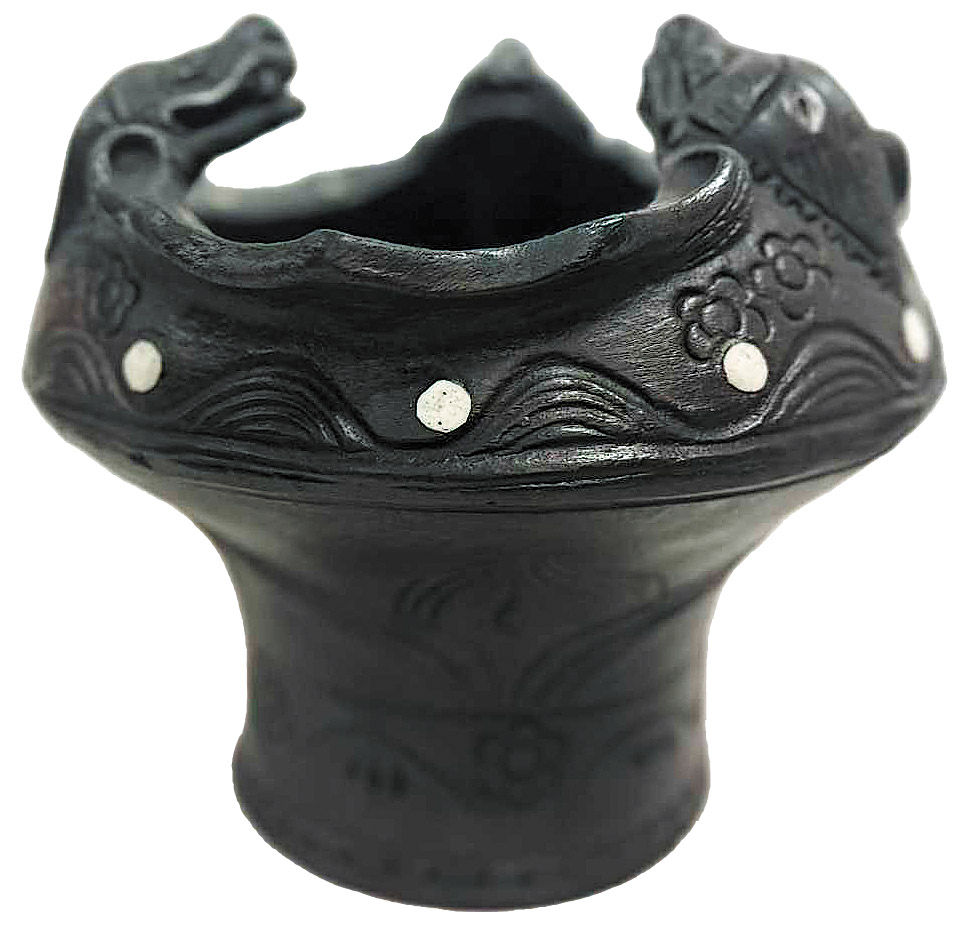
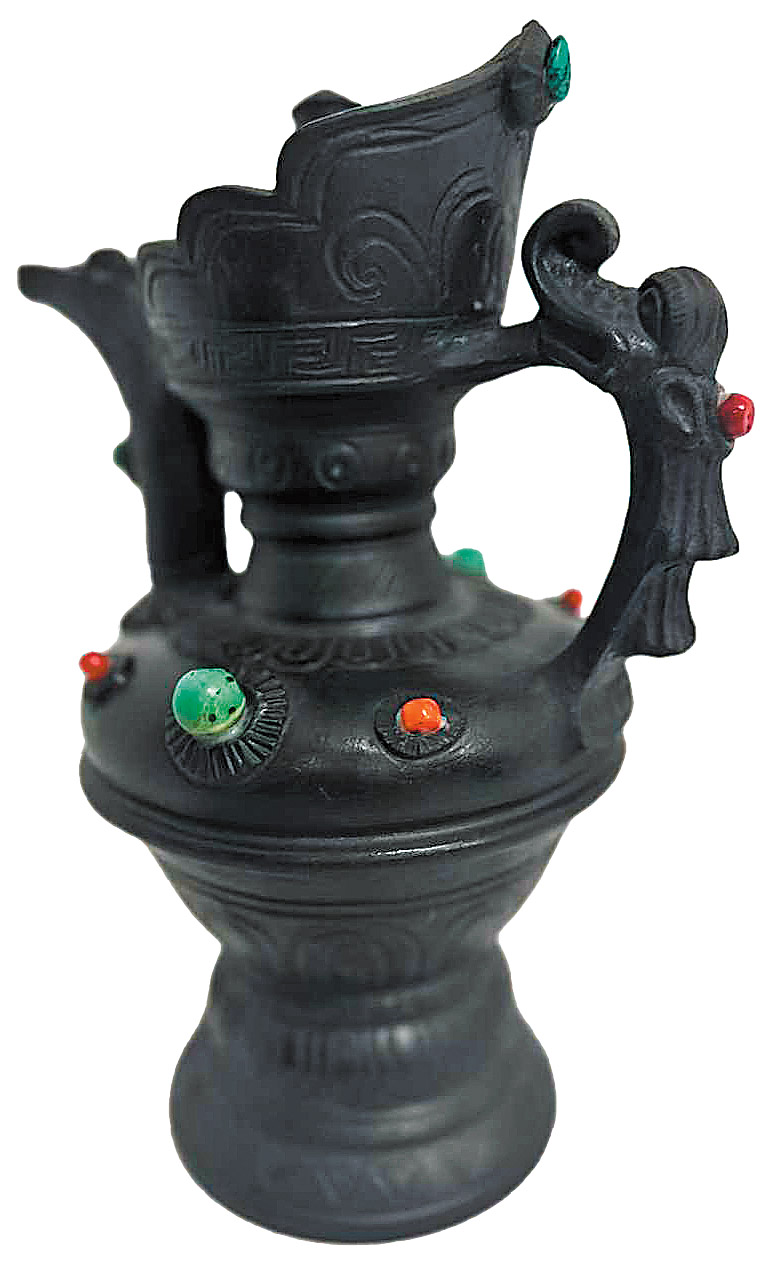
Moreover, Song registered a series of trademarks and design patents related to Tinglin black pottery in 2019, paving the way for its future commercialization and branding. "I hope to contribute more to my hometown community with the revitalized craftsmanship, including offering courses, attracting tourists, popularizing the craft, and creating jobs," he says.
Shen Shuying, 62, appreciates Song's diligent efforts, which allowed her to pick up black pottery making. Alongside Sun Yi, her 35-year-old son, she is enjoying each day molding the clay and inheriting the ancient craftsmanship at the Tinglin Black Pottery Intangible Cultural Heritage Creative Park.
ALSO READ: On-site museum takes closer look
The local governments of Tinglin town and Jinshan district are also working with Song to protect and promote black pottery. Last year, the district's black pottery craftsmanship was added to the Shanghai intangible cultural heritage list. Pottery wares from across the nation are displayed in exhibitions in Tinglin, and an industrial alliance is in the making.
"I will further explore the integration of diverse techniques in black pottery design while continuously refining the firing processes. My goal is to make our black pottery ware able to compete with major international brands and art pieces," says Song with confidence.
Contact the writer at wangxin2@chinadaily.com.cn
