

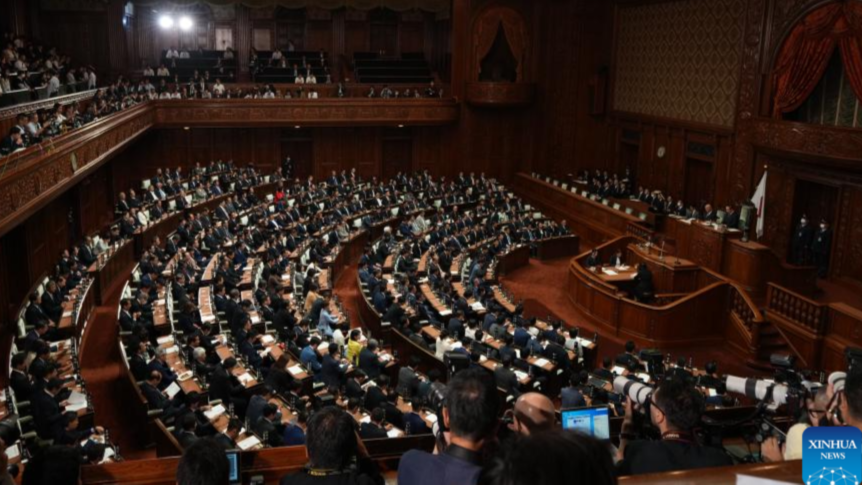
TOKYO - Japan's parliament on Tuesday enacted an 18.3 trillion yen (about $118 billion) supplementary budget for the current fiscal year ending March 2026 to fund Prime Minister Sanae Takaichi's massive stimulus package, raising concerns over the state's deteriorating fiscal health.
The draft budget cleared the House of Councillors, the upper chamber, just a day before the end of the current Diet session, after passing through the House of Representatives last week.
Although the ruling coalition led by Takaichi's Liberal Democratic Party lacks a majority in the upper house, some opposition parties, including the rising Democratic Party for the People, backed the bill as it incorporated parts of their demands for relief measures.
Under Takaichi's "responsible and proactive fiscal policy," the latest budget was the largest since fiscal 2022. A total of 8.9 trillion yen will be allocated for measures to ease the strain on households from elevated living costs, which mainly include tax cuts, subsidies and cash handouts.
ALSO READ: Reports: Japan plans bigger extra budget this fiscal year
As part of efforts to build what she has described as a strong economy, 6.4 trillion yen was earmarked to expand investment for crisis management and growth, mainly focusing on areas such as strengthening AI research and development, shipbuilding and space strategy. The supplementary budget also included 1.7 trillion yen for security and diplomacy.
Japanese government debt-to-GDP ratio now stands near 240 percent, the highest of any advanced economy. Despite the soaring debt, the government plans to issue 11.7 trillion yen in new bonds to cover more than 60 percent of the total supplementary budget, heightening worries over Japan's fiscal sustainability.
