

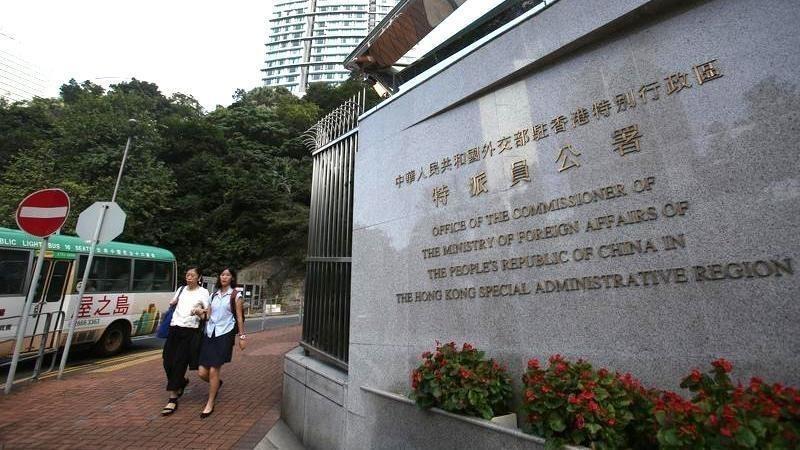
HONG KONG - Cui Jianchun, commissioner of the Chinese Foreign Ministry in the Hong Kong Special Administrative Region (HKSAR), on Sunday published an op-ed article on the verdict of Jimmy Lai's case in the local newspaper South China Morning Post titled "Jimmy Lai case shows the world HK's commitment to rule of law."
On Dec 15, Jimmy Lai was found guilty on two charges of conspiring to collude with external forces and a charge of conspiracy to publish seditious materials by the High Court of Hong Kong. The verdict was welcomed in the city and, as expected, prompted another round of outcries from some Western countries.
"As Commissioner of the Ministry of Foreign Affairs of the People's Republic of China in the Hong Kong Special Administrative Region, I feel obliged to set the record straight and reaffirm our commitment to the rule of law," Cui said in the article.
Cui raised three key questions in the op-ed and addressed each in detail.
On why Lai was convicted, Cui said that Lai, putting on a thin veneer of journalistic professionalism, deeply involved himself in and even masterminded a series of anti-China incidents, as proved by the evidence presented during the trial.
Acting as a proxy for external anti-China forces, Lai abused his media influence to incite social hatred and confrontation, actively promoted violent unrest and played a central role behind the 2019 "black violence" in Hong Kong, Cui noted.
Lai openly pleaded with foreign powers to impose sanctions on China and Hong Kong. Such actions seriously endangered national security, severely harmed Hong Kong's social stability and inflicted lasting trauma on its citizens. It was therefore not only necessary but imperative for him to face legal consequences, according to Cui.
Cui pointed out that in any jurisdiction, Lai's actions would constitute serious criminal offences, and he drew a parallel: if someone from a Western country used his influence to incite violence against his own government, colluded with foreign officials and called for sanctions to be imposed against his own nation, would that country's judicial system allow such behavior to go unpunished? "The answer is obvious."
Second, was Lai treated unfairly? "Absolutely not," Cui said.
ALSO READ: Judgment in Jimmy Lai’s case upholds rule of law
Lai received a trial conducted in strict accordance with the law, during which his legal rights were fully safeguarded. Hong Kong's judicial process is fair, transparent and adheres rigorously to legal procedures. The publicly available court records confirm that due process was meticulously followed at every stage, Cui emphasized.
As for his treatment in detention, Cui said the facts are clear. Hong Kong's Correctional Services Department has provided him with appropriate and lawful medical care throughout his custody, ensuring his well-being. Notably, Lai's own defence lawyer stated in open court that he had not been subjected to unfair treatment. These points collectively demonstrate that Hong Kong has consistently upheld the rule of law and respected humanitarian standards throughout this case.
Third, what does the interference by some Western countries in Lai's case reveal? Cui noted that certain Western countries have openly interfered in Hong Kong's judicial process throughout Lai's trial, calling for his release and even threatening sanctions against judges and prosecutors who were carrying out their lawful duties. "In seeking to sway judicial outcomes through political pressure, do these nations not discredit themselves, undermining the very 'judicial independence' that they profess to uphold?"
ALSO READ: HKSAR security secretary rebuts FT over Jimmy Lai case
The irony deepens when politicians invoke "human rights" and "freedom" to criticize Hong Kong while ignoring their own countries' legal frameworks, Cui pointed out. The United States, for instance, maintains multiple national security laws, including the National Security Act of 1947 and the USA Patriot Act. Likewise, the United Kingdom passed a heavy-handed National Security Act two years ago.
When these countries enforce such laws, they describe them as "defending the rule of law." Yet, when Hong Kong takes legally comparable measures to safeguard national security, the same actions are labeled as "suppressing freedom," Cui noted, calling this a clear example of double standards and a departure from the fundamental norms of international relations.
Hong Kong has now entered a new stage of pursuing sustained prosperity on the basis of social stability. A law-based, thriving and secure Hong Kong benefits not only its 7.5 million residents but also the wider international community, according to Cui.
"We warmly welcome friends from across the world to visit Hong Kong and see for themselves the vitality and stability that the rule of law protects and promotes," Cui added.
