

BANGKOK - Thailand has seized assets worth more than $300 million, including shares in a major regional energy company, and issued arrest warrants for 42 people in a high-profile push against regional scam networks, officials said on Wednesday.
Parts of Southeast Asia, including the border areas between Thailand, Myanmar and Cambodia, have become hubs for online fraud, with criminal networks earning billions from illegal compounds where trafficking victims are often forced to work.
The seizures and warrants involve Chinese-Cambodian tycoon Chen Zhi, who heads the US-sanctioned Prince Group, and Cambodian nationals Kok An and Yim Leak, who authorities said were all linked to transnational online scam operations.
Prince Group did not immediately respond to a request for comment. Chen, who is also facing indictment by the US, could not be reached for comment. Last month, Prince Group denied the company or Chen were involved in any illegal activity.
Reuters was unable to contact Kok An or Yim Leak.
Scam centers have defrauded people across the world
Although hundreds of people in the region have been detained for alleged involvement in scam centers that have defrauded people across the world, law enforcement agencies have yet to arrest the suspected masterminds of the lucrative networks.
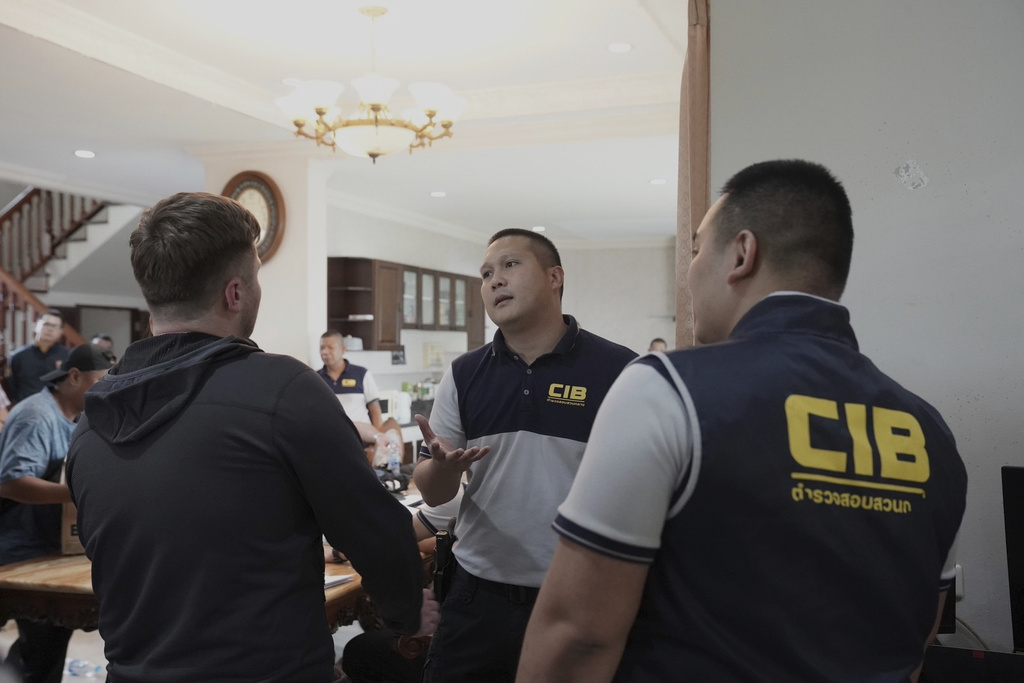
"We have seized assets worth 10,157 million baht ($318 million). Arrest warrants have been issued by the Criminal Court for 42 individuals," Sophon Saraphat, Deputy Commissioner of the Thai Central Investigation Bureau, told a press conference.
"As of yesterday, 29 individuals have been arrested."
Some of the assets seized were tied to Prince Group head Chen. Thailand's Anti-Money Laundering Office said in a statement that investigators had found "information on networks of online fraud, human trafficking, and money-laundering" that were linked to Chen and his associates. They did not give further details.
ALSO READ: China, 5 Southeast Asian nations to step up ties on fighting telecom fraud
Chen's whereabouts were unknown and it was not immediately clear if he was one of the people subject to a Thai arrest warrant.
In the past two months authorities in the Hong Kong Special Administrative Region and Singapore froze or seized assets linked to the Prince Group worth $354 million and $116 million respectively, after Britain and the United States sanctioned the Southeast Asia-based multinational network over accusations it was involved in running scam centers.
In October, the US Justice Department indicted Chen for wire fraud conspiracy and money-laundering conspiracy for allegedly directing Prince Group's operation of forced-labour scam compounds across Cambodia.
Prince Group rejected those allegations as baseless in a statement, saying neither the company nor Chen had engaged in unlawful activity.
Energy company shares seized
Another alleged scam operation involved Yim Leak, who Thai authorities described as "the heir of an influential network in Cambodia" that conducted fraudulent transactions, including domestic and international money transfers, the statement said.
The Anti-Money Laundering Office said it had seized trading accounts connected to Yim Leak as part of the probe, including shares in energy major Bangchak Corporation worth 6 billion baht ($188 million).
Bangchak said the actions taken by Thai authorities concerned an individual shareholder, adding it would cooperate with authorities and was committed to transparency.
"This matter is separate from Bangchak’s business operations and management, which continue as normal and remain fully stable," it said in a statement.
Bangchak’s shares closed up 1.87 percent on Wednesday.
Thai authorities said they have also identified a criminal group operating out of facilities in Cambodia owned by another Cambodian, Kok An, that used illicit earnings to acquire assets in Thailand.
Reuters was unable to reach Kok An, Yim Leak or their representatives. They have not publicly commented on the allegations.
READ MORE: Over 2,000 arrested in Malaysia's anti-scam crackdown
Cambodia's government and Foreign Ministry did not immediately respond to requests for comment on Thai authorities implicating Cambodian nationals in online fraud.
