

Sector showing signs of recovery, driven by more emotional, experience-driven consumption

The ice cream market in China is showing signs of recovery after two years of contraction, with global players accelerating product innovation, channel expansion and capital-market moves in anticipation of a cyclical rebound and long-term structural growth.
Food and beverage producer Nestle is signaling renewed confidence in the country's ice cream market.
At its national distributor conference last month, Xu Dai, senior vice-president of Nestle Greater China and head of its confectionery and ice cream unit, said Nestle's ice cream unit achieved double-digit sales growth in 2025, marking a clear rebound after two years of decline, according to Food Inc, a food industry portal in China.
Xu said: "The ice cream market in China is showing signs of recovery, driven by a shift toward more emotional, experience-driven consumption and a surge in new usage occasions."
READ MORE: Understanding China's new consumption reality
Nestle's turnaround has been led by its Oreo ice cream series, which posted triple-digit growth this year after entering the Chinese market in 2024. The company's 8 Cubes product retained its position as China's top brick-style ice cream, and its food service-focused B2B portfolio — used in freshly made beverages, cafes and bakeries — grew at a high double-digit pace.
The food and beverage company is expanding its product pipeline in 2026 with new 8 Cubes flavors, dual-wafer Crispy Shark bars, Q-texture jelly ice products, and additions to the Oreo lineup including mini cookie-coated bars and a sandwich ice cream format.
The company said these innovations aim to match the emotional preferences of younger consumers, who value novel textures, trendy color palettes and shareable formats that perform well on social media.
The Magnum Ice Cream Company, the world's largest ice cream maker, recently filed a statement with the US Securities and Exchange Commission, taking a key step toward listing its shares on the New York Stock Exchange. According to the public filing, China remains a strategic pillar for TMICC.
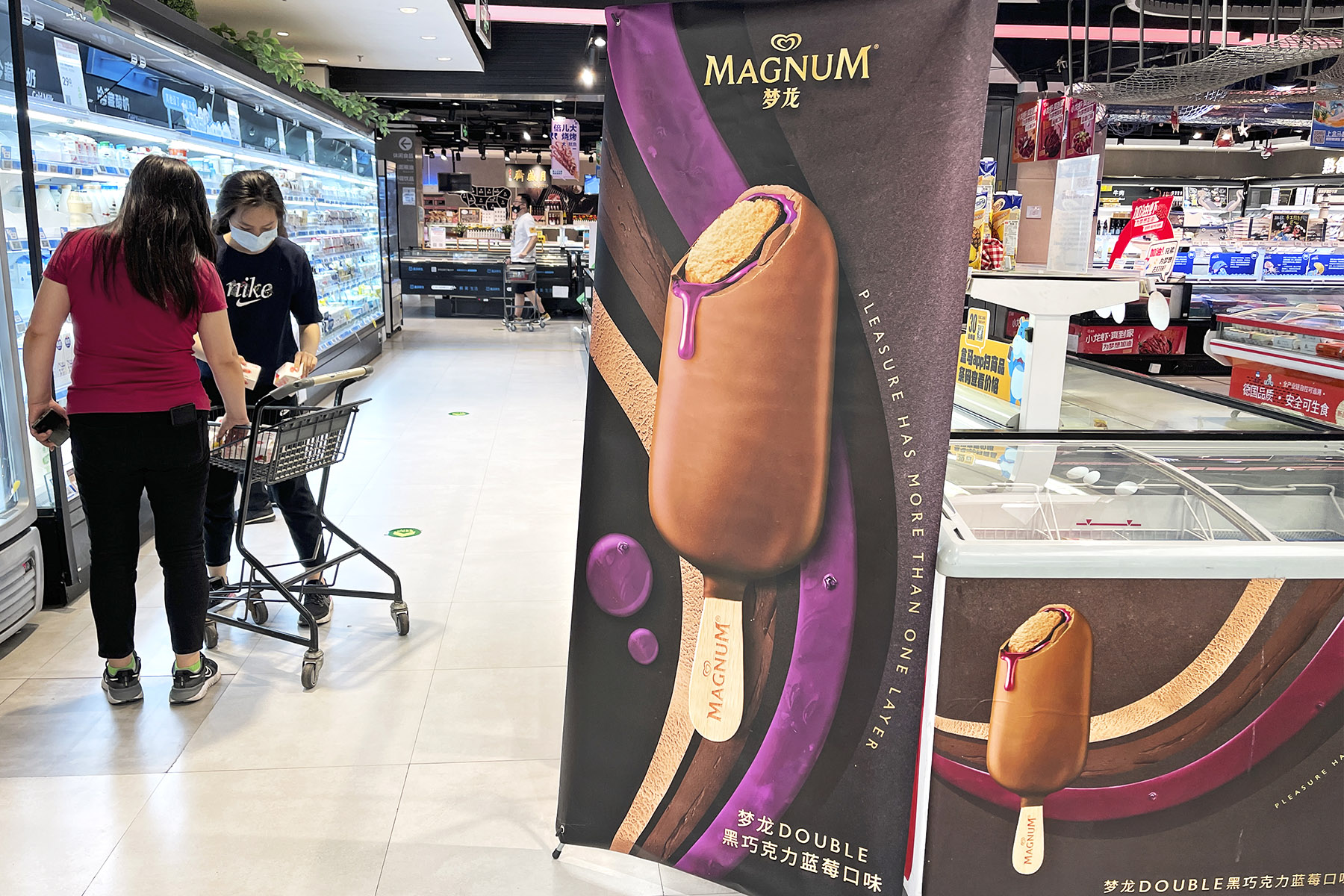
The company's primary brands, Cornetto and Magnum, ranked as the fourth and fifth-largest ice cream brands in the country by retail sales in 2024.
TMICC generated 317 million euros ($369.2 million) in China revenue in fiscal year 2024 and 270 million euros in the first half of 2025, driven mainly by impulse consumption and a distribution network that reaches a broad spectrum of channels.
This means the first half revenue has already reached 85 percent of last year's total revenue. The growth came from increased investment in distribution, freezer deployment and innovation and early marketing of the new products, according to the company.
Industry data point to a market in transition.
According to Euromonitor, China's ice cream sector is expected to grow 1.3 percent in 2025 — its first expansion after two years of contraction — yet per capita consumption remains at just 1.5 liters, far below levels in the United States, Japan and South Korea, leaving significant room for long-term growth.
Elisa Lin, senior consultant at Euromonitor International, said the ice cream market in China has recovered this year after 2024's deep descent. This turnaround is primarily driven by two factors.
First, the start of autumn in 2025 was later than usual in many parts of the country, with more hot days and less frequent extreme weather events compared to previous years, which boosted impulse purchases of ice cream, said Lin.
Second, within the industry, inventory levels dropped to relatively low levels at the beginning of the ice cream season. Significant discount-driven stock clearance was markedly less common than in 2024, leading to prices of new products becoming more stable.
At the same time, consumption logic is shifting. Flavor hybrids are proliferating, including ice cream blended with cookies, mint mixed with chocolate and cola paired with biscuit crumbs.
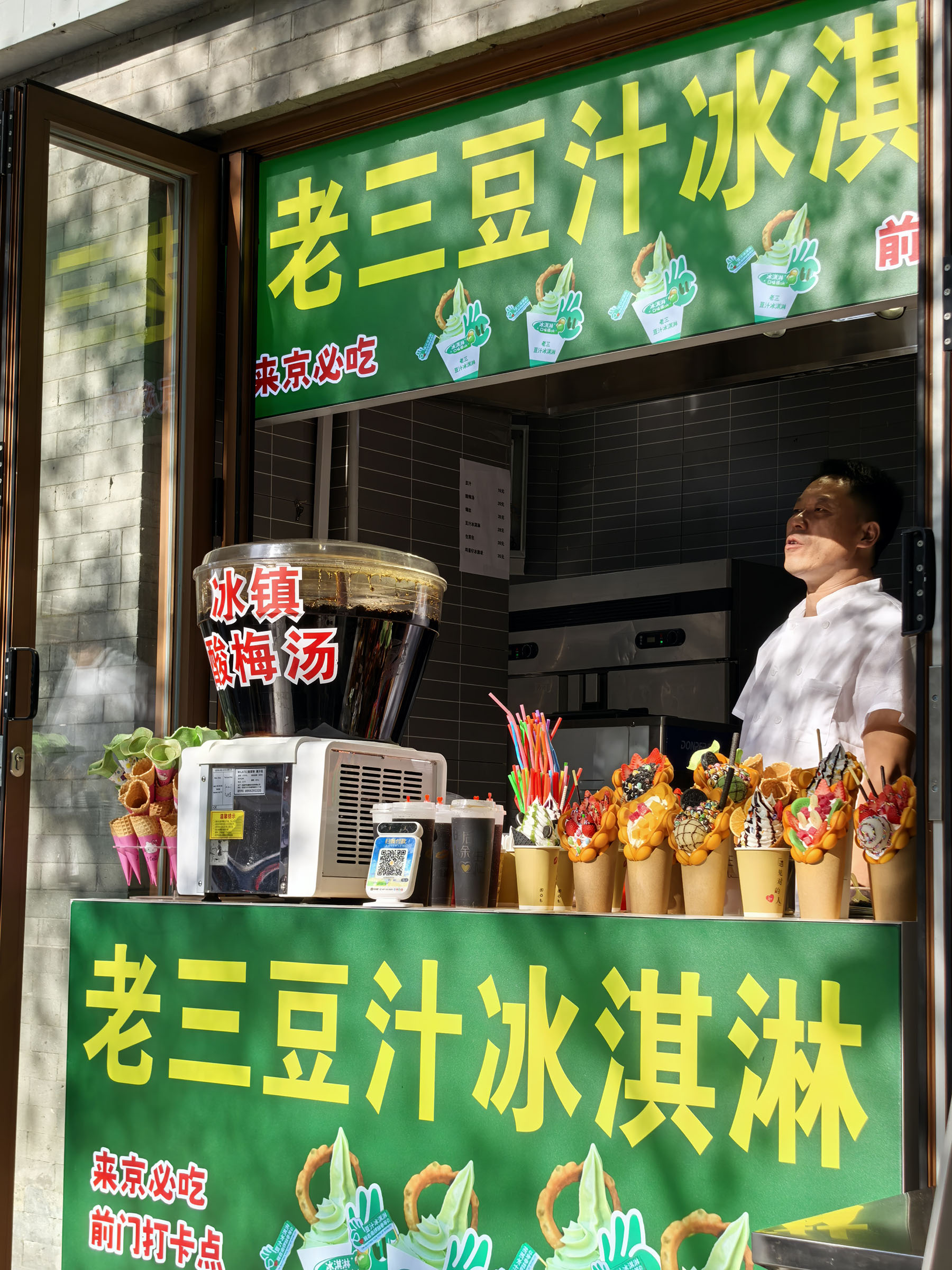
Tea chains have embraced ice-cream-infused milk teas, driving a wave of viral pairings thanks to the country's rapidly growing freshly made tea beverage industry. Ice cream has become a high-margin ingredient in tea shops, and brands are integrating ice cream stock keeping units into new beverage formats.
Meanwhile, China's retail landscape for ice cream is undergoing its fastest transformation in a decade.
Kantar data show that convenience stores and instant retail shops remain the two largest channels, accounting for 30.5 percent and 42.4 percent of category sales, respectively, both maintaining growth momentum.
NielsenIQ estimates that snack stores now exceed 100,000 outlets nationwide, contributing 5 percent of ice cream category sales, while instant retail — powered by front warehouses and store-warehouse integration — has become one of the industry's key growth engines.
ALSO READ: Ice cream brand faces heat from netizens
TMICC continues to benefit from its extensive distribution network, while Nestle is investing to shorten the distance between brand and consumer.
Marketing intensity is rising alongside channel competition. Nestle deployed a series of campaigns in 2025, including music-driven promotions and sponsorship of the 2025 football tournament in Jiangsu province. The activations generated an estimated 880 million online and offline impressions and helped drive double-digit sales growth in East China.
Executives said the sector is entering a more fragmented, innovation-driven phase where understanding young consumers and adapting quickly to shifting channels will determine who wins.
"The Chinese market is large enough for many brands," Xu of Nestle said. "We will refine our positioning, focus on what we do best, and deepen engagement with young consumers while working closely with our distributor partners to grow together."
Contact the writers at wangzhuoqiong@chinadaily.com.cn
