

Experts urge increased efforts as severe storms and floods displace thousands
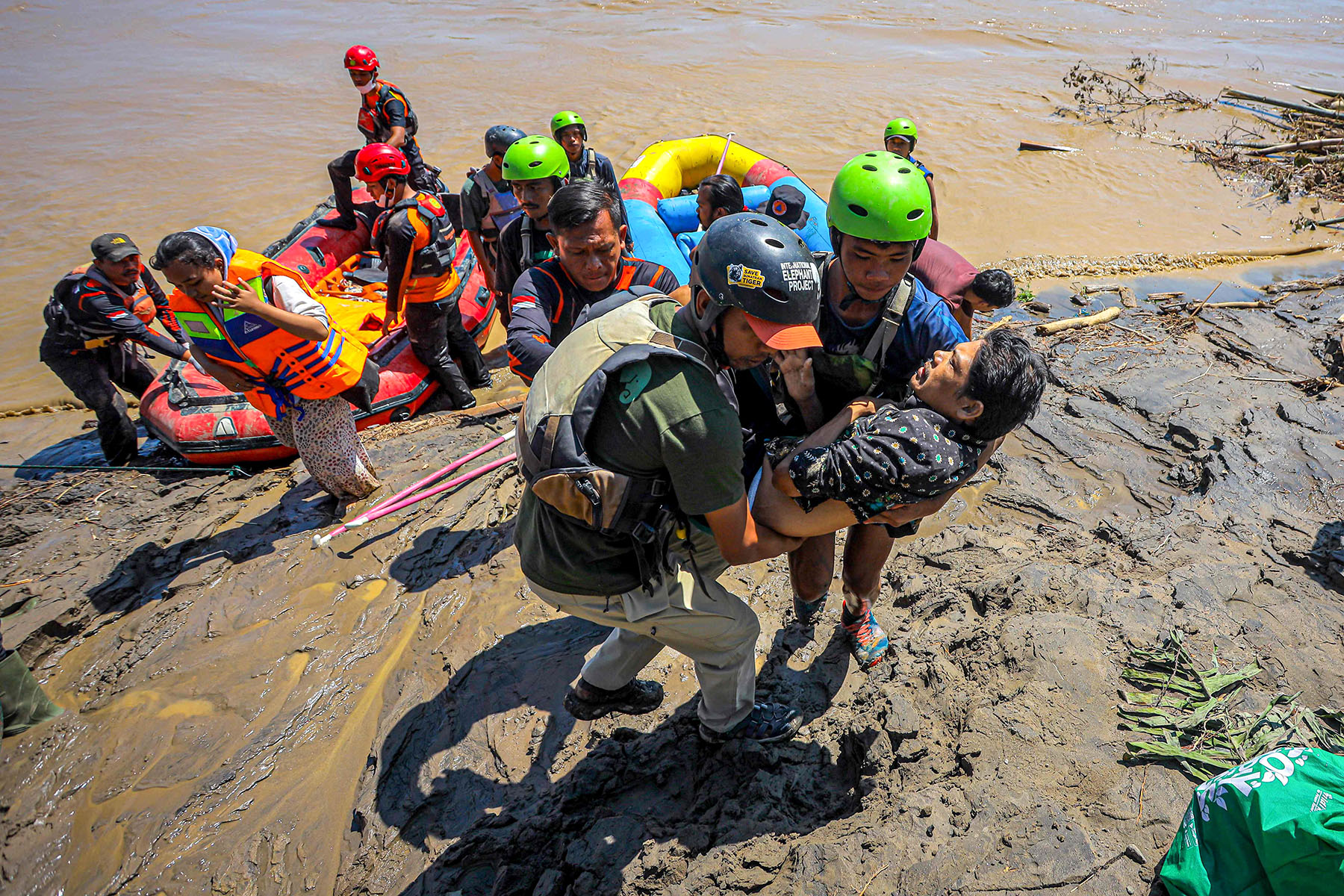
Intensifying typhoons and worsening floods are underscoring Southeast Asia's urgent need to accelerate climate adaptation, analysts warn, as global warming inflicts mounting costs on local communities.
Recent storms displaced thousands and inundated farmland across Indonesia, Malaysia, Thailand and Vietnam. While the northeast monsoon typically brings heavy rains in the fourth quarter, experts say this year's typhoons are more severe because of climate change.
The Association of Southeast Asian Nations Specialized Meteorological Center in Singapore forecasts above-normal rainfall across much of the region through January. A negative Indian Ocean Dipole — a climate pattern defined by differences in sea-surface temperatures that affects regional weather — is expected to persist until the year-end, driving wetter conditions.
READ MORE: Severe storms kill nearly 1,000 in Southeast Asia, Sri Lanka
"Adapting to the climate crisis is the most important agenda for developing countries today," said Renato Redentor Constantino, an adviser to the Climate Vulnerable Forum and V20 Group of Finance Ministers.
Sheeba Chenoli, an associate professor of geography at the University of Malaya, said governments must enforce policies and plan proactively as extreme weather intensifies.
Most climate strategies emphasize emissions cuts, she said, but adaptation is now critical because "it is more local".
Projects such as flood hazard mapping must be community-based since "only local communities know what needs to be done", she added.
Serina Abdul Rahman, an adjunct assistant professor at the Department of Southeast Asian Studies at the National University of Singapore, said adaptation policies must incorporate community feedback and recognize local knowledge of environments, habitats and weather patterns. "We need to move away from elitist approaches to knowledge, science and policymaking," she said.
Nguyen Ton Quan, deputy head of the Department of Community-based Disaster Risk Management and Communication under Vietnam's Disaster and Dyke Management Authority, said 14 storms and five tropical depressions have struck so far this year, with more expected.
Torrential rains in mid-November drenched Vietnam's central region, triggering floods and landslides that left 108 people dead, Viet Nam News reported on Friday.
In Indonesia, more than 300 people were killed by floods and landslides in Sumatra, the National Disaster Management Agency said on Saturday. Southern Thailand's severe flooding claimed 145 lives, while in Malaysia, more than 20,000 people were displaced.
The scale of destruction has pushed developing economies to demand greater adaptation funding at the United Nations climate conference in Brazil. The summit closed on Nov 22 with pledges to double adaptation finance by 2025 and triple it by 2035.
Serina of the National University of Singapore said ASEAN countries should have acted long ago to adapt to shifting weather patterns and climatic extremes.
Main driver
When it comes to climate change, Serina said "there is no more space or time for denial". Adaptation projects must tackle deforestation — the main driver of floods and landslides during periods of abnormally high rainfall, she added.
The online platform Carbon Governance in Southeast Asia reports the region holds nearly 15 percent of the world's tropical forests but suffers the fastest deforestation rate in the tropics. Indonesia alone accounts for more than 60 percent of regional forest loss.
ALSO READ: Deadly floods hit parts of Southeast Asia as more rain forecast
"While we see the side effects of climate change — and suffer from its harshest impacts — we don't focus enough on the factors that make it worse," Serina said.
Cesar Carlito Baclagon, regional finance campaigner at green group 350.org, said that building resilient, locally grounded systems to help communities adapt "is a strategy that makes survival possible". Local communities, he added, "deserve not just to endure but to thrive".
That is why adaptation must be embedded in a broader shift to a low-carbon economy, he said. "For the Global South, climate action must always be anchored on adaptation and resilience, shaped by countries' need for sustainable development."
Yang Han in Hong Kong and Xinhua contributed to this story.
Contact the writers at prime@chinadailyapac.com
