

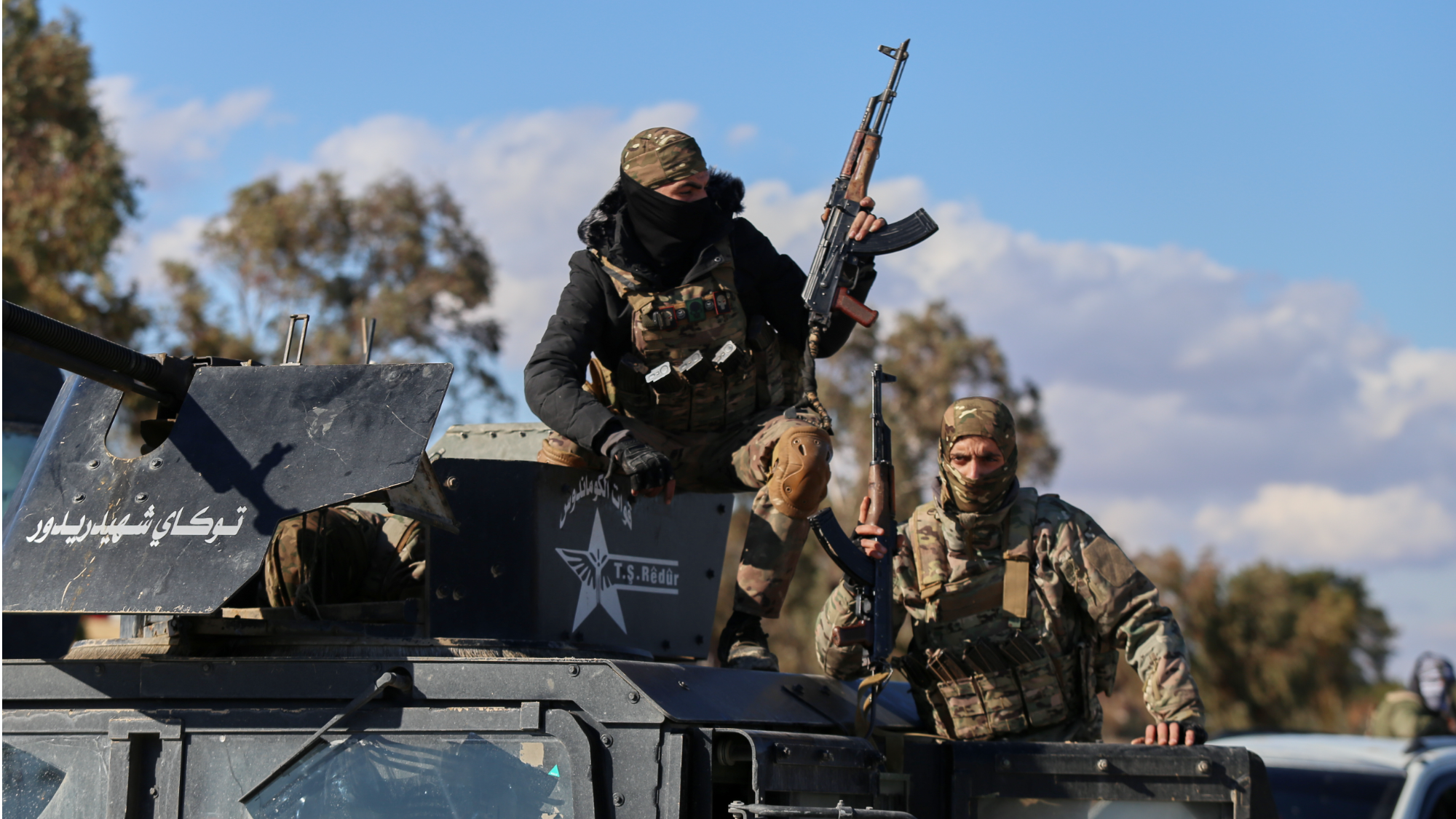
DAMASCUS - Forces of the Syrian interim government on Monday expanded deployments across northern and eastern Syria after attacks blamed on armed groups linked to the Kurdistan Workers' Party (PKK) left three soldiers dead, testing a newly reached agreement between the authorities and the Kurdish-led Syrian Democratic Forces (SDF).
In statements carried by Syria's state news agency SANA, the army said groups affiliated with the PKK had attempted to disrupt the implementation of the agreement by targeting deployed military units. The statement said two separate attacks on army positions killed three soldiers and injured others.
Despite the incidents, the army said units were continuing their organized advance in Syria's Jazira region -- a term referring to the northeastern part of the country between the Euphrates and Tigris rivers, stretching toward the Turkish and Iraqi borders -- and secured additional areas along the strategic M4 international highway and in the eastern and northern countryside of Hasakah province.
The Syrian interim government urged the SDF to refrain from targeting deployed forces and to adhere to the agreement reached a day earlier, which established a ceasefire framework and paved the way for the return of state authority over key areas and institutions.
The deployments are part of a broader effort by Damascus to reassert control over the Raqqa and Deir al-Zour provinces, following days of clashes that preceded the latest deal with the SDF. Under the agreement, SDF forces are to withdraw from areas west of the Euphrates River, with the interim government taking control of key infrastructure, energy facilities, and administrative institutions.
In Deir al-Zour, the interior authority said its units had entered the eastern countryside under a comprehensive security plan aimed at establishing an organized presence across towns and villages, protecting civilians and public and private property, and reinforcing stability.
The defense authority said the army's air force, in coordination with the military medical services administration, has been evacuating civilians with critical injuries from hospitals in Deir al-Zour to Damascus and Aleppo aboard military aircraft.
Meanwhile, civil defense teams arrived in Raqqa province on Monday to begin emergency response operations. The teams said they had started firefighting, ambulance services, and road-clearing efforts in the city of Tabqa to facilitate movement and humanitarian access after days of disruption.
Erdogan calls for new ceasefire
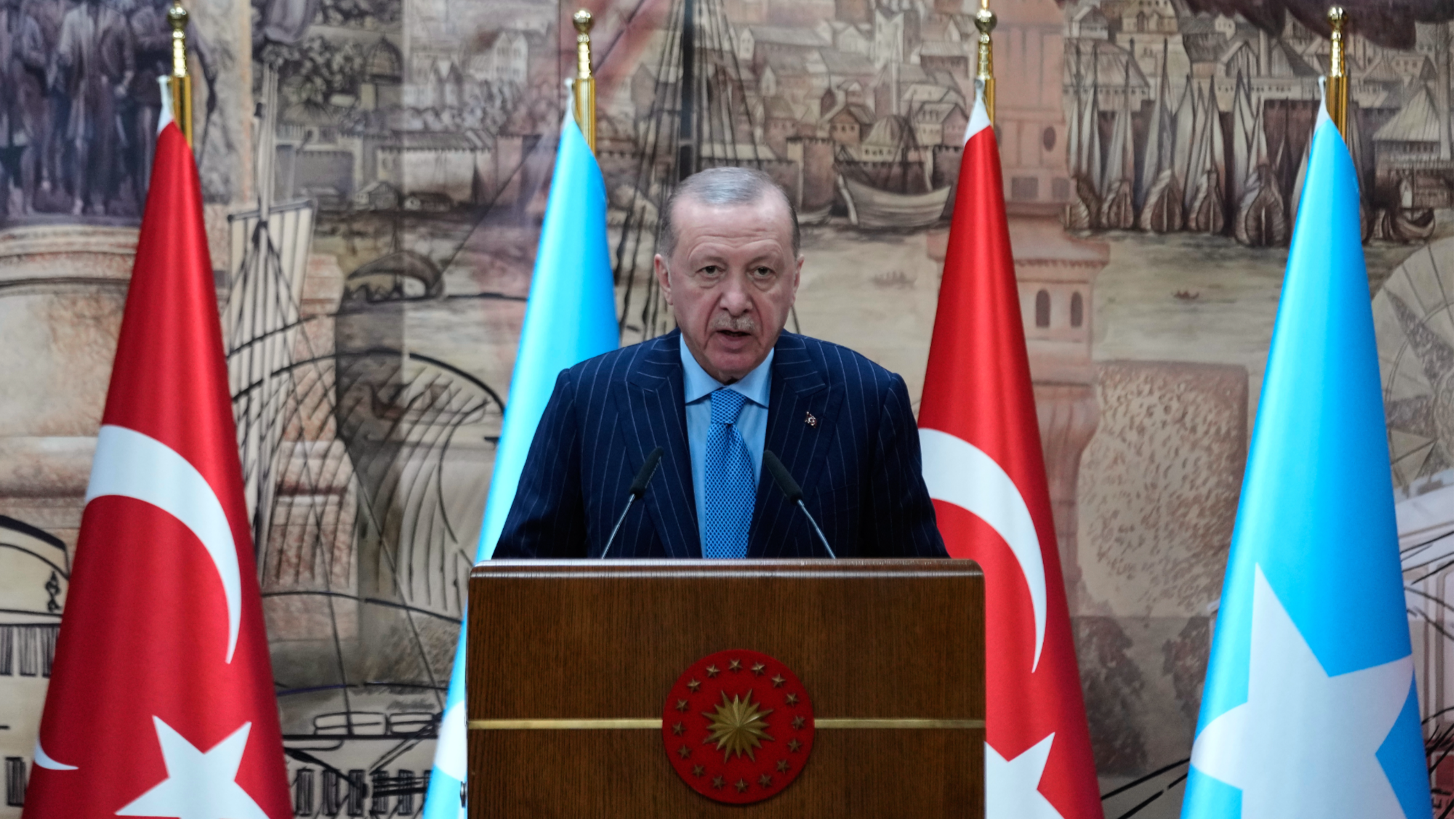
Turkish President Recep Tayyip Erdogan on Monday called for a swift and full implementation of the new ceasefire and integration agreement signed by the Syrian interim authority and the Kurdish-led Syrian Democratic Forces (SDF).
Speaking after a cabinet meeting, Erdogan said the ceasefire and full integration of Kurdish fighters into Syria's armed forces must be implemented without delay. Türkiye believed that a united Syria with full territorial integrity was indispensable for the prosperity of the wider region, the Turkish president said.
He said Türkiye would continue to support Syria in its fight against terrorism.
On Sunday, the Syrian interim authority and the SDF signed the agreement aimed at ending hostilities and resolving long-standing security and administrative disputes in northern Syria.
Türkiye considers the US-backed SDF, which controls large parts of northeastern Syria, a terrorist organization. Ankara says the SDF is dominated by the Kurdish People's Protection Units, an extension of the Kurdistan Workers' Party, which has waged an armed campaign against the Turkish state since 1984.
Syrian army controls key IS prison
The Syrian army said Monday in an update that it has taken control of the Shaddadi area and its prison holding thousands of Islamic State (IS) suspects in northeastern Hasakah province after the Kurdish-led Syrian Democratic Forces (SDF) reported a loss of control over the facility amid escalating clashes.
The army said it has secured the prison complex and immediately launched search operations to recapture escaped inmates, whom it accused the SDF of releasing during recent clashes. A full curfew has been imposed on the area, it added.
The Syrian interim government rejected the SDF's claims, accusing it of attempting to politicize the issue and use prisons as leverage.
The interim government said it is fully prepared to secure all detention facilities in accordance with international standards and prevent any escape of IS detainees. It also warned that any facilitation of detainee releases would be treated as a grave security threat.
Türkiye denies releasing IS suspects
The office of Turkish President Recep Tayyip Erdogan on Monday refuted media reports that Türkiye had recently assisted the Syrian army in releasing suspects of the Islamic State (IS).
The claim that IS suspects were released by the Syrian army with the assistance of Türkiye in Syria is "entirely unfounded," said the Center for Combating Disinformation under the presidency's Directorate of Communications.
The Syrian army said on Monday that it has taken control of the Shaddadi area and its prison holding thousands of IS suspects in northeastern Hasakah province after the Kurdish-led Syrian Democratic Forces (SDF) reported a loss of control over the facility amid escalating clashes.
The army accused the SDF of releasing the inmates during recent clashes. The SDF said the prison had come under repeated attacks by Damascus-affiliated forces, leading to heavy casualties before it lost control of the site.
