

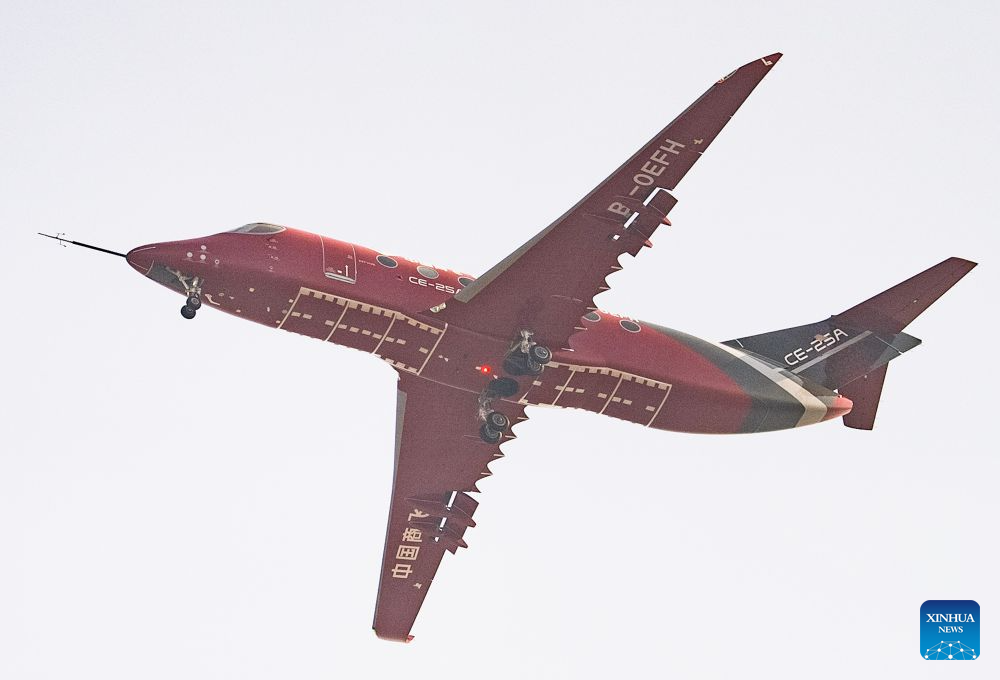
China's first domestically developed 10-metric-ton-class electric commercial aircraft, the CE-25A, completed its first piloted test flight in Binzhou, Shandong province, on Saturday, marking another milestone in the development of electric aircraft for short-haul commercial travel.
The aircraft, developed by Commercial Aircraft Corp of China, carried two pilots and a flight test engineer. The test lasted 57 minutes and 46 seconds, including 16 minutes and 38 seconds in the air, during which the aircraft covered 60.4 kilometers.
The aircraft performed normally and all test results met expectations, COMAC said in a statement.
The CE-25A is COMAC's first electric commercial aircraft, designed to carry 19 passengers on commercial flights between cities. It has a maximum takeoff weight of 10 metric tons, a cruising speed of 300 kilometers per hour, a cruising altitude of 2,400 meters, and a range of 400 kilometers.
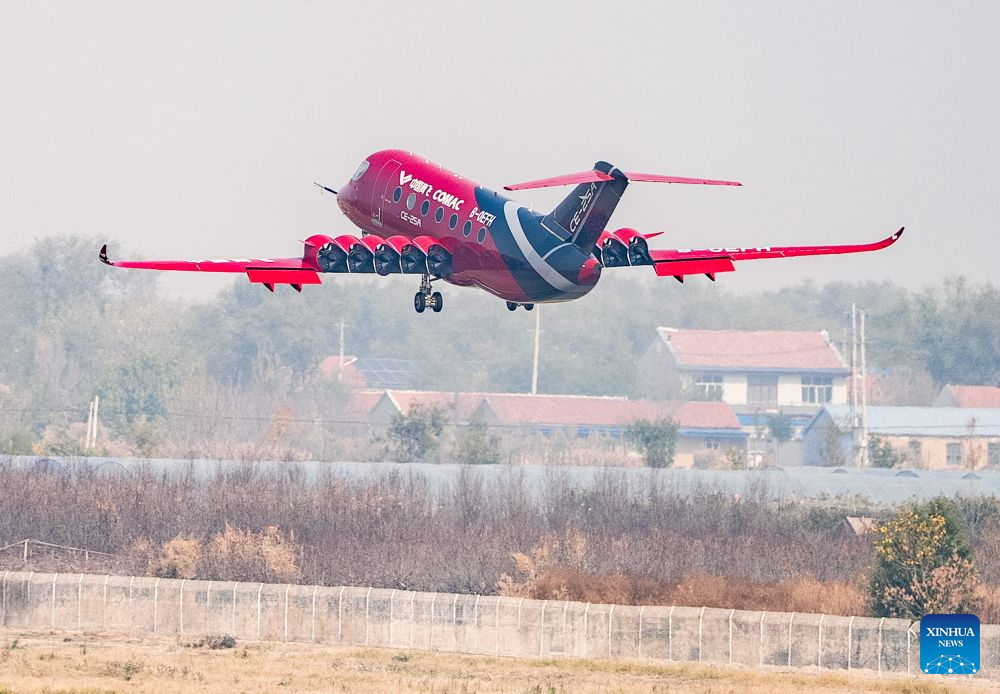
The aircraft is powered by a distributed electric ducted-fan propulsion system mounted on its wings.
Saturday's flight followed the aircraft's first unmanned autonomous test flight on Feb 2. COMAC said the CE-25A completed 19 unmanned autonomous flight tests during its development.
The aircraft is being jointly developed by COMAC, Chinese battery manufacturer Contemporary Amperex Technology Co Ltd, Shanghai Jiao Tong University, and other domestic partners.
The Civil Aviation Administration of China has accepted the application for a type certificate for the CE-25A, according to COMAC.
The aircraft is being developed in accordance with China’s CCAR-25 airworthiness regulations for transport-category aircraft, which also apply to large commercial passenger aircraft.
The acceptance of the application marks a step in the aircraft’s certification process, which must be completed before it can enter commercial service.
