

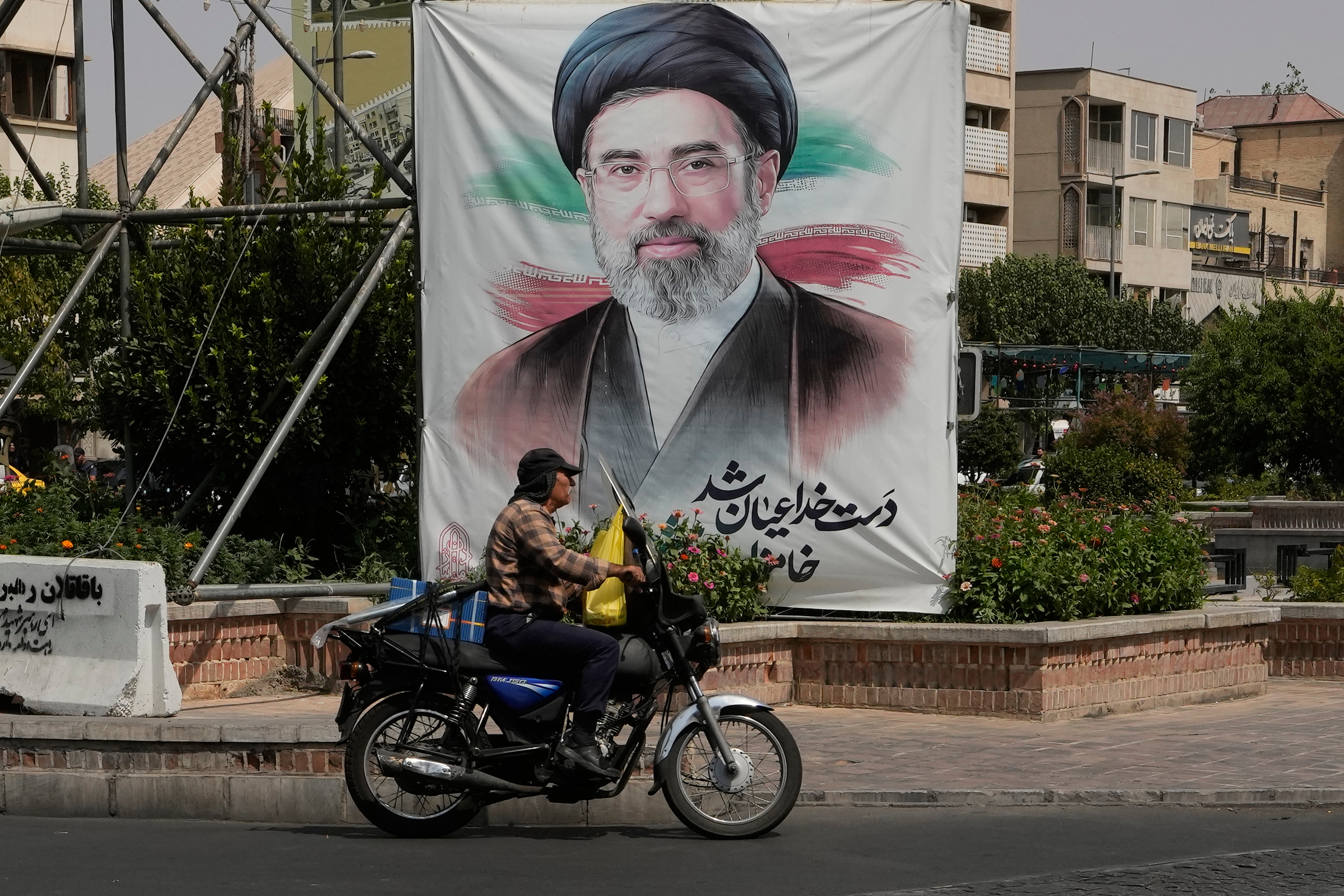
TEHRAN/MOSCOW/DOHA/WASHINGTON — The US has told several Gulf countries to prepare for a brief but intense military campaign against Iran after the US midterm elections, The Wall Street Journal reported on Wednesday, citing people briefed on the conversations.
According to the report, the US and Israel are preparing for another round of intense military operations against Iran. US forces in the Middle East are replenishing ammunition stocks, and bombers and fighter jets are getting ready for potential strikes.
Israel has also drawn up plans and identified targets for a possible new attack, the Journal reported.
US President Donald Trump has not made a final decision but is leaning toward a major attack targeting Iranian infrastructure and nuclear sites, the report said.
Trump could also seek a deal with Iran. Last week, he said the US might launch another "little Epic Fury," referring to the US and Israeli bombing campaign in the spring, or Iran could agree to a deal.
The president has said he won't attack Iran before the midterms.
'Neither war nor peace'
Iran's Supreme Leader Mojtaba Khamenei on Tuesday called for safeguarding Iran's rights and those of the regional "resistance front" by meeting Iran's conditions to end the war, according to a statement published on his website.
Describing the current state as "neither war nor peace," Khamenei underscored "securing the conditions stipulated by the country's officials with the aim of ending the war.
Iran on Sept 22 conveyed a new plan to the US through mediators on the sidelines of the 81st session of the UN General Assembly in New York.
Under the plan, Tehran proposed ending the war and reopening the Strait of Hormuz within seven days, provided that the US accepted its conditions.
ALSO READ: Iran holds ground as war fears mount
'Without US involvement'
Iranian President Masoud Pezeshkian said Tuesday that countries in the Middle East are capable of resolving their own problems without US involvement.
Pezeshkian made the remarks during a meeting with Russian President Vladimir Putin in Moscow, saying regional countries should not rely on US assistance.
"Once the Americans began taking aggressive steps in the region, it became clear to everyone that we must work toward the formation of a multipolar world," Pezeshkian said.
A multipolar world will benefit all countries and create opportunities for cooperation with Russia and other nations that wish to remain independent and free, he added.
'Violating' oil tanker catches fire
The navy of Iran's army said Tuesday a "violating" oil tanker that sought to cross the "forbidden region" east of the Strait of Hormuz caught fire after hitting naval mines.
ALSO READ: Report: US prepared for fresh Iran strikes after midterms
In a statement published on the army's website, the navy said the oil tanker, which had turned off its tracking systems, suffered damage after colliding with the mines in the "unsafe region" east of the waterway.
The navy reiterated that the Strait of Hormuz remains closed and unsafe for violating vessels attempting to cross it, stressing ships must ensure necessary coordination with the Iranian armed forces.
Qatari delegation
Qatar said Tuesday that a Qatari delegation's visit to Tehran on Sunday was part of ongoing mediation efforts to ease Iran-US tensions, while calling for a new regional security framework for sovereignty and non-aggression.
Ibrahim bin Sultan Al Hashmi, director of the Media and Communications Department at Qatar's Foreign Ministry, told a weekly press briefing that proposals continued to be exchanged between the US and Iran through mediators, urging the crisis to be resolved through dialogue and diplomacy.
He also called for a new regional security framework founded on respect for national sovereignty and mutual non-aggression, a position Qatar had previously outlined at the United Nations.
Meanwhile, Pezeshkian and Qatari Emir Sheikh Tamim bin Hamad Al Thani met Tuesday on the sidelines of the 8th Summit of Heads of State and Government of the Gas Exporting Countries Forum in Moscow and discussed ways to expand bilateral relations and energy cooperation, the Iranian official news agency IRNA reported.
Pezeshkian arrived in Moscow on Monday night. He is scheduled to hold meetings with a number of the participating countries' leaders on ties and cooperation, according to the website of his office.
Iran, Russia vow to expand cooperation
Pezeshkian and his Russian counterpart Putin on Tuesday called for expanded bilateral cooperation across sectors and continued consultations on regional developments, according to the Iranian president's office.
At a meeting on the sidelines of the eighth Summit of Heads of State and Government of the Gas Exporting Countries Forum (GECF) in Moscow, the two sides reviewed bilateral ties and the progress of joint projects, the Iranian president's office said in a statement.
Pezeshkian welcomed growing bilateral trade and highlighted both countries' determination to advance relations in science, economy, industry, culture, security and military.
He condemned the US unilateral actions in the region, stressing the necessity to promote multilateralism and increase interactions among the sanctioned countries.
Pezeshkian added that regional countries have the capability and determination to resolve intraregional challenges without relying on the United States.
Putin, for his part, said trade between Russia and Iran rose 10.4 percent in the first eight months of 2026 compared with the same period last year.
He said that Russia's construction of the Bushehr Nuclear Power Plant in southern Iran is continuing, and his country is fulfilling all commitments under its joint projects with Iran.
Putin expressed hope that developments in the Middle East would move in a positive direction.
Cost estimate of Iran war
The cost of the US military campaign against Iran has risen to at least $47 billion, up 3.5 billion dollars from early September, local media reported Tuesday.
The latest estimate, compiled by the US Central Command on Oct 16 and provided by the Pentagon to Congress last week, includes more than 29 billion dollars to replace expended munitions such as air defense interceptors and bombs.
Nearly 12 billion dollars is obligated for incremental costs of military action and another 6.1 billion dollars to replace equipment losses, according to the estimate.
The Air Force has spent 7.6 billion dollars since the United States and Israel launched joint military attacks on Iran on Feb 28, followed by the Army at 2.1 billion dollars and the Navy at 1.5 billion dollars.
The estimate does not include the cost of damage to US military bases in the Middle East.
The Pentagon is prepared to launch new and potentially major military operations against Iran "within 96 hours of receiving" an order from US President Donald Trump, CNN reported on Monday.
