


RAMALLAH/GAZA – Israeli authorities demolished shops and issued military orders to seize dozens of dunams of Palestinian agricultural land on Tuesday, while Israeli settlers set fire to a Palestinian house and several vehicles in separate incidents across the West Bank, according to Palestinian sources.
Local sources said Israeli forces, accompanied by heavy machinery, stormed the Hasaka Road area northwest of Hebron and demolished five shops.
Israel also issued a military order to seize roughly nine dunams of land (0.9 hectares) in the northern Jordan Valley, 11 dunams of land in Jenin and 26.5 dunams of land in northwest Ramallah, under the pretext of "military purposes."
Mu'taz Bisharat, an official in charge of settlement affairs in the Tubas Governorate, told Xinhua the move was part of efforts to expand control over the northern Jordan Valley through land confiscation and the construction of military roads.
Meanwhile, Israeli settlers set fire to a Palestinian house, two vehicles and an agricultural structure in the town of Yatta, south of Hebron, according to Osama Makhamreh, an anti-settlement activist in the southern Hebron area.
RELATED ARTICLES
- Palestinian residents return to Hebron after Israeli army withdrawal
- UN: Strikes imperil Gaza civilians; 3,000 remain displaced in Hebron
- Palestinians doubt Israeli elections will bring real change
- UN: Israel committed war crimes, crimes against humanity in Palestine
- 409 Israeli attacks on Palestinian olive farmers, land in West Bank in 21 days
In a separate incident, settlers set fire to two Palestinian vehicles in the village of Majdal Bani Fadil, south of Nablus, according to local sources.
Official Palestinian statistics showed that Israeli settlers carried out 1,369 attacks across the West Bank in October, marking an increase of 111.6 percent from 647 attacks recorded in September.
More than 600,000 Israeli settlers live in the West Bank and East Jerusalem. Israel occupied the West Bank in 1967 and has since established settlements there, which are considered illegal under international law.
Israel closes Rafah crossing to travelers, aid, commercial trucks
Israeli authorities on Tuesday turned back travelers seeking to cross the Rafah border crossing and halted the entry of humanitarian aid and commercial trucks from Egypt into the Gaza Strip, according to Palestinian and Israeli sources.
The Gaza border crossings authority said in a statement that Israeli authorities imposed the measures against travelers under so-called "pretexts and claims related to the security situation in the area," without prior notice or announced changes to operating procedures.
It added that Israeli authorities had informed the Egyptian side of the suspension of aid and goods entry, noting that around 40 trucks carrying aid and commercial supplies had been entering the enclave daily from Egypt.
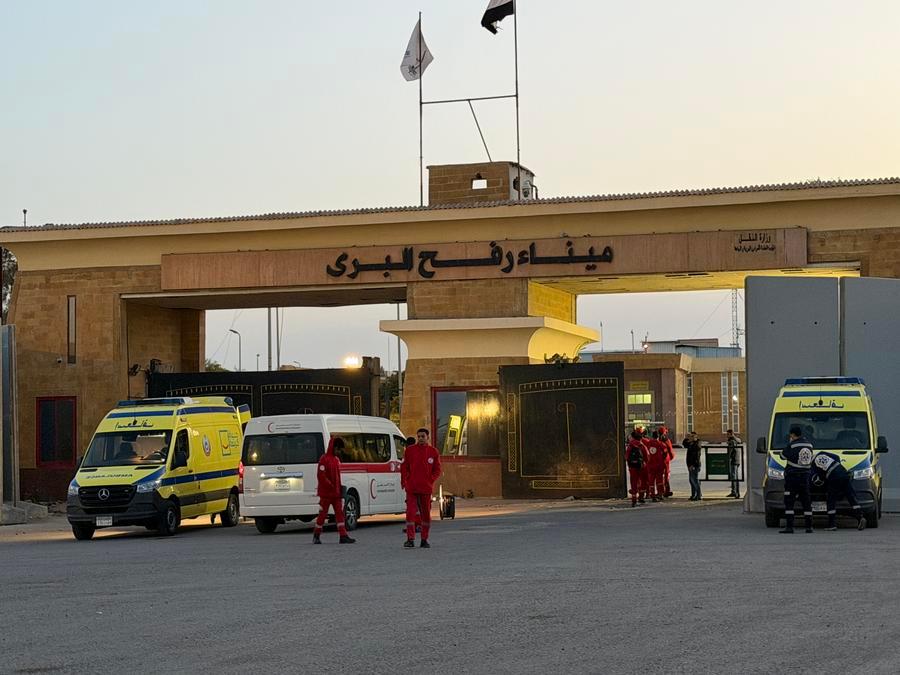
Israeli military sources told Israel's state-owned Kan TV News that the army had decided to close the Rafah crossing over alleged smuggling and what they described as interference by Hamas security forces in the Gaza Strip.
The decision does not affect the Kerem Shalom/Karem Abu Salem crossing, the sources added.
According to Kan, the suspension covers aid from the Egyptian committee, the UN and international organizations, as well as commercial shipments from Egypt, including fuel, gas, food and other goods.
There was no immediate comment from Hamas on the developments.
Meanwhile, the Hamas-run government media office in Gaza said Monday that Israeli authorities had allowed 77,657 trucks into the enclave since the ceasefire agreement took effect in October 2025, 33.4 percent of the 232,800 trucks scheduled to enter under the agreement.
In October alone, 3,777 trucks entered Gaza out of the 18,600 stipulated in the agreement, accounting for 20.3 percent, it said.
The trucks included 1,805 carrying humanitarian aid, 1,725 commercial shipments and 247 fuel trucks, with a daily average of 121.8 trucks, according to the office.
It added that 14,821 travelers had crossed Rafah in both directions since the agreement took effect, 37 percent of the 40,000 expected.
Maher al-Tabbaa, director of the Gaza Chamber of Commerce, warned that restrictions were worsening the economic and living conditions, with severe shortages of essential goods, sharp price rises and a near-collapse in residents' purchasing power.
Al-Tabbaa said the number of items entering the enclave does not exceed 200, compared with more than 10,000 daily before the war, while a ban on construction materials had pushed the prices extremely high and prevented residents from repairing damaged homes.
