

Hong Kong strengthens its position in digital financial asset innovation
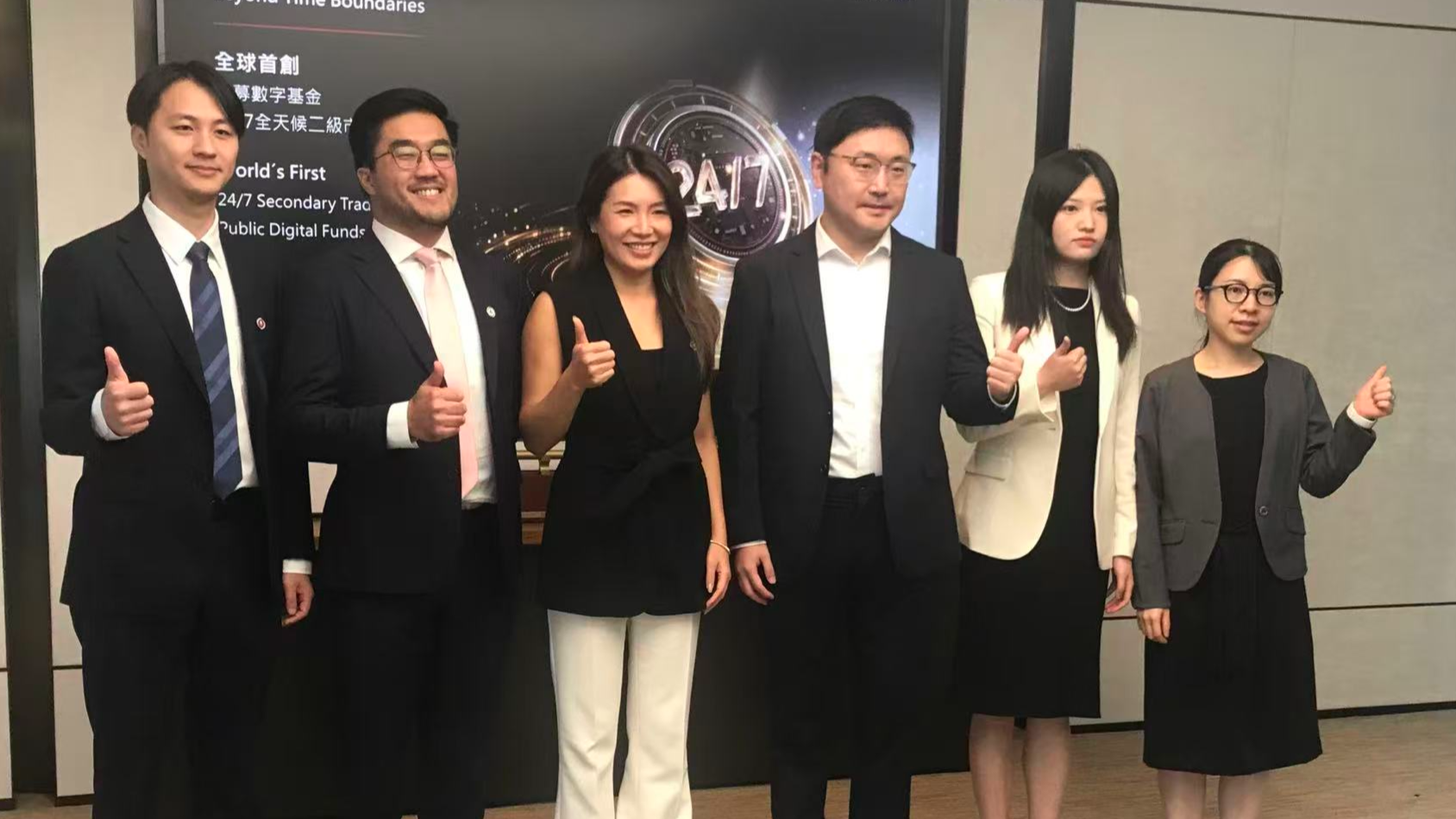
The Securities and Futures Commission (SFC) in the Hong Kong Special Administrative Region has approved the world’s first secondary trading of tokenized public funds, marking an important milestone in advancing Hong Kong’s digital asset trading ecosystem.
In a statement on Monday, the SFC said it had approved the secondary trading of two existing SFC-authorized tokenized money market funds, with trading available around the clock starting that day.
China Asset Management (Hong Kong) announced that it will partner with PantherTrade (Hong Kong), an SFC-licensed virtual asset trading platform (VATP) wholly owned by Futu Holdings, to launch the world’s first retail secondary trading service. The two funds are the ChinaAMC HKD Digital Money Market Fund and the ChinaAMC USD Digital Money Market Fund.
In April, the SFC introduced a regulatory framework to pilot secondary trading of tokenized SFC-authorized funds on SFC-licensed VATPs. The framework sets out the requirements and safeguards covering the operation of the trading channel, fair pricing, liquidity provision and disclosure.
“Secondary trading of tokenized money market funds marks an important milestone in the SFC’s ongoing efforts to advance Hong Kong’s digital asset development by adding an important building block — 24/7 trading capability — to Hong Kong’s evolving tokenization ecosystem,” said Elisa Ng Ka-li, the SFC’s executive director of investment products. “We will continue to strengthen Hong Kong’s position as a pioneer in tokenization by facilitating responsible innovation while safeguarding investors.”
ALSO READ: Chan: Hong Kong eyes trade finance links with Southeast Asia
The SFC said the interaction between tokenized funds and tokenized money on digital rails could support more efficient trade settlement and asset mobility. Investors could sell their tokenized assets on VATPs around the clock and transfer their trading proceeds instantly to pursue other investment opportunities.
With the first batch of products focused on tokenized money market funds, the SFC said it will closely monitor trading activities and consider broadening the product’s scope over time.
Katie He, executive director and head of strategic business at ChinaAMC (HK), said this product innovation demonstrates Hong Kong’s institutional advantages and market execution capabilities in compliant digital financial innovation. She said it balances investor protection, technological feasibility, and commercial sustainability while promoting the implementation of financial innovation.
For investors to buy and sell already-issued fund units in the secondary market, existing units are transferred between buyers and sellers, rather than being subscribed or redeemed by the fund for each transaction. This means the fund manager does not need to simultaneously buy or sell the underlying assets for every secondary market transaction, which allows secondary market trades to take place outside of traditional trading hours.
The trading system incorporates an independently calculated, around-the-clock iNAV (indicative net asset value) by a third-party institution that gives real-time reference, allowing investors to track the underlying market price at any time during trading.
ALSO READ: Hong Kong regulator sees rise in listing of young growth firms
The product meets the needs of companies managing treasury across time zones, while providing additional options for retail investors who need to allocate funds immediately, she said.
In the future, ChinaAMC (HK) will continue to expand into more asset classes, such as bonds and commodities, to further integrate on-chain and off-chain investment, trading, and settlement systems. The asset manager will also strive to deepen integration with compliant digital currencies, including compliant stablecoins and central bank digital currencies, she added.
Steve Zeng, managing director of Futu Holdings, added that secondary market prices are market-driven as they are determined by free matching between buyers and sellers, and may deviate significantly from the underlying net asset value. However, the trading platform has a mechanism, consistent with the Hong Kong stock exchange’s volatility control mechanism, to limit extreme volatility.
Contact the writers at oswald@chinadailyhk.com
