

Experienced campaigners look to lead a new generation of medal contenders
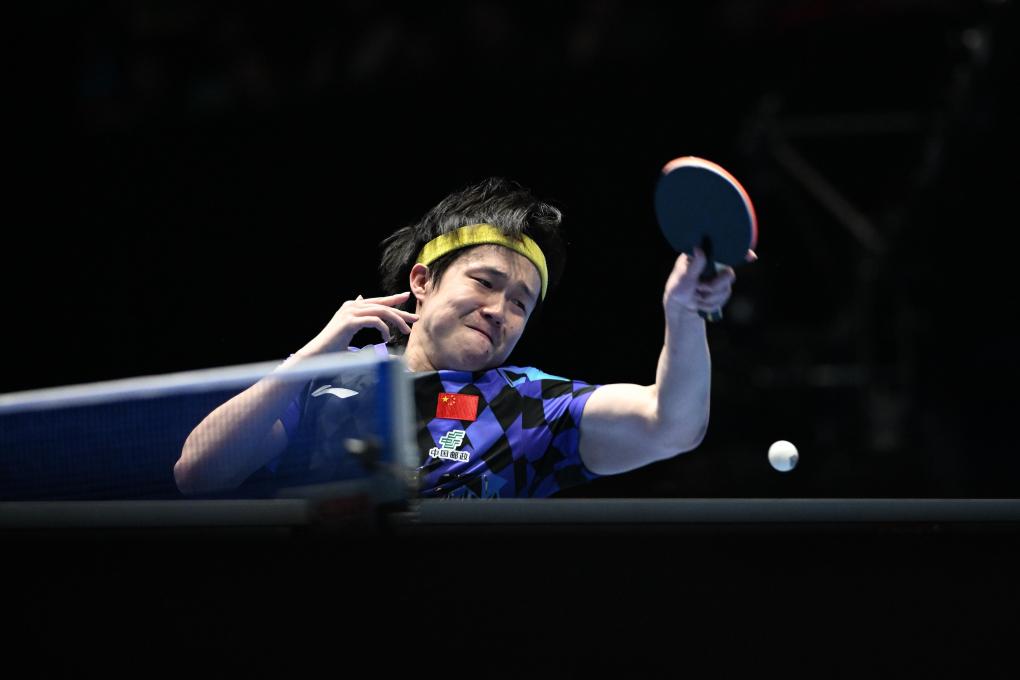
As Asia's premier table tennis showcase, the Aichi-Nagoya Asian Games will see China's squad of seasoned champions and rising rookies take on host Japan and powerhouse South Korea, as the Chinese team looks to assert its regional dominance while testing its new-generation paddlers on the continental stage.
Pushed by Japanese teenage star Miwa Harimoto's breakthrough momentum and a lingering weakness in women's doubles, plus the men's team's ongoing generational reshuffle following the Paris Olympics, the Asian Games campaign is far more than a title defense for China — it serves as a proving ground for the national program's next generation and a key rehearsal for the Los Angeles Olympics.
The table tennis competition runs from Sept 20-28 at Sky Hall Toyota, with seven gold medals on the line: men's and women's team, men's and women's singles, men's and women's doubles, and mixed doubles.
The team titles will be decided first on Sept 24, followed respectively by mixed doubles, men's doubles, women's singles, women's doubles and men's singles.
For China, the tournament arrives at a moment of generational change. The squad is led by reigning men's world No 1 and defending Asian Games men's singles champion Wang Chuqin, alongside newly crowned women's world No 1 Wang Manyu and No 2 Sun Yingsha, the defending women's singles champion, all competing at their third Asian Games.
ALSO READ: China's Wang Manyu wins women's singles title at WTT Europe Smash
The other seven members, Lin Shidong, Wen Ruibo, Xiang Peng, Huang Youzheng, Chen Yi, Kuai Man, and Fan Shuhan, all born after 2003, are making their Asian Games debut.
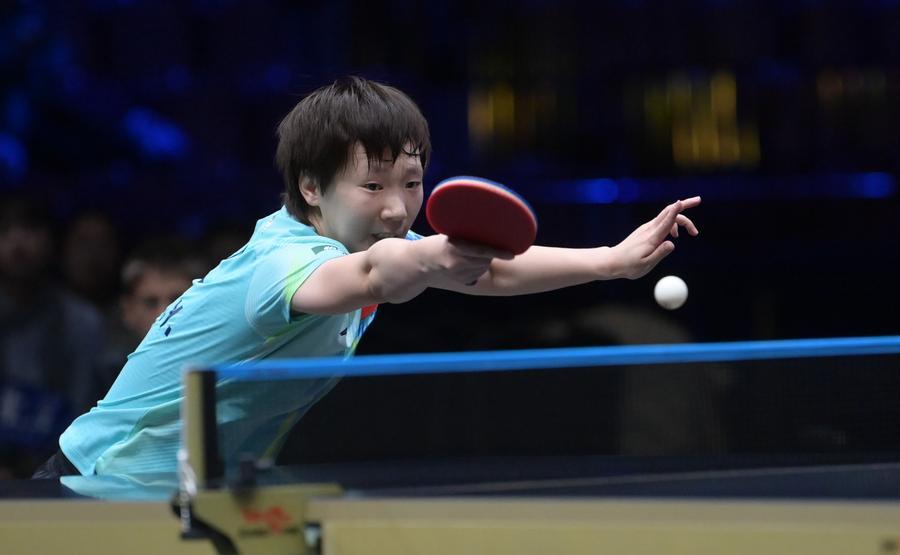
The lineup has been selected to prepare for the Los Angeles Olympics cycle, while also looking further ahead to Brisbane 2032, as the young debutants accumulate valuable experience.
The challenge is likely to be fiercest in the women's game, where Asia's rivalries often represent the sport's highest level.
China will look to build on its seventh straight women's team title at the ITTF World Team Table Tennis Championships Finals in May, where it rallied past Japan in a five-match thriller at London's Wembley Arena — a rivalry that is expected to reignite in Nagoya.
In women's singles, China has won seven straight Asian Games titles since Bangkok 1998, a run that underscores its long-standing dominance. This time, Jakarta champion Wang and Hangzhou champion Sun will carry China's hopes, and while they enter as clear favorites, Japan's home-court advantage means that nothing can be taken for granted.
Chief among Japan's threats is 18-year-old Harimoto, ranked world No 3. On Sunday, she beat Chen 4-3 in the women's singles final at the WTT Champions Macao, an event Sun and Wang Manyu did not enter, to claim her third WTT Champions title of the year, following victories in Chongqing and Yokohama.
She is only the second player to win three consecutive WTT Champions titles in a single season, after Sun. The 18-year-old is set to compete in four events at the Games: women's singles, women's team, women's doubles, and mixed doubles. She will also continue to partner with the 26-year-old world No 6 Hina Hayata in women's doubles. They are currently the world's top women's pair, and pose a major threat to China's duo of Wang Manyu and Kuai.
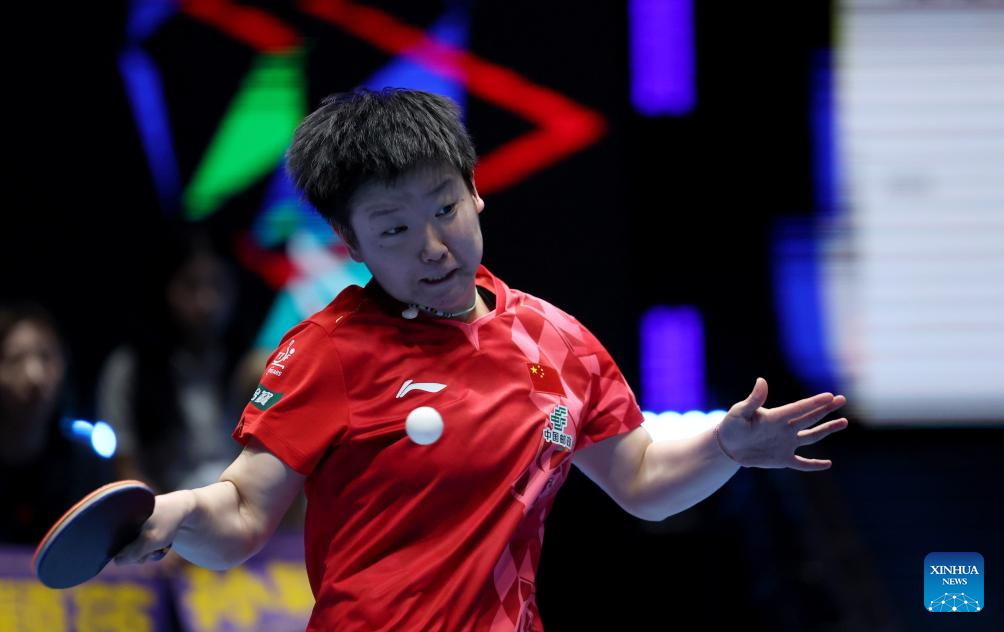
Women's doubles, in particular, is shaping up to be one of the most unpredictable events of the tournament. It was the only title China failed to claim at the Hangzhou Asian Games. There, Sun and Wang Manyu fell 1-3 to Harimoto and Miyuu Kihara in the quarterfinals, while Chen Meng and Wang Yidi also lost 1-3 to India's Sutirtha Mukherjee and Ayhika Mukherjee.
Both pairs crashed out before the semifinals, marking the first time since China began competing at the Asian Games in 1974 that the team failed to reach the women's doubles podium.
The men's game poses an even sterner test for China's younger generation. After the Paris Olympics, Ma Long stepped back from frontline competition to serve as vice-president of the Chinese Table Tennis Association, while Grand Slam winning paddler Fan Zhendong is playing in Germany's Bundesliga.
ALSO READ: Chinese star paddler Fan Zhendong unveiled by Borussia Dusseldorf
Together, these departures have plunged the men's program into a difficult period of accelerated transition.
The men's team event will be led by Wang Chuqin, who swept all four golds in men's team, men's singles, mixed doubles, and men's doubles at the Hangzhou Asian Games, while the other four members — Lin, Wen, Xiang and Huang — are all making their Asian Games debut.
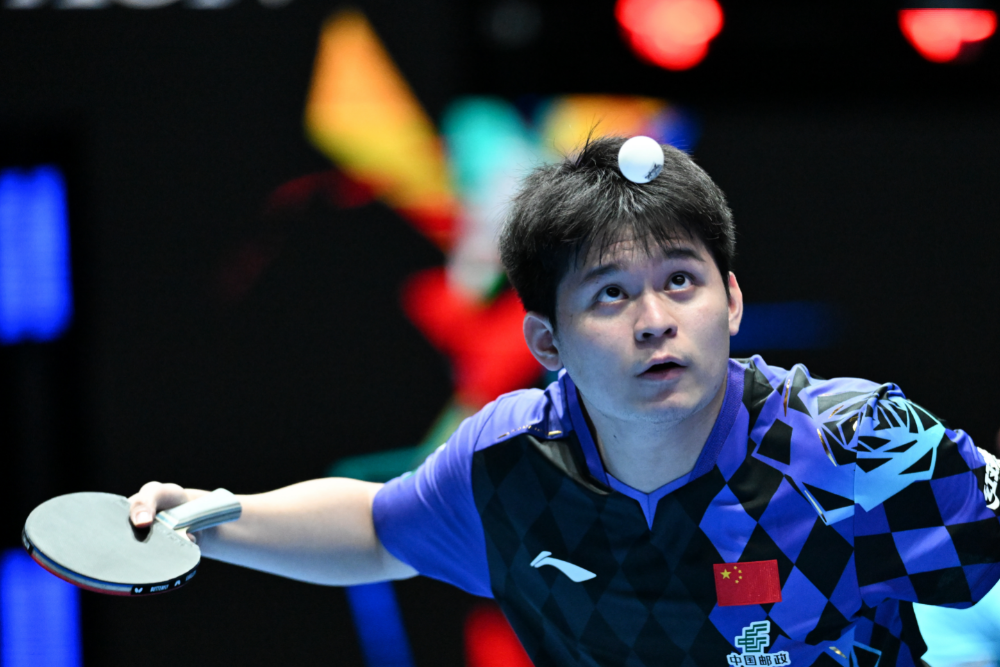
For a long period of time Chinese table tennis has rested on a system in which multiple elite players supported and pushed one another through healthy competition.
Yet, despite winning a 12th straight title at the ITTF World Team Table Tennis Championships 2026, the men's team has yet to shake off concerns over a thin talent pipeline and a lack of psychological resilience.
The Chinese squad will have to withstand the challenge of a Japanese men's team featuring current world No 3 Sora Matsushima and world No 4 Tomokazu Harimoto.
Notably, in September, China made a last-minute change to its men's doubles lineup. The original pairings of Lin and Wen and Huang and Xiang were swapped to Lin and Huang, the current world No 2 duo, and Wen and Xiang, who have never partnered in official international competition — a pair now racing to build chemistry.
With South Korea's Lim Jonghoon and Oh Jun-sung, India's Manav Thakkar and Manush Shah, and Wong Chun-ting and Chan Ho-wah of Hong Kong, China, all world-class pairs, the men's doubles is shaping up to be a fiercely competitive event.
In mixed doubles, China will field defending Asian Games champions Wang Chuqin and Sun, along with Lin and Kuai, a pair the national team has been grooming for success for a while.
Their strongest rivals include the current world No 1 South Korean duo of Lim and Shin Yu-bin, as well as the home-court pairing of Matsushima and Miwa Harimoto.
