

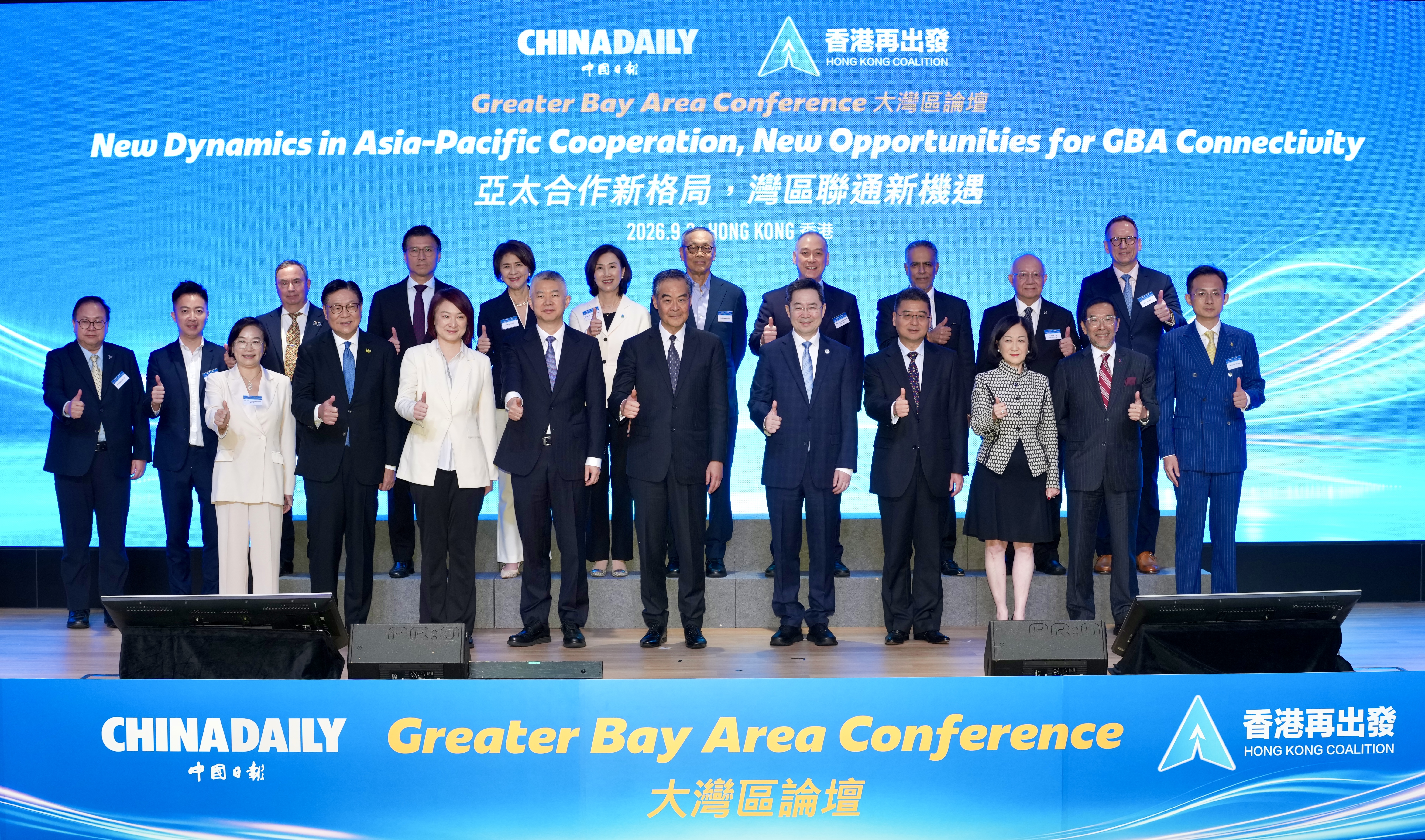
High-level officials and society leaders gathered in Hong Kong on Thursday for a major conference on integration of the Guangdong-Hong Kong-Macao Greater Bay Area, with keynote speakers highlighting the Hong Kong Special Administrative Region's role as a "super connector" between the Chinese mainland and global markets amid rapidly shifting geopolitical and technological landscapes.
The conference, themed "New Dynamics in Asia-Pacific Cooperation, New Opportunities for GBA Connectivity", was co-organized by China Daily and the Hong Kong Coalition, bringing together nearly 300 government officials, consuls general, business leaders and representatives from think tanks, academia and media, as well as public-private sector experts from across Asia.
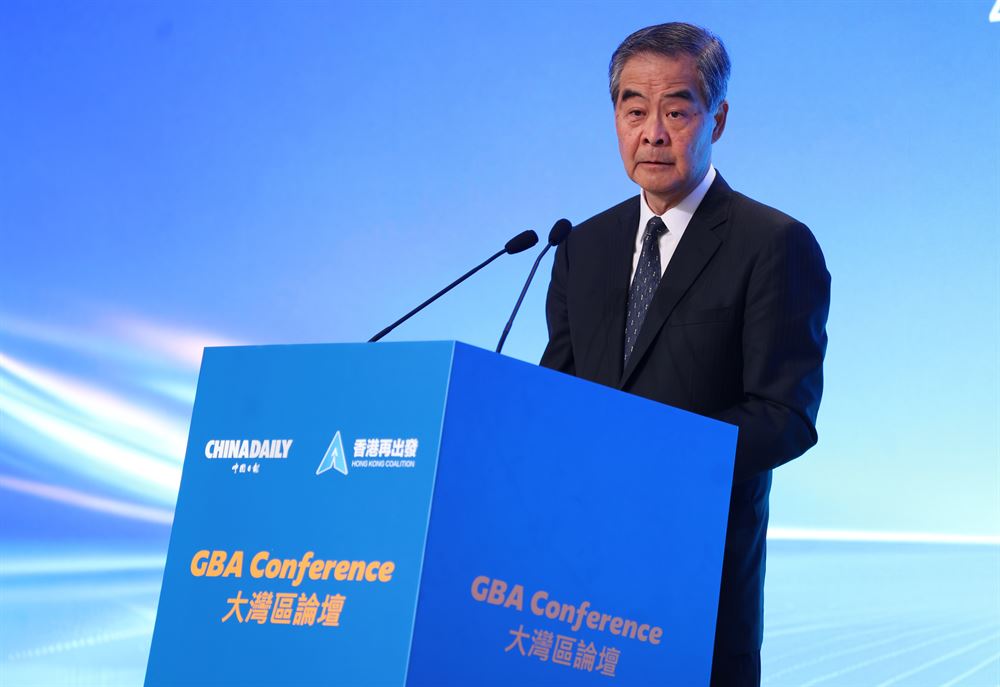
Leung Chun-ying, vice-chairman of the National Committee of the Chinese People's Political Consultative Conference, said that collaborative initiatives unveiled recently in data and healthcare between Hong Kong and Nansha in Guangzhou, Guangdong province, underscore the unique role of Hong Kong as a partner and super connector linking the Greater Bay Area with the rest of the world.
He said the steps to be taken are clear and necessary — to promote better government-to-business and business-to-business interactions between Hong Kong and Guangdong.
ALSO READ: GBA Conference 2026 sheds light on HK development strategies
"The new momentum generated in recent months through cooperation between Guangdong cities in the Greater Bay Area and Hong Kong will benefit other Asia-Pacific countries and regions," Leung said.
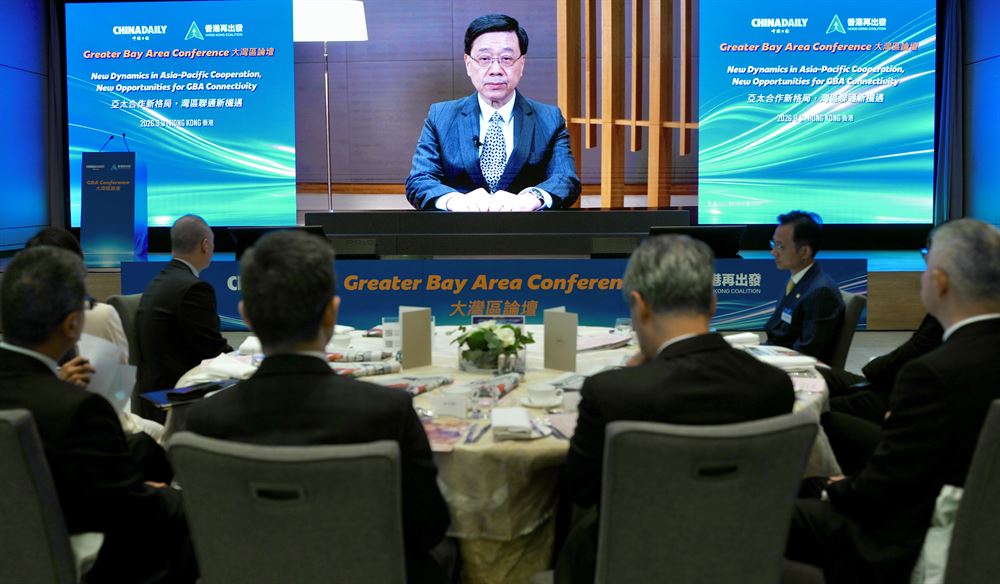
Hong Kong SAR Chief Executive John Lee Ka-chiu said in a video speech that the Greater Bay Area is fast becoming one of the most dynamic and integrated economic powerhouses in the world, underscoring Hong Kong's role as the only world city that converges both the China advantage and the global advantage.
Lee said that this role takes on new significance this year, as the 33rd Asia-Pacific Economic Cooperation Economic Leaders' Meeting will be held in Shenzhen, Guangdong, in November, a historic first for the Greater Bay Area, and Hong Kong will host the APEC Finance Ministers' Meeting in October. He added that the region is ready for the spotlight.
Lee said that Hong Kong has a deep and liquid market and a strong pool of financial and professional talent, and the city has become Asia's premier fundraising, asset management and risk management hub.
He said the Hong Kong Park of the Hetao Shenzhen-Hong Kong Science and Technology Innovation Cooperation Zone is key to turning cutting-edge ideas into tangible outcomes and world-class research into products, by bringing together Hong Kong's research excellence and the Chinese mainland's advanced manufacturing capabilities.
He added that talent is central to Hong Kong's innovation and technology push, while highlighting the "one town, five elements" framework for the Northern Metropolis University Town Area — a hub where universities, research institutes and industries will be set up together to integrate the five elements of education, technology, talent, industry and urban development.
"Integrating into and serving overall national development, Hong Kong brings together ideas, capital and talent across boundaries, and connects the Greater Bay Area with global markets. Together, we are not just building the Greater Bay Area. We are shaping a more connected, innovative and prosperous future," Lee said.
READ MORE: Guangdong, HK, Macao jointly showcase GBA opportunities to SOEs
Qu Yingpu, publisher and editor-in-chief of China Daily, said that the China Daily Hong Kong Edition has chronicled Hong Kong's remarkable voyage — enduring storms, celebrating triumphs and now recording a new era of transformation from stability to prosperity, aligned with the vibrant rejuvenation of the Chinese nation.
"Amid shifting communication landscapes and unprecedented global change, we will continue to share the living story of and contribute to this 'one country, two systems', the dynamism of the Greater Bay Area and China's unwavering commitment to an open global economy," he said.
Qu also said that he believes that Hong Kong will continue to innovate, leap forward and forge new heights of achievement with its first five-year plan, which is scheduled to be published on Sept 16.
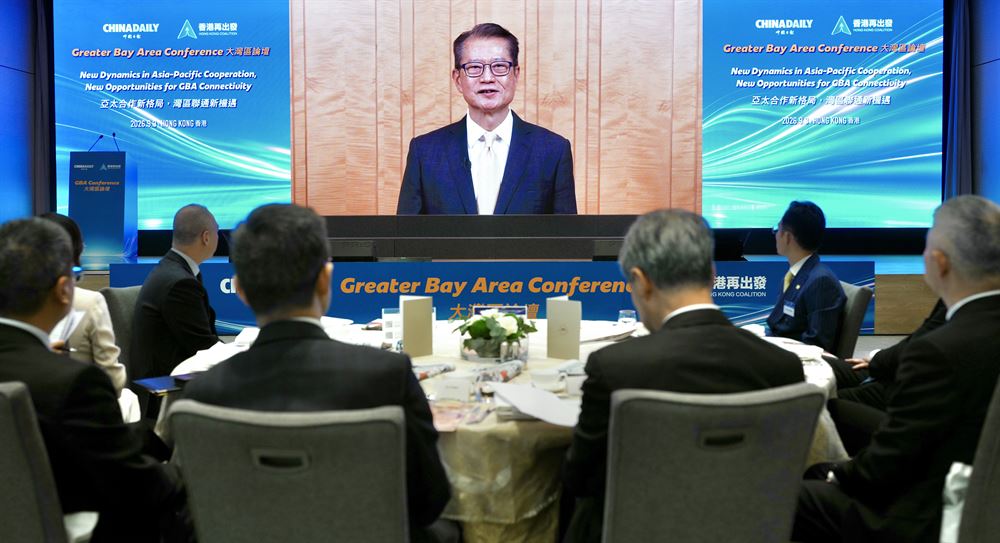
Hong Kong SAR Financial Secretary Paul Chan Mo-po stressed connectivity and Hong Kong's role in connecting the world in an age of profound change driven by geopolitics and technological transformation.
"As the country's most internationally connected region, the Greater Bay Area presents a strong value proposition for Asia-Pacific collaboration," Chan said. "It rests on a simple conviction: When we partner, we do not merely add up our strengths — we multiply them and extend their reach well beyond Asia."
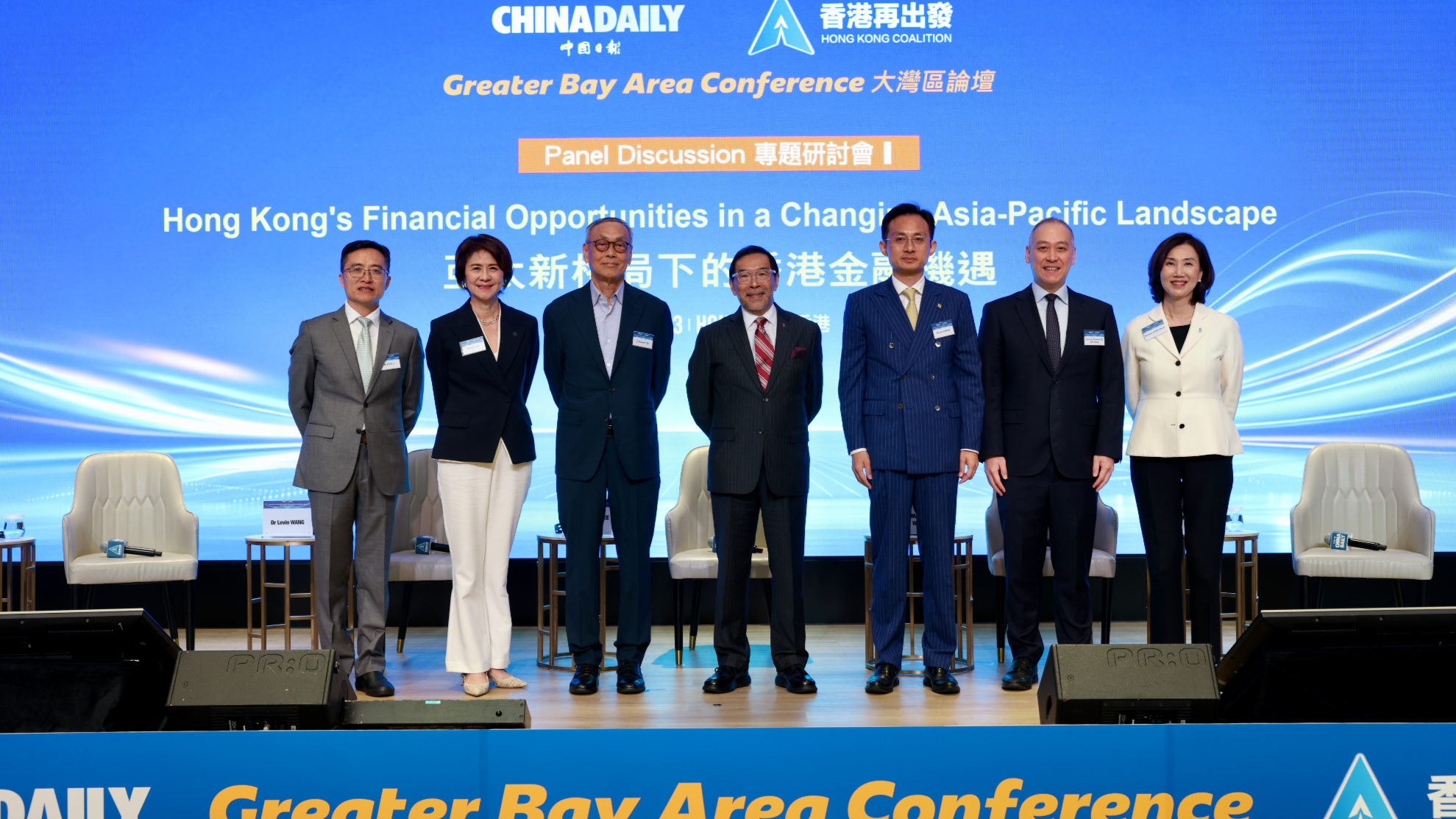
The conference also featured three panel discussions on Hong Kong's financial opportunities in the changing Asia-Pacific landscape, the synergy in commercial aerospace development between the HKSAR and Shenzhen, and education in the artificial intelligence era.
Panelists highlighted how Hong Kong can seize opportunities arising from deeper Asia-Pacific economic and trade cooperation to enhance its influence as a global financial hub.
Discussions also centered on harnessing the Greater Bay Area's manufacturing capabilities and Hong Kong's strengths, exploring ways to build a collaborative commercial space ecosystem.
Panelists also examined how the education sector can reinvent its model with AI to cultivate talent that serves the Greater Bay Area and the Asia-Pacific market.
Contact the writer at stacyshi@chiandailyhk.com
