

Authorities plan to adjust trigger thresholds as critics urge better worker protection
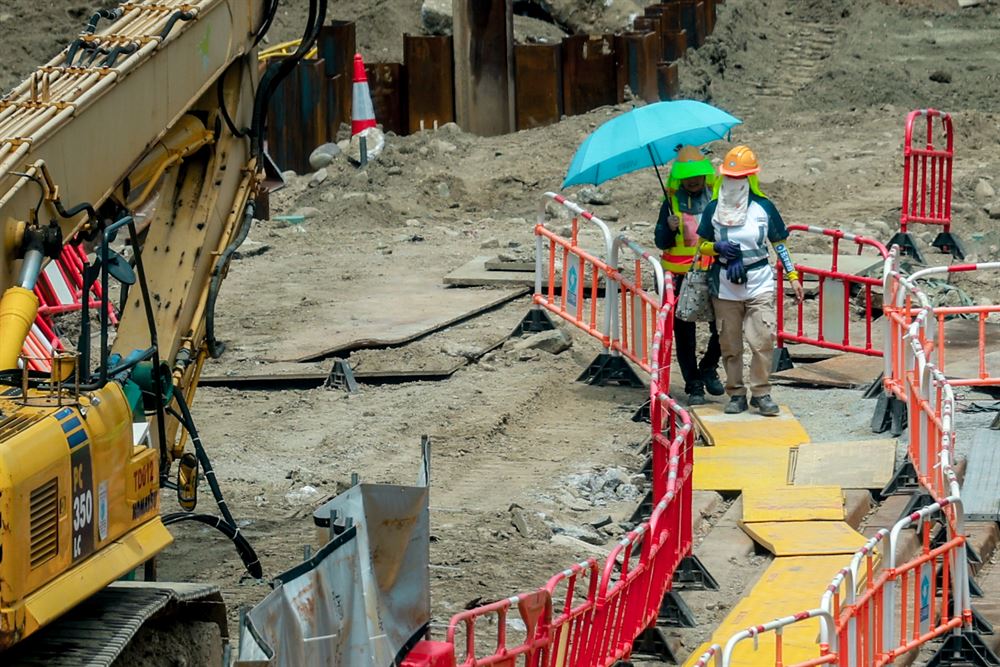
The Hong Kong Special Administrative Region is planning to optimize its heat warning system by adjusting the warning threshold, in response to the exceptional heat of recent weeks.
The move follows a public outcry amid a period of record-breaking hot weather, during which only the amber warning has been issued — the lowest tier of the Labour Department’s three-tier Heat Stress at Work Warning system. No red or black warnings have been issued since the system’s implementation in 2023.
Commissioner for Labour Sam Hui Chark-shum said the department is working with the Hong Kong Observatory to enhance the warning system to make it more responsive to actual temperatures.
He said that the recently revamped warning system isn’t built solely on the Hong Kong Heat Index, which is based on the King’s Park Meteorological Station. The overhaul in April factors in data from various meteorological stations when issuing temperature warnings.
Higher warnings are expected to be issued under the new system, Hui said, adding that the authorities remain perplexed when higher warnings are not triggered despite record-breaking temperatures.
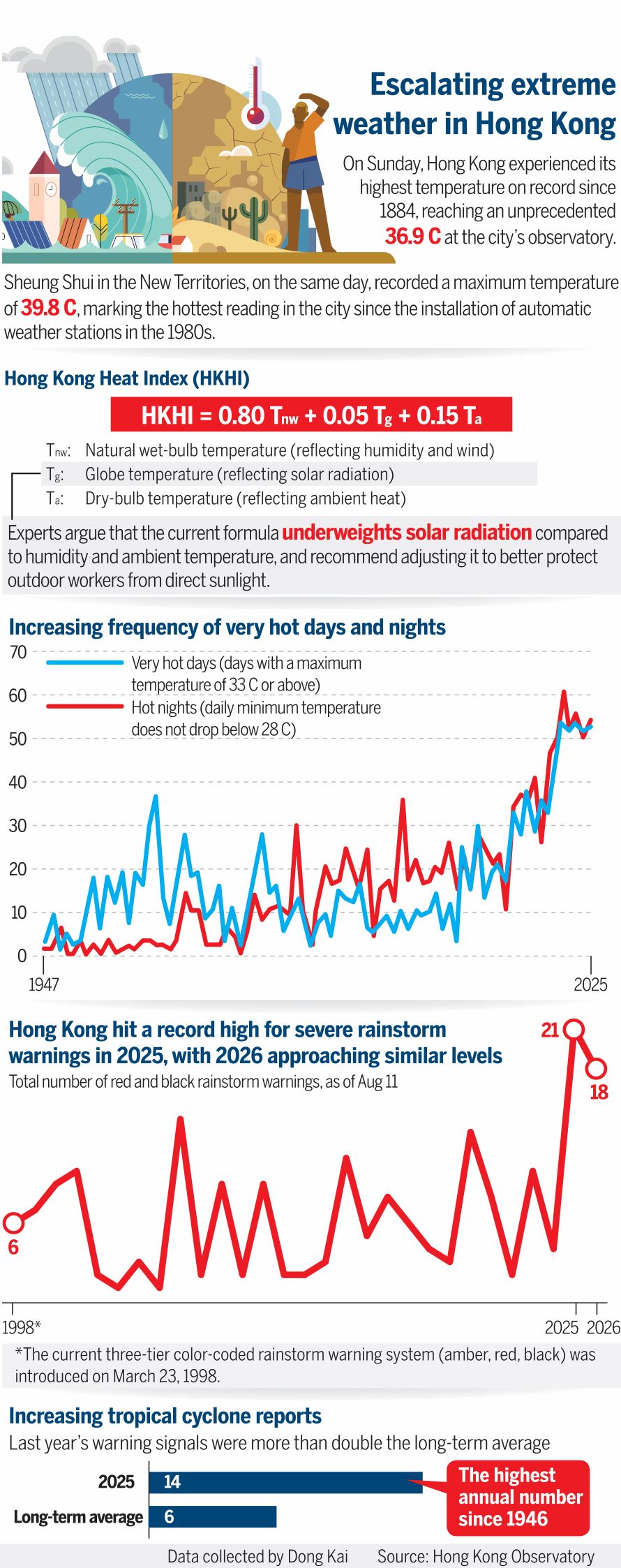
On Sunday, Hong Kong recorded its hottest day since records began in 1884, with temperatures hitting 36.9 C at the Hong Kong Observatory headquarters in Tsim Sha Tsui. The mercury even hit 39.8 C in Sheung Shui in the northern New Territories — the highest reading since automatic weather stations began operating in the 1980s.
The Heat Stress at Work warning, formulated by the Labour Department and based on the Hong Kong Heat Index, serves as an indicator for employers and employees when working outdoors or indoors without air conditioning.
Hui said that the authorities inspect some 20,000 sites annually and issue about 1,000 warnings or statutory improvement notices due to insufficient heat-relief measures. He said he believes there’s still much room for improvement.
ALSO READ: HKO: High temperatures in HK expected to continue until Thursday
Addressing public criticism, Hui said that the current heat stress model is based on the internationally recognized wet-bulb globe temperature index, locally adjusted by the observatory and the Faculty of Medicine at the Chinese University of Hong Kong.
Given Hong Kong’s subtropical Lingnan climate, people in the region often experience heat stress due to high humidity and poor ventilation. Therefore, the current model emphasizes humidity and wind speed, and increases the proportion of humid heat factors to 80 percent.
Hui said that under the current model, the weight of thermal radiation from direct sunlight is relatively low. During extremely hot weather conditions, the current index may not immediately reflect the actual risks faced by workers exposed to strong outdoor sunlight.
READ MORE: Tourism increase continues despite record heat wave in HK
Therefore, one factor to be reviewed is how to enhance the index’s sensitivity to outdoor work environments that are highly exposed to the sun and where temperatures can be high. The review is expected to be completed before the end of this year’s summer holidays.
In a social media post, former Hong Kong Observatory director Lam Chiu-ying, who had earlier criticized the high threshold for issuing a red warning and questioned the scientific basis for the criteria, praised Hui for his “pragmatic approach” in addressing the problem.
Before the detailed review is completed, Lam suggested that Hong Kong could first refer to the existing Chinese mainland framework, which sets daily maximum temperatures of 35 C, 37 C and 40 C as thresholds for different high-temperature alerts.
“After the review is completed, the wet-bulb globe temperature index can be used as an objective reference, running in parallel with the above arrangement, always putting workers’ safety first,” Lam added.
Ken Lee Kwong-yu, representing the labor sector in the city’s legislature, told China Daily that he will meet with the Labour Department and the Occupational Safety and Health Council on Wednesday to discuss the matter.
Key topics for discussion will include reviewing trigger thresholds for warnings, optimizing work-rest arrangements during extreme weather, encouraging employers to adopt heat-prevention technology, and exploring the feasibility of including heatstroke as an occupational injury.
Lee said he hopes that through a pragmatic and proactive approach, the authorities can maximize protection for workers, refine the existing mechanism, and develop a sustainable and workable long-term solution.
Contact the writer at atlasshao@chinadailyhk.com
