

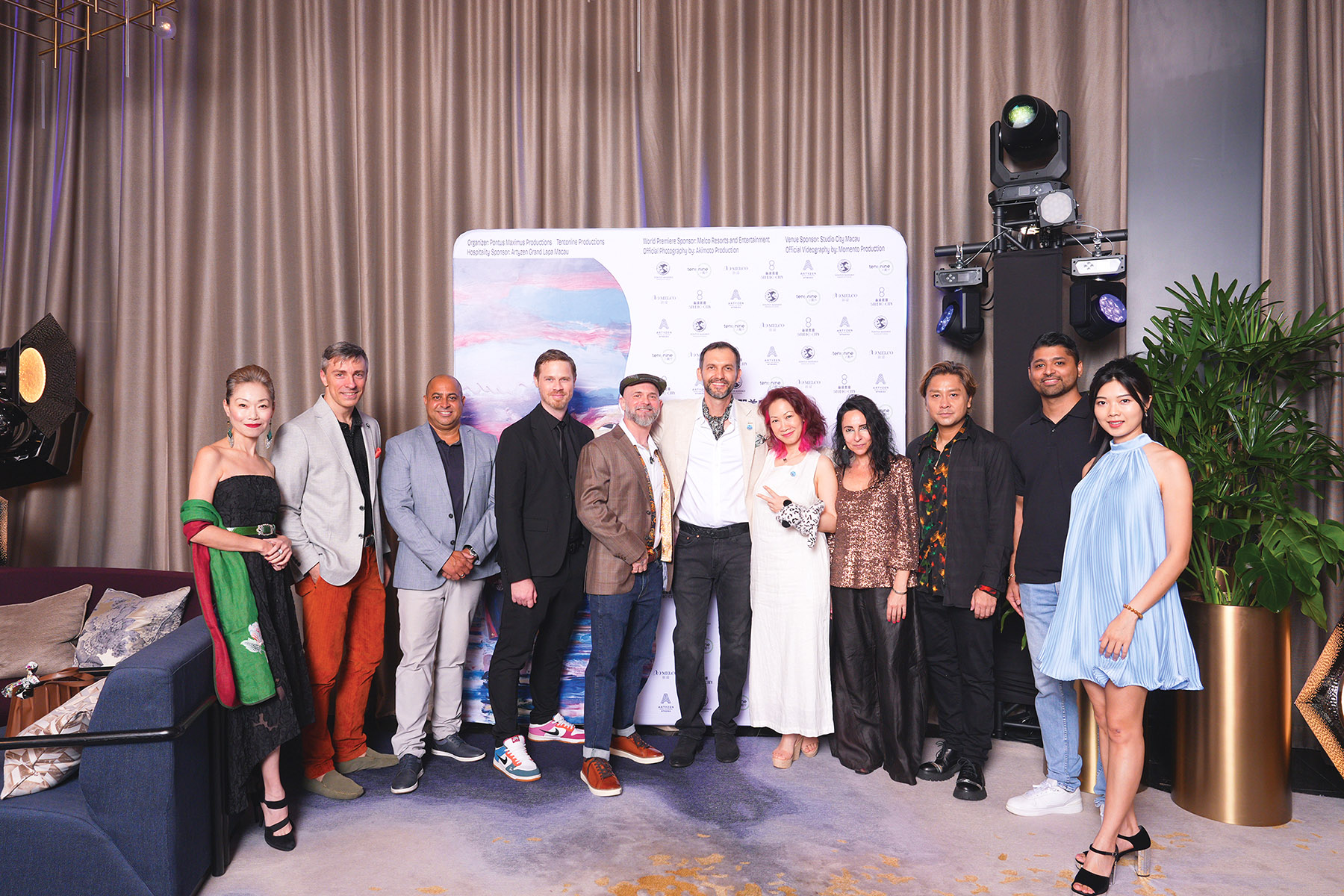
Maxim Bessmertny’s debut feature, The Violin Case, which was released in Macao theaters on May 22, is a rare case of an independently produced English-language film made in the city.
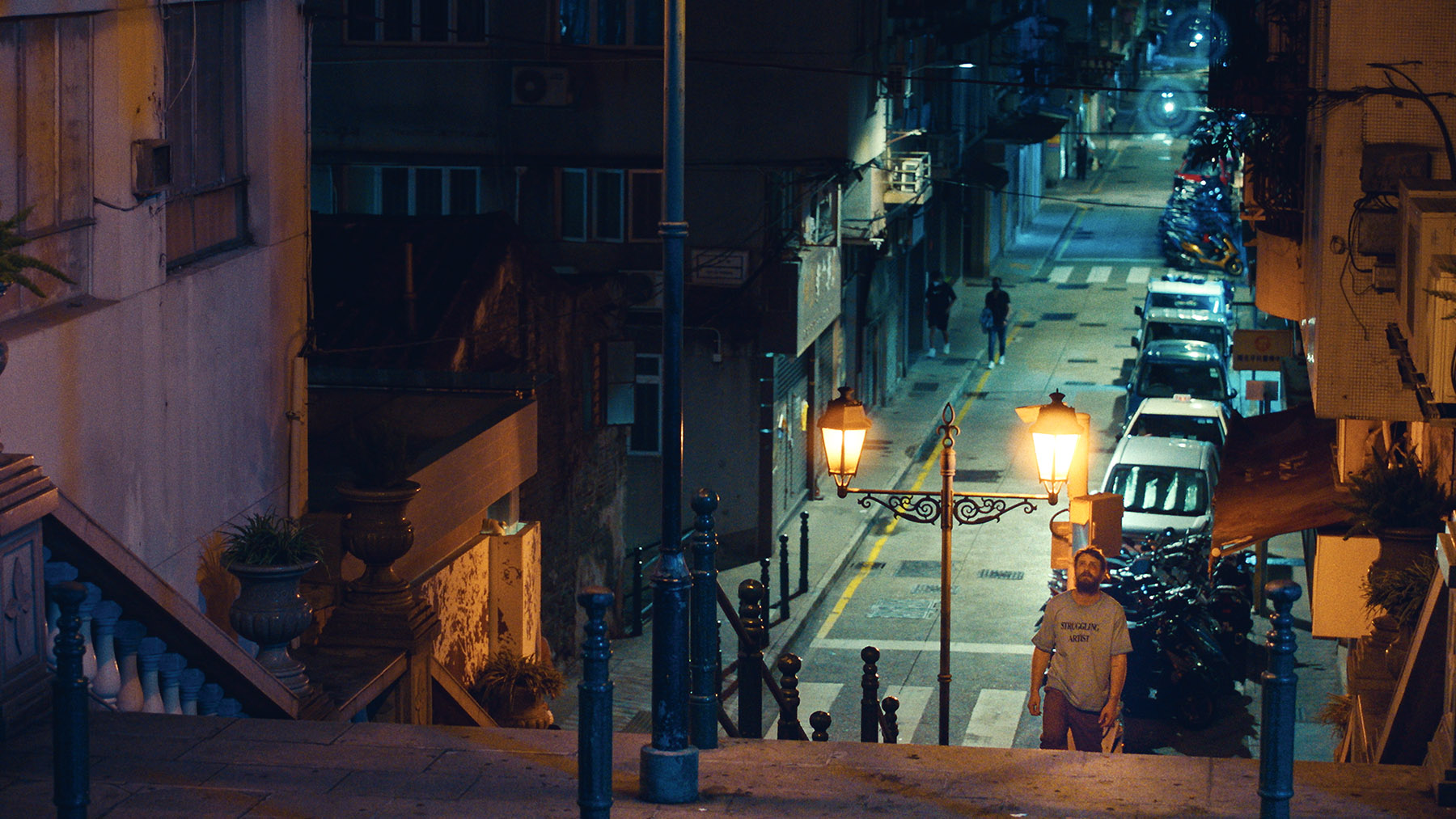
Co-produced by the filmmaker and Virginia Ho, the film follows Theo, an American painter living in Macao. One night, he mistakenly leaves behind his most prized possession — a painted violin — in a taxi. What follows is a restless, citywide pursuit during which Theo passes through shadowy alleyways, has chance encounters, and is exposed to a set of visceral experiences.
“I always dreamed of capturing a single night in Macao,” says the Russian-born Bessmertny, who grew up in Macao and took his degree in Film Production from the NYU Tisch School of the Arts. “My father once left a painting in a taxi, and the idea had stayed with me. I realized it could become a story — an adventure unfolding across back alleys, the Inner Harbor, and places where Macao’s truest spirit lives.”
His father is Konstantin Bessmertny, one of Macao’s most prolific and influential contemporary artists, whose legacy, presumably, has shaped the film’s creative DNA.
The Violin Case reveals a rare, textured portrait of Macao that lies beyond the glamour of casinos and luxury facades. Instead, the camera lingers on quieter, lived-in corners, where everyday stories unfold.
“You’re not just watching Macao, you’re inside it,” Bessmertny explains. “The film plays like a one-night passage through its streets, rhythms, and energy. In many ways, Macao itself becomes a character, carrying the story forward.”
“My biggest wish is that when people from Macao watch this film, it will remind them of their own memories and help them rediscover the city they thought they knew,” says co-producer Ho.
Beneath the film’s fast-paced narrative lies a more introspective thread. Bessmertny weaves questions of selfhood and belonging into the film’s fabric, inviting viewers to ponder on questions such as: Who are we without our titles, achievements, and even the people we think of as our closest friends?
Labor of love
Shot over 21 nights during the most intense months of the COVID-19 pandemic, the film is a testament to the resilience and resourcefulness of the production team. The cast, comprising nonprofessional actors selected from across Macao’s cultural spectrum, speaks English, Cantonese, and Portuguese with ease, reflecting the city’s multicultural makeup.
Six years in the making, The Violin Case is as much a fruit of perseverance as it is of cinematic ambition, especially seeing that a feature film of its scale is a rarity in Macao.
ALSO READ: The Macao files
Made with support from individual benefactors and corporate sponsors, the film was financed through staged contributions. The Cultural Development Fund of the Macao Special Administrative Region Government helped with sending the film to 10 international film festivals, including those in Cannes and Tokyo. The film will have its European premiere in Lisbon in September.
The co-producers now have their sights set on theater release on the Chinese mainland.
“From the very beginning, the Chinese mainland has been part of our long-term vision,” they say. “It remains a central focus for us.”
The writer is a freelance contributor to China Daily.
