

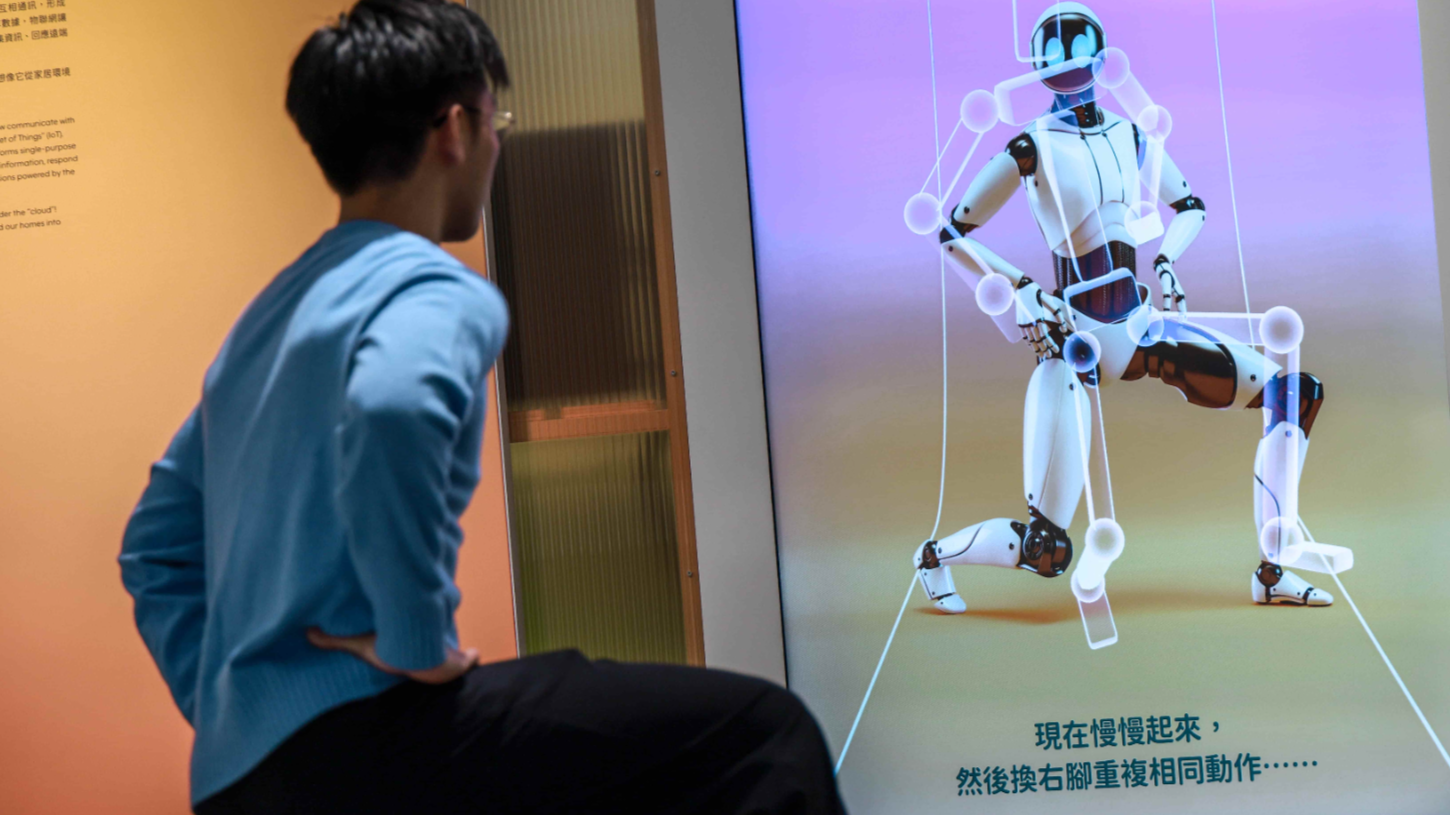
The Hong Kong Jockey Club’s JC GoAI project is expected to provide over 100,000 students from 300 local schools with more creative learning experiences by the 2028-29 school year by embedding artificial intelligence technology into curricula and teaching resources.
The ambitious target is one of the city’s latest responses to the national AI development goals listed in the 15th Five-Year Plan (2026-30).
The draft of the Five-Year Plan was approved by the National People’s Congress, the nation’s top legislature, on Thursday, at the closing session of the 14th NPC.
The project, expected to last 4 1/2 years, has launched a pilot phase in the second half of the 2025-26 school year, with 90 schools’ participation. A new round will begin in 2026-27, and the at-scale phase will start in September 2027.
Jointly designed by over 40 educators and 20 subject experts, the project also aims to train about 2,200 teachers, and support over 11,000 parents through educational activities to gain a deeper insight into AI.
At a launching ceremony on Thursday, Hong Kong Education Secretary Christine Choi Yuk-lin reiterated the country’s emphasis on digital education, and said the city’s Education Bureau will keep improving students’ digital literacy.
ALSO READ: National scholars inspire students with lectures on science and culture
In Hong Kong, 220 secondary schools have launched pilot programs to implement AI-assisted teaching, Choi said, adding that the government has set aside HK$2 billion ($255.5 million) in the Quality Education Fund to support digital education in primary and secondary schools and will release the Blueprint for Digital Education in Primary and Secondary Schools in 2026.
The draft outline of the nation’s 15th Five-Year Plan urges all sectors of the country to make all-out efforts to advance digital intelligence empowerment and implement the “AI+” initiative comprehensively, strengthening AI's integration with scientific innovation, industrial development, cultural enrichment, livelihood security and social governance.
The goal is to secure a leading edge in AI industrial applications and empower thousands of industries, the plan says.
Daniel Lai, project director of JC GoAI, explained the key components of the project, including AI teaching and learning resources, in-person and online workshops, study trips and exchanges, as well as student enrichment activities.
The project also engages parents through parent-child workshops and seminars to build shared understanding and community support, Lai said.
READ MORE: Chan stresses need to develop and deploy AI and robotics responsibly
Keric Lee Wai-ming, vice principal of SKH Yuen Chen Maun Chen Jubilee Primary School — which has joined the project — said the school has progressively applied AI to classes over the past years, and found that AI has elevated students' autonomy in learning.
Instead of providing answers, the AI applied to this project uses questions to stimulate students’ deeper thinking, he said.
Along with the ceremony, innovation projects developed by participating schools were showcased at the venue, including a smart healthcare app developed by Ling To Catholic Primary School. The app integrates AI with traditional Chinese medicine principles to analyze health data.
Another project is AI TV Show from the Buddhist Sum Heung Lam Memorial College, which can produce programs on science and national security education. The school also developed an image-generation project that helps senior couples fulfill their dreams of taking wedding photos in their ideal locations, allowing them to make up for missed moments.
Contact the writer at atlasshao@chinadailyhk.com
