

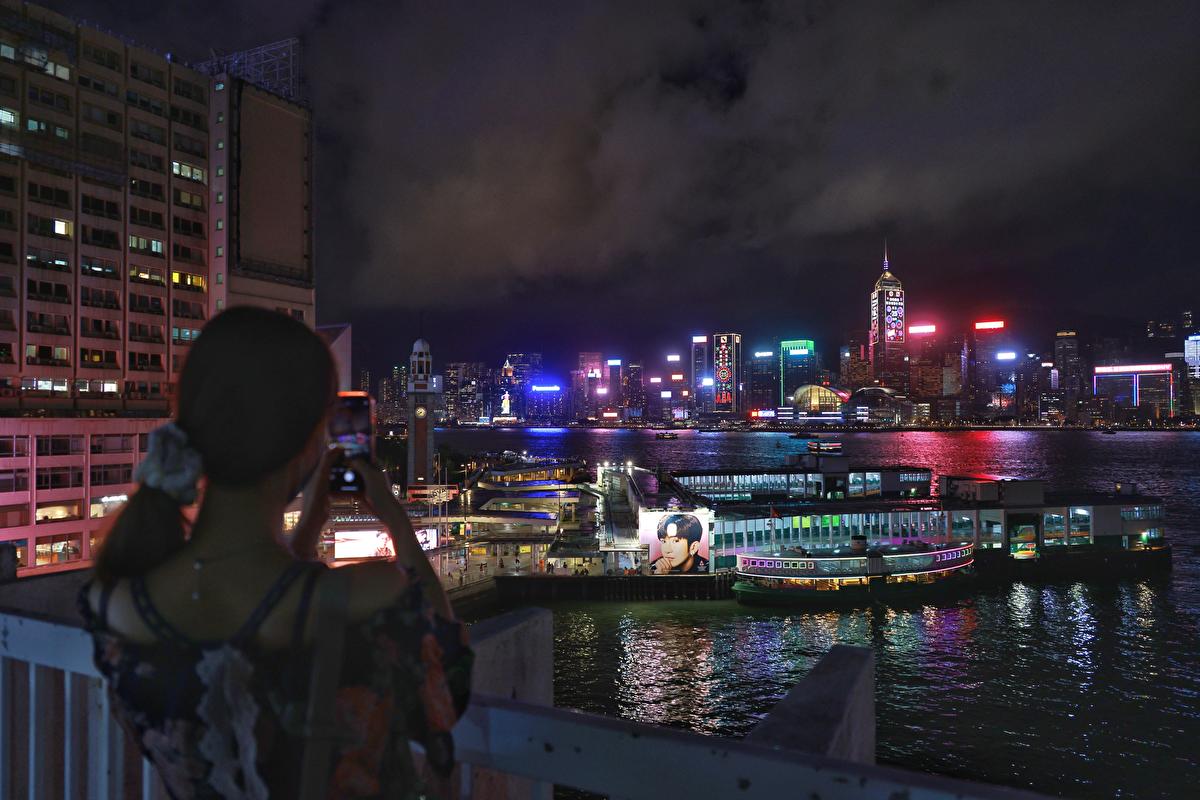
The 22-year-old Symphony of Lights harbor show will come to an end in the second half of this year, to be replaced by aperiodic light festivals at tourist spots across the Hong Kong Special Administrative Region, the city’s tourism chief said on Friday.
Speaking at a media briefing today on the tourism and sports measures unveiled in Financial Secretary Paul Chan Mo-po’s Budget speech on Wednesday, Secretary for Culture, Sports and Tourism Rosanna Law Shuk-pui expressed optimism about Hong Kong tourism, citing the city’s enhanced hosting capacity, which she said is best epitomized by Kai Tak Sports Park’s rapid ascent even before its first anniversary as the world’s third-largest venue by ticket sales.
Law said that authorities expect full-year visitor arrivals for 2026 will increase by around 8 percent year-on-year to 53.8 million. This forecast is based on last year’s remarkable performance: visitor arrivals nearing 50 million — a 12 percent increase on the previous year — as well as on the 1.77 million arrivals during the recent Chinese New Year holiday, which marked a 14 percent year-on-year rise, she said.
The shutting down of the long-standing Symphony of Lights, announced in the city’s 2026-27 Budget, was engineered along with other new strategies to “revitalize and light up” traditional attractions and encourage repeat visits, Law said.
Law said the new light festivals are more flexible in content design and involve fewer resources compared with the harbor show — a nightly performance that has illuminated the skyline along both sides of Victoria Harbour since 2004.
The new light shows can also highlight locations of interest to tourists across the special administrative region — among them Victoria Peak, one of the likely hosting venues.
The citywide light festival is part of the government’s HK$1.66 billion ($212.2 million) reimbursement to the Hong Kong Tourism Board — a 35 percent year-on-year funding boost — along with HK$1.2 billion for sports growth and a HK$200 million fund to breathe new life into rural tourism.
Addressing concerns over Hong Kong’s tourist capacity, Law told reporters the city is well-positioned to host the expected increase in visitor numbers. “We (have) managed to accommodate at peak 65 million visitors despite some strain, and with new facilities like the Kai Tak Sports Park, the city’s tourism capacity has only been strengthened,” she said.
Less than a year after its opening, Kai Tak Sports Park’s main stadium was ranked first in Asia and third worldwide in ticket sales, according to a report in December from Pollstar, a US-based entertainment trade publication and data provider.
Law said the new sports development funds will be used to intensify team sports training and bring a wider array of major events to the city.
She said that the current development program for team sports will be assessed after this year’s Asian Games — to be held in Nagoya, Japan, from Sept 19 to Oct 4 — with the review results helping inform the funding details and quantum for the next funding round, starting April 2027.
“And in the lead-up to the Asian Games, the government will ramp up funding to encourage the city’s team sports representatives to enter more competitions, to train and enhance performance through participation,” Law said.
ALSO READ: SARs to enhance trade, technology ties with Guangxi
Meanwhile, subsidies for hosting events will be increased by 50 percent to spur national sports associations and local groups in the city to stage more competitions of various scales, Law said.
Legislator Alex Fan Hoi-kit said it would be short-sightedness to see the budget’s culture and tourism spending as mere event hosting or upgrading costs.
Speaking to China Daily, the seasoned arts administrator and amateur musician framed the resource allocated as in substance “capital investment” whose return will materialize in the form of “longer-term, greater visitor affinity” for Hong Kong, as a steady pipeline of offerings with content of great quality, innovation, and depth can not only attract newcomers but keep travelers coming back.
Fan said that the key to lasting success is keeping Hong Kong “refreshing”. If a city can consistently offer new, progressive discoveries, it would mean long-term sustainability for its tourism and cultural sectors — and that, he added, will ultimately pay dividends for the wider economy.
Mathias Woo Yan-wai, a local cultural policy observer and the executive director of an international experimental theater company, said that the authorities’ ambitious light festival plan came not without potential challenges, citing that iconic sites like the Peak already face frequent heavy traffic that, if left unaddressed, could blunt the impact of any new activities.
Woo urged authorities to keep industry talks close and dig deep into the logistics and practical nuts and bolts of staging such showcases.
