

Aviator realizes boyhood dream, becomes first international visitor to China's space station
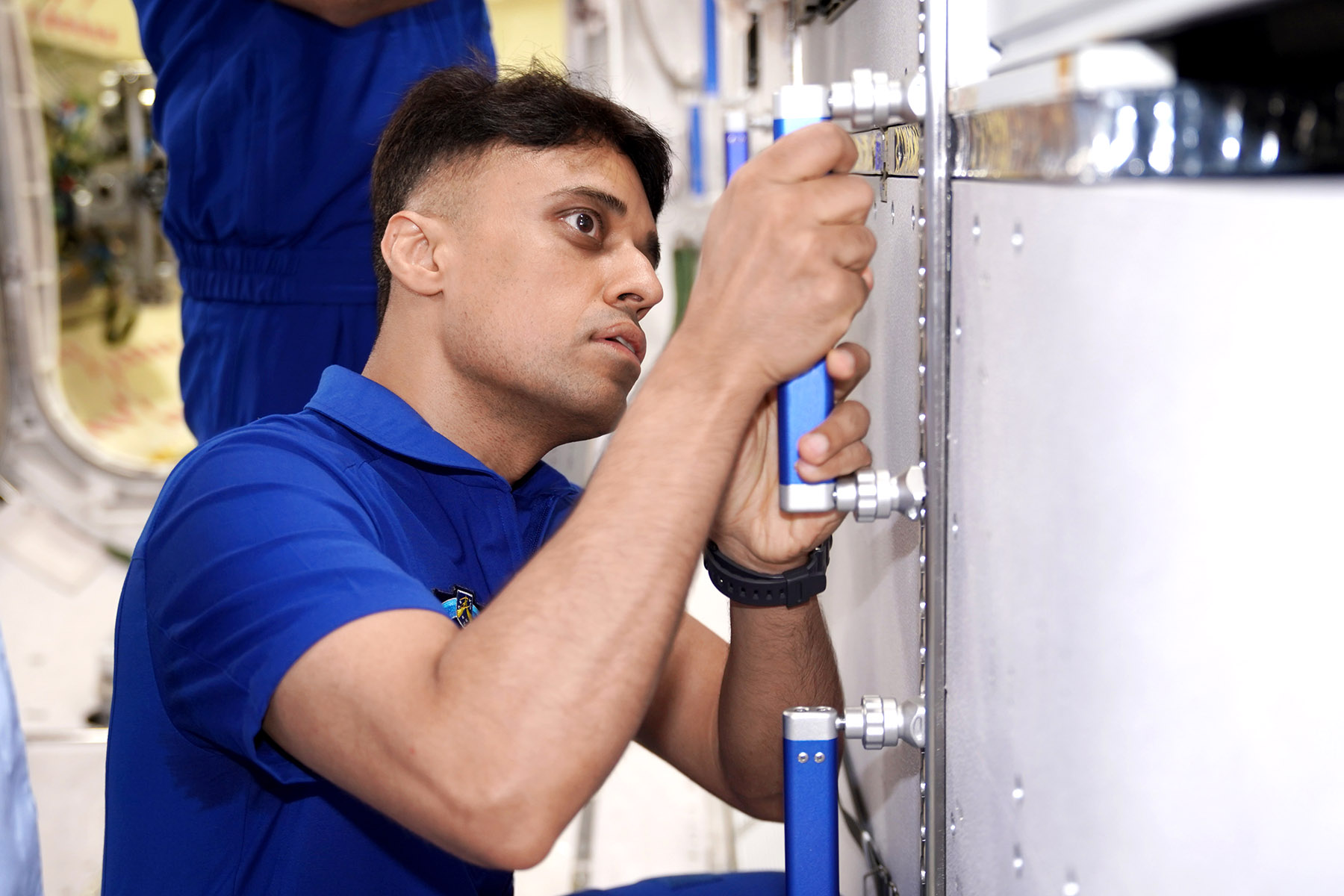
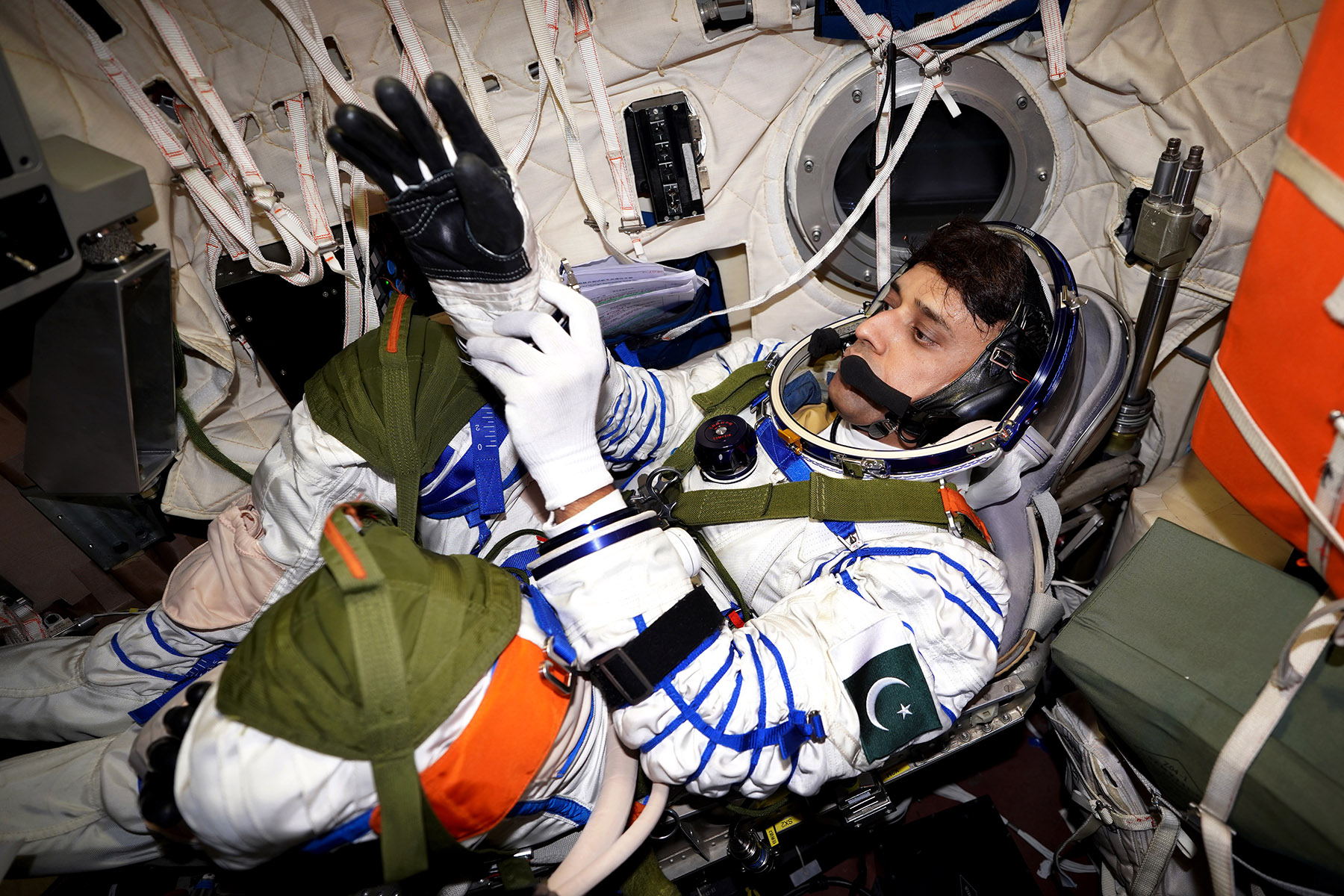
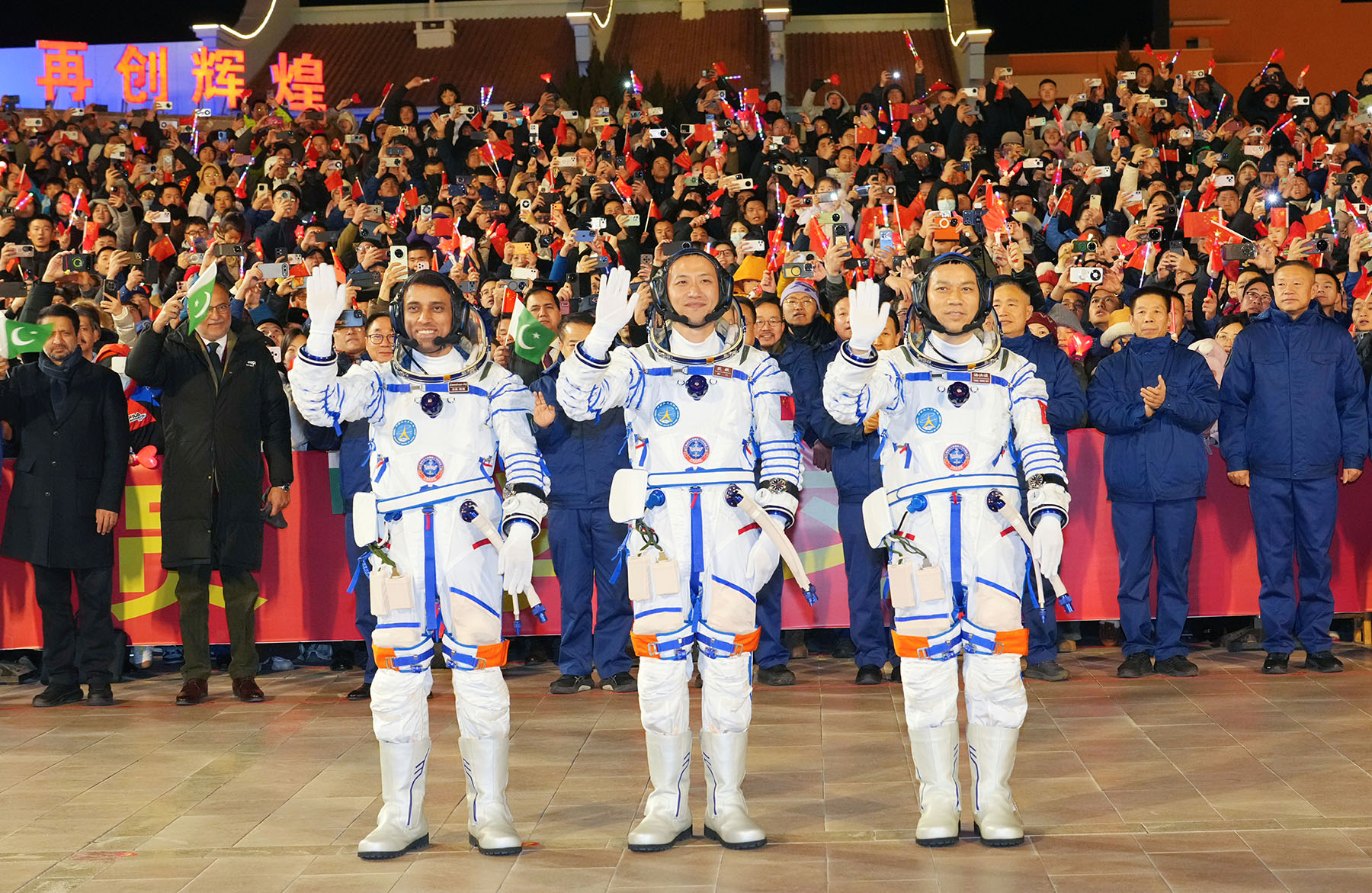
Muhammad Zeeshan Ali finally realized his childhood dream on Wednesday morning by becoming the first Pakistani astronaut in space as a crew member of China's Shenzhou XXIV mission.
He also recorded another landmark by becoming the first foreign astronaut to visit the Tiangong space station.
The 40-year-old wing commander in the Pakistan Air Force said since he was a boy, he had closely followed projects such as the space shuttle program and the Mars rovers' landing.
"I was inspired by many astronauts worldwide," Ali told China Daily in an interview at the Astronaut Center of China headquarters in northwestern Beijing, several days before heading to the Jiuquan Satellite Launch Center in the Gobi Desert in northwestern China.
READ MORE: Pakistani astronaut to be first foreigner aboard Tiangong
He said famous astronauts like Russia's Yuri Gagarin, the United States' Neil Armstrong, and China's Yang Liwei had "done wonders" for space travel. "All these people and programs inspired me to become an astronaut. Now, I can see that childhood dream coming true."
On a personal level, Ali said he has drawn inspiration from trips into the mountains, and looking at the clear night sky, the stars, the moon and the planets. Documentaries about the universe and books and movies have also fired his passion.
"Even in ancient days when there was no technology, there were still no limitations to human imagination. People have always been imagining new things, the stars and the planets," Ali said.
Surprise selection
In February 2025, the China Manned Space Agency and Pakistan's Space and Upper Atmosphere Research Commission signed an agreement in Islamabad to establish bilateral cooperation in the selection and training of Pakistani astronauts.
With his extensive experience flying aircraft and instructing flight students, Ali was assigned to help manage the initial selection process in Pakistan. He worked in the position for a while before an unexpected opportunity arose. "I saw many people come into this selection process and many of them were rejected," Ali said.
The selection officials decided to consider additional candidates with suitable backgrounds and Ali was told to take part in the selection process.
He was excited, and soon found that his knowledge and expertise as an experienced pilot had helped him pass all the assessments and tests in the initial selection phase in Pakistan.
Ali was then informed he would be sent to Beijing to take part in further selection procedures. After several rounds of rigorous tests, he emerged as the successful candidate.
"I was very surprised to learn that among the last batch of 10 candidates, I was the only one that was finally selected for this program," he said.
"And that moment cannot be expressed in simple words. I was very excited, and I considered myself to be the luckiest person on this planet as I would possibly become the first Pakistani astronaut into space and the first international crew member to enter the Chinese space station," Ali recalled.
The first person he shared the news with was his wife.
"I couldn't keep it to myself. So I told this news to my wife and she was also surprised and shocked to hear it, and she was literally crying with happiness," he said.
Hard training
In April, Ali and another candidate — Khurram Daud, a Pakistan Navy aviator — arrived at the Astronaut Center of China to begin formal spaceflight training.
He soon realized that learning and mastering the knowledge and skills required for a spaceflight within several months would be a major challenge.
The first priority was learning Chinese.
"It is the primary requirement for the operation of the Shenzhou spaceship because all the switches, all the software, all the programs, all the voice announcements, everything is in Chinese. So we have to learn and master the Chinese language," he explained.
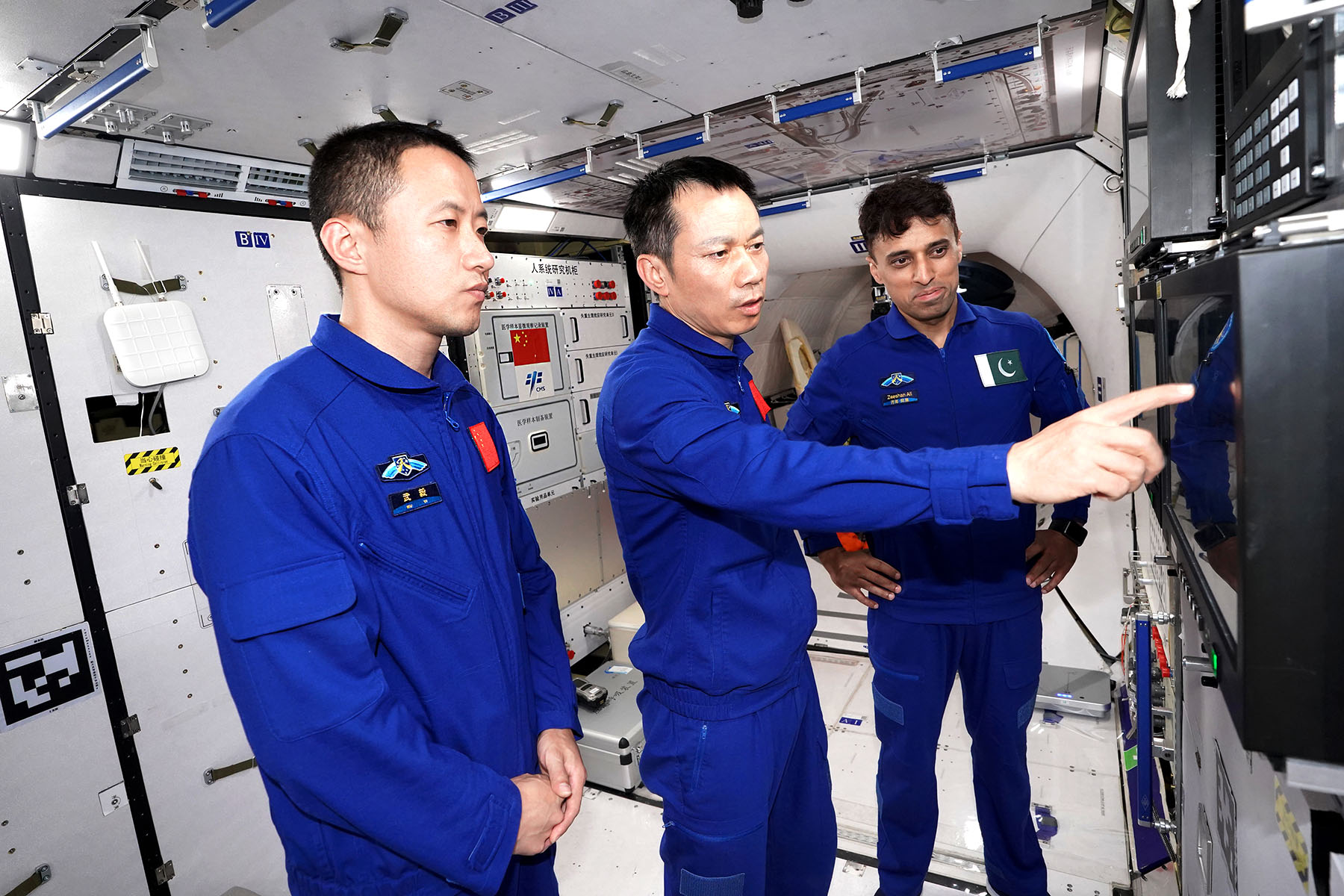
Ali said his Chinese crewmates — Shenzhou XXIV mission commander Tang Hongbo and fellow astronaut Wu Yi — helped him develop useful learning methods.
"Together, we devised a system like writing down the specialized words or the technical terminologies in Chinese pertaining to the spaceship's operations for me to memorize, and we practiced them repeatedly," he recalled.
The two Chinese astronauts also helped him compile a list of technical terms frequently used by the crew.
"With these techniques, I have overcome all the challenges. Now I can confidently say that I can laugh with my crewmates in Chinese. I can run a long checklist of the spaceship in Chinese with my crewmates, without anybody acting as a translator," the Pakistani said proudly.
Ali described his two mission partners as "wonderful gentlemen".
His initial impression of Tang was that he was a very strict commander. But after Ali started training with him: "I found him to be very humble despite having flown into space twice. He shared all his experiences with me, and I learned a lot from them. Throughout the training, he always told me that I should always believe in myself."
Ali described Wu as a "very good friend".
"He is also going into space for the very first time, but as a spaceflight engineer he has a lot of training experience. He also shared his experiences, many things that I otherwise could not grasp from our training alone."
Ali said his two Chinese crewmates often told him not to relax until the engines of the rocket were ignited.
He said the friendship among the crewmates represents the friendship between Pakistan and China. "Now, we hope that with this Shenzhou XXIV mission, we will take this friendship to new heights," he said.
Ali said the crew had repeatedly practiced flight procedures and emergency responses to prepare for possible scenarios.
On his training with the Shenzhou XXIII crew members, with whom he is scheduled to return to Earth, Ali said they had practiced procedures multiple times through video calls.
He said they told him they were very excited to welcome him to the space station. "In our last interaction, Lai Ka-ying (from the Shenzhou XXIII team) said that she's going to bake some very delicious cakes for me after I arrive at the space station," he said.
Ali said his crewmates not only understood him, but also respected his opinion.
"I strongly believe that training itself creates competence. Then the hard work turns this competence into reliability, but in the end, teamwork is No 1. Teamwork turns this reliability into mission success," he emphasized.
'Beautiful memories'
Besides the demanding training, Ali said he shared some "very beautiful memories" with the Chinese astronauts.
He recalled an incident when they were doing sea survival training in Yantai, Shandong province, simulating exiting from the return capsule into a boat, when the weather changed and it started raining.
Although the training teams were monitoring them, the astronauts enjoyed the rain and started singing Chinese and Pakistani songs together.
"Just like the microgravity environment in space, you are prone to motion sickness at sea. But somehow I felt so excited that I couldn't recall any of the sickness. Perhaps that was the reason that I enjoyed it a lot," Ali recalled with a smile.
In Yantai, he was also fortunate enough to meet one of his heroes, Yang Liwei, China's first astronaut in space.
"Our first interaction was in Yantai, when we were doing the sea survival training. I felt really honored and privileged to meet him personally and to learn from his experience, and to know how he did extraordinary things for the Chinese space program," he said.
According to Ali, Yang paid close attention to both Pakistani astronauts' training and followed their progress.
"Whenever we meet him, he greatly appreciates how we work and how we prepare for this mission. That appreciation from him, I think, is one of my biggest sources of motivation."
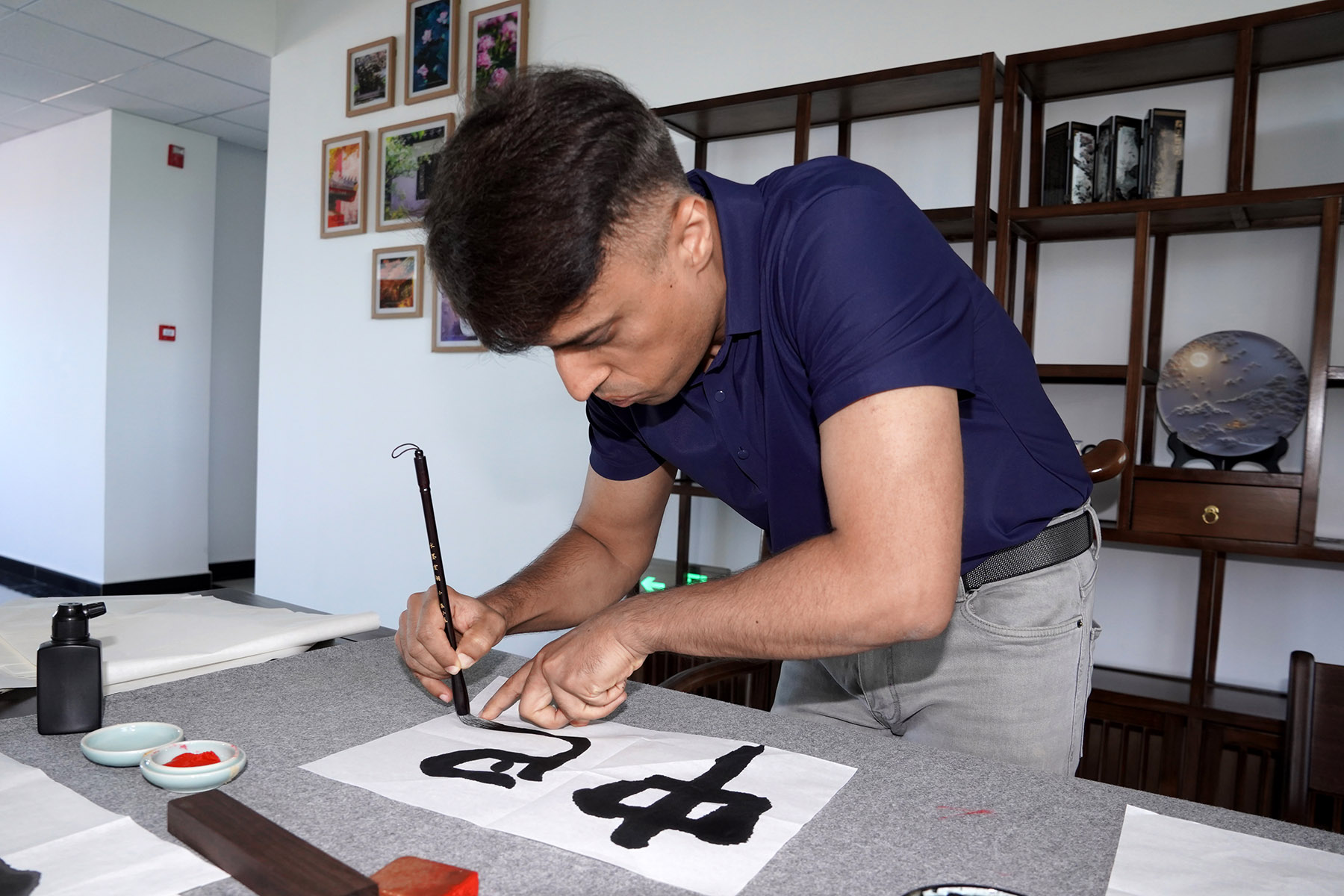
During their stay in Beijing, the Pakistani astronauts also had opportunities to learn about Chinese culture.
Ali said he liked Chinese food "very much" and learned tai chi and table tennis. He also read the works of the distinguished ancient poets Du Fu, Li Bai and Su Shi.
"During my training time, whenever I missed my family, I often recalled one very famous sentence from the Chinese poem written by Su Shi: dan yuan ren chang jiu, qian li gong chan juan (I only hope we may have long lives, may share the moon's beauty, though a thousand miles apart)," he said, reciting the verse in Chinese.
The two Pakistani astronauts also learned some famous Chinese songs from their Chinese trainers and peers.
Ali also said he was fond of Wishing We Last Forever, a song performed by singer Faye Wong and adapted from Su Shi's poem that contains the lines "When will the moon be bright?" and "Though miles apart, we'll share the beauty she displays".
Ali said he was grateful for the support he and Khurram Daud had received from everyone at the Astronaut Center of China.
"They are very professional. They have been working in the same capacities for many years, so they have a lot of experience. Over this very short span of time, they have tried their best to impart all their knowledge and all their experience to us. So that whenever we encounter any kind of situation, we should be able to overcome that," he said.
Pioneering collaboration
As the first international astronaut to visit the Chinese space station, Ali said he believes the mission will show the world that Tiangong is opening its doors to international astronauts to collaborate for the benefit of humanity.
"Space should be an avenue for collaboration, not confrontation," he said.
"I expect that after this mission, many international astronauts will be following me. They will be collaborating together with Chinese astronauts and leveraging all the technologies that China has achieved and retained to further explore and work together for the betterment of all humanity."
The Pakistani astronaut also shared his views on the significance of space exploration.
"I believe that the more we explore, the more we move away from Earth, the more we appreciate this planet. We appreciate its beauty and its fragility, because that is the only home that we know in this whole universe," he said.
"A lot of astronauts have said that, 'whenever we look at Earth from outer space, we don't see any borders. We don't see any separation between the human beings. It is one humanity'," Ali said, adding that President Xi Jinping had always referenced a community with a shared future for humanity.
ALSO READ: Pakistanis celebrate China's Shenzhou XXIV launch as their first astronaut aboard
The Pakistani astronaut said, "Once we are there in space, exploring the unknown, we need to remind ourselves why we are there — we are there for the betterment of humanity".
"We are there for the peaceful exploration and peaceful utilization of space to make the lives of common people better on our planet," he stressed.
Asked what personal belongings he would take to the space station, Ali said: "I will take pictures of my kids, my wife, my parents, my friends — all these people who have supported me. Looking at those pictures will remind me that I have to work to the best of my ability to achieve all the mission objectives. I will also be taking some handwritten letters from my kids and my father as a great source of inspiration for me".
Ali said he expects to bring back from the mission "a lot of memories made with my crewmates to cherish for the rest of my life".
Contact the writers at zhaolei@chinadaily.com.cn
