

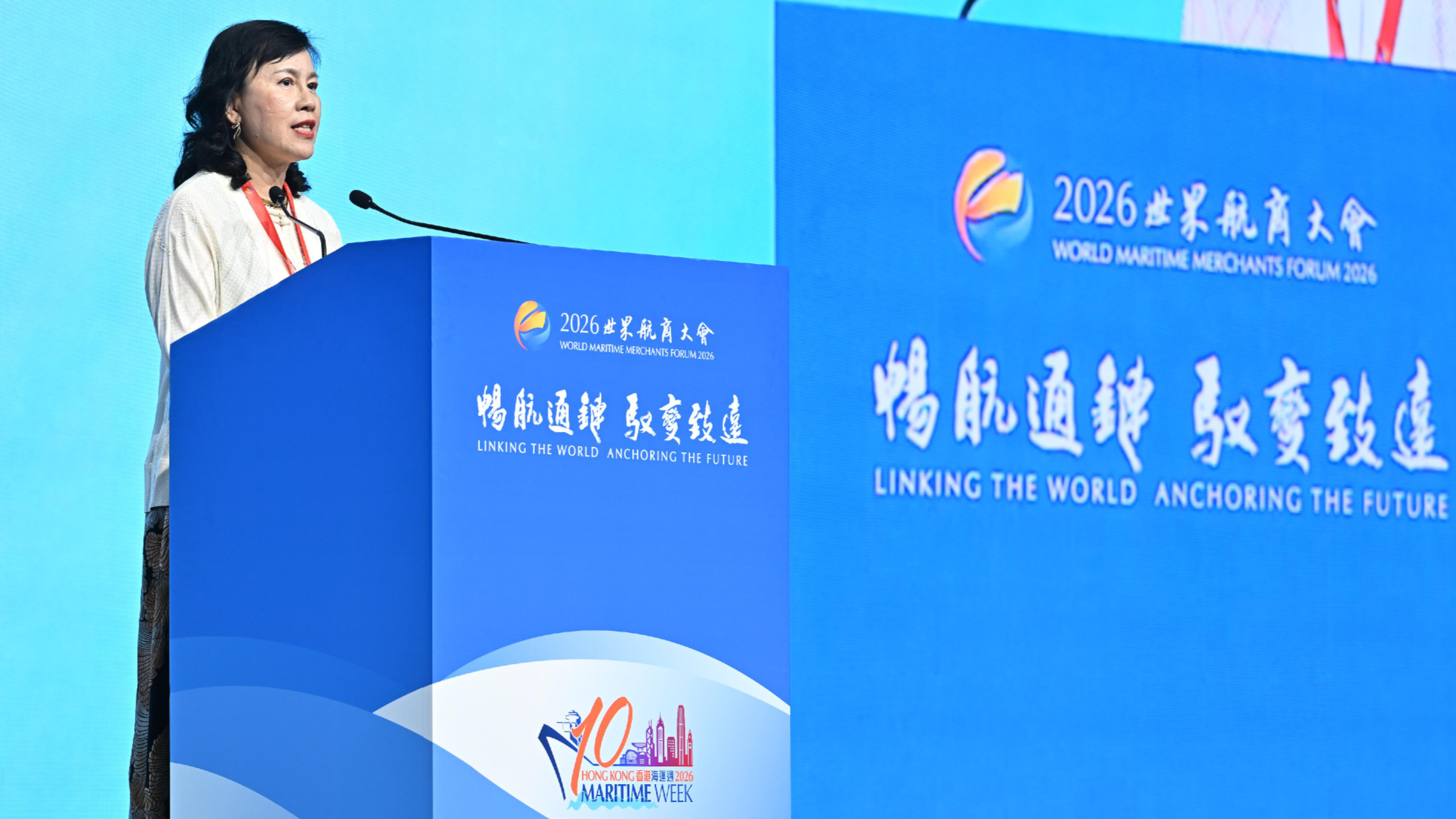
The Hong Kong Special Administrative Region is strengthening links between Chinese mainland supplies of green marine fuels and international shipping markets, pursuing regional partnerships and certification cooperation as it develops bunkering and trading services.
Mable Chan, Hong Kong's secretary for transport and logistics, said the city aims to link mainland fuel production with bunkering in Hong Kong and use by vessels abroad. It also seeks to provide a platform connecting national initiatives on fuel trading and certification with international standards.
Asked at a media briefing how Hong Kong could differentiate itself from Singapore's established marine fuel market, a Hong Kong transport official highlighted the city's proximity to mainland fuel production, alongside its financial services and common law system.
New cooperation agreements announced during Hong Kong Maritime Week reflect that approach.
ALSO READ: Global maritime leaders highlight HK role in shipping industry upgrade
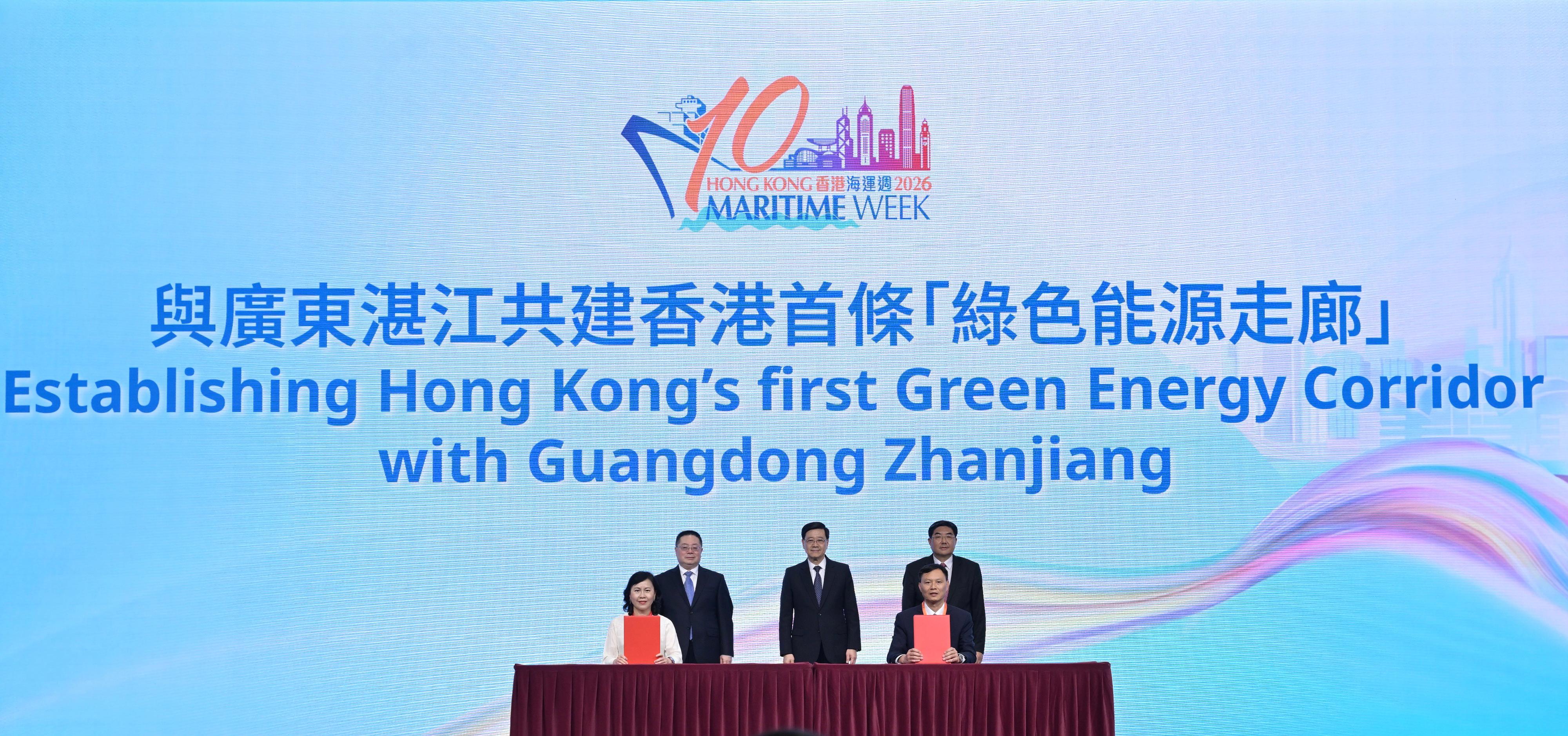
On Nov 16, Hong Kong signed a memorandum of understanding with Zhanjiang, Guangdong province, to jointly establish its first green energy corridor.
The following day, the special administrative region's Transport and Logistics Bureau signed an agreement with the Global Sustainable Transport Innovation and Knowledge Center under the Ministry of Transport to promote Chinese-led green marine fuel certification standards internationally.
Hong Kong completed more than 210 green marine fuel bunkering operations, from January 2025 through the third quarter of 2026, totaling over 370,000 metric tons, according to government figures.
The government is also working with the industry on trading arrangements. Chan announced on Nov 16 the establishment of a working group comprising traders, energy suppliers, industry organizations, and experts to advise on the development of a green marine fuel trading platform.
Discussions at a related seminar in Shenzhen highlighted the commercial and technical challenges that must be addressed as the industry expands its use of alternative fuels.
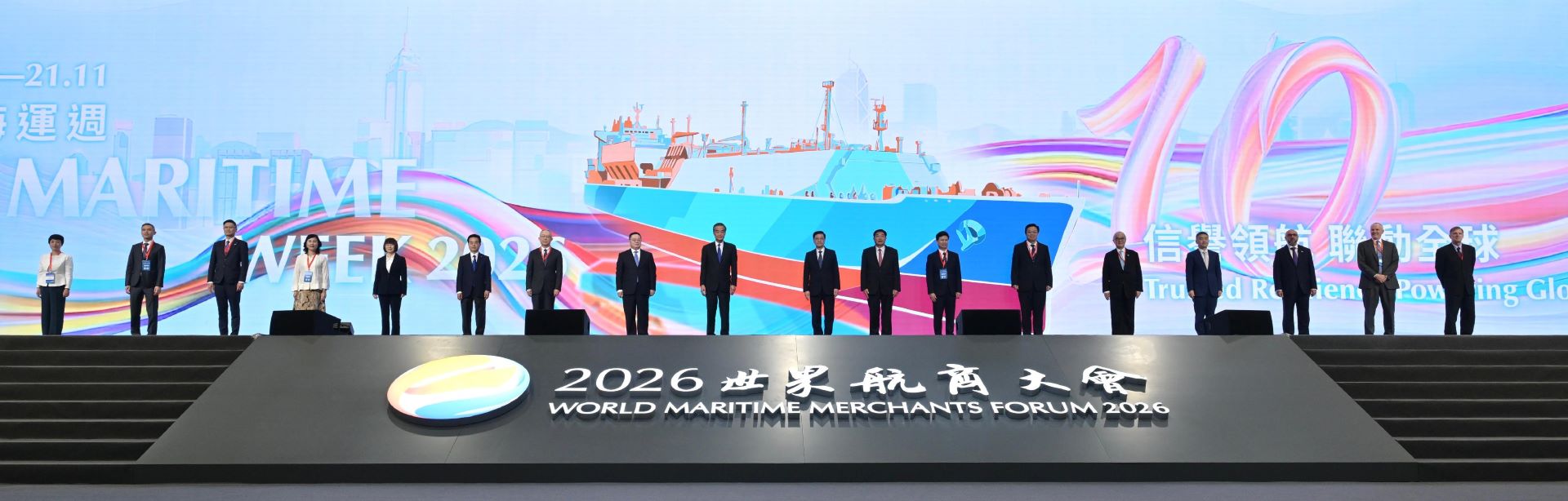
The Nov 17 seminar, held as part of the World Maritime Merchants Forum, brought together more than 100 representatives from shipyards, classification societies, energy companies, ports, shipowners, cargo owners and green finance institutions, according to the organizers.
ALSO READ: HK forum: Multilateral efforts to transform global shipping industry
Kenneth Leung, director of the Sustainability/Net-Zero Office at the Hong Kong University of Science and Technology, called for a clear, transparent and traceable framework for calculating the life-cycle carbon emissions of fuel. Closer alignment of international certification standards would help strengthen Hong Kong's green shipping services and competitiveness, he said.
Wang Zhifang, an expert at the China Classification Society's Wuhan research institute, identified policy uncertainty, imbalances between green fuel supply and demand, high compliance costs, and new safety risks as challenges facing the transition.
Roundtable participants discussed fuel price premiums, difficulties bringing production capacity into operation, and inconsistencies among certification standards. Their discussions emphasized the need for stable, affordable and safe fuel supplies supported by cooperation across regions and throughout the supply chain.
For Hong Kong, developing those services is part of a broader maritime strategy. Chan said the city seeks to maintain port competitiveness while strengthening its high-value maritime services sector.
