

Experts: Institutional assets open possibilities for region's economic development
In co-hosting major events such as those under Asia-Pacific Economic Cooperation, or APEC, the Guangdong-Hong Kong-Macao Greater Bay Area has developed institutional assets for efficient coordination across the three places.
These assets, according to regional policymakers, experts and scholars, will not only support more joint mega-events but also enhance the region's international image as a highly integrated cluster, opening possibilities for greater flow of cross-boundary elements, improving regional livelihoods and boosting economic development.
They spoke to China Daily ahead of the 33rd APEC Economic Leaders' Meeting, held in Shenzhen on Wednesday and Thursday, a major event in the APEC "China Year" and China's third time hosting APEC.
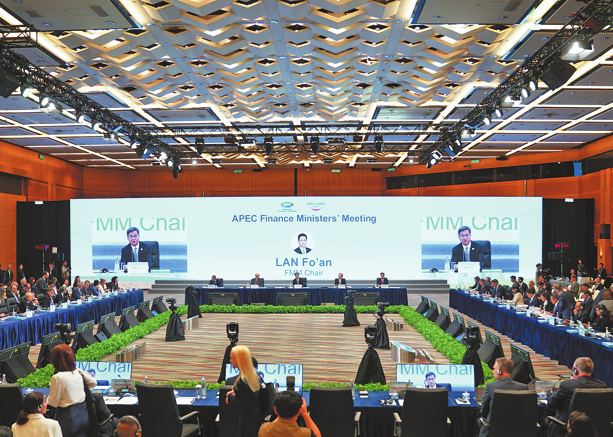
Before Shenzhen, the APEC Finance Ministers' Meeting was held in the Hong Kong Special Administrative Region in October for the first time, while Macao SAR hosted the 13th APEC Tourism Ministerial Meeting and the 67th APEC Tourism Working Group Meeting in June.
Through continuous exploration and experiments in co-hosting events, the Greater Bay Area is developing an efficient cross-system cooperation model in which each place plays to its strengths while coordinating seamlessly, Hong Kong lawmaker Ben Chan Han-pan said.
ALSO READ: APEC CEO Summit: Business leaders eye closer cooperation with China through GBA
The Greater Bay Area, which encompasses 11 cities — the Hong Kong SAR, the Macao SAR, and nine cities in Guangdong province — comes with three different legal systems and three separate customs territories.
Another example of the region's ability to co-host mega events was the 15th National Games of China, which took place in November 2025. It was the first-ever national sporting event co-hosted by Guangdong province, the Hong Kong SAR and the Macao SAR.
Chan said the ability to co-host the event was made possible by improving infrastructure connectivity and closer alignment of rules and mechanisms across the three regions. The process, Chan said, was "much faster than imagined" and yielded numerous benefits.
Regarding physical connectivity, Chan said an expanding high-speed rail network has directly linked Hong Kong with more mainland cities, driving a surge in usage among city residents.
He said other major institutional innovations — such as cross-border vehicle schemes for eligible Hong Kong and Guangdong drivers — continue to attract strong interest.
Furthermore, the completion of the Shenzhen-Zhongshan Link and the Hong Kong-Zhuhai-Macao Bridge has significantly streamlined travel across the Pearl River Delta, making cross-boundary movement smoother and more frequent than ever.
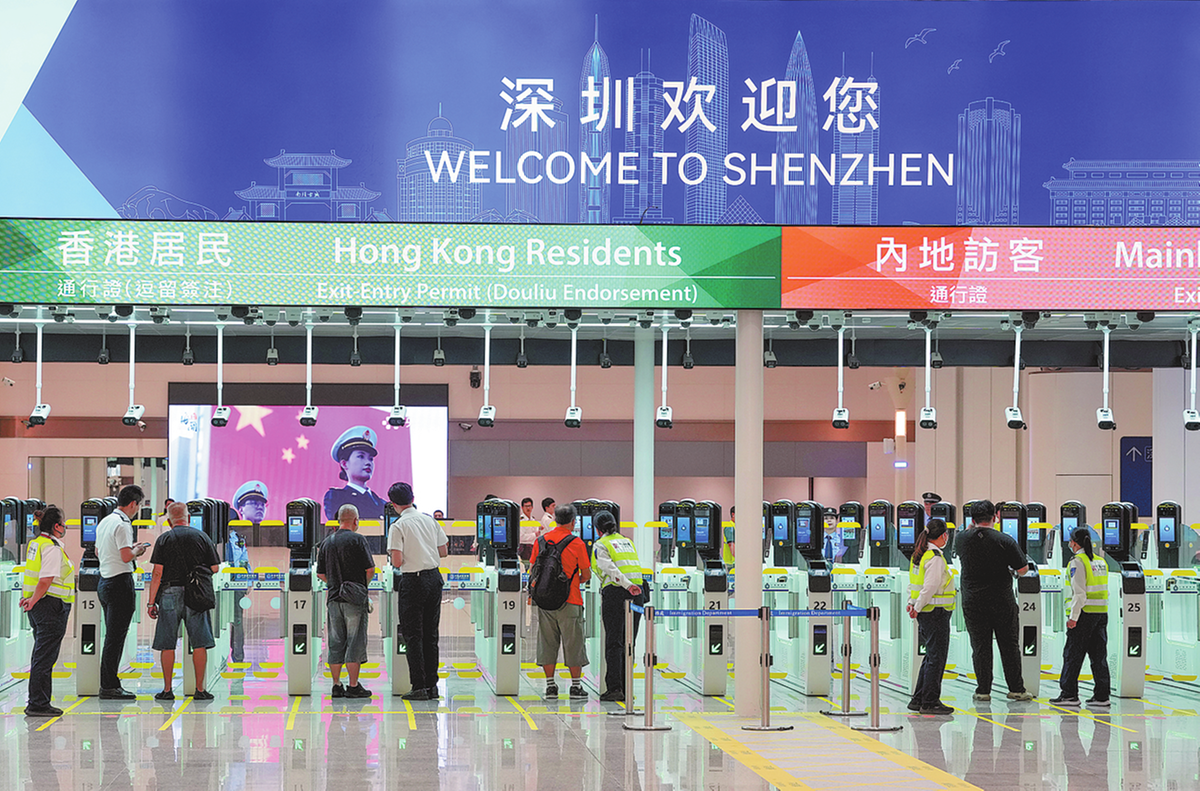
As for soft connectivity, he cited smoother border clearance as the best evidence. The new Huanggang Port, which opened in October with upgraded clearance systems allowing travelers to complete Hong Kong and Chinese mainland immigration procedures in a single stop, is a prime example.
These advances, together with unconventional innovations at the National Games, such as those in the cross-border marathon, demonstrate the region's ability to jointly host mega events.
ALSO READ: HKSAR representatives: APEC platform to showcase GBA development
These steadily accumulating institutional assets have also helped forge a distinctive identity for the region, Chan said, suggesting the potential to jointly host more high-profile events.
Citing high-level United Nations meetings in Geneva and European Union-related activities in Brussels, he said such signature events can sharply elevate a city's global profile.
He expressed hope that port and border-control approval procedures will be further streamlined and communication costs among the three places reduced, enabling the region to build more signature events of its own and strengthen the cluster's global recognition and brand influence.
High convenience
Yet, the significance of these institutional assets goes beyond hosting more events, said Yeung Wan, a senior research officer at the Hong Kong-based think tank One Country Two Systems Research Institute.
They show residents and worldwide stakeholders that the Greater Bay Area not only enjoys the advantages and distinctive features of the "one country, two systems" principle, but also enables people and businesses to move between the two systems at low cost and with high convenience, Yeung said.
Citing the new Huanggang Port's latest clearance model, Yeung said it represents not only steady technological breakthroughs but also increasingly smooth coordination among regional authorities, under which the three places can identify gaps, solve problems and lay the groundwork for cooperation in more areas.
As a result, residents within the region enjoy greater convenience, building trust and confidence in regional cooperation through growing positive feedback. More broadly, such coordination shows global businesses, potential investors and talent interested in the Greater Bay Area how exactly the cluster excels despite having three separate customs territories and three currencies.
ALSO READ: GBA seen contributing more to Asia-Pacific prosperity
"To many overseas stakeholders, this principle is little more than rhetoric. But firsthand experience of the seamless coordination among the three places will give them a deeper understanding of the cluster's institutional advantages," said Yeung.
This will help the region draw in more partners and talent, spanning commerce, investment and technology, he said.
During the National Games, supported by the General Administration of Sport of China, the two SARs and mainland authorities established a regular communication mechanism, he said, which could outlast the event and give authorities more direct channels for communication and coordination.
Fan Kwok-yuen, an assistant professor in the Department of Economics and Finance at Hang Seng University of Hong Kong, said accumulating such institutional assets also builds tacit understanding and collaboration momentum among the three places — what he called a form of "trust capital". This spurs more cooperation and will surely benefit livelihoods, with cross-boundary elderly care a prime example.
READ MORE: Greater Bay Area fosters key designs
Many elderly people in Hong Kong would opt for post-retirement life in mainland cities. To make this work, cross-border medical services, including cross-border ambulance services, require customs, border control and even health authorities on both sides to familiarize themselves with procedures in advance, Fan said.
In addition, to lower elderly care costs, both sides should explore partial linkage between Hong Kong's electronic health system and mainland medical insurance in the future.
With institutional assets growing increasingly substantial, Fan said he hopes these issues can be properly resolved.
He said he also expects deeper connectivity across more fields in the future, benefiting residents and industries.
This includes data flows — especially in finance, banking, credit reporting, healthcare and research — as well as mutual recognition of professional qualifications, and the exchange of capital and intellectual property.
In July, China announced plans for a center in Qianhai, Shenzhen, to promote APEC cooperation on cross-border data flows. The center serves as an open platform for policy research, regulatory alignment and services for businesses.
"As trust took root, the three sides candidly communicated their needs and boundaries and deeper cooperation followed naturally," said Fan.
Contact the writer at amberwu@chinadailyhk.com
