

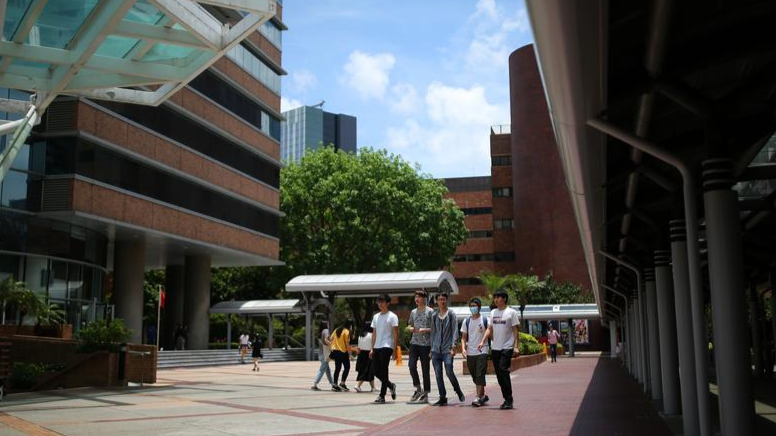
A research institute under the Hong Kong Polytechnic University plans to set up three joint laboratories with the Commercial Aircraft Corporation of China Ltd (Comac) to advance homegrown aircraft research, with the agreement to be signed at next month’s Zhuhai airshow.
The three new labs are expected to respectively focus on intelligent design, precision processing and manufacturing, and operation and maintenance, said the PolyU Aerospace Research Academy (PARA) on Friday.
PolyU established the academy in July to facilitate interdisciplinary collaboration on aerospace research and help its scientists apply for national projects.
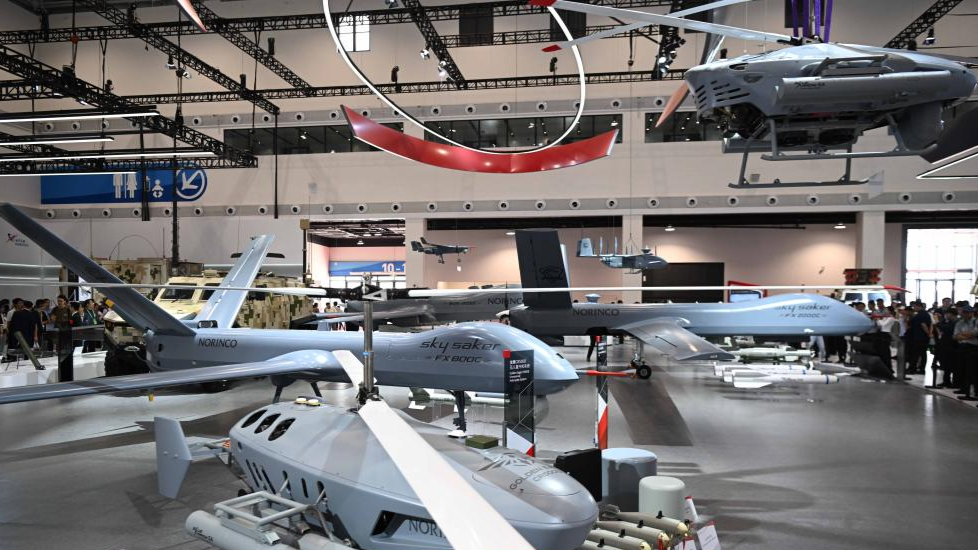
At a news conference, PARA unveiled its new research roadmap, with China’s domestically developed large aircraft among its key focus areas.
One of PARA’s research unit is the Comac-PolyU Research Institute for Large Aircraft (RILA), which was established in 2024. Wen Chih-Yung, director of RILA and PolyU’s chair professor of aeronautical engineering, said RILA and Comac will sign an agreement at the 16th Airshow China in Zhuhai next month to jointly establish three laboratories.
He said the “groundwork” is already in place, and the labs can be officially launched at PolyU immediately after signing.
Wen said RILA has been working on more than 10 projects, including aircraft weight reduction and in-flight turbulence prediction. This interdisciplinary research involves five departments, with the fastest projects expected to yield breakthroughs within one to two years, said Wen.
He also revealed that RILA and Comac are discussing cooperation in artificial intelligence, which could lead to a fourth joint lab.
Founded in 2008, Comac delivered China’s first homegrown large passenger aircraft C919 in 2022. The aircraft began regular flights to Hong Kong in 2025, connecting the city with Shanghai in East China.
READ MORE: China's homegrown C919 jet carries over 8.4m passengers
In August, C919 completed its first international commercial flight, from Beijing to Ulaanbaatar, capital of Mongolia.
Alongside large aircraft, PARA will continue to focus on deep space exploration, the low-altitude economy and space manufacturing, while expanding into frontier research fields spanning advanced satellites and payloads, health and well-being in space and extreme environment, space computing, space governance, advanced aviation materials and advanced propulsion technologies, according to its new roadmap.
Christopher Chao Yu-hang, PolyU’s senior vice-president overseeing research and innovation and PARA’s interim director, said he hopes PARA will bring together PolyU’s research strengths, major research challenges and practical needs, including those in large aircraft research, and thus foster interdisciplinary and cross-institutional collaboration and align to the nation’s needs in aerospace growth.
Beyond its collaboration with Comac, PolyU has partnered with research institutions under the Chinese Academy of Sciences in frontier areas including space manufacturing and lunar exploration, said Yu Hongyu, executive director of PARA and professor of PolyU’s Department of Mechanical Engineering.
He said PARA will further deepen collaboration with research institutions and industry partners at home and abroad. Through research and innovation, talent development and research translation, his academy will strengthen PolyU's research and innovation capabilities in aerospace technologies, help translate research outcomes into applications in Hong Kong, and contribute to the nation’s technology development, Yu added.
Contact the writer at amberwu@chinadailyhk.com
