

Cooperation project brings scientific approach to rice-prawn cultivation
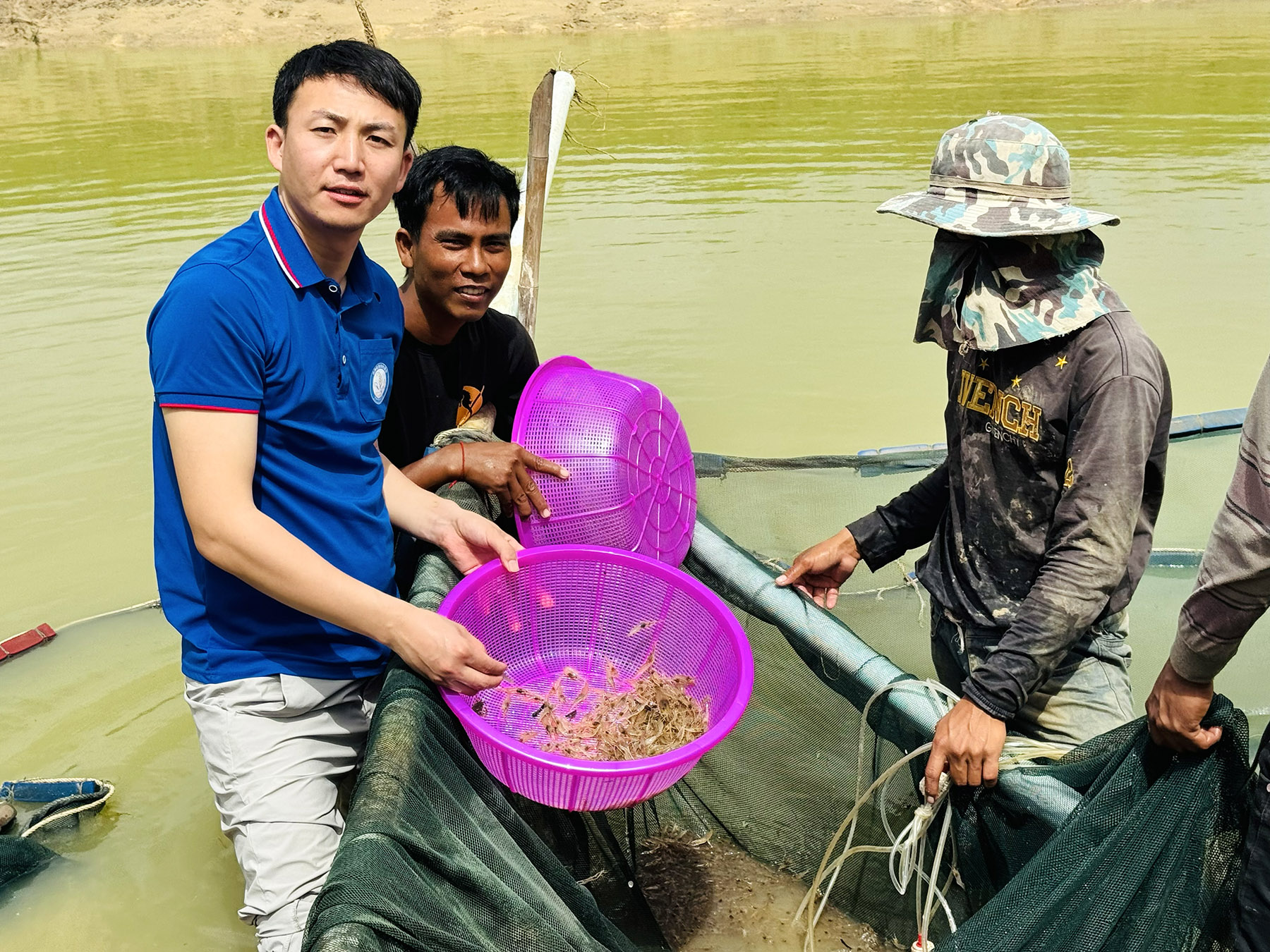
A farmer in Cambodia's Takeo province no longer has to rely on instinct to determine whether his prawns are growing in favorable conditions. With a few taps on his mobile phone, Pros Kh can check water quality readings from his ponds, monitor changes in dissolved oxygen and temperature, and make better-informed decisions about his harvest.
The digital system, introduced through a China-Cambodia smart fisheries cooperation project, is helping him increase income by growing rice and raising giant freshwater prawns in the same field.
By combining China's experience in integrated rice-fish farming with digital aquaculture, scientific training and locally adapted practices, the project showcases how international cooperation can translate technological innovation into tangible benefits for rural households.
"When I'm using smart agriculture, the survival rate of prawns is higher and also income is higher. My life changed a lot," Pros Kh said.
For farmers like him, the technology is a means of reducing production risks, making better use of existing farmland and increasing income, which is the foundation of a more sustainable livelihood.
China, drawing on its own development experience and achievements in poverty alleviation, has been expanding its cooperation with developing countries to help improve livelihoods and build more resilient rural economies.
Through partnerships with countries including Cambodia, Uganda and Egypt, China has supported improvements in aquaculture techniques, promoted digital farming models tailored to local conditions and strengthened training systems for local talent.
By translating technology into practical skills and sustainable production, these initiatives seek to build bridges for mutually beneficial development and contribute to poverty reduction across the Global South.
Two in one
In Cambodia, the cultivation of giant freshwater prawns is an important measure to strengthen rural livelihoods and food production.
The smart fishing cooperation project between China and Cambodia builds on the ecological relationship between rice and aquatic animals, a farming practice that has existed for generations but can be made more productive through scientific management.
Wu Xugan, a professor at the College of Fisheries and Life Science at Shanghai Ocean University who led the project, said the principle behind integrated rice-fish farming is relatively simple.
When fish or prawns are raised in rice paddies, their waste can serve as organic fertilizer for rice plants. Meanwhile, the rice provides shade for the aquatic animals, creating a mutually beneficial environment. "It's a small cycle," Wu said.
The approach is particularly suitable for Cambodia, where many farmers have limited access to irrigation infrastructure and depend on seasonal rice cultivation.
"Normally, one farmer has one hectare of land, but they don't have an irrigation system. They grow rice only in the rainy season. In the dry season, they do nothing," Wu said.
Traditional pond aquaculture often requires farmers to construct ponds and invest in irrigation systems, creating financial and infrastructure barriers for small-scale producers.
Integrated rice-fish farming offers an alternative by making use of existing rice fields, requiring limited additional inputs while allowing farmers to diversify production.
Wu said the model is relevant amid mounting pressure on natural fish stocks from climate change and overfishing. Fish provides more than one-third of Cambodia's protein supply, making aquaculture important both for nutrition and livelihoods, he said.
Rice-fish farming therefore can help farmers produce aquatic products while continuing to cultivate rice, strengthening food security and creating additional income opportunities.
When the project began in Takeo in 2024, there were only four participating farmers. By 2026, the number had grown to 52.
The experience has been extended to other Cambodian provinces and shared with Laos and Myanmar, indicating the potential for agricultural cooperation to reach beyond individual demonstration sites.
Digitalizing tradition
What makes the Cambodia project distinctive is its integration of traditional farming practices with digital monitoring and scientific management.
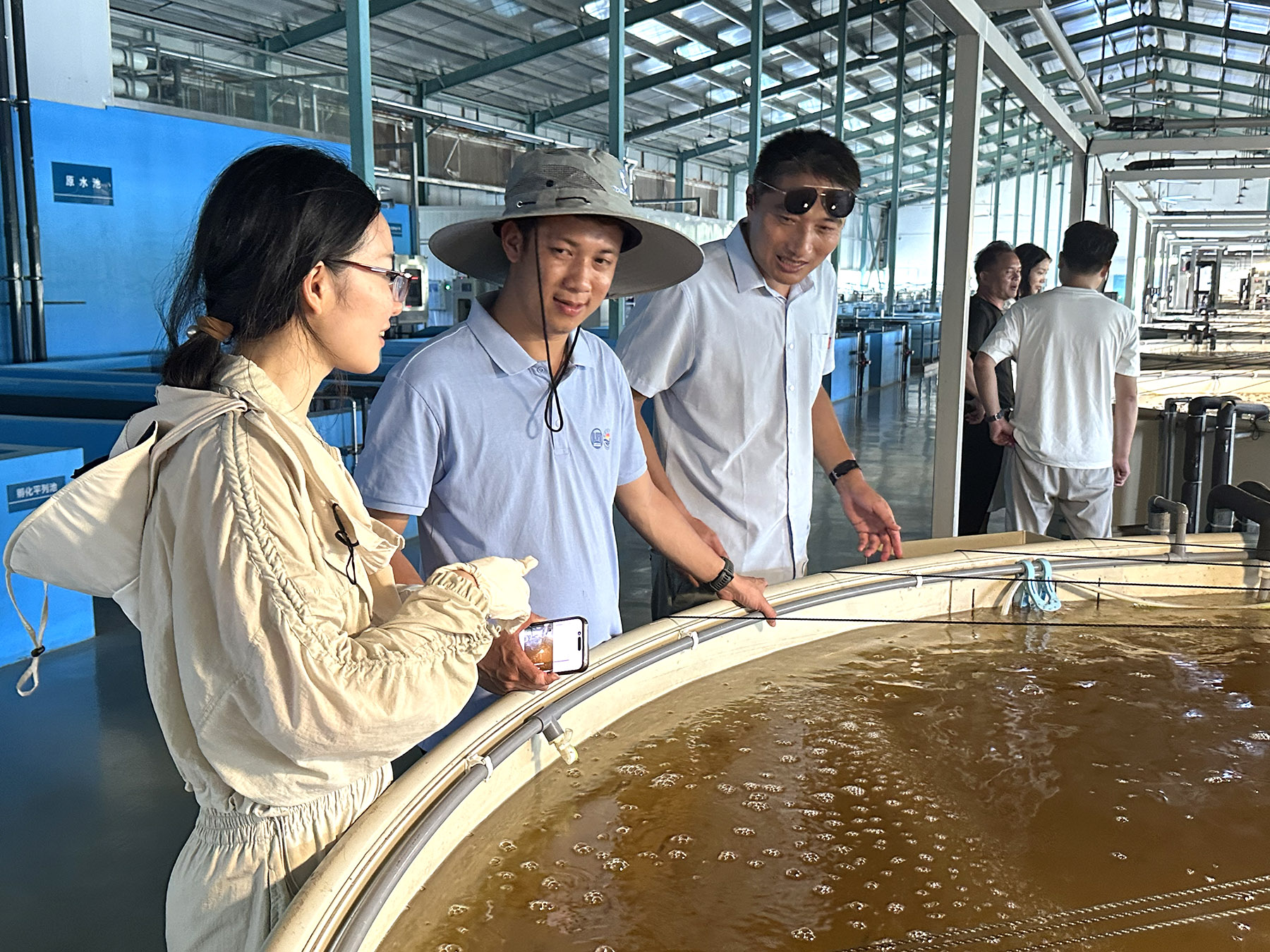
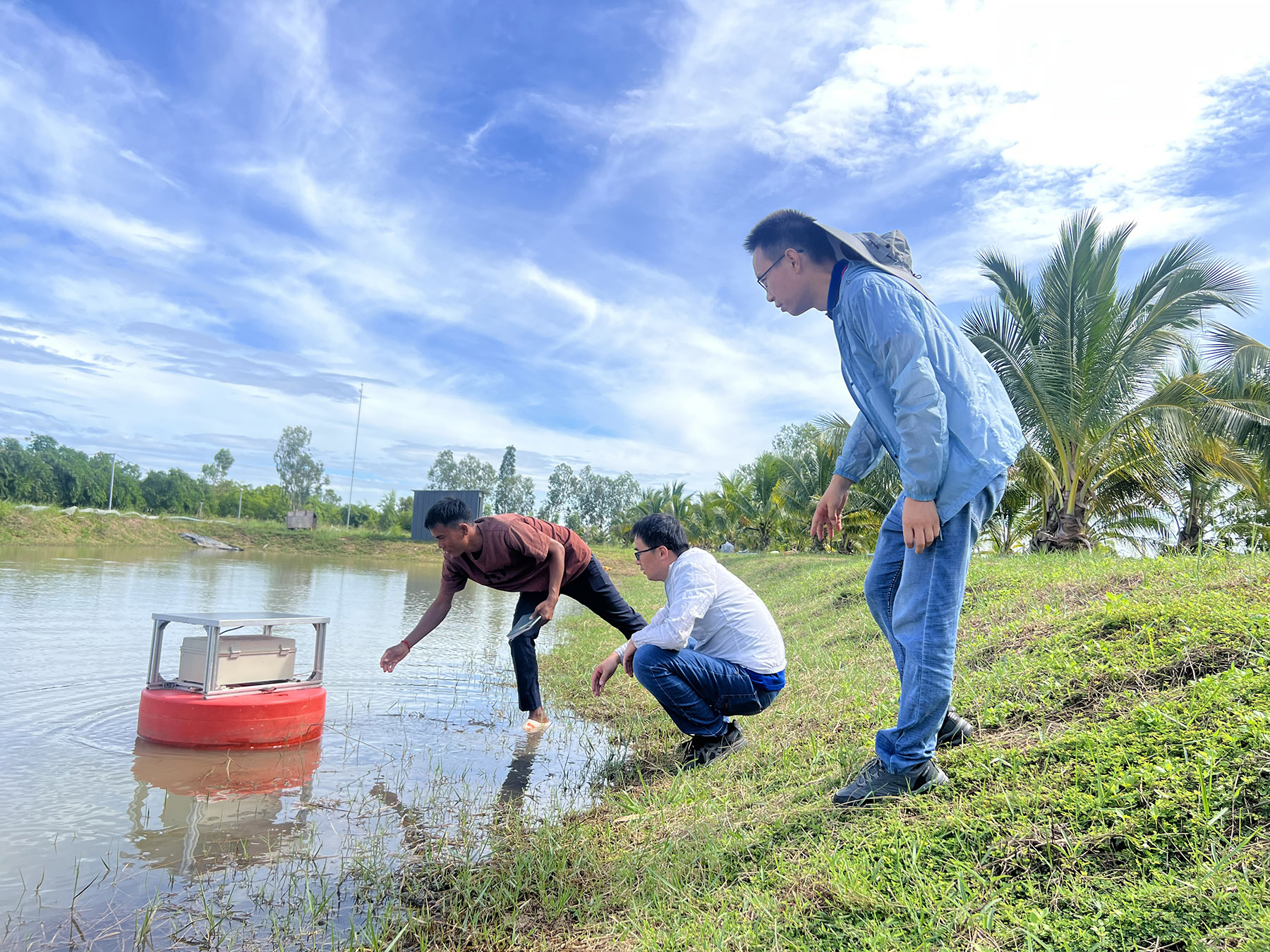
At demonstration sites, floating solar-powered water quality monitoring devices measure dissolved oxygen, water temperature and pH. Sensors placed in ponds transmit data every 10 minutes, allowing farmers to monitor changes in water conditions and respond when necessary.
Chen Leilei, an associate professor at the College of Engineering at Shanghai Ocean University, said the system was designed to be practical and accessible.
Farmers can decide where to place monitoring devices according to their farming needs, check the water quality of their ponds and review historical fluctuations through a large-screen display.
The system also features a Khmer-language interface, helping farmers operate it without having to overcome a language barrier.
"Overall, for the farmers, logging in or using it is not particularly difficult," Chen said, adding that farmers at the project's three demonstration bases had become proficient in using the system.
At the demonstration sites, prawn survival rates rose from about 40 percent to 80 percent last year, Chen said. The integrated rice-prawn farming model also helped increase annual income per hectare from approximately $1,000 under rice-only cultivation to around $3,000.
Before adopting smart agriculture, Pros Kh's prawn nursery survival rate was about 60 to 65 percent. With digital monitoring and improved management, it has increased to between 70 and 80 percent. "I am happy about this smart agriculture," he said.
Such gains illustrate how digital technologies can help small-scale farmers address uncertainty, which is a central challenge in agricultural production. Timely information allows producers to make more informed decisions, improving the prospects of a successful harvest and reducing avoidable losses.
However, technology produces lasting benefits only when farmers can understand, operate and apply it in their daily work.
On-site experience
For Zhang Dongdong, a Chinese visiting teacher in Cambodia involved in the project, introducing a new farming model requires more than explaining its scientific principles.
Many local farmers initially had little understanding of integrated rice-fish farming or related advanced techniques, he said.
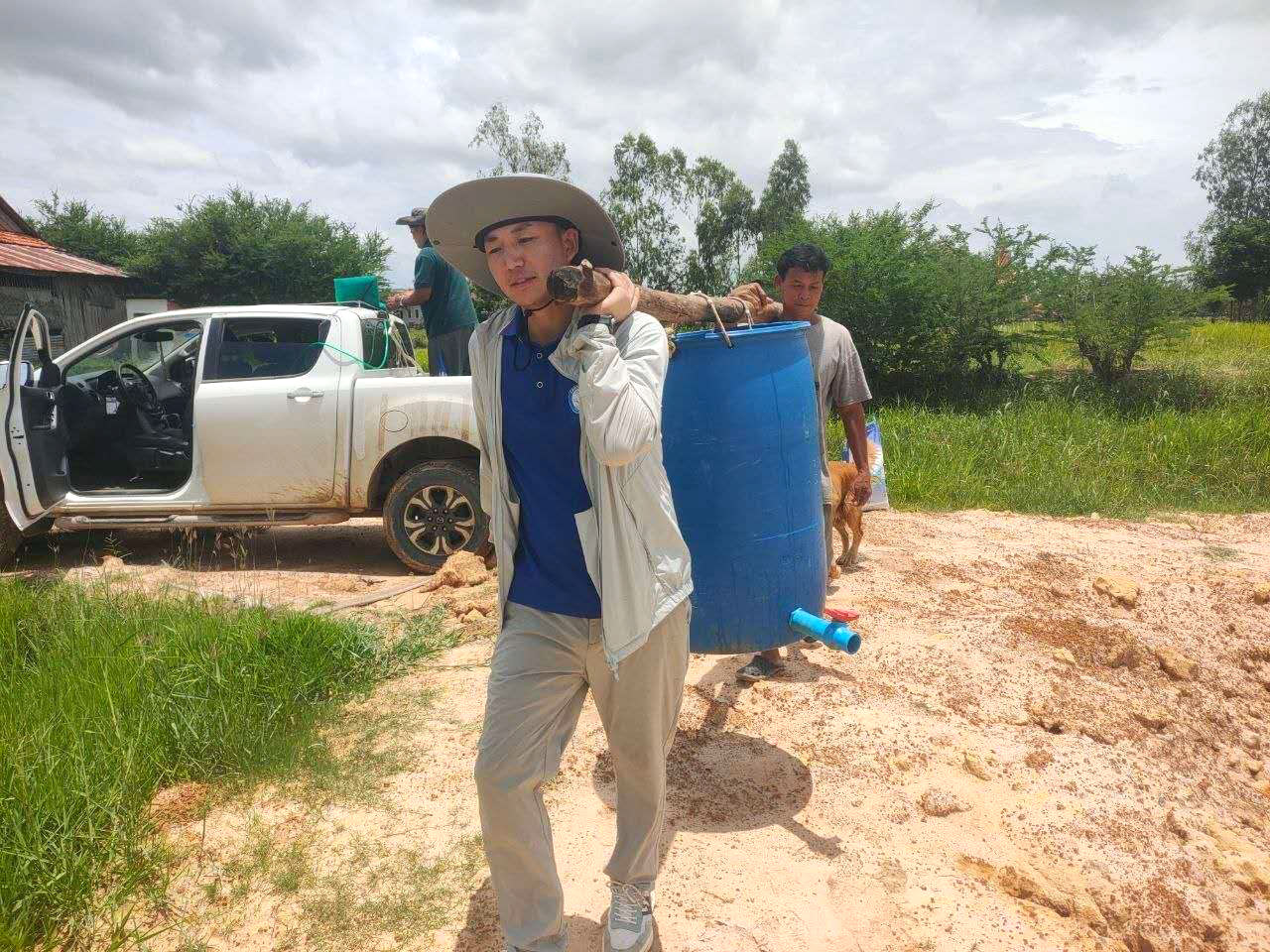
The project team began by demonstrating the methods, then guiding farmers through the process step by step.
"We showed them how to do it first. At the same time, we taught them how to do it. We provided hands-on guidance," Zhang said.
After farmers achieved successful results, the team invited other households to visit the demonstration sites and learn from their experience. "In this way, they saw tangible results. More farmers got involved," he said.
The approach has helped turn individual demonstrations into a process of knowledge sharing. Rather than simply introducing equipment, the project seeks to equip farmers with the skills to manage production themselves and continue applying the techniques.
As farmers' needs differ according to their resources, infrastructure and technical knowledge, measures that address these constraints directly are more likely to produce sustained improvements in income.
In Takeo, the combination of existing farmland, additional aquaculture production, digital monitoring and practical training has offered a model adapted to local circumstances.
The project was recognized in 2025 by the International Poverty Reduction Center in China and the Food and Agriculture Organization of the United Nations as one of the best practices of global poverty reduction.
Spreading influence
The Cambodia experience has attracted attention from international agricultural experts, who see potential in combining established farming practices with technological innovation.
Eduardo Leano, director-general of the Network of Aquaculture Centres in Asia-Pacific, said rice-fish farming is a community-based aquaculture system that can be particularly appropriate for developing countries.
Integrating innovations into the system could help small-scale farmers improve production, he said, while addressing the challenge of translating research and innovation into practical applications at the farm level.
"The gap that we are trying to address is how we can bring this technology from innovation down to the farm level," Leano said.
He added that China could play an important role in promoting innovative technologies and helping developing countries adopt them, particularly among small-scale farms.
For Leano, the significance of cooperation lies not only in the technologies being introduced, but also in the possibility of making scientific advances accessible to communities that have traditionally had limited access to them.
Essam Yassin Mohammed, director-general of WorldFish, similarly emphasized the role of aquaculture in addressing food security, nutritional needs and poverty.
As natural fish stocks face pressure and demand for food continues to grow, fish farming can make an important contribution to feeding communities and supporting rural livelihoods, he said.
China's experience is particularly relevant. The country accounts for about 60 percent of global aquaculture production, Mohammed said, giving it considerable experience in transforming the sector and developing technologies that can support production.
But he cautioned that innovation alone does not guarantee inclusive development. Advances in artificial intelligence, data and digital technologies can improve production efficiency, yet high capital costs may prevent small-scale producers from accessing them.
He urged universities and governments to examine how technological advances can be made accessible not only to farmers, but also to people involved in marketing, processing and value addition.
"What we need is an inclusive transformation to bring about that shared prosperity that we always dream about," he said.
Li Jiayu contributed to this story.
Contact the writers at zhaoyimeng@chinadaily.com.cn
