

Far more than just a tropical getaway of coconuts, sandy beaches and palm trees, Hainan is rolling out the welcome mat for Hong Kong and Macao tourists, especially families. The island province is showcasing its lesser-known treasures, including restorative eco-sanctuaries, elite dive sites, and centuries-old fishing communities.
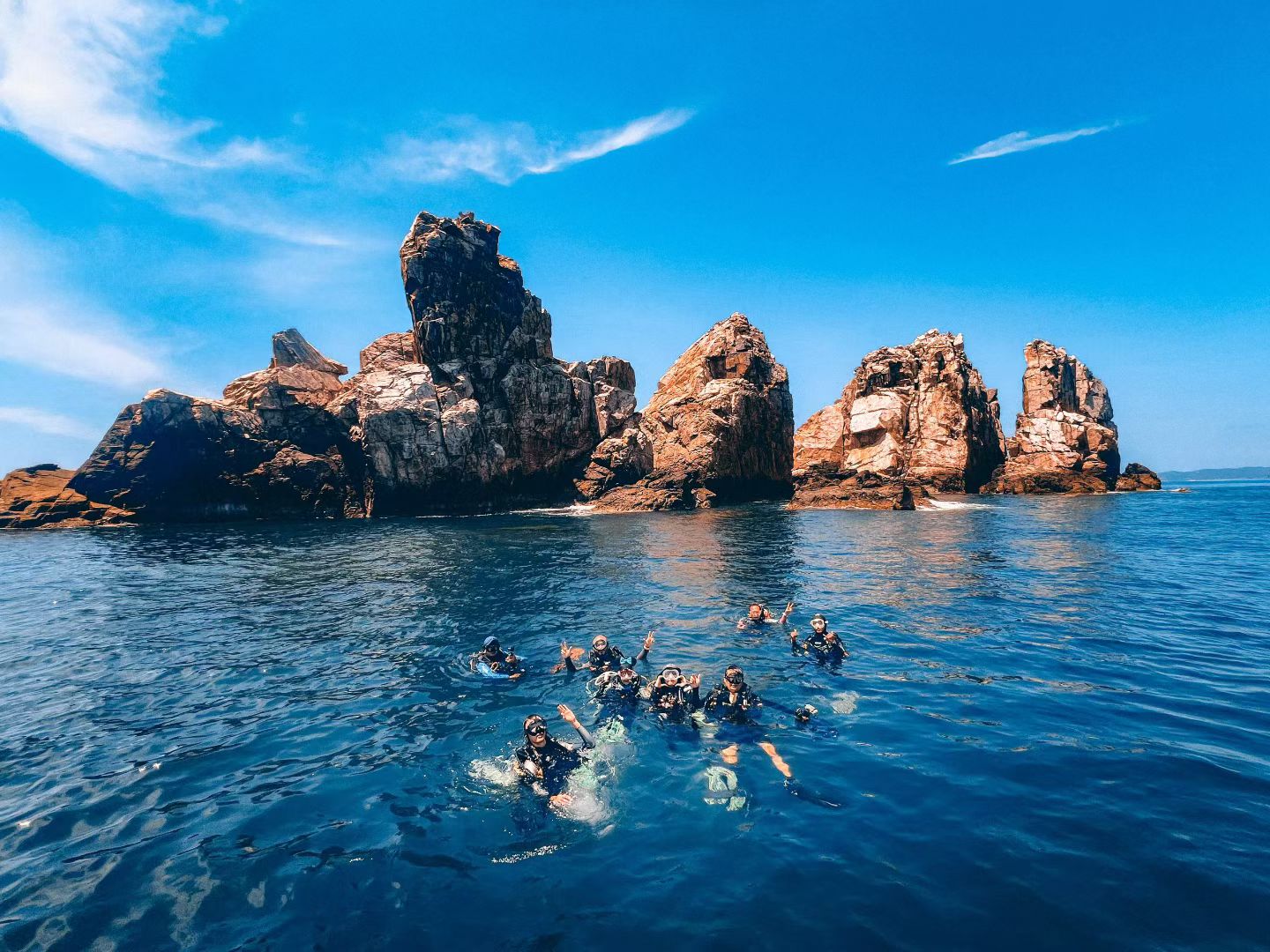
Among these fresh offerings is Double Sail Rock, located in the Xiangshui Bay area of Lingshui county on Hainan's southeast tip. It has rapidly gained fame as a premier domestic diving destination capable of rivaling popular spots in Southeast Asia.
The Double Sail Rock — known as Shuangfan Stone in Chinese — gets its name from two rock formations rising above the water that resemble a boat’s sails. The site only recently came into the spotlight thanks to diving enthusiasts who discovered its crystal-clear underwater views during the COVID-19 pandemic.
ALSO READ: Hainan, HK, Macao, and Taiwan tourism sectors discuss cooperation
Ideally suited for diving, the site plunges as deep as 60 meters, maintaining a stellar visibility of 20 to 40 meters year-round. With water temperatures hovering between 24 and 28 C under calm, stable conditions, it offers premier diving opportunities.
Wang Ying, manager of the Lingshui Double Sail Rock diving center, notes that Hainan province — with its iconic ocean views, distinct culinary traditions, and all-age-friendly activities — provides a safer, richer, and more diverse alternative to Southeast Asian destinations for travelers from Hong Kong and Macao.
"We hope to attract more family tourists from Hong Kong and Macao because we offer superior services, facilities, transport, and accommodation, alongside a safer travel experience, especially for children and the elderly," she explained.

Since opening in 2022, the dive center has welcomed around 5,000 visitors during peak season, with international travelers primarily hailing from Russia and South Korea. By offering personalized underwater photo and video packages, the center has successfully attracted young divers seeking fresh, exciting adventures. Wang, a veteran diving instructor with a decade of experience, notes that the sport is rapidly growing in popularity among the younger generation.
At another base in the resort city of Sanya, Wang added, the focus shifts toward family visitors eager to help their children experience the ocean firsthand. Kids can learn snorkeling or deep diving while swimming alongside sea turtles. "The youngest child I've seen at our base for snorkeling was just five years old," Wang said.
"Diving has progressed significantly in China in recent years, fueled by a growing emphasis on environmental conservation," Wang concluded, noting that the country's world-class marine dive sites deserve global recognition.
In fact, tourists, especially foreign tourists, enjoy a much more convenient journey from Hong Kong since July 2024, with the introduction of 144-hour visa-free policy for foreign group tourists entering Hainan through Hong Kong. Today, an average of four direct flights operate daily between Hong Kong and Hainan province, with flight times clocking in at under two hours.
In the first nine months of the year, Hainan province welcomed 146,000 Hong Kong and Macao tourists, representing a 19 percent year-on-year growth. Among them, 133,100 came from Hong Kong, making the special administrative region Hainan's third-largest source of visitors, according to the Hainan government.
Hainan has also launched an all-out promotional campaign in Hong Kong, hosting roadshows that showcase the province's iconic coastal views, aerospace rocket-launching experiences, and rich cultural offerings. Additionally, the province has invited key opinion leaders, artists, and media representatives from Hong Kong and Macao to experience Hainan firsthand.
These efforts have clearly paid off, with travelers from Hong Kong and Macao expanding their itineraries beyond the beaches of Sanya to explore a more diverse array of emerging attractions.
Wenbi Peak — a national 4A-level tourist attraction in Ding'an county — has been a major beneficiary of this tourism boom. Wang Kemin, general manager of the scenic spot, revealed that arrivals from Hong Kong have grown substantially this year, posting a 6 percent year-on-year increase through September, following a total of 1,100 Hong Kong visitors and 530 Macao visitors last year.
Renowned for its distinctive rock formations, lush greenery, and status as a landmark of Taoist culture in Hainan, Wenbi Peak is said in Chinese folklore to have formed from the bridge of Pangu's nose — the creator of the world.
With continued promotional campaigns in Hong Kong, Wang expects visitor numbers from the city to grow exponentially in the future.
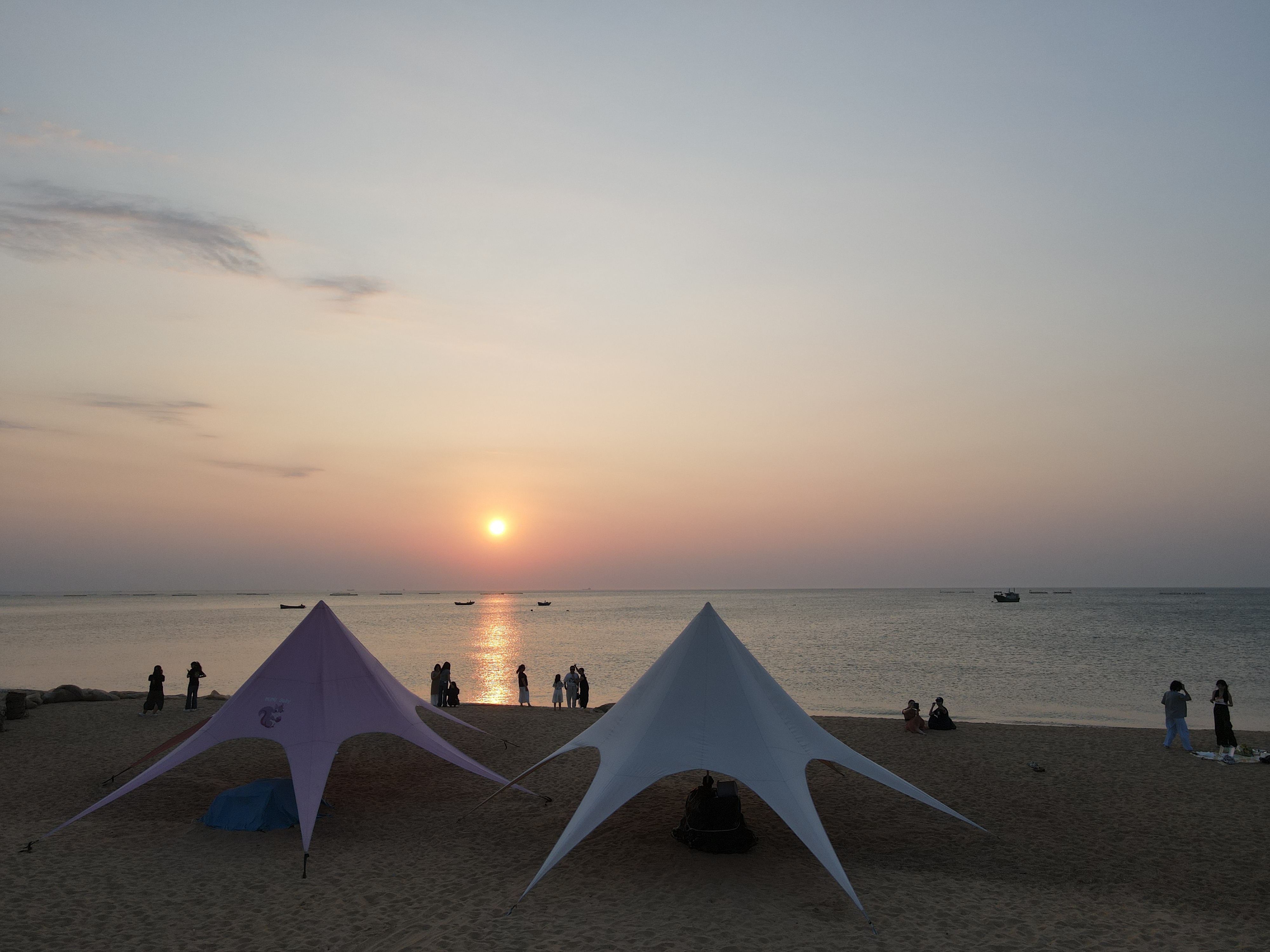
The booming prospects have also drawn Hainan natives back to their homeland in search of new career opportunities. Among them is Tang Haohui, a former finance professional in Shenzhen who returned to his hometown in 2016. Tang now operates a campsite and hostel in Rongshanliao, a 400-year-old fishing village on the west coast of Haikou, the capital of Hainan province, casting a strong vote of confidence in its cultural and tourism potential. The village originally gained social media fame for its stunning sunsets, where golden rays drape across the sea and the silhouettes of fishers dot the coastline.
"Despite the economic challenges brought by the pandemic and global geopolitical shifts, I believed that Rongshanliao's unique story — bolstered by a government-led push — still held immense promise," Tang told China Daily.
Just two years ago, the village was still a traditional fishing community. Today, it has transformed into a popular getaway that blends authentic local heritage with relaxed dining, signature art shops, and comfortable hostels, attracting tourists, artists, and young entrepreneurs alike.
According to Deng Canfang, general manager of the Haikou Xiuying District Tourism Culture Investment Development Co., Ltd. — the state-owned enterprise overseeing the village's revitalization — the destination welcomed 2.39 million visitors in 2025, marking a 62.8 percent increase from the previous year. It currently boasts 79 business establishments, including 22 hostels, three water sports ventures, and two art workshops.
At the start of the fishing season, the village maintained its traditional ritual of openly bidding for the freshly harvested fish, which draw over 10 million views on social media, and Deng remains confident that the number of local businesses will surpass 100 by the end of the year as its popularity continues to climb.
Captivated by the tranquility and coastal lifestyle of a quiet fishing village, young pen and ink artist Shu Zhan decided to put down roots with his wife. After years of traveling the world in search of inspiration, Shu opened his own gallery in May 2025. His intricate pencil works have brought a refined artistic touch to the rustic community, giving a new generation of travelers another compelling reason to visit.
Optimistic about the village's future, Shu notes that a simple stroll along the coastline continually fuels his creativity, adding that local authorities have played an instrumental role in helping promote and develop the area into an emerging tourism hotspot.
