

Zhejiang city’s two decades of grassroots development creates path to success for young players
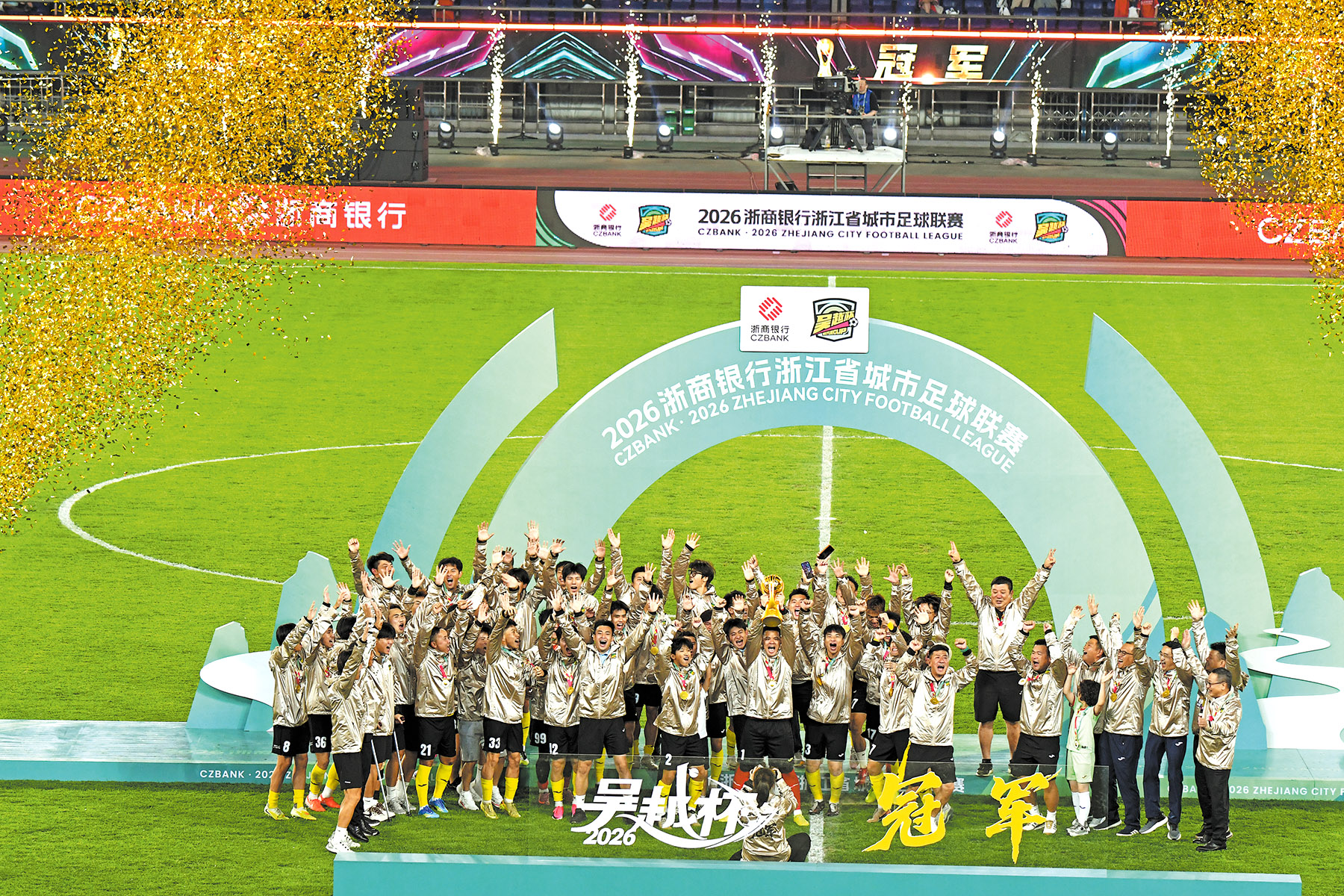
When Jinhua lifted the inaugural Zhejiang City Football League trophy — the Wuyue Cup — back in June, it was more than a championship for the city. It was the latest result in a school soccer system that was more than two decades in the making.
Jinhua beat Wenzhou 6-5 on penalties in the final at Hangzhou’s Huanglong Sports Centre. Of the 60 players registered for the team, 17 were current or former students of Tangxi Senior High School.
With an average age of just 21.5, Jinhua was the youngest team in the tournament.
The momentum continued.
Tangxi’s boys’ team later represented Zhejiang at the China High School Football League National Finals, finishing sixth — the best result by a Zhejiang high school boys’ team in the competition.
Then, on Oct 18 in Germany’s Unterhaching, two Tangxi students were part of another milestone, as China won the World Final of the FC Bayern Youth Cup, defeating Zimbabwe on penalties.
The players were selected from a national pool of high school soccer players, rather than from professional club academies, two of whom — Wu Jiayi and Zhou Ruijie — came from Tangxi.
For Jinhua, the results have drawn attention to a citywide approach that connects soccer participation in primary schools with talent development in middle and high schools, while keeping academic education at the center.
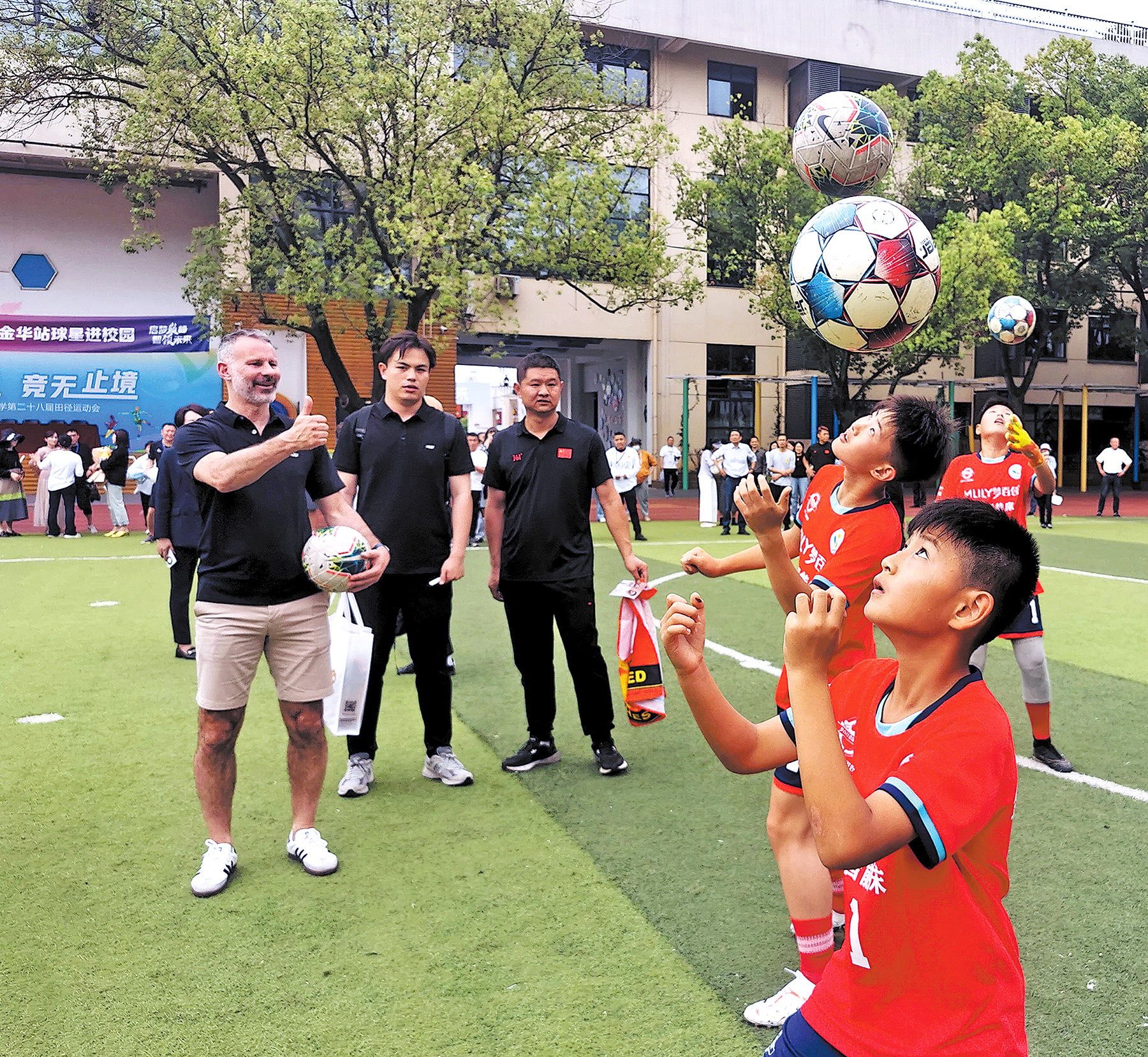
Jinhua began its citywide school soccer league in 2004. It has since developed a four-level competition structure covering classes, schools, counties, and the city.
More than 1,250 county- and city-level matches are held each year, involving more than 1,560 teams. The city has 185 national school soccer specialist schools and 243 at provincial level or above.
At primary school level, Jinhua has deliberately avoided concentrating resources in a small number of specialist schools, instead expanding access at ordinary schools.
At the middle- and high-school levels, 24 designated soccer base schools provide a more focused development pathway. Sixteen middle schools recruit promising players within their counties, while eight high schools recruit soccer-specialist students across the city. More than 260 such students are admitted each year.
“The width of the pyramid’s base determines the height of its top,” said Qian Shengjun, deputy director of the Jinhua Education Bureau.
The aim is for soccer to be fun and accessible at primary school, more varied at middle school, and increasingly specialized at high school.
The approach has created a pipeline between schools.
Jiangbin Primary School, a city football-specialist school since 1997, developed a program centered on skills, character, and teamwork. In 2004, neighboring Jinhua No 5 Middle School established a pathway with Jiangbin, producing 116 soccer-specialist students and winning eight consecutive city middle school championships.
Tangxi later took in five of the first football-specialist students from Jinhua No 5, turning a relatively informal team into a regular provincial contender.
For Jinhua, developing players is only part of the goal. The city has also sought to address the point at which many young players traditionally face a choice between soccer and academic study.
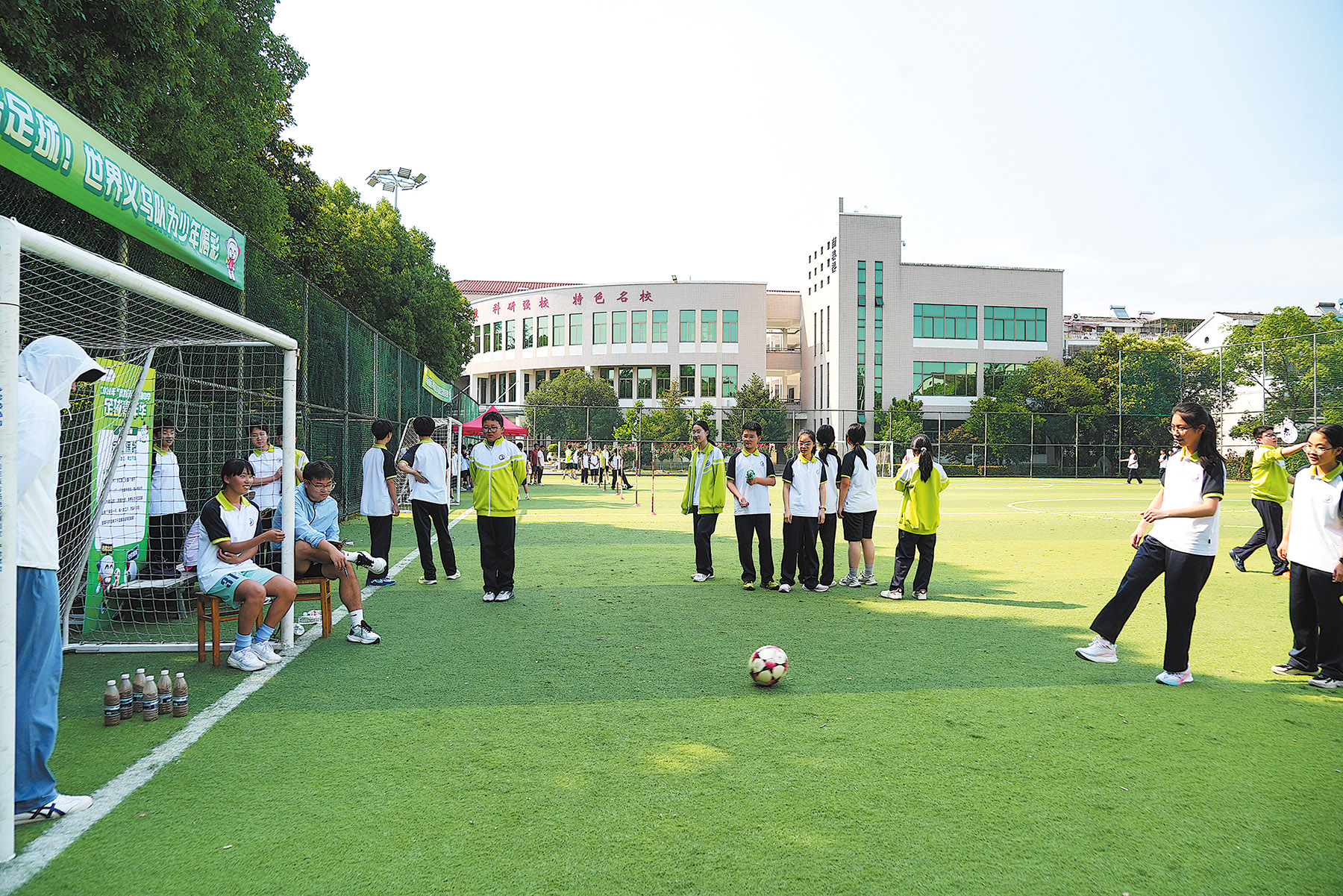
Jinhua No 8 High School, for example, has introduced a dual-track system for its girls’ soccer team, combining regular academic education with specialized training.
During their final year, players preparing for university admissions follow a modular schedule, with academic classes in the morning and soccer training in the afternoon.
Four players have gone on to achieve university scholarships to institutions including Tongji University, Soochow University and Hunan Normal University. Seven players were admitted to leading universities in 2026.
Tangxi has adopted a similar approach. Soccer-specialist students receive individual development plans, while a dedicated sports class allows academic schedules to be adjusted around training and competitions.
More than 40 of its players have attained scholarships, with more than 95 percent entering their preferred universities, according to the school. Fifteen former players have become teachers.
“Our starting point in developing football was not to win championships, but to open another door for children,” said Chen Jianchao, Party secretary of Tangxi Senior High School.
“That door can lead to university, to professional competition and to a broader life.”
Soccer has also been incorporated into mainstream education. It is included among the sports assessed in the senior high school entrance examination, accounting for 25 percent of the relevant score.
The system has created multiple pathways after high school. More than 300 Jinhua soccer players have entered universities through sports-specific admissions and high-level sports talent programs.
The city has also developed elite men’s and women’s teams, sending more than 20 players to Zhejiang Greentown Football Club. Seventeen have been selected for provincial teams, and seven have represented China at various age-group levels.
Among them are Bao Shengxin, who helped China’s U23 men’s team finish runner-up at the 2026 AFC U23 Asian Cup, and Li Tingyingge of China’s women’s U20 national team.
For Zhou Xiaowei, a Jiangbin Primary School teacher and Bao’s first soccer coach, the point is not merely to produce stars.
“The first thing about school soccer is not about producing star players. It is about helping children genuinely fall in love with football,” Zhou said.
Jinhua was selected in May 2025 as one of China’s pilot areas for reforming youth soccer talent development.
The city has spent more than 20 years building its soccer system, and the latest trophies and achievements are just another milestone rather than a finish line.
The bigger prize may be a system where children can start playing at primary school, continue through middle and high school, enter university and still have options both on and off the pitch.
Contact the writers at liyingxue@chinadaily.com.cn
