

Women are pushing back against bias in tech. Zhou Mo writes that their underrepresentation in AI worsens the problem, with female entrepreneurs saying people, not machines, must remain the sector’s gatekeepers.
Editor’s note: Rapid advances in artificial intelligence have fueled call for “tech for good”, such as social equality and public benefits. This three-part series explores how AI can and should serve vulnerable groups, continuing with women combating algorithmic bias.
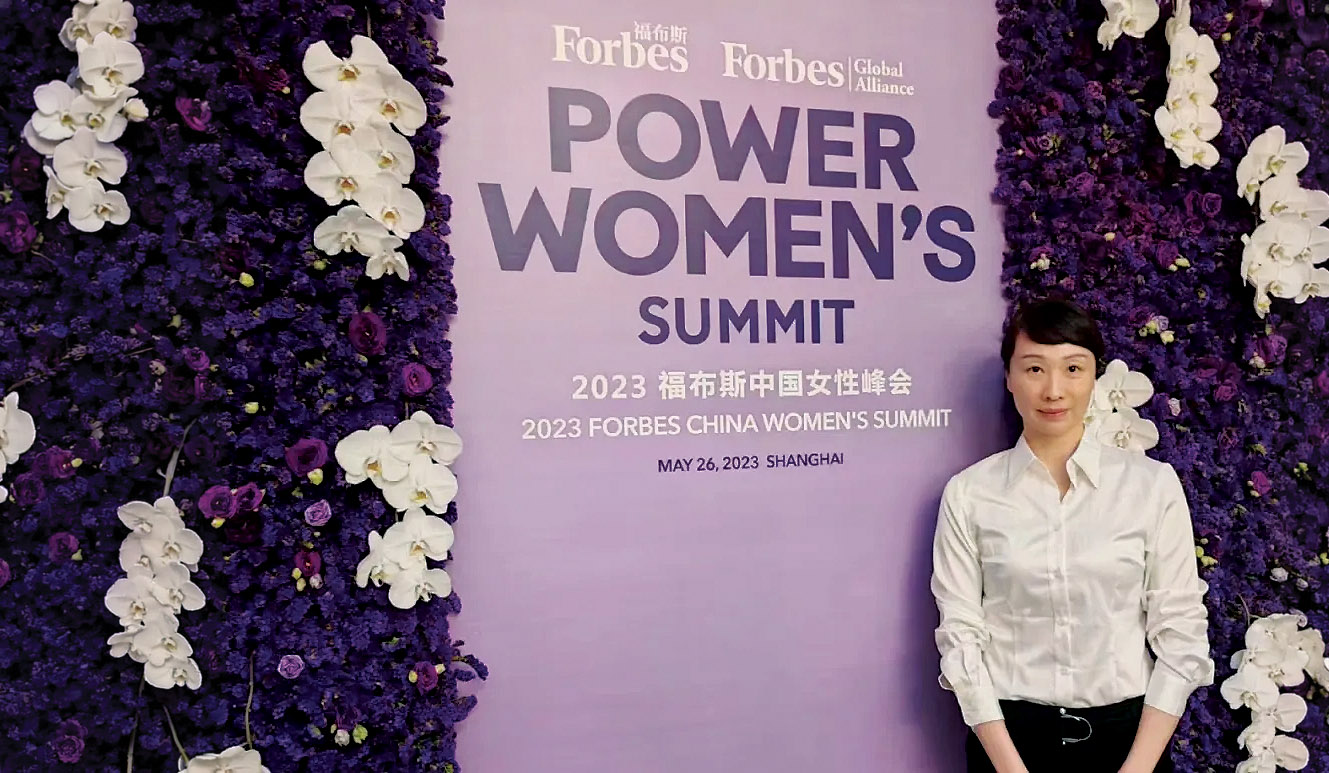
For years, Dong Ning has navigated the Chinese mainland’s male-dominated technology industry. However, she refuses to define herself through the gender lens.
“I don’t need special attention just because I’m a woman. What I need is fairness,” says Dong, founder of Bamboocloud — a Shenzhen-based tech company specializing in identity and access management.
Throughout her entrepreneurial journey of more than a decade, Dong has sought equal business opportunities, access to financing and representation at decision-making tables. She opposes the entrenched belief that male tech entrepreneurs are more capable, as well as investors’ skepticism about businesswomen.
Her efforts and achievements have softened long-held gender prejudices among those around her. But with the rise of artificial intelligence, she faces a new battle — rooting out gender bias in machines.
“Gender equality in AI is deeply intertwined with social progress. To build fairer AI, diverse perspectives should be embedded in its underlying design, data annotation, testing and evaluation processes,” she says.
Dong’s advocacy reflects a wider call among women to curb embedded gender bias in algorithmic systems and amplify their voices in the AI era.
Bias in AI
Gender bias in AI is sparking mounting concerns, with evidence of such disparities showing up across a range of sectors. The Gender Equity Policy Institute — a United States-based nonprofit organization dedicated to advancing women’s freedom, well-being and opportunity — last month released a report in which real‑world cases of algorithmic gender bias were recorded.
In the job market, resume search engines that employers use on US recruitment platforms, including Indeed, Monster and CareerBuilder, rank men with the same listed qualifications above women across 35 occupations, 20 American cities and some 855,000 candidate profiles.
One test for an engineering position found that a resume that earned 13 out of 55 selections with a male’s name received only three selections once a female’s name was used.
The report also cited a Lancet study, where GPT-4 was given 400 chest‑pain case descriptions, half for male patients and half for female patients. The AI model gave stronger recommendations for cardiac stress testing and routine non-invasive test for suspected heart disease toward men. It rated the tests as highly important in 71 percent of men’s cases, compared with 58 percent for women’s.
“AI systems learn from data and records generated in a world marked by historical gender inequality. They draw information from historical documents, published works and media reports, among other sources in which women have long been underrepresented,” Dong says.
“The biased outputs produced by AI systems are then fed back into training datasets which will be used to train future generations of AI models.”

Under‑representation of women in the AI industry further exacerbates such bias as it shapes how algorithms are designed and built. According to a report from LinkedIn, only 13 percent of executive positions in AI companies are held by women, compared with 19 percent in non-AI companies.
Meanwhile, women hold 27 percent of various roles in AI companies, while the proportion in non-AI firms stands at 31 percent, said the report which based its findings on the research of 15,000 companies across 27 countries.
“Technology is not automatically empowering. It depends on how it’s designed, governed, distributed and taught,” notes Sam Han, a partner at Union Communications Hong Kong — a communications and public affairs consultancy focusing on gender equality and digital inclusion.
“Without inclusive design and targeted capacity building, technology may reproduce existing inequalities in digital form,” he says.
Fixing the system
Han says he believes that both technical and governance solutions are vital for reducing algorithmic gender bias.
Tech companies should conduct bias testing, data audits, fairness assessments and regular monitoring of algorithmic outcomes. They should also diversify training data and include gender-sensitive indicators in model evaluation, he urges.
From the industry governance perspective, regulators should improve transparency, provide channels for complaints and correction, and allow independent audits in high-impact scenarios such as recruitment, finance, education and public services, he says.
Han would like to see a greater female representation in offline policy and industry settings, as higher visibility of women experts and leaders will contribute to a more diverse pool of public narratives, professional references and knowledge materials, which “may become tomorrow’s digital knowledge base”.
Amplifying women’s voices in AI isn’t just a matter of gender equality — it’s also for building technology with a human touch.
As a Hong Kong entrepreneur in the parent-child sector, Iris Leung Wai-yan, who founded Evvoke (Hong Kong), often turns to AI to spark creative ideas on product design and marketing. But, she says that working with AI isn’t a one-way take-and-use, but a two-way give-and-take.
While the machine helps her with rational analysis, Leung feeds the AI partner with subtle parental feelings and emotional observations.
“Women own innate advantages of multi-dimensional thinking, sharp perceptiveness and deep empathy, which machines don’t have,” she says. “These human qualities bring high value to AI systems, with women’s nuanced perspectives enriching training datasets and steering algorithms toward outcomes that carry human warmth.”
But humans should never cede control to AI, stresses Leung. “AI should serve merely as an information‑support tool, and humans should keep the final say in all decisions.”
Dong agrees. “Humans must always remain AI’s authorizers, gatekeepers and the parties ultimately accountable for it. This is the fundamental principle of rights and responsibilities for achieving gender equality in AI.”
Contact the writer at sally@chinadailyhk.com
