

From a boy's memory in 1926 to excavations in the last few years, a site in Xiyin village has been at the heart of Chinese archaeology, Wang Ru and Zhu Xingxin report in Yuncheng, Shanxi.
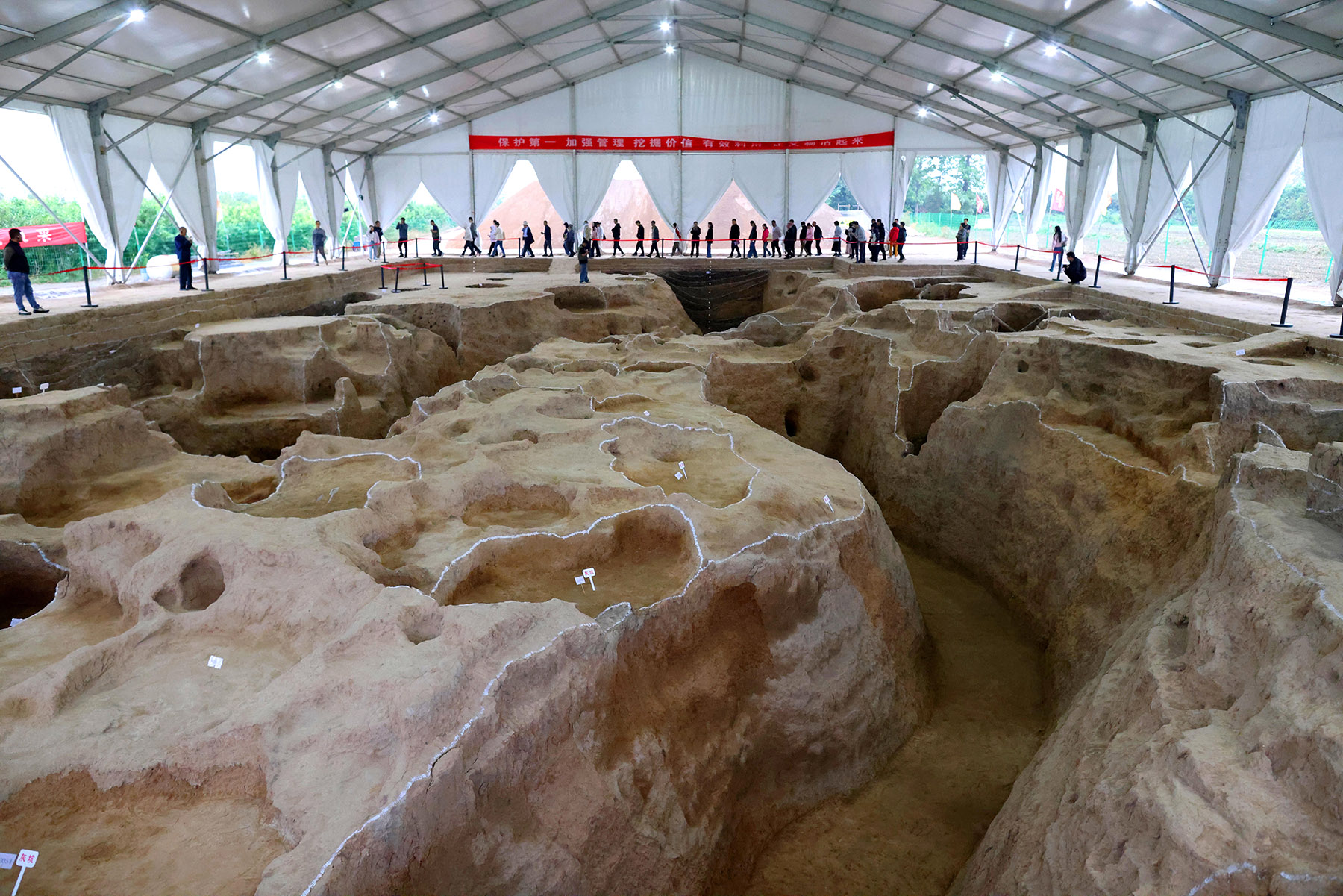
The boy was not supposed to be there. It was 1926, and near the excavation at Xiyin village in Shanxi province he was playing, the way children played around anything new and noisy. He overheard the villagers talking and remembered what they called the two men on the digging team: Doctor Li and Mr Yuan.
Nearly 70 years later, in 1994, a young archaeologist named Fan Wenqian, then 28, arrived at the same site for its second excavation and met a man in his 80s. The elderly man told him about the boy — himself — and the two names he had remembered since childhood. By then, his grandson was working alongside Fan on the excavation.
READ MORE: Scholars look to future of archaeology
On Oct 15, at the 6th Xiyin Forum as part of the 5th Congress of Chinese Archaeology in Yuncheng, Shanxi, Fan, now director of the Shanxi Provincial Institute of Cultural Relics and Archaeology, told the story. A century had passed since the first spade struck the ground at Xiyin. The boy, the names, the grandson and the young man who listened had all come together at the same place.
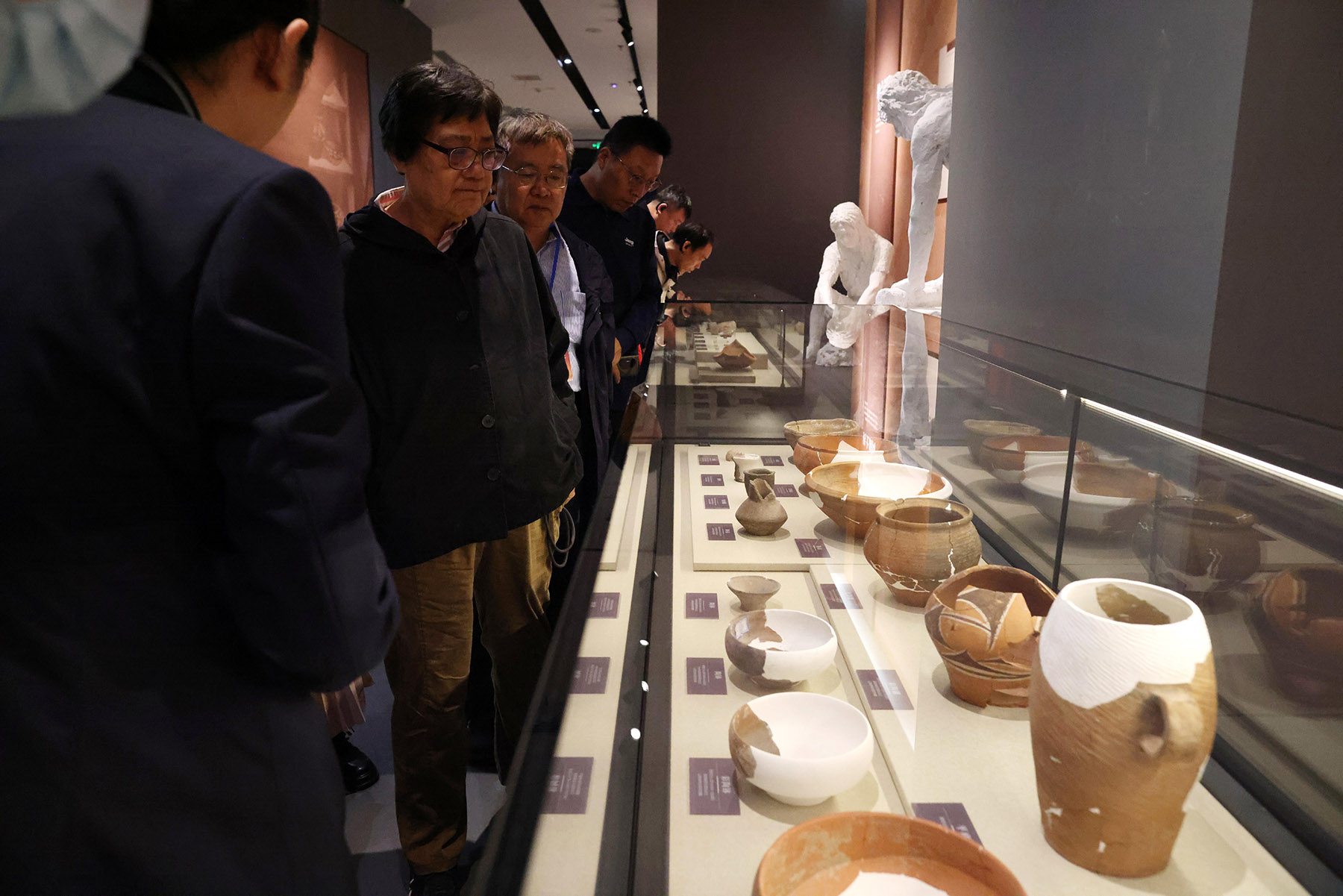
Located near the meeting point of Shanxi, Henan and Shaanxi provinces, Xiyin sits in the heart of the region where Yangshao culture, the key Neolithic culture of northern China dating back 5,000 to 7,000 years, took root and grew. Xiyin was not only a regional central settlement of Neolithic Yangshao culture but also continued in use into the Shang Dynasty (c. 16th century-11th century BC), making it a prehistoric site with a long history and rich cultural deposits.
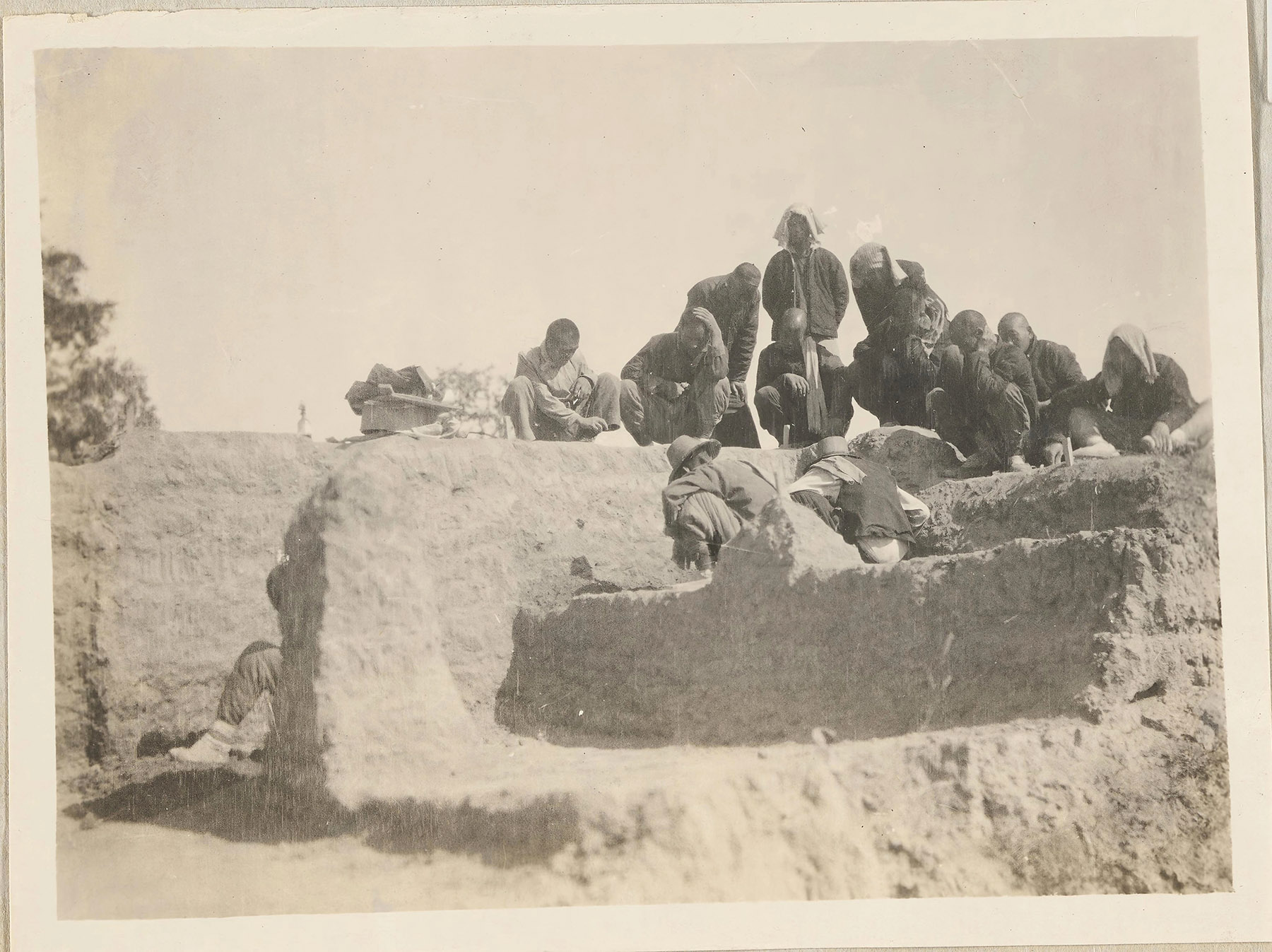
"Doctor Li" and "Mr Yuan", as remembered by the villager, were archaeologist Li Ji (1896-1979), who is regarded as "the father of Chinese archaeology", and geologist Yuan Fuli (1893-1987). A century ago, it was Li and Yuan who led the first excavation at the site, also the first modern scientific archaeological excavation independently led by Chinese scholars.
Zheng Yuan, deputy director of the Shanxi institute, says the site's century-long research journey mirrors the development of Chinese archaeology.
Groundbreaking findings
In 1921, Swedish scholar Johan Gunnar Andersson (1874-1960), a geology consultant for the Chinese government, led the first archaeological excavation at the Yangshao site in Sanmenxia, Henan province. Given similarities between the painted pottery from the site and that from Central Asia, Andersson proposed Yangshao culture was possibly transmitted to China from the West.
Doubting Andersson's hypothesis, Li decided to seek the cultural origins of prehistoric China through further archaeological efforts. Therefore, southern Shanxi, which is believed to be related to the early capital cities of the Xia Dynasty (c. 21st century-16th century BC), came into focus.
In February and March 1926, Li and Yuan carried out extensive surveys of the prehistoric human traces in southern Shanxi and were attracted by the pottery pieces in Xiyin village. On Oct 15, they broke ground at the site.
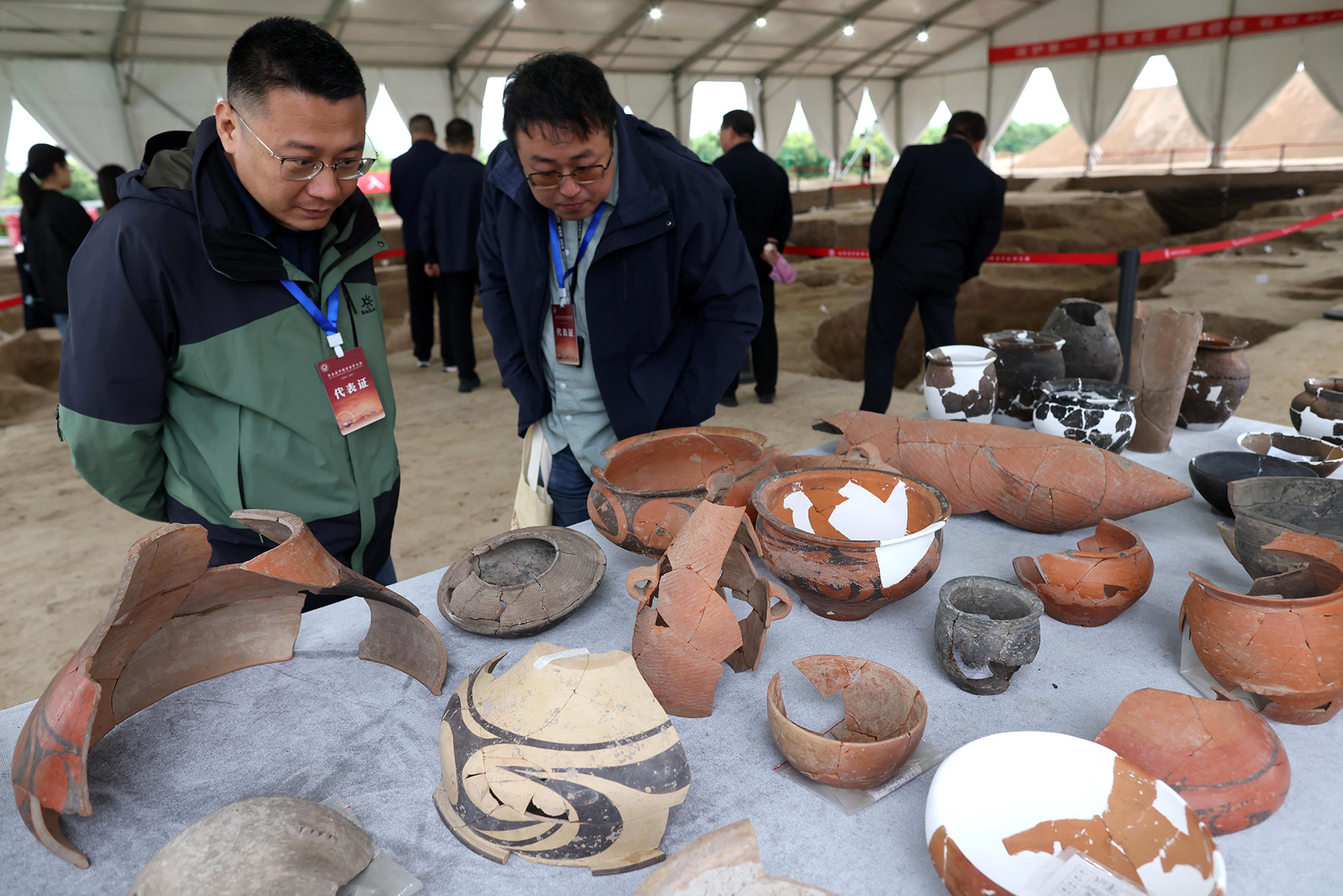
The 40-day-plus excavation yielded half of a silkworm cocoon with traces of cut marks and more than 100,000 pottery pieces. Examining the pieces, Li believed the site had close connections to Yangshao culture. He also noticed a decorative pattern combining horizontal lines, dots and curved angular motifs on painted pottery, and named it "Xiyin pattern".
More importantly, the methods applied in this excavation were revolutionary. "Li applied methods such as three-point recording, stratigraphic layering and grid excavation. By recording each object's coordinates and layer, he preserved it together with its spatial and stratigraphic context. These methods later became the standards for Chinese field archaeology," says Zheng.
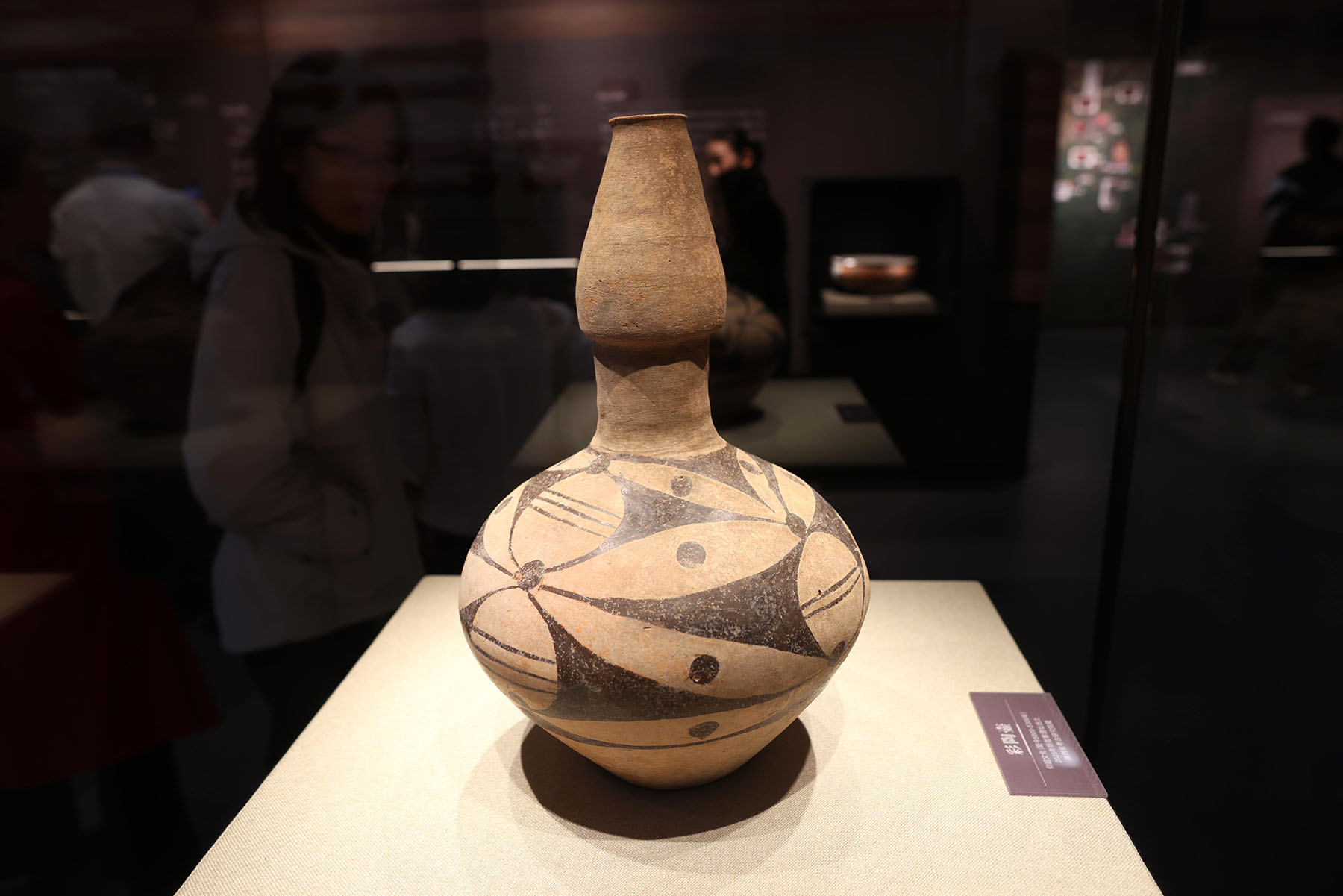
Chen Xingcan, chairman of the Society for Chinese Archaeology, notes that the excavation also provided a basis for rebutting Andersson's hypothesis. Li observed that the painted pottery from Xiyin, though often fragmentary, showed local features and a sequence of change, and that the finest pieces had no parallel elsewhere.
"Although Li wrote cautiously about this issue, his work laid the foundation for further research. After the establishment of New China in 1949, continued studies on the Neolithic Peiligang culture and others proved that Yangshao had its own origins in China and was an indigenous culture," says Chen.
The 1920s also witnessed some other excavations. Together with them, the Xiyin site has been recognized as part of the beginning of modern Chinese archaeology.
After 1949, China's archaeology entered a period of rapid development, with major discoveries emerging continuously and the discipline's academic system improving.
One example was the identification of the Miaodigou type in the 1950s. After the Miaodigou site in Sanmenxia was excavated, the Miaodigou type of Yangshao culture was identified. Scholars found that Xiyin's materials largely corresponded to this type. Therefore, Xiyin then became a key Miaodigou-type site, and its "Xiyin pattern" a typical motif of that type. A second excavation began at Xiyin in 1994.
"This time, through the evolution of pottery vessels from the site, we put the site in the broader context of the southern Shanxi area in the middle reaches of the Yellow River, and made clear the region's prehistoric cultural sequence," says Zheng.
This excavation also helped the site to be included in the fourth batch of important units of cultural relics under national protection in 1996, demonstrating the role that archaeology plays in heritage protection.
New era
Entering the 21st century, new technologies and closer multidisciplinary collaboration have ushered in a new era. Archaeologists have increasingly used scientific methods to examine sites — analyzing their internal spatial functions, social organization and subsistence patterns to gain a better understanding of how Chinese civilization originated and how the country took form. It was against this backdrop that the latest work at the Xiyin site started in 2024.
As of now, the ongoing excavation has confirmed a settlement with two layers of moats from the middle period of Yangshao culture, enhancing understanding of the settlement's layout, defense system and functional zones, says Wu Yangyang, a researcher at the Shanxi Provincial Institute of Cultural Relics and Archaeology who is taking part in the third round of excavations.
Wu says prehistoric moats were often made for defense or water drainage. The two-layered moats at this site were probably built for such functions, supporting the stable development of the settlement.
ALSO READ: From hunters to early farmers
Besides the moats, archaeologists have also discovered many tools for making painted pottery, including pigment palettes, grinders and grinding discs. They indicate how ancient people created the items.
"Xiyin is one among many prehistoric sites in China. What makes it special is that its three excavations coincide with key stages in the development of China's modern archaeology," says Zheng.
"That is why the site's century-long history of archaeological research can be seen as a demonstration of the growth of China's archaeology. Generations of scholars continue to make studies of the same site. From interpreting objects to reconstructing society, and from reading stratigraphic layers to comprehending civilization, such sustained research sheds light on Chinese civilization with solid evidence," she adds.
Contact the writers at wangru1@chinadaily.com.cn
