

China and Central Asian countries are building a regional network to safeguard their common Silk Road legacy, report Ma Jingna and Hu Yumeng in Lanzhou.
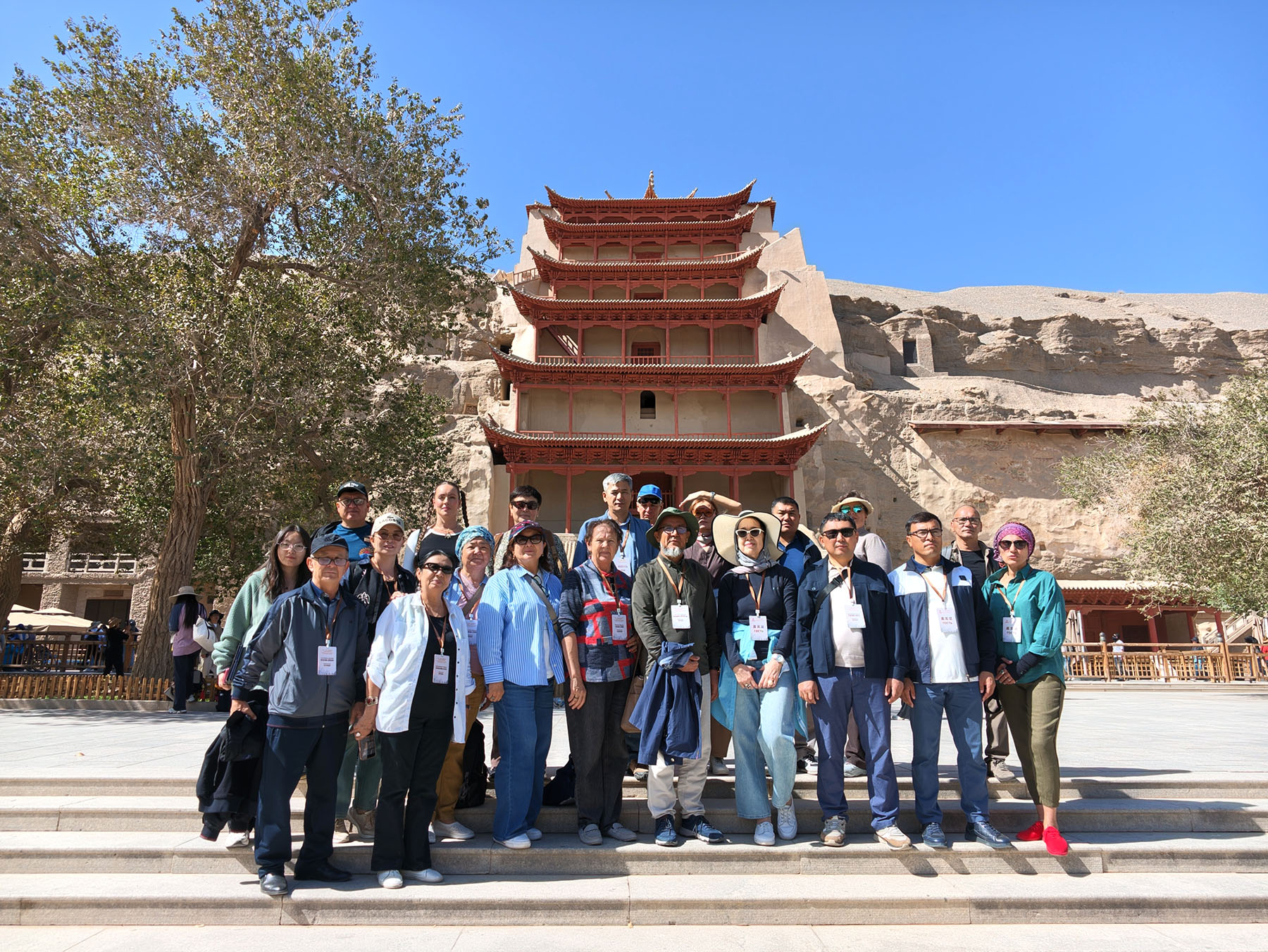
For centuries, Dunhuang, Gansu province, stood at the crossroads of the ancient Silk Road, connecting East and West through trade, travel and the exchange of ideas. That legacy lives on in the grottoes, ancient cities and other heritage sites scattered along the route. Today, it is also driving a new chapter of cross-border cooperation in heritage conservation.
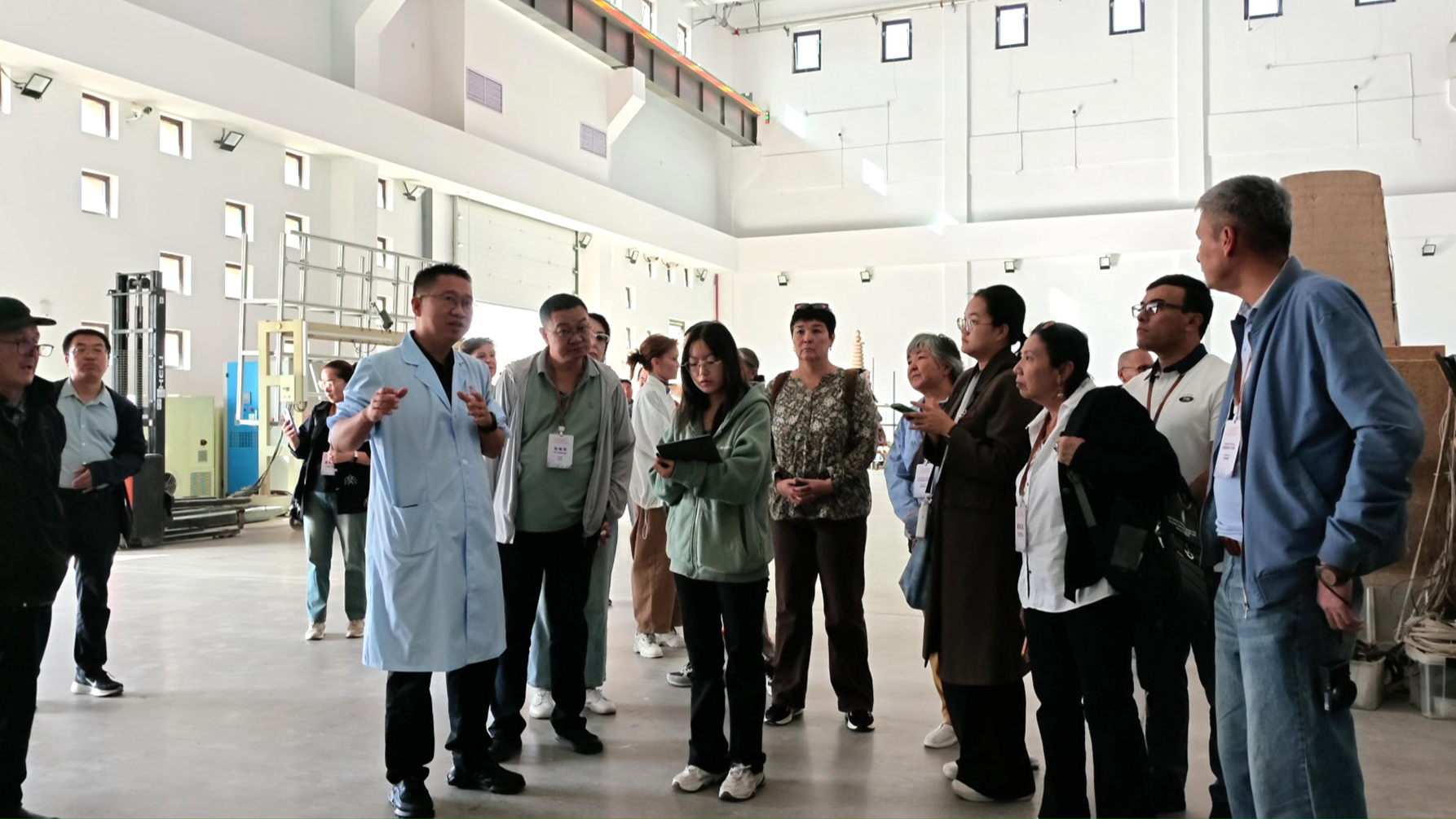
The effort took center stage at the 2026 China-Central Asia Seminar on Silk Road Cultural Heritage Conservation, held in Dunhuang in late September. More than 70 experts and scholars from China, Kyrgyzstan, Kazakhstan, Tajikistan and Uzbekistan gathered to discuss a shared challenge: how to exchange conservation expertise across borders while adapting methods to different environments, materials and local needs.
For China and Kyrgyzstan, this cooperation is taking shape through a joint laboratory that brings together research, conservation practice and professional training.
"The joint laboratory is increasingly becoming an important platform for cooperation between Kyrgyzstan and China," said Aisin Duishanalieva, director of the Republican Inspectorate for the Protection of Historical and Cultural Monuments under the Ministry of Culture, Information and Youth Policy of the Kyrgyz Republic.
ALSO READ: Preservation through digitalization
She said the partnership could expand to include joint heritage monitoring, digital archives, archaeological research, documentation technologies, and professional training.
Approved by China's Ministry of Science and Technology in September 2025, the China-Kyrgyzstan Belt and Road Joint Laboratory for Cultural Heritage Conservation builds on nearly a decade of cooperation between the two sides, including joint surveys, research projects and academic exchanges since 2017.
The laboratory marks a shift from individual projects and occasional exchanges to a more systematic framework for studying, conserving, and presenting Silk Road heritage.
Collaborative efforts
The partnership is rooted in a common history. China, Kazakhstan and Kyrgyzstan jointly nominated the Silk Roads: the Routes Network of Chang'an-Tianshan Corridor, which was inscribed on the UNESCO World Heritage List in 2014.
"The joint nomination was significant in its own right," said Aizhan Samybekova, a chief specialist of historical and cultural heritage in Kyrgyzstan.
The nomination recognized the Silk Road as a shared, cross-border heritage rather than the exclusive legacy of any one country, she said.
This shared history provides a foundation for cooperation in archaeology, conservation, museum exchanges, and professional training.
Kyrgyzstan needs more specialists in restoration, archaeology, museum work, digital documentation, and World Heritage management, she said, fields in which China has accumulated considerable experience.
For Guo Qinglin, director of the Dunhuang Academy, such cooperation extends the Silk Road's long history of interaction.
"Protecting and researching the cultural heritage of the Silk Road is a shared responsibility," Guo said.
"Only through deeper cross-border, cross-institutional and interdisciplinary cooperation can we continue to improve both the understanding and practice of heritage conservation."
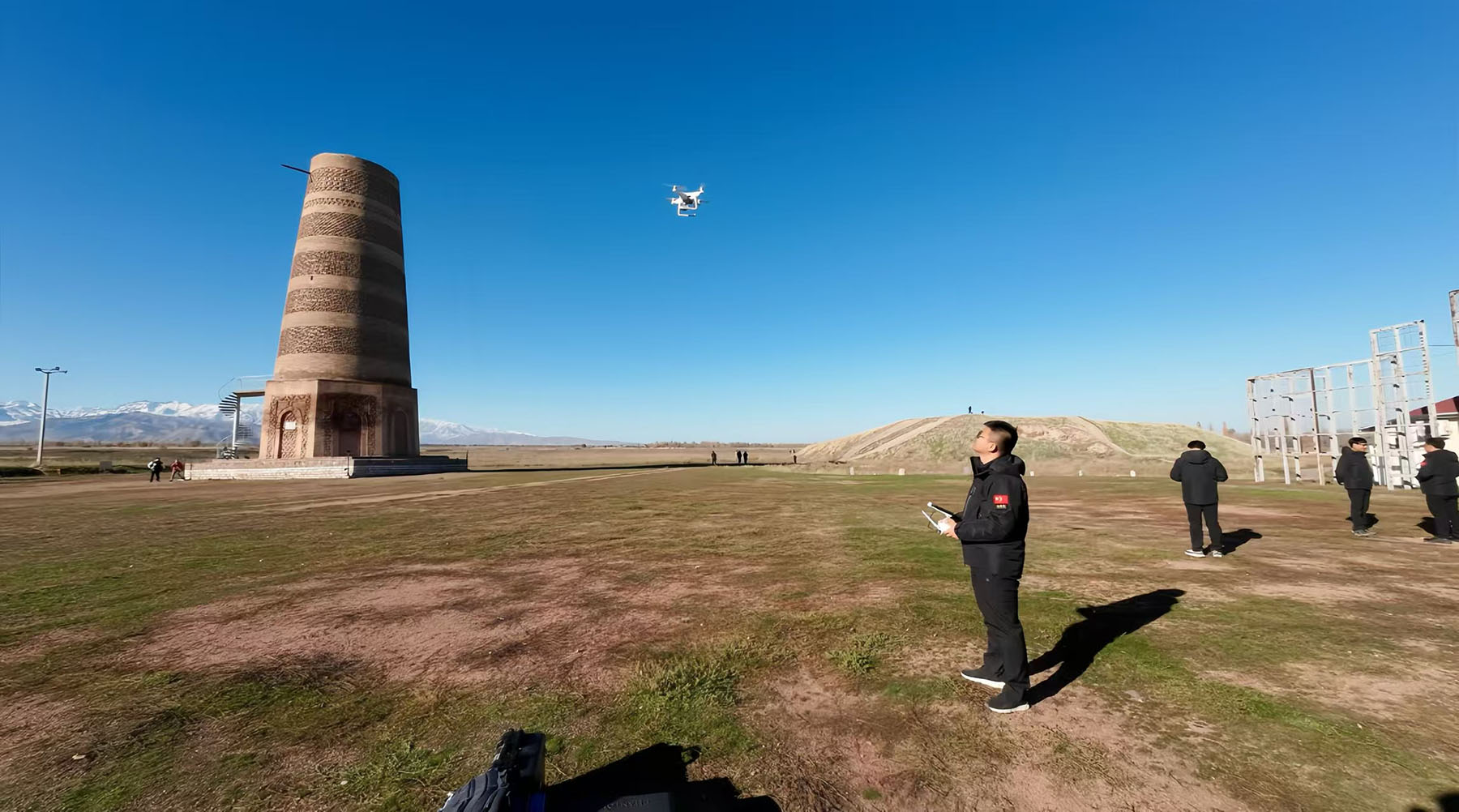
The partnership is already at work at heritage sites in Kyrgyzstan, including Suyab, also known as Ak-Beshim, an ancient Silk Road city whose earthen remains face wind erosion, rainfall, freeze-thaw cycles, salt migration, and damage from vegetation.
Chinese and Kyrgyz researchers have jointly assessed the site's heritage value, preservation condition, architectural forms, materials, and deterioration mechanisms. Their findings are helping establish a scientific basis for future conservation while informing approaches suited to local conditions.
For Zhang Bo, an associate research curator at the Dunhuang Academy's Conservation Institute, China's most valuable contribution is not a single technology.
Over decades of work, the academy has developed an integrated approach encompassing heritage-value research, archaeological and condition surveys, material and environmental studies, deterioration analysis, technology development, conservation projects, monitoring and evaluation, and digital documentation and presentation.
But methods developed in Dunhuang cannot simply be transplanted to Central Asia.
"Our approach is to first investigate and assess, then conduct laboratory experiments and small-scale field trials," Zhang said.
The guiding principle is to work with "local materials, local environments, local testing, and joint evaluation", he said.
Rather than simply applying established solutions, researchers from both sides investigate problems together, test materials, and assess whether conservation measures are compatible with the heritage fabric and local environment.
To support this work, the joint laboratory platform in Bishkek was upgraded in 2026.
Its initial capabilities include rapid diagnosis and mapping, physical-property analysis, material-performance testing, and remote monitoring. The facilities enable basic research and routine diagnosis to take place closer to heritage sites, strengthening Kyrgyzstan's capacity for scientific conservation.
Preventive conservation
The partnership also reflects a broader shift in conservation philosophy. Instead of focusing mainly on repairing damage after it occurs, researchers and heritage authorities are increasingly embracing preventive conservation — identifying risks, monitoring changes and intervening before deterioration becomes irreversible.
"Heritage conservation should not begin only after damage has occurred," Duishanalieva said, emphasizing the need for systematic registration, documentation, monitoring, and risk assessment.
Kyrgyzstan is working to strengthen its heritage registration and management system, including digital records containing coordinates, condition information, imagery, and historical documentation.
Tools such as 3D scanning, geographic information systems, satellite remote sensing, drones, and digital archives can help document sites and track changes over time.
But technology alone is not enough, Duishanalieva stressed.
"Technology itself cannot protect cultural heritage," she said. "It can only play its full role when it is supported by professional management, qualified specialists and a sound legal framework."
The two sides are also developing guidelines for protecting historical and cultural monuments in Kyrgyzstan, adapting conservation principles to local conditions.
The cooperation is not a one-way transfer of "Dunhuang experience".
"Cultural heritage conservation itself is a process of mutual learning," Zhang said.
Since 2017, exchanges between the two sides have included more than 200 visits, alongside joint investigations, academic meetings and specialist training.
In July, a 40-day advanced training program on Silk Road heritage conservation brought together 25 young professionals from 19 institutions across China and five Central Asian countries. The program combined classroom teaching, laboratory training, fieldwork, and academic discussions.
For Zhang, who also mentored participants, developing a new generation of professionals is essential to sustaining conservation cooperation.
"Cultivating heritage conservation professionals can help improve the capacity for investigation, research, conservation, and management," he said.
Samybekova said the shortage of qualified specialists remained a challenge for Kyrgyzstan.
"We are actively sending our specialists to training courses and seminars," she said.
"Our goal is to train professionals and build a sustainable pool of specialists in the field of cultural heritage."
The China-Kyrgyzstan partnership is also part of a broader effort to build a regional network for Silk Road heritage conservation.
ALSO READ: Bridging the Belt and Road
During the September seminar, the Dunhuang Academy signed cooperation memorandums with Kazakhstan's National Historical and Cultural Museum-Reserve "Azret Sultan" and Tajik State University of Law, Business and Politics.
Participants also worked toward a "Dunhuang Initiative" to promote a China-Central Asia Belt and Road Alliance for scientific and technological innovation in cultural heritage conservation.
For Guo, the goal is to build a stable, open network in which countries along the ancient route can share expertise, research results and professional resources.
"Cultural heritage connects history with the present and links people across countries," Guo said.
"We hope to use the joint laboratory as a platform to deepen cooperation with Central Asian countries in research, conservation, talent development, and the sharing of results."
Yang Mingze contributed to this story.
Contact the writers at huyumeng@chinadaily.com.cn
